This week I had started my blog in commemoration of Black History Month. Alas it has sat in my computer unfinished as the deadline is well past for my bi-monthly post. So here is why.
As I was listening to NPR one day, a man was describing the “types” of thinking developed as a consequence of the types of intellectual and physical exposure. “Higher” thought (I hate that assessment of it, but it’s his word) he equated with things like knowledge of Shakespeare. “Other” thought went with the days before (or current places and peoples without) access to some of our own human intellectual ventures (like Shakespeare’s plays). What I, the abstract thinker (of course, I’m a theologian…) took away from this was that maybe I had ventured well into the realm of so-called higher thinking and as such had LOST touch with some basic thought for survival.
So I had a medical emergency. I have a hiatus hernia. It was diagnosed just before I went to India, and medication prescribed. I filled that prescription for over a year at my local pharmacy for about $10-$12 per 100 pills. India is in a patents war with the US over medicine production, because they refuse to play into the over-costly game that is our US norm. When my supply ran low I went to get a new prescription filled at my now local pharmacy. They asked for over $300 for a 3-month supply! Even if I only got one month it would be $169. I opted to do without altogether. I figured my dietary adjustments, no citrus, no mint, no tomatoes no night time eating would be enough to suffice. Continue reading “To Your Poor Health by amina wadud”
Have you visited Feminism and Religion’s Feminist Sparks page?
Here you will find upcoming events, announcements, and other Sparking news related to feminism and religion at the intersection of scholarship, activism, and community. Feel free to send in your own suggestions of upcoming events and announcements to be added to the page. Please email those to feminismandreligionblog@gmail.com and include “Feminist Sparks – submission” in the subject line of the email.
Now scroll down to read the most recent Sparking News!
~~~~~~~~~~~~~
Feminism and The Church Call for papersdeadline is Friday, February 21 (two more days to submit a proposal!)
March 21-23, 2014 Boston University School of Theology
The Center for Practical Theology and the Doctoral Student Association at Boston University will host the second Graduate Student Conference at BU’s School of Theology. Feminism and The Church is one of its four streams of inquiry under the larger theme, “Theological Research and The Church.” There is still room for paper and workshop proposals in the Feminism and the Church stream. Please submit your proposals and join Xochitl Alvizo and Mary Hunt, both FAR contributors, who will also be presenting. Additionally, Xochitl will be conducting an interview with Mary Hunt as part of the conference program. It should be fun – join us!
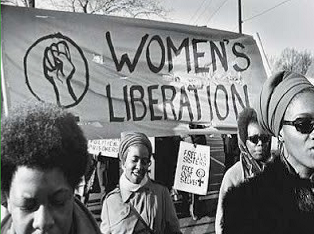
Hosted by the Women’s, Gender, & Sexuality Studies program at Boston University, in partnership with many others, this conference aims to do some historical remembering and celebrating of the Women’s Liberation Movement as well as critical analysis and discussion of the unfinished business that still continues today. It will inevitably be a reunion of many of the women, and men, who were directly involved in the movement, but its scope is also much larger than that. It’ll be a very exciting event! Plan to attend and register now!
~~~~~~~~~~
Goddess Pilgrimage to Crete with Carol Christ May 31-June 14. 2014 and September 27-October 11, 2014 Find the Goddess and a Society of Peace on a Sacred Sites Tour for women in Greece with Carol Christ, author of Rebirth of the Goddess. The Goddess Pilgrimage to Crete is a two week tour for women. Carol will lead you in rituals celebrating the grace and joy of life and introduce you to a pre-patriarchal culture where the Goddess was revered as the Source of Life, women were honored, people lived in harmony with each other and with nature, and there was no war. The pilgrimage will engage your body, mind, and spirit. Tours are small and intimate enough for community to develop. Join us now!
~~~~~~~~~~~~~
Seminar on Debates about Religion and Sexuality Harvard Divinity School
June 10-19, 2014
Applications are due February 5, 2014.
We are pleased to announce the 2014 summer seminar at Harvard Divinity School for scholars, other writers or artists, religious leaders, and activists who are working on a first large project in which they hope to change the terms of current debates around religion and sexuality. For scholars, this project would be either a doctoral dissertation or a first book. For other writers and artists, religious leaders, and activists, it might be a first book, though it might also be a new curriculum, a series of public presentations and performances, or a media piece. The seminar understands both “religion” and “sexuality” broadly. It especially seeks participants from outside the United States. Harvard Divinity School will pay for participants’ travel to Cambridge and lodging and meals during the seminar. The seminar will be directed by Mark D. Jordan (Washington University in St. Louis) and Mayra Rivera Rivera (Harvard University). Faculty from Harvard and other institutions or organizations will lead sessions in their areas of interest. Large portions of the seminar’s time will be devoted to discussing participants’ writing in workshop format. Applications are due February 5, 2014. Invitations to the seminar will be issued by February 20. Details of the application and further information about the program are available online at http://www.hds.harvard.edu/faculty-research/conferences-and-seminars/debates-about-religion-and-sexuality. Questions may be directed to rsseminar@hds.harvard.edu.
Theology is faith seeking understanding. Faith is that ineffable, intangible spiritual apparatus that keeps us in relationship to a transcendent, infinite god. It is, for Christians, the core of their relationship with the god of Jesus Christ. Yet, as Karen Armstrong and others so often remind, faith is not about loyalty to a certain doctrine, or dogma, or set of beliefs, rather it is about a commitment and engagement in a certain way of “living, and moving and having one’s being” in the world. As the word faith derives from the Greek word “pistis” it fundamentally signals not a way of thinking about who god is and god’s relationship to us, but a way behaving in light of our belief in and relationship to god.
Christian faith is grounded in the theological claim that god became incarnate in Jesus. Faith, in this regard, is not about an intractable and intolerant assertion of that theological claim; rather, it is about a sincere and consistent commitment to live into the implications of that claim. Put simply, “To keep the faith,” is not about holding onto a certain way of thinking, rather it is about maintaining a certain way of acting. The point of the matter is that for Jesus faith did not signal a preoccupation with belief per se.
When Jesus was calling people to faith, or telling them to have faith, he was not calling them to believe in him or in his divinity, rather he was asking them to be engaged in a particular way of living, to be committed to his mission in the world. Their loyalty, their trust was to be in the way of life which he embodied, a way of life that reflected the presence of god in the world. And so it is in appreciating the meaning of this word faith as Jesus used it, that I come to theological task on this day. Continue reading “To Do Justice for Jordan Davis by Kelly Brown Douglas”
For me the word “matriarchy” expresses the certainty that “another world” can exist—a world not based in domination and hierarchy or violence and war.
The word “matriarchy” makes people’s hair stand on end as they imagine the mirror-image of patriarchy: societies in which women dominate men, beat men, rape men, hold men as slaves, and demand obedience from men. Some who do not protest very loudly or at all against patriarchy are horrified by the very idea of matriarchy. To be fair, most feminists have also been schooled not to use the “m” word.
Early in my academic career, I read “The Myth of Matriarchy” by Joan Bamberger and learned that the idea of matriarchy gone wrong has been used by men to justify patriarchy. From other academics I learned that in matrilineal societies, uncles have a great deal of power—so therefore there never was a matriarchy. I was also aware that Jungian and other proponents of a “matriarchal stage” in the development of culture have argued that matriarchy had to be succeeded by patriarchy in order for societies to evolve to a “higher” stage. Unlike many of my colleagues I stubbornly held onto the belief that there must have been “a better way” prior to patriarchy. Continue reading “MATRIARCHY: DARING TO USE THE “M” WORD by Carol P. Christ”
As Valentine’s Day approaches, it seems normal to think of love, perhaps with cynicism or hope or a mix of conflicted emotions. Last year, I wrote a post on this site about Valentine’s Day, and I’m happy to contribute this year around the same time. But this year I’ve been doing a different kind of reflection. Maybe it’s because I just took my artificial Christmas tree down this past weekend, but I’ve been a little slow to get in the Valentine’s spirit, more specifically to reflect on the idea of a holiday dedicated to love.
It’s not that I haven’t been talking about love and relationships—I’ve been doing a lot of that lately. I’m teaching a class that is currently in the middle of a unit on Christian sexual ethics, I’ve been conversing with friends about their upcoming weddings and future plans, and I have spent a lot of time on the phone navigating the terrain of a long-distance relationship. But all this talk hasn’t left me too much time to reflect. It wasn’t until last night, as the church choir rehearsal I was attending was ending, that my thoughts of devouring chocolate hearts were interrupted by a litany prepared by two choir members in honor of Valentine’s Day. Continue reading “Love and Happiness by Elise M. Edwards”
It may come as a surprise to those who identify as both feminists and religious practitioners that I don’t believe women should be pastors of any dominant religious congregation. This includes most religions which, I assert, are rooted in and structured by the tenets of patriarchy. Does that mean I think women should be congregants of a patriarchal-originated religious system? You guessed it – no. While this may seem like a radical notion to some, it took me quite some time to come to terms with my own conflict in being both feminist and a believer.
My transition from the Pentecostal sect was a long, intricate process that involved life-altering decisions. The notion of leaving the church was driven by my immersion in women’s studies during my undergraduate degree. There were many difficult questions I simply didn’t have an answer for, as the church didn’t provide me with them.
One of them being: Can women instruct an entire congregation of believers?
For those who are female pastors, I’m sure you’ve heard this one a million times, but somehow it never fades from religious and secular discourse. Whether it’s the Islamic, Jewish, Christian, or Mormon faith, women have had to constantly fight for their right to preach religious doctrine. In the beginning of my transition, I was on the side of: Preach it ladies! Continue reading “Why I Don’t Believe in Female Pastors by Andreea Nica”
Mary, Mary, quite contrary, how does your garden grow? With silver bells and cockle shells, and pretty little maids all in a row.
From the beginning of horticulture about 8000 BCE or earlier to the present day, weeding has been women’s work. Women, who were the gatherers and preparers of food in traditional nomadic societies, no doubt were the first to discover that seeds dropped at a campsite one year sometimes sprung up as plants the next year. When this discovery was systematized, agriculture was invented, and human beings began to settle down in the first villages and towns.
In the early days of horticulture (the name for the earliest stage of agriculture before the plow was developed), the cycles of planting and harvest and all the stages in between were understood to have been given to mothers by the Great Mother, the Source of Life. The secrets of planting, seed collection, harvest, and food preparation and preservation were all perceived to be “mysteries” connected to the ongoing cycles of birth, death, and regeneration in the universe.
My grandmother Lena Marie Searing who was born on a farm in Michigan must have learned agricultural secrets from her mother, for she not only created a beautiful garden, she also farmed an orchard and preserved its fruits in glass jars that lined her pantry. It was she who taught me and my brothers and cousins to love nature. My mother learned to garden from her mother, but she did not harvest food crops. I think of both of them whenever I work in my garden.
The past few days I have been weeding my garden after heavy rains that left the soil clumpy and moist. I have weeded before, but I have never enjoyed it so much. My garden has matured over the past seven years, and now the weeds are more “under control.” There aren’t so many of them, and as I have now been weeding them out over the years, their roots are shallow.
As I slide a trowel into the earth the weeds lift up and with my fingers I gently pull the plants with their roots from the soil. The weeds are familiar, though I don’t know all of their names. The “sticky weed” has many tough roots, the clover has many fine ones—both are hard to eradicate. Other weeds are easy to pull up and do not reappear again until the next year.
wild chamomile blooming among “weeds”
I am discovering that weeding is a delicate process. Sometimes the roots of plants I want in the garden are entangled with those of the weeds. I work carefully choosing the ones to save and the ones to discard.** I leave poppies, chamomile, yellow daisies, and marigolds where I find them, as I consider them to be wildflowers that will provide beauty in my garden when they bloom in spring. I also take care to “keep the soil in good heart” by not discarding too much of it along with the weeds.
As I weed, I think of the women in my village who harvest greens from the fields, feeling certain that some of the weeds I discard are edible. I marvel at all of the knowledge women have shared and passed down over the past 10,000 years and more, as I realize how little of it I know. My suspicion that some of my weeds could be food is validated when a friend and I order boiled “greens from the mountains” for lunch at a local taverna and are served one of the plants I had thrown into the garbage can.
As I weed, I am reminded of an essay called “Keeping the Soil in Good Heart: Women Weeders, the Environment, and Ecofeminism” by Candice Bradley which was published in Karen J. Warren’s Ecofeminism. Bradley writes that weeding is women’s work in almost all cultures. As I work, I understand that this is so because weeding is delicate work that requires concentration and patience and that must be repeated. Bradley says that in many cultures men disparage weeding as they disparage housework—not considering either to be “real” work.
Horticulture is the most environmentally friendly form of farming, according to Bradley, because it does the least harm to the soil, and because the weeds that are not eaten are burned or composted and turned back into the earth to replenish it.
While weeding by hand has been considered work for women and children, men have generally controlled the plow and its recent successor, the tractor. However, as Bradly states, the plow and the tractor do not eliminate the need for hand-weeding. In many cases they encourage the weeds to regenerate. Women and children still weed.
The chemical gardening and farming industry (“round it up”) is based on the premise that weeds can and must be eradicated. Rachel Carson warned us of the danger this approach to agriculture presents to human and all other forms of life. A by-product of chemical agriculture is that the careful work of women weeders is further discounted.
I do not use chemicals or pesticides in my garden, and I will be out there weeding on a regular basis in the next months. As I put my hands in the earth, I will think of all the women before me who have weeded and planted, weeded and harvested, and weeded again. Blessed be.
*The title of this essay is an homage to Elizabeth Wayland Barber’s Women’s Work: The First 20,000 Years which discusses and celebrates women and weaving.
**I am aware that no plant was born a “weed” and that the designation of some plants as weeds is a by-product of human digestive systems, human taste, agriculture, and the creation of gardens for the celebration of beauty.
Growing up, there was a way in which I always felt excluded from holy things. There was the holy: blessed water, sacred oil, priestly blessings, consecrated priests, pilgrimage sites, religious buildings and communion to name a few and then there was everything else including me. Yet, I was a good kid who always (or almost always) did as I was told. Doing good works is not contrary to a Catholic childhood or education. In fact, it is an integral part of Catholicism, but there is also a competing notion that good works are in a different ontological category from holiness. While goodness merits salvation, salvation is not connected to being holy. Holiness was granted; salvation was earned. In addition, holiness also seemed more distant because men had more access to holiness than women did. Only men could be ordained and priests consecrate the Eucharist, celebrate the sacraments and bless people and things. These are all holy things and the closer one interacts with holiness, the more holiness is bound to transfer onto the person coming into contact with them. Continue reading “On the Path of Holiness by Ivy Helman”
Cooper was born a slave in Raleigh, NC in 1858. Her mother was a slave and her biological father was her mother’s white master. After living and working as a slave until the age of five, Cooper began her formal education at a school for slaves. She would grow up to become one of the most educated and intellectual black women of her century. In fact, she was the fourth African American woman to earn a Ph.D. in the United States, writing her dissertation on “Attitudes toward Slavery in Revolutionary France.” Continue reading “Painting Anna Julia Cooper by Angela Yarber”
Lady Death is knocking on my dear old Poppy’s door. His health has been getting progressively worse with each day and it is a sad and trying time for all of the family. Naturally, with death, comes reflection, unresolved issues are stirred up and we are inevitably confronted with our own mortality. I have been reflecting and reminiscing about times spent with my Pop as a child. So many wonderful memories are warmly held in my heart.
Visiting Pop and Nanna’s house as a child was always very exciting, namely because of all the lollies Pop had hidden in his cupboards – XXXX mints and licorice all sorts his favourites. I remember him Irish jigging in his blue tartan dressing gown around the campfire, and the times he would stick out his false teeth, roar and scare us silly. Slim Dusty, an Australian country music icon was one of his favourite singers, he would play his records on the old player as loud as can be, I knew the words to “I’d love to have a beer with Duncan” back to front. Every weekend the horse races would blare out of his little radio in the kitchen, I would listen along and try to pick a winner for him.
My sister and I would stay at Nanna and Pops house most school holidays and we would both wait at the front gate for him to come home from work, we were always so happy to see him coming down the path, covered in concrete and dirt, his skin so tanned from being in the sun all day. He always greeted us with a big smile and a pat on the head. We would have dinner early and no matter what was on the menu, much to Nanna’s disappointment, he would cover his food in a river of ‘black horse,’ slang for Worceteshire sauce. We would then watch the goings on in the neighbourhood from the back verandah; Pop could, and still can, tell you what everyone else was up to! He was, and still is a cheeky old thing, as stubborn as an ox, and I love him so very much.
Death of one of my family members is not something I have any experience with. Knowing that the time will soon be nigh however, has me naturally thinking about the cycle of life and death. As an avid gardener I witness this cycle daily. I plant seeds, watch them grow, set seed, decay then watch their progeny pop up all over the place. I find cocoons where caterpillars will eventually emerge as beautiful butterflies, only to flutter for two days and pass on. On my early morning bug hunts I find all sorts of larvae waiting to hatch, the strongest survivors grow; have a grand feast on my veggies, only to become a meal or compost themselves. Leaves and branches fall to the ground, animals perish and decay, feeding the earth and maintaining the fertility of the soil in the process.
This Life/Death/Life cycle is no new concept. Since time beginning human life was directly linked to the cycle of the seasons and the cycle of life and death. Humans were inextricably linked and connected with their natural environments. They imitated animals and worshipped the sun, moon, trees, rivers and mountains, elaborate rituals and ceremonies were created concerning these cycles and transitions. It was understood by careful observation of nature, that death was a natural part of the life cycle.
But why, in much of our Western culture is there so much fear and denial over death when religions and philosophies the world over have endeavoured to offer solace to humans in the face of our mortality by promising eternal life? Dr. Estes says that, “In much of Western culture, the original character of the death nature has been covered over by various dogmas and doctrines until it is split off from its other half, Life”. This is not how it is, for “death is always in the process of incubating new life”. This is life’s greatest paradox; even in our state of living, we are in fact dying and it is this dance between the two and the nature of the Life/Death/Life cycle that has been contaminated by a fear of death. This splitting in two of life and death, I feel, is largely a result of our disconnection from nurture and nature. This disconnection has impacted on every aspect of society, our ability to flow with these cycles is often weak and as a result impacts all kinds of relationships and structures, particularly that of family and community.
I am not sure what my pop believes about the nature of death as he is not religious, nor does he have any faith in an after life. He doesn’t even want a funeral of any kind. I do remember him though, saying to me as a child rather emphatically, “when you’re dead, you’re dead: food for the worms!” This has stayed with me for life and in it’s simplicity shows an understanding of the cycle. He was an avid gardener too, growing plenty of vegies for the household, and if I look deeper into his comment, which he made on more than one occasion, he was really saying that we become compost, teeming with new life, we feed the earth (the worms) and so the cycle continues.
I am certain though, that Pop fears death, and I know that he fears leaving the living, and while we can talk about, have faith in, and come to accept the Life/Death/Life cycle, it doesn’t mean that it is ever going to be easy. Surrendering to death, not just the physical death of our bodies, but any kind of death, I think, is life’s greatest lesson.
Lady Death is waiting for pop to answer the door, she has come to embrace him and comfort him in his pain and ease his transition. He is not quite ready, but the time will come soon and I feel strong in my knowing that despite how much suffering can accompany the dying, this is the way it is meant to be. From his death new life will emerge.
He will forever live in my heart and memories.
Returning, by Jassy Watson
Jassy Watson, who lives on the sub-tropical coast of Queensland Australia, is a mother of four, a passionate organic gardener, an artist, teacher of the Colour of Woman Method, and a student of ancient history and religion at Macquarie University, Sydney. She runs a small business Goddesses Garden and Studio to keep women’s sacred circles, art, music and gardening practices alive. Jassy teaches regular painting workshops based around themes exploring the feminine.