Even though snakes never inhabited Ireland, as in the rest of the ancient world both the serpent and the dragon were ancient symbols of life, fertility, wisdom and immortality for the Celts.Ancient Celtic ornamental work is entwined with serpents and dragons. The Celtic Knot can be seen as a never-ending serpent. A large stone with a carved serpent is found at the sacred cairn sites of Knowth. The megalithic structure of Brug na Bóinne (Newgrange) has multiple serpent-like spirals on the entrance stone.
In Scotland there is the earthen serpent at Glen Feochan, Loch Nell. The Pictish Aberlemno Serpent Stone is engraved with a serpent and other symbols. The torque collar, a symbol of kingship and status was created in the form of a hybrid horned dragon/snake. The serpent was connected to healing pools and springs and the Druids believed the serpent had healing powers together with a certain type of egg shaped stone called a “serpent’s egg.” Continue reading “Corra, Celtic Serpent Goddess by Judith Shaw”
In the early 1990’s I discovered the compelling story of Inanna, the ancient Sumerian Goddess, translated and retold in the book, Inanna, Queen of Heaven and Earth by Diane Wolkstein and Samuel Kramer. I was inspired to create a series of paintings from Inanna’s story.
‘Rather than being a bleeding image of female disempowerment, Medusa may be read as…one of the most ancient European symbols of women’s spiritual abilities… [and] an empowering image of feminine potential.’
–Patricia Monaghan, O Mother Sun! (1994:244)
The name Medusa means ‘sovereign female wisdom,’ ‘guardian / protrectress,’ ‘the one who knows’ or ‘the one who rules.’ It derives from the same Indo-European root as the Sanskrit Medha and the Greek Metis, meaning ‘wisdom’ and ‘intelligence.’ (1) Metis, ‘the clever one’, is Athena’s mother. Corretti identifies Athena, Metis, and Medusa as aspects of an ancient triple Goddess corresponding respectively to the new, full, and dark phases of the moon. (2) All three are Goddesses of wisdom, protection, and healing.
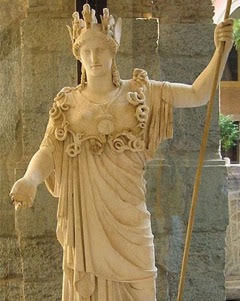
Athena with Gorgoneion in her heart. 5th C BCE.
Athena and Medusa are particularly linked: indeed, one may have been an aspect of the other, ‘two indissociable aspects of the same sacred power.’ (3) Their many common elements include snakes, wings, a formidable appearance, fierce eyes and powerful gaze. The serpent, like the Goddess, has been cast as an embodiment of evil in patriarchal retellings; yet as Merlin Stone points out, serpents were ‘generally linked to wisdom and prophetic counsel’, associated with ‘the female deity’ and ‘entwined about accounts of oracular revelation…throughout the Near and Middle East.’ (4) According to Ovid, the poisonous vipers of the Sahara ‘arose from spilt drops of Medusa’s blood.’ (5) Although this is presented as a further sign of Medusa’s horrifying character, the original Berber inhabitants of North Africa – where Herodotus reports that the Medusa myth began – viewed snakes as bringers of luck and portents of joy. (6)
Despite Medusa’s fearsome appearance, she herself does not personify evil or demonic forces. According to Miriam Robbins Dexter, Medusa is a manifestation of the Neolithic serpent/bird Goddess of life, death, and regeneration. (7) Jane Harrison explains that the ancient Goddess wore the Gorgon mask to warn the uninitiated away from her rites (8), most likely mysteries of the great cosmic cycles of heaven and earth. Patricia Monaghan sees the snakelike rays streaming out from Medusa’s countenance as a sign of a solar Goddess (9), while Joan Marler, citing her connection with Hecate, identifies Medusa more with the moon than the sun (10); either way, Medusa is a heavenly deity ruling over the powers of the cosmos and the rhythms of time. Continue reading “Medusa and Athena: Ancient Allies in Healing Women’s Trauma by Laura Shannon”
Before he told the story of how his people received the sacred pipe, Black Elk said:
So I know that it is a good thing I am going to do; and because no good thing can be done by any man alone, I will first make an offering and send a voice to the Spirit of the World, that it may help me to be true. See, I fill this sacred pipe with the bark of the red willow; but before we smoke it, you must see how it is made and what it means. These four ribbons hanging here on the stem are the four quarters of the universe. The black one is for the west where the thunder beings live to send us rain; the white one for the north, whence comes the great white cleansing wind; the red one for the east, whence springs the light and where the morning star lives to give men wisdom; the yellow for the south, whence come the summer and the power to grow.
But these four spirits are only one Spirit after all, and this eagle feather here is for that One, which is like a father, and also it is for the thoughts of men that should rise high as eagles do. Is not the sky a father and the earth a mother, and are not all living things with feet or wings or roots their children? And this hide upon the mouthpiece here, which should be bison hide, is for the earth, from whence we came and at whose breast we suck as babies all our lives, along with all the animals and birds and trees and grasses. And because it means all this, and more than any man can understand, the pipe is holy. [italics added]
Our first ritual on the Goddess Pilgrimage to Crete is a death ritual in which we honor the memory of those who have gone before us. Like so many things on the pilgrimage, the death ritual evolved. I did not consciously plan to begin with death. Rather, the death ritual inserted itself at the beginning of the tour. Now I understand that the timing is right.
As we begin our pilgrimage, seeking new insight about the meaning of our lives, about the meaning of life and death, we pause to remember those who have gone before us.
Before the ritual begins, I discuss the communal burials in round tombs of the ancient Cretans, sharing my belief that the purpose of their rituals was not to secure immortality or eternal life for the individual, but rather to affirm and ensure the regeneration of life in the community and in nature. I add that though I have no desire for personal life after death, I care deeply about the continued flourishing of life for human and other than human beings.
In the fields of classics and archaeology, Gimbutas’s work is often dismissed as nothing more than a fantasy of a “golden age.” In contrast, scholars of Indo-European languages, Gimbutas’s original specialty, are much more likely to accept the general outlines of her hypothesis. The German linguist and cultural scientist Harald Haarmann is one of them. Continue reading “Was There a “Golden Age” before Patriarchy and War? by Carol P. Christ”
I have recently watched one of these real life entertainment documentaries. This one was on plastic surgery. A woman went under the knife to enlarge her breasts. The female presenter, wearing sterile white, peeped into the operation theatre and, facing the camera, said excitedly: “This operation might be life-changing!”
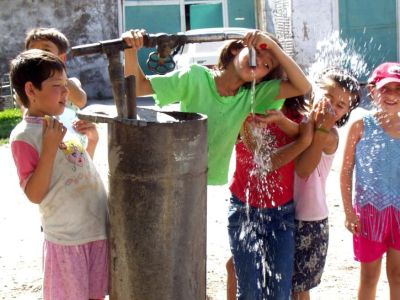
I thought: “Yes, precisely.” The money that the patient spent on breast implants could have bought – what? A trip to a strange land. A course for her to improve her employment prospects or to broaden her horizons. Art supplies for her to create something. A water pump to provide clean water in a village somewhere in the world where children die from preventable diseases caused by dirty water. Part of a salary for a teacher who works in a school for girls somewhere in the world where girls need extra help getting education.
Life-changing.
What we choose to spend money, or indeed any resources (time, energy) on depends on our story of life. What is life for us: a race to the unattainable ideal of glossy magazine covers or a spiritual journey we share with every other creature on earth? Continue reading “Stories vs. What Is by Oxana Poberejnaia”
In many ways, I’ve thought of the myriad Holy Women Icons I’ve painted as mediators, guides who accompany us, women who have shown us the way. Whether they enliven us to create, inspire us to sustain, or embolden us to empower, these holy women have taught me to rage, praise, hope, endure, persist, love, and laugh. Recently, though, I discovered that none of the Holy Women Icons I’ve researched, written about, or painted have helped me to grieve. Surely, many have experienced grief, or give us tools for coping with the grieving process, but no Goddesses of Grief filled my heart when I needed it most.
Last month, amidst my worries about walls and bans and words that exclude, grief came along and sucker punched me in such a way that I continue to grasp for mediators, guides, and ways to cope amidst tremendous sadness. On March 6, 2017 my little brother, Carl, died. An addict for much of his adulthood, his recent addiction began spiraling out of control over a year ago and he refused to go to rehab. My family worked hard to try and reach out to him, to open him up, to offer him support, but he refused to let anyone in, drowning his anguish in blackouts and overdoses. Though we filled his life with tremendous love, he also experienced pain—externally and internally—that he never shared with anyone. The drug of choice for the past year—duster—runs the risk of cutting off the oxygen to the brain every time it is used; in fact, there are instances of people dying the first time using duster. And this is precisely what happened when my mother found my brother. My beloved single-mom, Mary, became Our Lady of Sorrows, as she held the lifeless body of her 33 year-old son. Our lives will never be the same and the grief is overwhelming. Continue reading “Painting a Goddess of Grief by Angela Yarber”
When I came to Goddess, I was in my mid-forties and I suddenly had this huge fire burning in my soul. I felt like I had missed opportunities to practice my “calling” for forty-five years. I finally knew what I was born to do and couldn’t get there fast enough. There was a part of me that felt that, because of my age, I had to hurry up and “get there.” Come to find out, we do not ever “get there!” We are simply always “getting there!”
Like many other thousands of Americans, I watched the newest offering from the Star Wars legacy last autumn and was re-inspired to be an active part of the rebellion against oppression. Viewing the movie through my feminist lens I was cheered on by the choice of actors and actresses in lead roles and was reminded of Margaret Mead’s famous quote,“Never doubt that a small group of thoughtful, committed, citizens can change the world. Indeed, it is the only thing that ever has.”
It may be easy to compare the new president to Lord Vader because he is an easy target who encourages mockery and ridicule. However, tyranny, violence, and power trips have long been a part of world societies, for centuries. It is as evident as ever that we must continue to stand against such debilitating realities. We must stand together.
And, like millions of other people across the world, I had the privilege to participate in a Sister March to the Women’s March on Washington; shoulder to shoulder with passionate and caring people determined to make a difference. The experience generated feelings of elation, hope, and unity. I was most impressed by the kindness radiating from every person I came in contact with. Even though spaces were packed with people the overall atmosphere was conscientious, polite, and caring. Peaceful activism is critical to progress.
I also listened intently to the speeches made at the marches; especially by the women well known in popular culture. Gloria Steinem, a cornerstone of the modern feminist movement, spoke words that I believe reflect the change in values that I visualize in the form of a river current. “God may be in the details, but the Goddess is in connections. We are at one with each other, we are looking at each other, not up.” Women’s work is the creation of the web; the tapestry of connections between us all and the building of momentum in the stream bed.Continue reading “Join the Rebellion by Jessica Bowman”


 Even though snakes never inhabited Ireland, as in the rest of the ancient world both the serpent and the dragon were ancient symbols of life, fertility, wisdom and immortality for the Celts. Ancient Celtic ornamental work is entwined with serpents and dragons. The Celtic Knot can be seen as a never-ending serpent. A large stone with a carved serpent is found at the sacred cairn sites of Knowth. The megalithic structure of Brug na Bóinne (Newgrange) has multiple serpent-like spirals on the entrance stone.
 In Scotland there is the earthen serpent at Glen Feochan, Loch Nell. The Pictish Aberlemno Serpent Stone is engraved with a serpent and other symbols. The torque collar, a symbol of kingship and status was created in the form of a hybrid horned dragon/snake. The serpent was connected to healing pools and springs and the Druids believed the serpent had healing powers together with a certain type of egg shaped stone called a “serpent’s egg.” Continue reading “Corra, Celtic Serpent Goddess by Judith Shaw”
 In the early 1990’s I discovered the compelling story of Inanna, the ancient Sumerian Goddess, translated and retold in the book, Inanna, Queen of Heaven and Earth by Diane Wolkstein and Samuel Kramer. I was inspired to create a series of paintings from Inanna’s story.
 Before he told the story of how his people received the sacred pipe,
  Our first ritual on the Goddess Pilgrimage to Crete is a death ritual in which we honor the memory of those who have gone before us. Like so many things on the pilgrimage, the death ritual evolved. I did not consciously plan to begin with death. Rather, the death ritual inserted itself at the beginning of the tour. Now I understand that the timing is right.
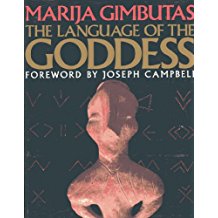 Marija Gimbutas coined the term “Old Europe” c.6500-3500 BCE to describe peaceful, sedentary, artistic, matrifocal, matrilineal and probably matrilocal agricultural societies that worshipped the Goddess as the power of birth, death, and regeneration in all of life.
 I have recently watched one of these real life entertainment documentaries. This one was on plastic surgery. A woman went under the knife to enlarge her breasts. The female presenter, wearing sterile white, peeped into the operation theatre and, facing the camera, said excitedly: “This operation might be life-changing!”
 I thought: “Yes, precisely.”
  In many ways, I’ve thought of the myriad
 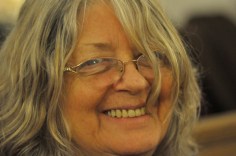 When I came to Goddess, I was in my mid-forties and I suddenly had this huge fire burning in my soul. I felt like I had missed opportunities to practice my “calling” for forty-five years. I finally knew what I was born to do and couldn’t get there fast enough. There was a part of me that felt that, because of my age, I had to hurry up and “get there.” Come to find out, we do not ever “get there!” We are simply always “getting there!”
 Like many other thousands of Americans, I watched the newest offering from the Star Wars legacy last autumn and was re-inspired to be an active part of the rebellion against oppression. Viewing the movie through my feminist lens I was cheered on by the choice of actors and actresses in lead roles and was reminded of Margaret Mead’s famous quote,
 Feminism and Religion