 I asked this question at the family dinner table, on facebook, and by e-mail. Many heartfelt responses were offered, all insightful. Some spoke of romantic love, sexual love (eros), self-love, spiritual love, the love a parent has for a child, unconditional love (agape), primal love, authentic love, universal love, divine love, the source of love, friendship (philia), love of nature, and love of a pet, while others considered the destructive nature of love. What was demonstrated by these conversations was that not only are the possibilities of love’s expressions endless, but there can ultimately be no right or wrong answer when it comes to the meaning of love. Our cultural, familial, religious and spiritual backgrounds all play a part in the way we think and feel about love.
I was raised in a secular, middle-class, two parent, two children, cat, and sometimes a dog kind of family. Despite the usual ups and downs, our family life was full of love. I remember having feelings of love as a child that were so incredibly overwhelming I would be brought to tears. I loved everything and everybody. Mum still reminds me that if I could have, I would have brought every elderly person along with every stray animal home to look after. After reading about the process view in Carol Christ’s book She Who Changes: Re-Imagining the Divine in the World, I see now that this love I felt was born out of feelings of deep sympathy.
Because we did not have a religious or spiritual background, I had no idea what divine love meant. My idea of the divine was the male, Christian, biblical God that our family rejected. It is said that Christian love is selfless and is best seen in actions such as compassion and kindness. This may be so. But selflessness, compassion and kindness are not limited to Christian values. They are human values. In his book The Art of Happiness, the Dalai Lama says that “love and compassion are necessities, not luxuries. Without them humanity cannot survive”. All religious, spiritual and philosophical traditions speak of the values of love. They say that love encompass compassion, kindness, selflessness, acceptance, gratitude, sympathy, sharing, grace, justice, charity, and liberation. They also speak of tension, wrath, discomfort, unkindness, loss, and judgement. For me, love is all these things and more.
Ancient myths address these values of love through tales of passion and devotion. Diane Wolkstein celebrates some of these myths in her book The First Love Stories. Each story expresses a distinct aspect of love. For instance: the tale of Isis and Osiris represents love that is stronger than the forces of nature, Innana and Dumuzi expresses the cyclical quality of love; Shiva and Sati reveals the eruption of passion and the taming of the mind; the Song of Songs celebrates love’s yearning; the story of Psyche and Eros portrays the forging of the self. All of these stories emphasize the sacred nature of love.
For me, having children awakened a love so very deep within. When I gazed into the eyes of my first born son at the tender age of 18, I was so overwhelmed by love I thought my heart would burst. I now have four children a husband and a loving extended family and friends who all teach me much about the true nature of love. They teach me above all else that love is patient, non-judgmental, and unconditional. It is through the growing awareness of my spiritual being and my journey with the Goddess that love has become something deeper than I ever thought possible. Love, for me has become a union with something higher than my individual self. My love extends beyond the family to include every living being on this planet and beyond. It is not just all about giving and receiving, but rather it is a state of being. It is personal yet universal and comes from deep within my sub-conscious. Love for me, not unlike the tales woven in ancient myth, is profoundly sacred.
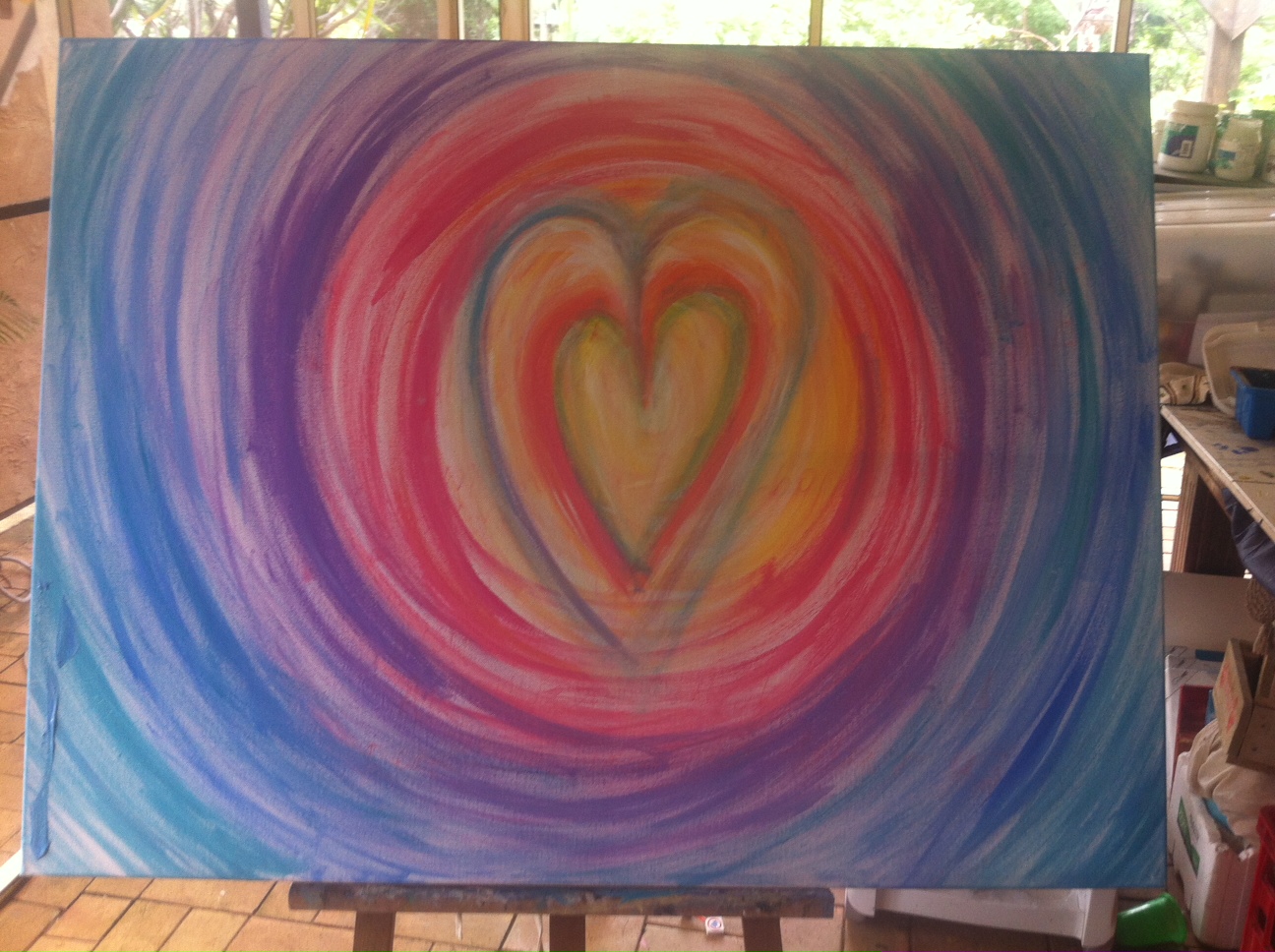
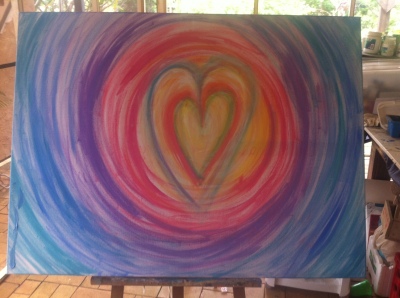
Embodied with love I set out to create my next painting. Out of this portal of love:
Aphrodite, Goddess of love, pleasure and relationships, in all her glory was born. Continue reading “What Is Love? by Jassy Watson”