The Power to Interpret for Myself by Jameelah X. Medina

Jameelah MedinaMy father always encouraged us to interpret scripture for ourselves. We read text, learned mainstream interpretations, and then he would ask for our authentic self-generated interpretations delivered in the form of book and chapter reports due to him. Growing up, all prayers and supplications were done in English; my parents wanted us to really understand and synthesize rather than simply memorize Arabic words with a generic sense of what we were reading or reciting.

Having grown up with the understanding that my own mind was powerful enough to make sense of religious matters, I took it for granted. Trying to fit into the mainstream Islamic mold was something I sought for a few years in my late 20s. I tried to be certain of the mainstream interpretations of heaven, hell, the creation story, the Night Journey, and even became obsessed with studying hundreds and hundreds of hadith (prophetic sayings) and memorizing Quranic verses in Arabic instead of English. I temporarily gave away my own power to have that direct relationship with God that Islam supports. Mainstream Islamic scholars became my middle men. At every step, I despised feeling powerless and mindless. However, I worked hard at suppressing my own doubts and questions…until the day I had enough and finally called “bullshit!” on this new shadow of my former self I was trying so hard to create. Continue reading “The Power to Interpret for Myself by Jameelah X. Medina”

My Name is Jihad by Esther Nelson

esther-nelson

Recently, my local newspaper (yes, I still get a paper delivered to my “newspaper box” every morning!) carried a short article that caused me to stop and reflect.

The headline read, “Use of ‘Jihad’ on school test assailed.”  A local, elementary school principal had pulled a math problem from the school’s resource pool when some parents and other community members objected to the use of “Jihad” as a name for one of the characters in the math exercise.  In the exercise, Roberto, Kwame, and Nika (along with Jihad) collected leaves for a science project.  The elementary school students’ assignment involved drawing bar graphs, showing how many leaves each character collected.

A local resident brought what he termed an “inappropriate name” (Jihad) to the attention of the School Board.  He said, “I believe this [using Jihad as a character name] is a very subtle desensitization of impressionable young minds,” citing Webster’s College Dictionary’s definition of jihad as “a war by Muslims against unbelievers or enemies of Islam, carried out as a religious duty.” Continue reading “My Name is Jihad by Esther Nelson”

Reading “Women” by Laury Silvers

My friends make my life difficult. They make me see what I could not see before. Kecia Ali, Aisha Geissinger, Karen Ruffle and Kathleen Self taught me how to read for gender in the classical texts I use for my academic work. It’s a way of doing close readings by paying attention to the way gender shows up in the text. Aisha sat with me one afternoon and walked me through my own sources pointing out references to gender in the sources. She showed me how the sources I was reading used gender to express social norms. She kept asking me, “What work is gender doing in the text?”
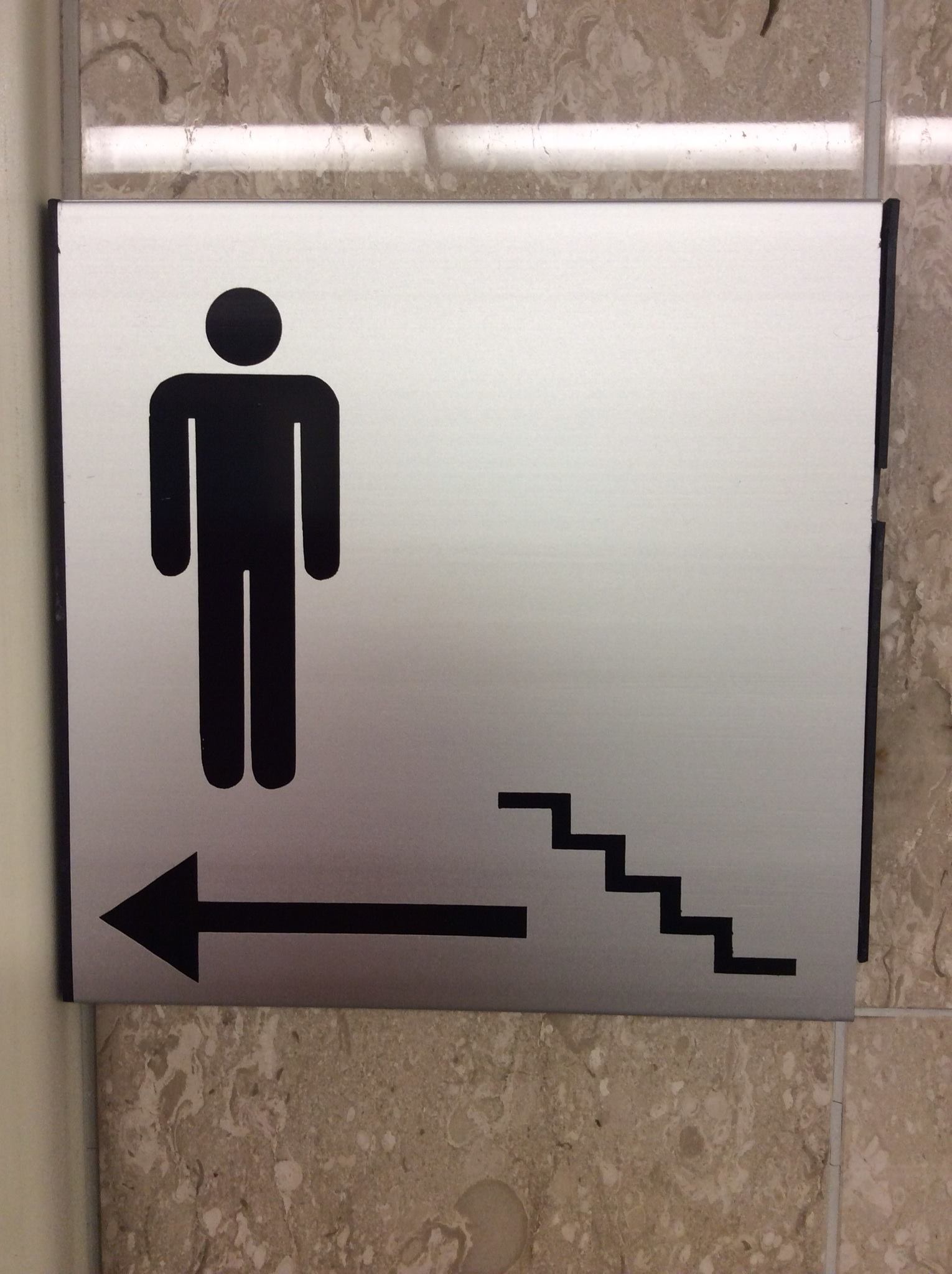
Don’t laugh you been-reading-gender-forever-and-a-day people! Okay laugh. I was a bit slow to pick up this gender thing at first, but I caught up okay. Now I cannot unsee it. I see it everywhere. For instance, I was heading to the stairs at work after a long day and was brain tired. I saw this sign at the stairs:

I nearly kept walking past the stairs thinking for a second that it meant they were for people that society designates as having “male” bodies only. I actually thought that. Then I started laughing at myself. I took a picture and posted it on social media with a story complaining how my friends have absolutely ruined me! Continue reading “Reading “Women” by Laury Silvers”

Cosmic Struggle and The Longest Nights by Jameelah X. Medina

Jameelah MedinaSince my college years studying Spanish mystics and their numerous writings, I have secretly been fascinated by the summer solstice. Years later, my hidden fascination with the winter solstice began. For exactly one year now, I have exclusively been using Nature as my pharmacy. Perhaps, paying more attention to nature has allowed me to relate my experiences with Leylat al-Qadr (Night of Power) and understanding of the story of Jacob wrestling with the “man” all night (Genesis 32:24) to what I felt leading up to and during the winter solstice. While Leylat al-Qadr and Jacob’s night struggle have no direct relation to the winter solstice, I still relate them when I think of my own struggles with my higher and lower self and with my daily goal to be a better me than the day before.

As a Muslim, Leylat al-Qadr is the night I look forward to toward the end of Ramadan. It is filled with blessings and power. Looking for it feels like knowing my sweetest, beloved relative is coming to visit but not knowing her time of arrival. That night is spent in deep reflection and filled with prayers as it is a night the Qur’an tells us is better than one thousand months in which the angels all come down to witness. Then, there is Jacob’s cosmic struggle that lasted until dawn. The Bible and Talmud tell us that he triumphed over divine and men in that long struggle, after which he is renewed by being called “Israel” (he who prevails over the divine) instead of Jacob. Lastly, there is Winter Solstice (Yule). This is a long night welcoming winter but focused on renewal, rebirth, personal power, and setting intentions. Continue reading “Cosmic Struggle and The Longest Nights by Jameelah X. Medina”

Are the Gods Afraid of Black Sexuality? by amina wadud

amina 2014 - croppedThis was the title of a two day conference recently held at Columbia University. At one point on the first day, one presenter asked if there was anyone who is not Christian. Two hands went up, sitting side by side: mine and a film maker friend who had been instrumental in getting me invited to present. She is Buddhist and was showing a trailer from her documentary on rape in the Black community.

One problem with my participation was how to introduce another conception of “God” while still engaging the intersection of race and sexuality with only 15 minutes. So I had to talk really fast.

While the easy answer is, “No,” the God in Islam is not afraid of Black sexuality, I still had a lot of ground to cover about the sex-affirming history and spirit of Islamic thought and practice. Because the preference is to marry, which is a contract and not a sacrament. Marriage is not for the purpose of procreation but for the pleasure of sex. Marriage is preferred over celibacy such that no spiritual virtue is applied to the latter. Marriage is the normative example (sunnah) of the Prophet. Continue reading “Are the Gods Afraid of Black Sexuality? by amina wadud”

A Women’s Mosque: An Interfaith Space for Feminist Spirituality by Vanessa Rivera de la Fuente

Vanessa Rivera de la Fuente. A Women MosqueIf you thought that all I could do in regards to feminism and religion is challenge Patriarchy and tease around ladies and gentlemen of good temper and better reputation with my corrosive comments, this post may change your mind.

As I said in a previous article, this year I started, with a small group of people, a social project called Imaan, whose goal is centered on inter-faith dialogue and better visibility of the actions and contributions of women in Islam (and religion in general,) plus critical thinking on religion from a feminist and progressive perspective.

As part of the activities of Imaan, we are developing “A Women’s Mosque” project; an initiative that aims to create a meeting place for women and our spirituality. The idea came after a reunion to talk on Islam and inter-faith dialogue with women from different denominations. At one point in the discussion, they asked me about sex segregation in mosques, which led us to a broader reflection on the position of women in the religious space, both material and symbolic, and how uncomfortable we were with that.

We realized that, in a variety of ways, places of worship displace women. Whether they relegate us to separate rooms, or refuse to allow us to speak, limiting our participation to “strictly female” issues such as maternity, caregiving, the role of wife and – of course- clothing, these prohibitions are always from a patriarchal “canonical” perspective.

So we decided to join together to create our own space. Continue reading “A Women’s Mosque: An Interfaith Space for Feminist Spirituality by Vanessa Rivera de la Fuente”

The God of Love by amina wadud

amina 2014 - croppedI admit I had the fortune of loving my father, the late Reverend Teasley, and feeling loved by him.  I also date my fascination with the divine back to my father.  There are many ways this fascination could have taken shape, but for me it led to the experience of religious diversity as an element of the global community of human beings that has never abated.

Like others, you might ask: if I feel so akin to diversity, why am I a devotee to only one of them: Islam? Some question this by way of offense to Islam. Others are genuinely curious. This curiosity takes two forms.  Either they are interested in my personal location within Islam, as in why are you Muslim? Or they are interested in why stop my quest for diversity and get stuck where I am clearly busy detangling the manifestations of Islam from their patriarchal moorings?

My answer is quite simple. Islamic thought brought me peace of mind, especially about the greater workings of the universe and my tiny, tiny part within it.  Islamic thought gave me the language to understand (a/my) reality.  Quite a handy facility if you think about how long humans have pondered the great existential questions: Who am I; Why am I here; and What is the purpose of life? Continue reading “The God of Love by amina wadud”

Get your fatwa off our backs! by amina wadud

amina 2014 - croppedIt’s not so easy any more to control the parameters of Islam and the way it is practiced by those who wish to stuff their opinion down the throats of other Muslim citizens, be they minorities or majorities across the globe.

This past week the Selangor Islamic Religious Counsel in Malaysia, issued a fatwa against Sisters in Islam (SIS), accusing them of being “deviant” because they subscribe to religious liberalism and pluralism.  They called for a ban on all their publications and to silence their social media. They sought to shun their activities and personhood “in the name of Islam.’

The next day SIS held a press conference and went on full counter attack.  This is what it has come down to for many who stand for justice, equality, and human dignity for all, within an Islamic perspective.

Let me step back and explain about a fatwa.  Continue reading “Get your fatwa off our backs! by amina wadud”

ISIS and the Larger Muslim Crisis by Hanadi Riyad

Hanadi Riyad croppedIt is heartening to hear the many condemnations Muslim scholars have issued of ISIS and its methods and actions. One of the latest attempts comes in the form of an open letter addressed by a coalition of one hundred and twenty six Muslim “scholars” from across the world to Abu Bakr al Baghdadi and ISIS followers and supporters. The seventeen page letter is one of the most detailed responses to ISIS I have read. However, just like other responses, it fell short of my expectations as a Muslim woman. I checked the list of the signatories and I could not find any women amongst them.

I am saddened to note that the authors of the letter fall into the same mistake they accuse ISIS of: they quote some Quraanic verses and Hadiths selectively, out of context, and portray them as sufficient rebuttal against ISIS actions, never mind the sources, verses, and Hadiths ISIS has been quoting just as selectively to justify its crimes. The letter explains about the methodology of Islamic legal theory (usul al-fiqh) that it stipulates “to consider everything that has been revealed relating to a particular question in its entirety, without depending on only parts of it, and then to judge if one is qualified based on all available scriptural sources.” There’s no explicit logical explanation for why the parts of the scripture and interpretations quoted by the writers of the letter should be given precedence over the ones quoted by ISIS.

The implicit reason, however, resides in the authors’ assertion of their authority as Sunni “scholars”  and their opinion as “a scholarly opinion.” We should take their word because they have the authority that ISIS does not. The assumption that ISIS cannot count amongst its ranks scholars is neither explained nor defended. The doctrinal connection between ISIS and Wahhabi ideology upheld by many Saudi scholars – like ibn Baz and his disciples— goes unacknowledged. Continue reading “ISIS and the Larger Muslim Crisis by Hanadi Riyad”

The Season of Pilgrimage by amina wadud

amina - featureThis weekend those of us not performing the ritual pilgrimage, or Hajj, will enjoy the Festival of the Sacrifice of Eid al-Adha. Celebrated on the 10th day of the 12th lunar calendar month, it tends to creep up without warning, since we operate on the solar Gregorian calendar. The next day I jump a plane to Southeast Asia so my attention is already diverted.

The sacrifice here refers to Prophet Abraham’s botched contract with God over his first son. Muslims stick with the sheer biology that it was his first son, Ishma’il rather than Sarah’s first biological son, Isaac as recognized in Christianity and Judaism. It’s political, I won’t go there.

Instead I want to focus on this veneration of things masculine across all three Abrahamic faiths with the attention surrounding this particular patriarch. For example, I recall an Eid sermon which dwelt at length on Abraham circumcising himself in full adulthood without anesthesia. All I could think was, WHO should care about that? This particular manhood seems to excel over any reminder of his humanity, or of his devotion to monotheism in a community steeped in Idol worship. Continue reading “The Season of Pilgrimage by amina wadud”