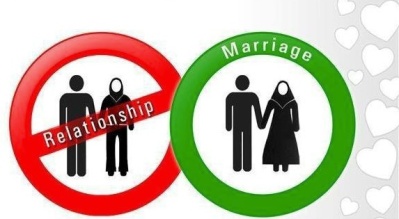
Reconstructions of the Past: Hafsa bint Sirin (“Introduction”) by Laury Silvers

silvers-bio-pic-frblog - Version 2This blog and those to follow will be taken from an academic talk I gave on the life of the early pious worshipper, scholar of Qur’an, Hadith, and their legal meanings, Hafsa bint Sirin (d. ca. 100/800). I used some of the material for the talk in my chapter on early pious, mystic, and Sufi women in the Cambridge Companion to Sufism, but most of what I will share with you here and in the future has never been published. Whenever I sat down to write this material up for a journal, I realized I would not be able to expand the piece in the way I wanted in keeping with a properly skeptical historical attitude. I would need to hem and haw in all those places I just want to be bold and write what I think, without concession.
I want to tell her story as I have imagined it. Granted, what I have imagined is rooted in what can be known about the historical circumstances of her life and the lives of other women in that time and place. But I want to be honest about my agenda. My feminist agenda. In telling Hafsa’s story, I want to address and produce my own counter narrative to those stories told about pious and Sufi women over the years that hold up women’s silence and seclusion as the height of women’s piety. Continue reading “Reconstructions of the Past: Hafsa bint Sirin (“Introduction”) by Laury Silvers”

The Religion of My Rape by Jennifer Zobair

painted hands, Jennifer Zobair
Photo Credit: Brian Ziska

Whenever the epidemic of rape in Egypt makes the news, I am destined to think of Joyce Carol Oates.

Last summer, the author took to twitter to question whether Islam was responsible for the widespread incidence of sexual assault in Egypt, an argument people continue to make today. As a Muslim woman, I desperately wanted to respond to Ms. Oates’ tweets. I held my cursor over the “reply” button countless times. But I’ve been silent about the things I would have said, about why I follow Dennis Rodman on twitter, and why Pearl Jam is my favorite band, and how my heart shattered for women in Syria who felt like they had to be silent, too.

I have been silent. Continue reading “The Religion of My Rape by Jennifer Zobair”

Oh, Yes! On a Sexual Revolution in Islam by Vanessa Rivera de la Fuente

Vanessa Rivera de la Fuente. Sexuality and IslamFor centuries, religions have controlled sexuality. They have defined the legitimate options with regard to gender, sexual orientation, how to make love and its purpose. The religious discourse on sex imposes patriarchy, binarism, marriage, monogamy, motherhood and heterosexuality as sine qua non conditions for a “proper” sexual life. Also, it has caused the invisibility and subordination of female pleasure and has repressed the power of women’s sexuality that allows us multiple orgasms and tireless self sexual satisfaction for a life time.

The modern mainstream Islamic discourse is the continuation of what I already knew in Catholicism about sex: its purpose is to have children, it is lawful only after marriage, the man controls the couple’s sex life and may have more than one partner while women are the exclusive property of their men.

However, it seems that it was not always this way. The biblical book, “The Song of Songs,” for example, describes a sexual encounter with beautiful metaphors and passionate declarations of sexual desire. I insist in this: declarations of sexual desire. Nowhere in this text do the lovers speak of marriage, fidelity, children they will have or who will pay the bills. The “Song of Songs” is a celebration of sexual desire and the desire to have sex just because it is good and pleasant. Pleasure for the sake of pleasure, without normative assumptions, because sexual pleasure is a divine gift and if is shared, is even more divine. Continue reading “Oh, Yes! On a Sexual Revolution in Islam by Vanessa Rivera de la Fuente”

Islam, Ali, and Reformation by Kile Jones

Kile JonesDoes Islam need a reformation? The ever-controversial Ayaan Hirsi Ali’s new book Heretic: Why Islam Needs a Reformation Now argues that it does. Do you agree with her? Or do you find problems with the way Ayaan Ali frames the discussion?
I ask these questions a few weeks after the first all-women’s mosque was opened. It has also only been a short time since Muslims for Progressive Values (MPV), headed by Ani Zonneveld, sent an open letter to Salman bin Abdul Aziz, King of Saudi Arabia. These, and the innumerable condemnations of the Charlie Hedbo shootings, remind us that this “reformation” Ali is looking for is not entirely absent. Continue reading “Islam, Ali, and Reformation by Kile Jones”

Nature: The Best Muslim and My Favorite Muse by Jameelah X. Medina

Jameelah MedinaNow that spring is upon us, it started me thinking about the beach. I love the ocean. Like me, lots of people get that back-to-the-peaceful-womb feeling when looking at the ocean. As I thought about the ocean, I realized I saw it as having a very strong feminine energy. She is like our distant relative. I mean, we are mostly water and when we cry it’s salty, when we sweat it’s salty, and we both (ocean and human) are alive, and we are both Muslims (in the sense of submission to Allah), so we are connected.
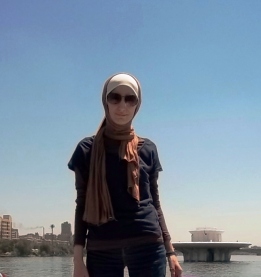
Allah says that there is nothing Allah did NOT create from water; I think this water connection is what so many of us feel when we are at the foot of the ocean. We feel closeness to Allah because we are in our element, or better said, we are in a space so close to something that shares the same chemical elements as us perhaps. The earth is one big organism within which we all play a part, though we think we are completely independent. Khalil Gibran has a quote that says something like if we love, our love neither comes from us nor belongs to us; if we are happy, our happiness is not in us, but in life itself; if we feel pain, our pain is not in our wounds, but in all of nature. I believe this. If we are still enough and just tune into that faculty beyond the most recognized, we can also feel it. Continue reading “Nature: The Best Muslim and My Favorite Muse by Jameelah X. Medina”

Enemy of (H)Islam by Vanessa Rivera de la Fuente

Vanessa Rivera de la Fuente. Misogyny in IslamSo, again, you, the most holy and enlightened man of the mosque have pointed your finger at me to declare, noisy and hysterical, that I am an “Enemy of Islam.” Then you, who preaches and recites best, have gone out there slandering me, “eating my flesh,” devotedly.

“Enemy of Islam.” Well, which Islam? Is there one unique Islam? Why is your Islam, THE Islam? There are so many ways to be Muslim, or, didn’t you know?

You seem to follow the principle “you believe like me or you believe against me,” especially when the discussion is about women. In your narrow view, I am an enemy of Islam because I’m a feminist, radical, progressive woman. I am engaged in interfaith dialogue and in political struggle against discrimination instead of “being at home serving [my] husband as a good Muslimah.” Continue reading “Enemy of (H)Islam by Vanessa Rivera de la Fuente”

The Difficult Truth: “Terrorists” are also Human by Hanadi Riyad

Hanadi Riyad cropped

This past month Jordan has witnessed a lot of grief, as well as a certain shift in politics and popular opinion regarding Da’esh and the government’s position towards it. On 3 Feb, Da’esh released a video of the immolation of the Jordanian air force pilot Muath al-Kasasbeh.

The ensuing shock, grief, and outrage have only just started to ebb. Immediately after the video release, government officials started issuing statements promising “revenge,” appealing to a largely tribal society where values of revenge and “honor” are defining traits. In a matter of a few hours, a mostly male mass hysteria took hold and demands for “revenge” dominated the streets and the local media.

Chants and slogans about the Jordanian people being “all men” could be heard and seen everywhere including on social media. The only “emotion” present was rage, the only masculine emotion. Hardly any women were present in any of the rallies on that day or after. On social media, Da’esh combatants were called “women” for trying to intimidate the Jordanian forces so as not to have to confront them as “men” would and, conversely, “monsters” and “animals.” Some statements called for the killing of Da’esh “women and children” as well.

Continue reading “The Difficult Truth: “Terrorists” are also Human by Hanadi Riyad”

Poppaea & Paul: Was This About A Female Challenge To Male Privilege? by Stuart Dean

Poppaea Sabina as portrayed on a Roman coin minted 62-65 CE.


As suggested in my first post on Poppaea it is likely she knew one or more of the women Paul refers to in Romans. Of particular interest is the woman Paul refers to as his ‘mother’ (Romans 16:13).  If Poppaea knew her she surely knew about Paul.  If that was the case, then it seems all but certain Poppaea was among those members of the imperial household to whom Paul refers at Philippians 4:22.  Corroboration of that may have been in the source(s) of an anecdote Saint John Chrysostom tells, attributing Paul’s incarceration and execution to Nero’s anger at his interaction with a woman with whom Nero was erotically involved.

Though it is difficult to place much reliance on Chrysostom’s anecdote without more knowledge about his source(s), in the aggregate the evidence for Poppaea knowing about or even meeting with Paul is relatively strong, especially when compared to the sort of evidentiary problems with which ancient historians regularly grapple.  Furthermore, it is easy to spot the issue Poppaea would have focused on (that precisely because it relates to sexuality could have led in antiquity to the sort of distortion or misunderstanding of her motivation in meeting with Paul) that may underlie Chrysostom’s anecdote: circumcision.  The problem with understanding that issue today, however, ironically relates to modern perceptions of no relevance whatsoever to the ancient evidence. Continue reading “Poppaea & Paul: Was This About A Female Challenge To Male Privilege? by Stuart Dean”

Being Scared: Fear and Authenticity by Ivy Helman

meblogMy partner is a lawyer who works with asylum seekers and other immigrants here in the Czech Republic (ČR). She’s amazing at her job and I’m constantly in awe of her passion and commitment along with her righteous anger at systematic injustices. In fact just last week, her workplace, together with a consortium of other immigration organizations in the ČR, helped organize a demonstration in the center of Prague to protest the Czech Republic’s refusal to admit Syrian children and their families into the country. She invited me to attend the event with her. I went.

It was my first time attending a public demonstration in Europe. It was moving to see many of her co-workers there and inspiring to listen to the passionate speeches against xenophobia, Islamophobia, racism, the plight of the Roma people as well as the need to come together and welcome diversity. In addition, there were signs in Czech, German and English saying “No One is Illegal,” “End Xenophobia,” “Do Syrian Children Have to Wait for their (Nicholas) Winton?” “I want to have a Syrian Friend!” and “Refugees Welcome!” I wanted to hold each one of those signs! Continue reading “Being Scared: Fear and Authenticity by Ivy Helman”

ISIS and Authority by Kecia Ali

Kecia Ali Bio pic officeLast week, Graeme Wood caused quite a stir with his article “What ISIS Really Wants.” It focused on the apocalyptic religious vision of the group and contended that ISIS was, as a scholar quoted in the article put it, “smack in the middle of the medieval tradition,” including on the things most shock and repulse observers, such as slavery.

Though Wood grants that most Muslims do not support ISIS, and acknowledges in passing the role of interpretation in formulating its doctrines, the overall impression conveyed by the article was that Muslims who deny that ISIS is a fair representation of Islam are either apologists or simply do not really know anything about Islam. Others have offered rebuttals of many of the points in the article, and Bernard Haykel, the scholar quoted, has offered a more nuanced articulation of his views. More than one commentator has pointed out that by treating ISIS as a legitimate representative of the Islamic tradition, seriously religious and dedicated to the texts “shared by all Sunni Muslims,” it fosters an unholy convergence of interests between extremist Muslims and Islamophobes. Continue reading “ISIS and Authority by Kecia Ali”