The Gendered Dimensions of the Water Crisis in Iran: Impacts on Women’s Health, Livelihoods, and Security

Moderator’s Note: This post has been brought to you in cooperation with the NCRI women’s committee. NCRI stands for the National Council of Resistance of Iran. You can learn more information as well as see this original article by clicking this link. A description of their Council can be found at the end of this post.

The water crisis in Iran has moved far beyond a simple environmental issue — it has become a humanitarian, ecological, and economic disaster.

While at first the problem seemed to be the result of drought and declining rainfall, its true causes ran much deeper: entrenched corruption and mismanagement at the heart of the ruling establishment. Until these systemic roots are addressed and removed, Iran’s present — and its future — will only become more precarious.

A significant number of researchers and international observers emphasize that 70 to 80 percent of the current crisis stems from mismanagement, unsustainable policies, lack of transparency, and corruption. As one report notes, “Iran’s water crisis is not a crisis of resources; it is a crisis of decisions—decisions that have made the land thirstier and the future darker. This crisis, alongside the erosion of public trust in governance, is a symptom of structural and managerial failure.” (Newsweek, August 1, 2025; The Times, December 8, 2022; Reuters, April 27, 2021)

Continue reading “The Gendered Dimensions of the Water Crisis in Iran: Impacts on Women’s Health, Livelihoods, and Security”

The Policing of Muslim Women’s Speech: Invited, then Silenced on a Women’s History Month Panel by Dr. Hadia Mubarak  

Moderator’s Note: This is part 1 of a 2 part series. A version of this article first appeared in The Charlotte Post on March 25

In her paradigm-shifting book, Why I am No Longer a Feminist: A Feminist Manifesto, Jessa Crispin reminds us that having token “female representation” does not solve the problem of systemic oppression or marginalization.  I was recently reminded of this truth when a female co-panelist attempted to silence me twice, when I shared my perspective on women’s challenges in Gaza.

On March 20, I joined an all-female interfaith panel for an elite retirement community center in Charlotte, NC in honor of Women’s History Month. As three female panelists, we were invited to represent our respective faiths, Judaism, Islam, and Christianity. After we each responded to the scripted questions posed to us, community members began to ask us questions. One man stood up and said, “I have visited Jordan, Egypt, and Israel. Will it be safe to travel to Israel again given the current situation?”

Continue reading “The Policing of Muslim Women’s Speech: Invited, then Silenced on a Women’s History Month Panel by Dr. Hadia Mubarak  “

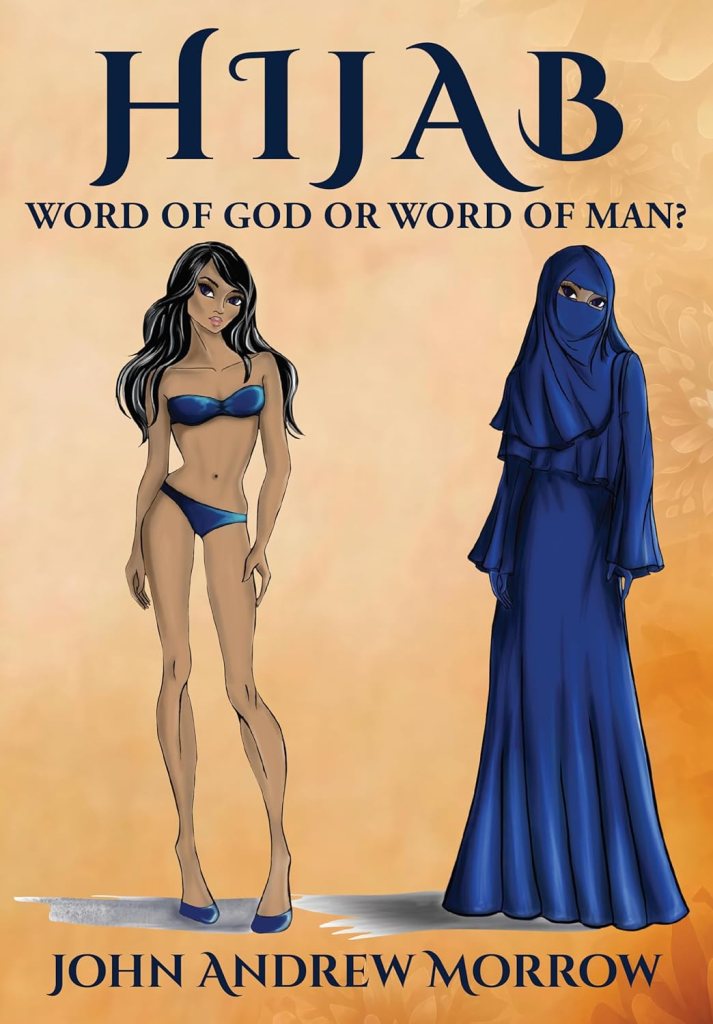
Hijab: Word of God or Word of Man? By John Andrew Morrow: BOOK REVIEW by Esther Nelson

Dr. Morrow’s book is a treasure chest of facts that also includes a wide variety of scholarly opinions regarding hijab.  His meticulous scholarship, laser-like vision, and accessible writing style clearly differentiate between what the Qur’an requires of women’s dress and what the jurists (overwhelmingly male) have enforced.  Morrow’s book would be an invaluable addition to Islamic Studies curricula in the academy, yet it’s comprehensible enough to a lay person interested in learning about hijab.

I thoroughly enjoyed reading this substantial volume.  I got a fuller picture of the meaning of hijab over time.  Dr. Morrow is clear—women ought not to be forced (legally or socially) to wear hijab.  Muslims are fond of saying: There is no priesthood in Islam.  There is no mediator between an individual and Allah.  Yet, many Muslim clergy enforce a patriarchal bent (that social system absorbed from their culture and society) to their juristic rulings that constrict women from making a free choice.

Continue reading “Hijab: Word of God or Word of Man? By John Andrew Morrow: BOOK REVIEW by Esther Nelson”

Women, Life, Freedom زن زندگی آزادی : Let’s talk about the protests in Iran by Anjeanette LeBoeuf

Trigger Warning: This post deals with violence towards women, violence towards humans, and egregious abuses of power.

Women, Life, Freedom; Zan, Zendegī, Āzādī;  زن زندگی آزادی has become one of the main slogans for an incredibly important and crucial global protest that is taking place right now. For over 2 months, life and death protests are taking place in Iran. The protests are focusing on the perpetual degradation of human rights with women bearing a large brunt. Many have declared the current state affairs as gender apartheid. We need to be talking more about what is happening with the people of Iran and how best to support them. The protests were started after the brutal murder of a woman due to a portion of her hair being visible outside of her hijab.

Continue reading “Women, Life, Freedom زن زندگی آزادی : Let’s talk about the protests in Iran by Anjeanette LeBoeuf”

Fasting During Covid-19 by Jamilah Ali

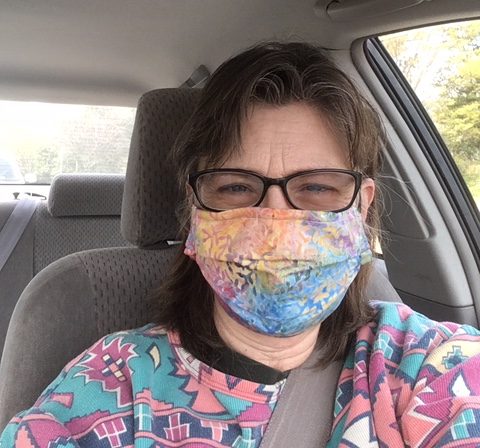
My beautiful mask was made by my sister-in-law, Gloria

“O you who believe, fasting is prescribed for you as it was to those before you, that you may (learn) self-restraint.” Quran 2:183“

This month of Ramadan 2020 is auspicious for me as it is my 30th year of fasting after I converted to Islam in late 1989. For those who do not know, Ramadan is a month of fasting which Muslims are instructed by God to observe unless sick, pregnant or traveling. We are allowed breakfast before dawn and then no food, drink or sexual intercourse during the daylight hours.  Fasting includes your speech; not to lie, argue or backbite.

The fasting hours in my locale this year are from 5 am to 8 pm.  The evening meal after the fast is called iftar and is usually a time to gather at the mosque or friends’ houses to eat together. During Ramadan there are extra evening prayers and the whole Quran is recited. Ramadan is based on the lunar calendar, so the date moves up by 11 days each year. At the end of the month we have community prayer, a sermon and a three-day celebration called Eid.

2020 is like no other Ramadan in memory. The irony is not lost on many of us fasting this year that God timed it this way. During the pandemic, quite surprisingly I am more connected than ever. Normally, as a Progressive Muslim the month is a little lonely for me. Usually my girlfriend is supportive, but not to the point of fasting with me. We had a group who met together to read Quran, but we never completed the effort in full measure due to logistics. We would meet for an iftar every year at a member’s home.  I may go at least once to break my fast at the traditional mosque. Usually Eid was the celebration we would look forward to, meeting with the whole community for prayer and then out to breakfast wearing our best outfits.

Continue reading “Fasting During Covid-19 by Jamilah Ali”

What I Learn from Women in Southern Morocco by Laura Shannon

I feel deeply fortunate to be able to travel regularly to southern Morocco. In Taroudant in the Souss Valley, and further south in the Anti-Atlas Mountains, my groups of students have the chance to discover women’s cultural traditions including music and dance, weaving and embroidery, household and healing rituals. In the seven years I have been leading these tours, women have joined me from a dozen different countries and as many different faiths, and most of them end up feeling at home here just the way I do.
What makes southern Morocco so special? Many threads come together to create the extraordinary ambience which permeates this part of the country. First of all, there is the Berber influence: a large percentage of Moroccans in the South are Berbers, and many elements of ancient North African Berber culture, with roots in Neolithic times, remain percepible beneath the relatively recent overlays of Arabic culture and Islam.

Continue reading “What I Learn from Women in Southern Morocco by Laura Shannon”

“If All Knowledge Must be Reinterpreted, Why Not Religion?” Says Islamic Feminist

xcelina-feminismo.jpg.pagespeed.ic._RyiiQg3TR.jpg

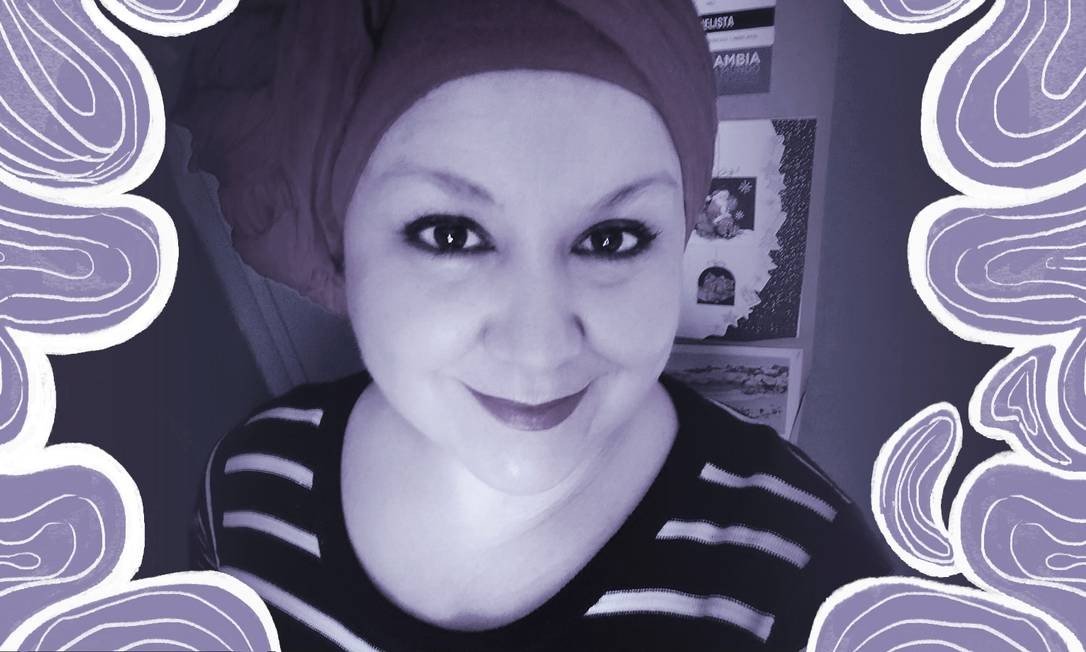
Vanessa Rivera de La Fuente is Muslim, feminist, and a human rights activist
Photo: Personal archive

Background: Journal O ‘Globo, one of the most important newspapers in Brazil, belonging to the transnational media group of the same name, published this interview with Vanessa Rivera de la Fuente on Islamic Feminism. Given its relevance to the discussion on the subject, it was translated by prominent Islamic feminist and scholar Keci Ali to share it with English-speaking readers.

The Muslim women’s movement has different agendas in accordance with the reality of each country. In Latin America, the Muslim Vanessa Rivera fights against prejudice about Islam.

by Isabela Aleixo*

Vanessa Rivera de La Fuente is Chilean and Muslim. Besides being an academic researcher, she’s also an Islamic feminist engaged with questions of gender, human rights, and social development. Vanessa has wide experience in social projects in Latin American countries.

In an interview with CELINA, she discusses the prejudices that Muslim women face in Latin America, explains the movement’s demands, destroys stereotypes, and declares: “I’m a woman and I demand to be treated as a person.”

Do you consider yourself an Islamic feminist? Why?

I consider myself a feminist woman, who lives feminism in all the distinct facets of her life: I’m Muslim; I’m a single mother; I’m a professional woman, an academic; and I’m a women’s rights activist. I’m feminist with all my life experiences. I think being a woman in male-dominated society is itself a political fact, so everything that I am as a woman can be resignified by feminism, including being Muslim. Islam is integrated into my life and my political struggle, which is intersectional. It’s based on the radical idea that all women are people and we deserve equal rights and a world free of violence.

Continue reading ““If All Knowledge Must be Reinterpreted, Why Not Religion?” Says Islamic Feminist”

Islam is my Louvre – Part II by Valentina Khan

I was once asked “why do I stay Muslim”? That was the question prompt, and it begged an answer…Reason #2: I believe Islam has vagueness in the Quran (I answered Reason 1 and 2 yesterday…)

What do I mean by all this vagueness?

First of all, Judaism and Christianity-based characters have made appearances in Islam by way of shared stories and prominent shared figures: Adam, Abraham, Isaac, Ishmael, Lot, Aron, Moses, Job, Jonas, Noah, Jesus, Mary and so on. Growing up Muslim, these prominent religious figures across the Abrahamic spectrum were names that were mentioned time and time again as part of the religious history and teachings. So I feel a sense of relief, that as a Muslim, we are not sailing alone in the sea of faith with no shared history with any other faith, but we are on the same island (so to speak) with our Jewish and Christian brothers and sisters. Continue reading “Islam is my Louvre – Part II by Valentina Khan”

Islam is my Louvre by Valentina Khan

I was once asked “why do I stay Muslim”? That was the question prompt, and it begged an answer. A deep, well thought out, articulate, and concise answer. Shamefully, at that time in my life, I was stumped. I was speechless a long while, because I couldn’t think fast or clear enough to answer with sincerity. At that time, whatever I wanted to say, just sounded like the “schtick” — for example “oh, yes I stay Muslim because Islam stands for peace, and I’m a peaceful person so this is my biggest reason..(next day – terrorist attack by “Muslims” totally negating my “why”)… and other similarly situated examples as such. So, I knew my why had to be more layered, more significant and pragmatic, yet exciting.

It’s been a few years since, and I have thoughtfully mulled this question over and over in my head. From my social context, as devout as both sides of my family are to the faith, I personally, grew up as a “SoCal” girl. For me this means, I have many non-Muslim friends, and I have influences from all spectrums varying from interfaith efforts to intellectual atheists. Growing up and still today, I have conversations with women, especially, that go beyond following any type of faith tradition. Many of friends within my circles have used their faith as a roadmap to a “higher frequency”. Tuning into the world, into humanity, eliminating draconian mindsets, and living today trying to be in touch with all of it, rather than just a section of “it.” Continue reading “Islam is my Louvre by Valentina Khan”

The Feminine in God by Vanessa Rivera de la Fuente

10268143_artmajeur-divine-feminine-womanhood-art-resting-in-gold-gioia-albano-2014-300-dpi-mod

An expert traveler knows that the best part of leaving is coming back. I am happy to open another year writing here again, after a necessary break, since writing is the way I maintain my strong ties with my critical spirit and this community that I cherish and has become through the years, my safe space.

Let me start with this. At the end of last year I was teaching a course on Gender, Women and Islam for social science students at a College in Mexico. One of the question I was often asked was: Madam, Is God a She? Continue reading “The Feminine in God by Vanessa Rivera de la Fuente”