

 Some years ago, womanist theologian Karen Baker–Fletcher asked about ancestors following a lecture I gave on the body and nature. I have since come to realize that ancestors are a missing link between the two: we cannot speak adequately of embodiment and interdependence in the web of life without recognizing the ancestors whose lives made ours possible. Our mothers quite literally gave us our bodies. All of our ancestors gave us their genes. Care and callousness with origins going back longer than conscious memory was imprinted on the psyches of our parents and grandparents and transmitted to us. All of our ancestors give us connections to place. While many black people in America can recite oral histories that begin with slavery in the United States, I come from a family where stories of origin for the most part were not valued or told. Both of my father’s parents lost their fathers when they were very young, and my father, who was raised Catholic at a time when Catholics were discriminated against, preferred to think of our family as “American now.” Like the hero of the film Lost in America, most members of my family dreamed of “melting right into that pot.” In the process we lost stories we need to help us to understand ourselves and the complex realities that “becoming American” involved. Continue reading “Body, Nature, Ancestors by Carol P. Christ”
Category: Major Feminist Thinkers in Religion
A Next Wave of Scholarship By Kwok Pui Lan
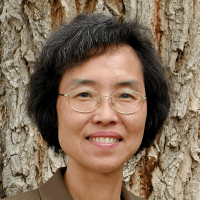 I came to the United States in 1984 to begin my doctoral studies at Harvard Divinity School. It was an exciting time to do feminist theology and religious studies. Womanist ethics just began to emerge, as Dr. Katie Geneva Cannon has just completed a dissertation on the subject at Union Theological Seminary in 1983. I count it as a blessing that she was teaching at the Episcopal Divinity School, just on the other side of the Cambridge Common.
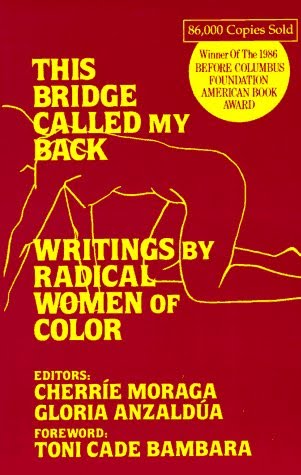 The mid-1980s saw the paradigm shifts in feminist studies in religion, as womanist, mujerista/Latina, Asian and Asian American women began to articulate their own theological understanding. If Womanspirit Rising (1979) was a reference text for our field, which contained essays by white women, we had the first reader by radical women of color, This Bridge Called Our Back(1981).
We began to discuss multiple oppressions and multiple identities, and the need to integrate race, class, and gender into our analyses. We challenged white women who have universalized their middle-class, white experience as if women were all the same. Continue reading “A Next Wave of Scholarship By Kwok Pui Lan”
Of Human Life* By Carol P. Christ
Watching the last episode of the Australian series Brides of Christ in which Catherine leaves the sisterhood of the convent because of her disagreement with Humanae Vitae brought me right back to the Yale Roman Catholic chapel and the folk mass I attended regularly. In 1968 just after the publication of Humanae Vitae, priest and co-graduate student Bob Imbelli preached a sermon on the doctrine of conscience, arguing that though it was incumbent on Catholics to think carefully about the papal encyclical on birth control, it was also the responsibility of every Catholic to follow her or his conscience on the matter. In the episode, Sister Catherine encourages a Roman Catholic mother of six who has already self-induced more than one abortion to take the pill, but the woman decides she cannot go against the church’s teachings. Catherine allows an editorial against Humanae Vitae to be published in the school newspaper even though she knows it will probably lead to the expulsion of one of her favorite students.
I had forgotten that Pope Paul VI issued the prohibition on birth control against the clear majorities of the Roman Catholic commissions instructed to study the matter. In the episode, Sister Catherine, told by her bishop that she can no longer express her own opinions on birth control, tries to explain to her students that Roman Catholics cannot use birth control because it is against “natural law.” This provokes one of the students to ask if people are not supposed to use birth control because animals don’t use it. This question sparked an “ah-ha” moment for me. Hmm, I thought, while “man” has invented birth control, “women” cannot use it because we are meant to remain “like the animals.” This debate really is about the question of whether women are human! Continue reading “Of Human Life* By Carol P. Christ”
Home for the Holidays By Carol P. Christ
Yesterday I was watching an episode of Grey’s Anatomy in which George’s father said to him, “you’re not like us, you’re a surgeon.” “And,” George’s father added, “you don’t like to do the things we like to do.” It is not easy not being like your family and not liking the things they like. When my mother was alive, she was the glue that held us together. Since then, my sheer presence in the lives of my father and my brothers and their families is disruptive. No matter that I try not to make waves, I make them all the same. I do keep my mouth shut about politics and religion and feminism. Even so, the last time I was home for the holidays my father asked me to stay in a hotel because having me in the house made him nervous and uncomfortable. To be fair, how would you feel if your daughter was 6 feet tall and you weren’t, she had a PhD and you didn’t, and even if she didn’t open her mouth at all, you knew that she didn’t agree with your political views or your everyday assumption that men make the final decisions on all important matters? Or if you were my brother who does not have a college education and who feels that women and minorities and gays have taken something from him? Or if you were my Mormon brother who is trying to keep his three daughters on the straight and narrow and not on the path chosen by their aunt? On the last Christmas day I spent at my brother’s house, I did not mention any of the obvious things, but it was hard to hide being astonished by the number of presents and the amount of money spent on them, and I simply could not force myself to watch football. Continue reading “Home for the Holidays By Carol P. Christ”
THE “G” WORD By Carol P. Christ
Recently, I saw the following line in a promotion for a book to which I contributed: “This volume includes voices from Christianity, Judaism, goddess religion, the Black church, and indigenous religions.” The editors of this book are to be strongly commended for expanding the dialogue in feminism and religion beyond the confines of the Christian hegemony in which it is still all too often framed. Nonetheless, I felt hurt and offended. I immediately wrote to the editors asking how they would feel if a book were promoted using the words: “This volume includes voices from Goddess religion and god traditions such as judaism and christianity.”
I am well aware that the conventions of English grammar dictate that the word “God” is to be capitalized when referring to the deity of the Bible and the Koran and in some other cases where a monotheistic deity is intended. I have been fighting this battle with editors of my work for years. Usually they automatically change “Goddess” to “goddess.” When I gained the courage to question this, an exception would usually be made for me, but the grammatical convention remained in force for other works by the publisher. Continue reading “THE “G” WORD By Carol P. Christ”
Progressive Religion to the Rescue By Mary E. Hunt
 The happy hoopla surrounding the lifting of Don’t Ask, Don’t Tell had a shadow side. Close inspection revealed a lot of partners and spouses of LGBTIQ military people who had been cloaked in secrecy and euphemism (“Meet my cousin”) for years. Now they, too, can come out. But they remain second-class citizens whose marriages don’t count because of the Defense of Marriage Act. They are not eligible for health care and other benefits routinely provided for dependents of military members. This injustice is a new and important front in the struggle for full human rights, one that has a unique religious twist that bears watching.
In late September, I attended a moving celebration hosted by the Military Partners and Families Coalition called “Beyond 61.” It was a celebration of the new lease on life that these folks experienced after the 60-day waiting period following the repeal of DADT. It took place at Arlington Cemetery, fittingly at the Women in Military Service Memorial, since women have a long history of unequal treatment in the military, as well.
Unaccustomed as I am to military anything (I continue to serve my country in the peace movement), I was impressed by the diversity among the participants and their singular commitment to justice. I was alarmed by the fact that, after decades of struggle, today’s young people are still subject to indignities due to their sexuality even when they enlist for military service. Given the current economic situation, their options for education and other kinds of work are limited. This only makes discrimination against the queer ones nastier. Continue reading “Progressive Religion to the Rescue By Mary E. Hunt”
In the Web of Life — No Exceptions By Carol P. Christ
Carol P. Christ is a founding mother in the study of women and religion, feminist theology, women’s spirituality, and the Goddess movement. She teaches in the Women’s Spirituality program at CIIS and through Ariadne Institute offers Goddess Pilgrimages to Crete. Her books include She Who Changes and Rebirth of the Goddess and the widely used anthologies Womanspirit Rising and Weaving the Visions.
Does God love me more than She loves my doggies? Does She love animals more than She loves trees and flowers? Does She love trees and flowers more than She loved the first cells that formed in the waters of our planet? Did She not also love the atoms and particles of atoms that coalesced to form the earth?
In her books Sacred Gaia and Gaia’s Gift Anne Primavesi questions the notion that the dialogue between God and the world began with “our entry onto the scene.” Primavesi argues that “human exceptionalism,” the view that the world exists for us, and that we are an “exception” to the world, has been and is the predominant Christian view. In the stories of Adam and Noah, God gives dominion over the creatures of the earth to man. Theologians asserted that of all the creatures that inhabit the earth, only man is in the image of God, and the image of God in man is found in his rational intelligence, which is shared with no other creature. Because he is in the image of God, man will escape death, which is the lot of every other living thing. Rather than challenging human exceptionalism, modern science furthered it, asserting that “matter” was “dead,” and that therefore it was right and just for man to subdue “nature” through technology and to harness it for his needs. Continue reading “In the Web of Life — No Exceptions By Carol P. Christ”
Running for the President of the American Academy of Religion By Kwok Pui Lan

Dr. Kwok Pui-Lan is an internationally recognized scholar and pioneer in Asian feminist and postcolonial theology. She teaches at the Episcopal Divinity School and is the 2011 president of the American Academy of Religion. Dr. Kwok has published extensively and is the co-editor of two volumes Off the Menu: Asian and Asian North American Women’s Religion and Theology (Westminster) and Empire and the Christian Tradition: New Readings of Classical Theologians (Fortress). Her other publications include Postcolonial Imagination and Feminist Theology (Westminster), Discovering the Bible in the Non-Biblical World (Orbis), and Introducing Asian Feminist Theology (Pilgrim).
“Pui Lan, would you be willing to run for the Vice-President of AAR?” the chair of the Nominations Committee of the American Academy of Religion (AAR) called and asked me back in April 2008.
The AAR, with 10,000 members, is the world’s largest professional organization of scholars in religion. The majority of its members are from the U.S., but approximately 17 percent are international scholars from over 70 countries.
It was a great honor to have been nominated—for the Vice-President would be in line to become the President in 2011. The problem was that there would be an election and I would have to compete with another candidate, who happened to be a professor at Harvard University.
I thought, “If I win, that’s good. But what happens if I lose?” Continue reading “Running for the President of the American Academy of Religion By Kwok Pui Lan”
Football as a Ritual Re-enacting Male Domination Through Force and Violence By Carol P. Christ
Carol P. Christ is a founding mother in the study of women and religion, feminist theology, women’s spirituality, and the Goddess movement. She teaches in the Women’s Spirituality program at CIIS and through Ariadne Institute offers Goddess Pilgrimages to Crete. Her books include She Who Changes and Rebirth of the Goddess and the widely used anthologies Womanspirit Rising and Weaving the Visions.
The other day when Paula McGee asked on this blog how Penn State students could rally in support of Sandusky, I was also reading a student paper quoting Rianne Eisler’s opinion that peace and environmental justice cannot be achieved in dominator cultures. Xochitl Alvizo commented that we should not be surprised by the reactions of the students as we live in a “rape” culture. I would add that we must examine the culture of male domination through force that is “football,” one of the “sacred cows” of American patriarchy, just as we need to examine the culture of hierarchical male domination of the Vatican in the context of child-rape by priests. Continue reading “Football as a Ritual Re-enacting Male Domination Through Force and Violence By Carol P. Christ”
Should Our Children and Grandchildren Live Better Than Us? And Whatever Happened to Our Dreams? By Carol P. Christ
Carol P. Christ is a founding mother in the study of women and religion, feminist theology, women’s spirituality, and the Goddess movement. She teaches in the Women’s Spirituality program at CIIS and through Ariadne Institute offers Goddess Pilgrimages to Crete. Her books include She Who Changes and Rebirth of the Goddess and the widely used anthologies Womanspirit Rising and Weaving the Visions.
Last Sunday on Meet the Press Tom Brokaw spoke about the breakdown of what he felt had been a common consensus about American life. He said that Americans are questioning the American dream which tells us that “our children and grandchildren will live better than us.” He found it disturbing that people now feel their children will not be better off than they were. The poor no longer see a way out of poverty and the middle class fear that their children will be unemployed for long periods in their lives, burdened with college debt, and unable to afford mortgages and college educations for their children. I have heard this idea expressed many times in the recent economic crisis, including by progressive journalist Adrianna Huffington.
What Brokaw and others do not mention is that a few generations ago, this American dream was the hope that one’s children would not live in poverty. Now, for the middle class if this dream means anything, it means having a bigger house, more cars, $2000 suits, botox and plastic surgery, expensive vacations, weddings costing tens of thousands of dollars, store-bought Halloween costumes, and so many Christmas presents that children step on their new toys to get to the tree for more packages. What Brokaw and others did not address is whether the desire for your children to have “more” than you had, once your family is out of poverty is a valid, good, or sustainable desire to have. Of course we should all hope that our children and children’s children will find employment and not live in poverty, but an endless upward spiral cannot be sustained and there is no evidence that it makes anyone any happier. Continue reading “Should Our Children and Grandchildren Live Better Than Us? And Whatever Happened to Our Dreams? By Carol P. Christ”
 Feminism and Religion