We Are Music by Natalie Weaver

Natalie Weaver editedWhen I was about eight years old, I dreamed one night that I stood inside the workings of an immense instrument, so big it filled the sky. It was crafted of wood and gold, and although there was no obvious source of light, it was brightly illuminated. I could have confused it for the inner workings of a clock except that I could hear the sweet music it produced resonating throughout its cavernous hollows. It was curious to me that there seemed to be no atmosphere there either to breathe or to carry sound. Within it, I did not perceive any movement. And, there was no actual melody that it produced, which could be sung or repeated. There was only an enveloping harmonic thrumming. The sound was multiplicative and voluminous although not piercing. I understood it in the dream to be cosmic, structural, primordial, and generative. When I awoke, I had the feeling that I had seen something divine. It was not heaven. It was not God. It was more like the instrument of the universe, or the universal instrument, created as a first work among creation

It was puzzling to me that I had such a dream because I was not then a musician. I felt that I understood its meaning, but I was surprised by its discontinuity with things in my normal frame of reference. My mother played piano, but she had no music theory in her background. She surely did not have any training in musical cosmologies, such as those produced in antiquity by the philosophers and theologians. I occasionally mentioned the dream over the years when context seemed to warrant it, but, more or less, I filed it away. Continue reading “We Are Music by Natalie Weaver”

Hildegard: A Saint Eight Centuries in the Making

hildegard & volmar

The visionary abbess Hildegard von Bingen (1098-1179) has long been regarded as a saint, with her feast day of September 17, yet she was only officially canonized in May 2012. Why did it take the Vatican over eight centuries to canonize this great polymath, composer, and theologian?

The first attempt to canonize Hildegard began in 1233, but failed as over fifty years had passed since her death and most of the witnesses and beneficiaries of her reported miracles were deceased. Her theological writings were deemed too dense and difficult for subsequent generations to understand and soon fell into obscurity, as did her music. According to Barbara Newman, Hildegard was remembered mainly as an apocalyptic prophet. But in the age of Enlightenment, prophets and mystics went out of fashion. Hildegard was dismissed as a hysteric. Even the authorship of her own work was disputed as pundits began to suggest her books had been written by a man.

Newman states that Hildegard’s contemporary rehabilitation and resurgence was due mainly to the tireless efforts of the nuns at Saint Hildegard Abbey in Eibingen, Germany. In 1956 Marianna Schrader and Adelgundis Führkötter, OSB, published a carefully documented study that proved the authenticity of Hildegard’s authorship. Their research provides the foundation of all subsequent Hildegard scholarship.

In the 1980s, in the wake of a wider women’s spirituality movement, Hildegard’s star rose as seekers from diverse faith backgrounds embraced her as a foremother and role model. The artist Judy Chicago showcased Hildegard at her iconic feminist Dinner Party installation.

hildegard judy chicago dinner party setting

Medievalists and theologians rediscovered Hildegard’s writings. New recordings of her sacred music hit the popular charts. The radical theologian Matthew Fox adopted Hildegard as the figurehead of his creation-centered spirituality. Fox’s book Illuminations of Hildegard of Bingen remains one of the most accessible and popular books on the 12th-century visionary. In 2009, German director Margarethe von Trotta made Hildegard the subject of her luminous film, Vision. And all the while, the sisters at Saint Hildegard Abbey were exerting their quiet pressure on Rome to get Hildegard the official endorsement they believed she deserved.

Pope John Paul II, who had canonized more saints than any previous pontiff, steadfastly ignored Hildegard’s burgeoning cult, possibly because he was repelled by her status as a feminist icon. Ironically it was his successor, Benedict XVI, one of the most conservative popes in recent history—who, as Cardinal Ratzinger, expelled Matthew Fox from the Dominican Order where Fox had served for thirty-four years—finally gave Hildegard her due. Reportedly Joseph Ratzinger, a German, had long admired Hildegard. He not only canonized her but elevated her to Doctor of the Church, a rare and solemn title given to only the most distinguished theologians.

But I believe the true credit for Hildegard’s triumph is due to the Benedictine Sisters at Saint Hildegard Abbey for keeping Hildegard’s flame burning.

Meditation:

This is drawn from Ann K. Gebuhr’s book, Hildegard!

Take some time to listen to and contemplate Hildegard’s beautiful musical meditation on the Holy Spirit, O ignis spiritus paracliti:

O spirit of fire, bringer of comfort,

Life of the life of every creature,

You are holy, anointing those perilously broken;

You are holy, cleansing festering wounds.

O breath of loveliness,

O fire of love,

O sweet savour in our breasts,

Infusing heart with the scent of virtue.

O clearest fountain,

In which we see

How God gathers the alienated

And finds the lost.

O breastplate of life

And hope of the whole human body,

O belt of honour, save the fortunate.

Guard those imprisoned by the enemy

And free those who are bound,

Whom the divine power wishes to save.

O mightiest course

That has penetrated all things

In the heavens and on earth

And in every abyss–

You reconcile and draw all humanity together.

From you clouds flow, wind flies,

Stones produce moisture,

Water flows in streams,

And the earth exudes living greenness.

You are always teaching the learned,

Who, through wisdom’s inspiration,

Are made joyful.

Thence praise be to you who are the sound of praise,

And joy of life,

And hope and greatest honour,

Granting the gift of light.

(This is Susan Hellauer’s translation from the insert booklet of Anonymous 4’s CD, The Origin of Fire: Music and Visions of Hildegard von Bingen.)

Read Hildegard’s poem slowly as a prayer, contemplating how the Sacred Flame, however you envision it in your own spiritual tradition, relates to your life.

Mary Sharratt’s Illuminations: A Novel of Hildegard von Bingen won the Nautilus Gold Award and was a 2012 Kirkus Book of the Year. Visit her website: www.marysharratt.com.

Songs for the Soul by Elise M. Edwards

Elise EdwardsDuring the Christian season of Lent, many Christians focus on spiritual practices or disciplines that bring them closer to God. This year, I did not really engage in this type of reflection until the end of Lent. I have been wrapping up my first year teaching college students full-time, I’ve been focused on several writing projects, and I’ve been traveling. I did not intentionally think about spiritual practices until I participated in a silent retreat before Holy Week and traveled first to spend the holiday with my family and then again to mourn and remember the life of my aunt.  I reflected on them when I most needed them.

Continue reading “Songs for the Soul by Elise M. Edwards”

The Soul is Symphonic: Reclaiming Sacred Music

https://i0.wp.com/media.tumblr.com/55c2821e2413450d48ec03b96e4cd426/tumblr_inline_mqcp4y6ZwN1qz4rgp.jpg

Here is a hymn of praise, a beautiful and intimate piece meant to be sung.

Hail, O greenest branch,

sprung forth on the breeze of prayers.

. . . . a beautiful flower sprang from you

which gave all parched perfumes their aroma.

And they have flourished anew  in full abundance.

The heavens bestowed dew upon the meadows,

and the entire earth rejoiced,

because her flesh brought forth grain,

and because the birds of heaven built their nests in her.

Behold, a rich harvest for the people

and great rejoicing at the banquet.

O sweet Maiden,  no joy is lacking in you . . . .

Now again be praised in the highest.

When I posted this sacred text on my blog back in 2008, I asked my friends who come from a diverse range of spiritual backgrounds to guess the author and the divine figure to whom the text is addressed. Some thought it might be an ancient hymn to Persephone. In fact, it is one of Hildegard von Bingen’s ecstatic odes to the Virgin Mary. This song, O viridissima virga, can be found on a number of CDs of Hildegard’s music.

Born in the rich green hills of the German Rhineland, Hildegard von Bingen (1098-1179) entered the religious life at the age of eight. A Benedictine abbess, she composed an entire body of sacred music, including seventy-seven songs and a musical morality play which can be regarded as our first surviving opera. A polymath well versed in science and the healing arts, she developed her own form of natural medicine that is still practiced in Germany today. During her own lifetime, she was most famous for her prophecies which earned her the title Sybil of the Rhine.

Since earliest childhood, Hildegard experienced profound visions which directly influenced her music, theology, and healing practices. Her visions revealed the feminine face of the divine, which is mirrored in her music. Many of her songs are addressed to Mary or female saints, such as Ursula. Even the Godhead itself appeared to her in feminine form. In Scivias, her first book of visionary theology, she writes, “She is with everyone and in everyone, and so beautiful is her secret that no person can know the sweetness with which she sustains people, and spares them with inscrutable mercy.”

Hildegard’s sacred songs are filled with a deep sensuality and reverence for the natural world. In her hymn O viridissima virga, she transforms the Latin word virgo, or virgin, into virga, or branch, addressing Mary as the most verdant and lushly abundant branch on Jesse’s tree. Hildegard was Christian, yet her music and visions have profound resonance for people from all spiritual backgrounds. The more I study mystics and visionaries, the more I am convinced that they draw on the true heart of divinity. They tap into the ineffable.

Sacred music was the bedrock of Hildegard’s spirituality. For her, song was the highest form of prayer, sacred harmonies rising like incense in a perfect offering to heaven. Hildegard believed that the soul is symphonic. Such is the sweetness of music that it banishes human weakness and fear, and draws us back into our original state of grace, reuniting humans to their divine Source.

Benedictine monastic life was structured around the Divine Office: eight times a day, from the dawn office of Lauds to the night vigil of Matins, the choir nuns gathered to sing the Psalms of David and other sacred songs. Near the end of her long life, Hildegard and her nuns at Rupertsberg Abbey were subject to an interdict, or collective excommunication. A supposed apostate lay buried in their churchyard and they refused to allow the ecclesiastical authorities to exhume this man and desecrate his grave. As a result of the interdict, Hildegard and her nuns were denied the Mass and the sacraments—a very old woman, Hildegard herself might have died without the final sacraments or Christian burial. Yet what infuriated her most was that she and her sisters were forbidden to sing the Divine Office. Sacred song was absolutely central to her identity as a religious woman. The interdict was lifted only shortly before her death. I imagine her singing until her dying day.

What relevance does this have for us today? When I listen to recordings of Hildegard’s music, I am struck by its ethereal beauty. Nowadays, for people across the spiritual spectrum, there seems to be a dearth of good music. Much of what is sold as meditation music or inspirational music seems shallow and insipid to me. A regular church-going Catholic is more likely to experience the guitar mass than the mysterious beauty of Hildegard’s music.

As contemporary spiritual people, are we to live our lives severed from the kind of music that can truly feed our souls?

What can we do to reclaim the power of sacred song? Few of us are gifted composers. Many of us cringe to even hear ourselves sing. How do we integrate sacred music into our spiritual practice? Most of us lead busy lives and the stillness of a monastic lifestyle remains an impossible dream. Yet we might find sung devotions at morning and twilight to be deeply enriching. We might start by listening to recorded music that inspires us. From my own practice, I’ve discovered that Hildegard’s music definitely works as a backdrop to meditation and contemplation. It soothes the soul and draws the heart and mind to a higher place. Over time we might gain the courage and will to take the leap to sing for ourselves. It’s not necessary to play an instrument. The voice  God gave us is enough. The next logical step is creating our own new music.

If we can’t find the music to nourish our soul, we must create it. Hildegard took the established tradition of plainchant and wedded it to her own vision to create hymns of incomparable beauty that still move us today. Most of us aren’t visionaries like Hildegard, but we can write our own heartfelt lyrics in praise of the Divine as we see Her. We can write songs to celebrate the sacred cycles of the year and the days we hold sacred. We can take ancient sacred texts and find a melody to carry the words. Medieval plainchant is beautiful in its simplicity. Or perhaps a haunting old folk air will inspire you.

When you offer your songs as prayers, sing like you mean it. It’s not a performance to impress other humans but a pure act of devotion. Meet together with friends in an informal devotional gathering. Share your songs. Inspire each other. Our modern sacred music will inevitably keep evolving as people compose new songs and add to the canon. We each have the opportunity to be part of this evolution.

Mary Sharratt is the author of Illuminations: A Novel of Hildegard von Bingen (Houghton Mifflin 2012, Mariner 2013), winner of the Nautilus Gold Award: Better Books for a Better World. Visit her website.


Sacred Music Discography:

Hildegard von Bingen:
11,000 Virgins: Chants for the Feast of St. Ursula, Anonymous Four, Harmonia Mundi, USA.
The Dendermonde Codex, Dous Mal/Katelijne Van Laethem, Etcetera.
A Feather on the Breath of God, Gothic Voices, Hyperion.
Canticles of Ecstasy, Sequentia, Deutsche Harmonia Mundi.
Voice of the Blood, Sequentia, Deutsche Harmonia Mundi.

The Quiet Voice of the Frame Drum by Oxana Poberejnaia

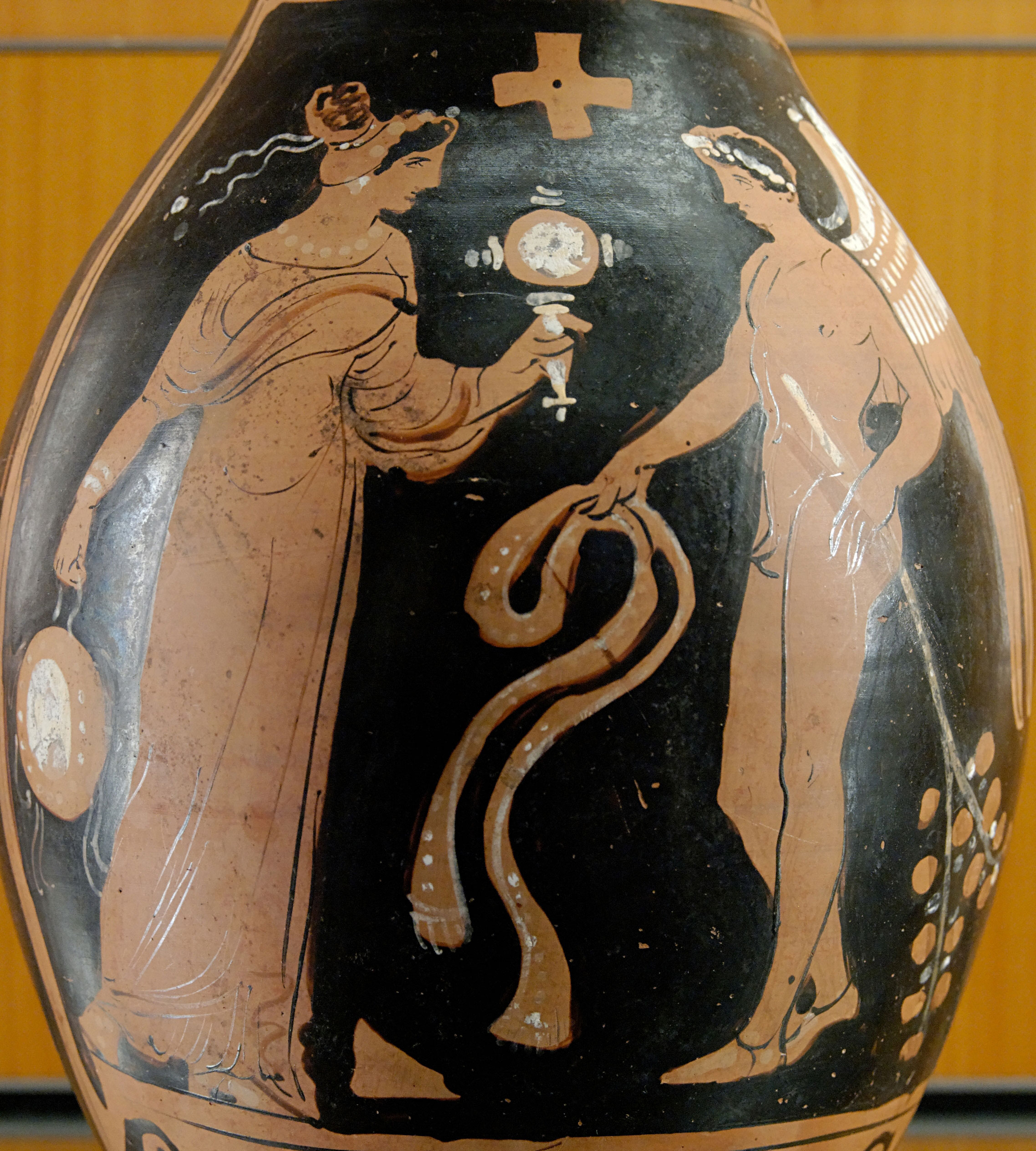
oxanaLayne Redmond passed away on 28 October 2013. Days before her death I received by post her signature Lotus Tambourine which Layne developed with Remo, manufacturer of world frame drums. Remo posted a tribute to her on her page as a Remo artist. Percussive Arts Society published an In Memoriam of her, along with the link to an article by Layne Redmond “Frame Drums and History”. Facebook and especially Women Frame Drumming page exploded with expressions of gratitude, sympathy and testimonials of how Layne changed people’s lives. Here is an account of Layne’s last summer by a person who supported her in her end-of-life transition.

Woman_mirror_tambourine_MBA_Lyon_L631FWLayne Redmond was intensely busy with two projects during this time: completing her film about drumming spiritual practices to dream awake Afro-Brazilian Gods and Goddesses, and preparing her seminal book When The Drummers Were Women for re-printing with new materials and photos. She put out appeals for both projects, including on Karen Tate’s show “The Voices of the Sacred Feminine” in June 2013, and people helped with their money and time.

Continue reading “The Quiet Voice of the Frame Drum by Oxana Poberejnaia”

“Enlightened Sexism” and The Media: The Cultural Attack on Feminism by Michele Stopera Freyhauf

Freyhauf, Feminism, Religion, Durham, Old Testament, Blogger, Bible, Gender, Violence, Ursuline, John CarrollWhat is a feminist mother of four daughters to do these days?  Look at our media and how girls and women are portrayed to our daughters, teens, and young adults. Then take a look at how media portrays the face of feminism, promoting every negative stereotype out there.  As I scroll through the magazines, listen to songs on the radio, and watch the programming targeted at girls in junior high and up, I cannot help but ask the question – Is the media trying to destroy feminism?

While this introduction might sound drastic, much truth lies behind the questions.  One merely needs to look around and watch former Disney Star, Miley Cyrus, twerk and make lewd gestures with a foam finger while grinding against a man, almost twice her age, as he sings about the blurred lines of sexual consent. When I saw the news stories and yes, watched the video, I was utterly mortified and stunned.  Gloria Steinem, in a statement that seems to condone this behavior stated that Cyrus’ performance (actions) is not a new phenomenon, but a product of American culture.  Instead of looking at it through the lens of degradation and influence, she defended the young star by saying:

 “I wish we didn’t have to be nude to get noticed. But given the game as it exists, women make decisions.  For instance, the Miss America contest… the single greatest source of scholarship money for women in the United States.  If a contest based only on appearance was the single greatest source of scholarship money for men, then we would be saying ‘this is why China wins.’ You know?  But that’s the way culture is.  I think that we need to change culture, not blame the people that are playing the game that exists.”

When Cyrus’ actions are boiled down to being “nude to get noticed,”  and we accept this behavior by merely chalking her performance up to  culture – isn’t it time to change culture?  Continue reading ““Enlightened Sexism” and The Media: The Cultural Attack on Feminism by Michele Stopera Freyhauf”

“Stand Up Straight” by Kelly Brown Douglas

When I was little my mother use to always tell me to “stand up straight.” It is probably because of my mother’s plea that one particular bible story became one of my favorites. It is a story that comes from the Gospel of Luke, Chapter 13.  In this story Jesus heals a woman who had been crippled and bent over for 18 years. As he does so he tells her “to stand up straight.” For me, these are some of the most powerful words that Jesus could have spoken to this woman. For not only did they signal that he had freed her from whatever the burden was that kept her hunched over, but they also restored her to a sense of dignity. These are simple, yet powerful words, for the many women in our midst who have for so long have not been able to stand up straight.

I think of the Sarah Baartmans of our world, like a Rachel Jeantel, who are made into a circus act because of their appearance. What happened to Sarah Baartman in 1810 as she was paraded across Europe so that people could examine her buttocks and genitalia—deeming her exotic and erotic, happened to Rachel in 2013 as she gave testimony in an American courtroom while people decried her appearance and mocked her speech—deeming her ignorant and illiterate. Continue reading ““Stand Up Straight” by Kelly Brown Douglas”

Eco-Theology and the Dave Matthews Band by Gina Messina-Dysert

Gina Messina-Dysert profileFeminist theologian Sallie McFague argues that we must give the earth the attention it is due and recognize its subjectivity rather than having an arrogant viewpoint that assumes we have the right to control the planet.  She states that by refusing to accept our place on earth we are sinning.  I think it is fair to say that the Dave Matthews Band has a perspective that is similar to McFague’s.  Song after song offers lyrics that acknowledge the earth as our holy Mother and demands that we recognize our place in the ecosystem and our personal responsibility for its continuation.  For instance, “One Sweet World” calls us to be cognizant of the fact that without the wonders of nature we would be unable to sustain ourselves.  We have taken the earth for granted and yet our very survival is dependent on the wellbeing of our planet.  In this song, DMB ponders the question “if the green should slip to gray, would our hearts still bloody beat?”

Continue reading “Eco-Theology and the Dave Matthews Band by Gina Messina-Dysert”

Having the world “in a jug with the stopper in your hand” by Kelly Brown Douglas

When we were growing up, my dad would often exclaim to my sisters, brother and me, “You got the world in a jug with the stopper in your hand.” He most often said this when he noticed us indulging in some pleasurable event: be it watching our favorite television show or savoring every bite of our favorite food.  We would laugh every time my dad said this. We did not know he was quoting a blues lyric, we thought this line was another example of our dad’s creative wit—there was no one that could make us laugh more than dad.  But, as creative and witty as dad was, this jug line was not original to him. This was a line from the song, “Downhearted Blues” a song originally recorded by blues woman Alberta Hunter and later covered by Queen of Blues Bessie Smith in 1923.  Indeed, as suggested by my father’s use of the line, this line would come to have signfiyn’ meaning within black culture and for black people. It would be this jug line that indeed made Downhearted Blues a mega hit within the black community.

Continue reading “Having the world “in a jug with the stopper in your hand” by Kelly Brown Douglas”

The Original Art by Elise M. Edwards

Storytelling is the original art as the desire to communicate is a common thread of all the other arts. I started reflecting on the stories – through various mediums–that have shaped me, and I wanted to use my post today to honor the herstories, the narratives of the women that have been meaningful to me.

On Tuesday night, I attended a gathering of storytellers.  I sat with two of my friends and listened to professionals and amateurs alike share stories.  The stories they told presented a range of narratives from Danish folktales to improvised children’s stories.  I was both horrified and enchanted by the content of their works.  While one story was a particularly violent tale of retribution and “justice,” another seemed to offer lessons about cooperation.

I thought about sharing a story of my own, but I didn’t feel prepared.  By the end of the evening, I was aware of the irony of my reluctance to share.  I was afraid I was not a good enough storyteller, yet I’d spent a good part of the previous two weeks traveling and catching up with old and new friends, which certainly involved animated retellings of the events going on in my life. Continue reading “The Original Art by Elise M. Edwards”