Today, I bring you an old old story from Scotland. It explains how and why winter became spring. Cailleach is another name for the Hag – the archetypal Crone. She represents winter. Brigit is the forever Maiden and stands for spring. There are many ways to spell her name, all of them correct. Ben Nevis is a mountain in Scotland and the word bairns means “babies”.
It’s always important to remember that myths come to us through retellings by countless bards and storytellers. They are layered one on top of the other like palimpsests and sometimes appear contradictory. I think of stories- particularly the ones who have existed for millennia as three-dimensional puzzles to be slowly played with and unlocked in increments. Furthermore, what we see and hear in a story means different things to us at different times and circumstances. There is always something new to be gleaned. Continue reading “Brigit and the Cailleach by Christine Irving”
Our human connection to Cow goes back to the days of prehistory. Aurochs (wild oxen), cattle’s wild ancestors, are found in prehistoric cave art throughout Europe, India and Africa. About 10,500 years ago modern cattle were domesticated from only 80 wild oxen in southeastern Turkey. This was not an easy task as wild aurochs are much bigger than cattle and not at all docile. But succeed they did and cattle became a foundation of human civilization. They provided not only food and clothing but also became beasts of burden for agriculture. An estimated 1.4 billion cattle exist today.
Mother Earth does not discriminate. She cares for all her children in all their varied forms. Our ancient ancestors considered Earth and its many geological elements to be feminine and/or associated with goddesses – from caves, to rivers, lakes and seas, to forests, to agricultural fields, to mountains.
I am the Sun – bringer of the warming light of day. I am Lightning –bringer of fire to Earth. I am Tlachtga who flew through the sky together with my father Mog Ruith in our glowing wheel. I am destruction and creation. I illuminate the darkness and point to the pathway of light that resides in each of you. Over time I made my final resting place at the Hill of Tlachtga, where the great fire ritual of Samhain is practiced, reminding the folk of the promise of Sun’s return at the end of the time of darkness and dreaming.
I love the concept of ancient mystery schools. I found a modern one in Maine in 1997. The mystery school experience allowed me to delve into life’s meanings and magic in a very visceral and personal way. In my youth, I had intensely studied and adored Greek myths. Through the activities of the school, I got to live the myths. I became my own hero. I got to do the work on transforming painful aspects of my life into my own personal wisdom teachings.
Fundamentally, mystery schools teach the lessons of Mama Nature in a very intimate and vital manner. Mother Nature, Herself, provides the original and powerful mystery teachings. These include lessons of spirit, creation, life/death/rebirth, oneness, and harmony. They also include fear, longing, love and blessing. Continue reading “My Mystery School Experience–Facing Life Part II by Janet Maika’i Rudolph”
Let me share with you the Goddess most honored as the Goddess of liminal time and space. It is our beloved Hekate, Great Goddess of the Three Ways, bridging Earth, Sea and Sky as we travel between worlds.
In modern times, She is seen by many as a “hag” or old witch stirring the cauldron. This idea was popularized by Roberts Graves’ book, The White Goddess. In early writings, however, she is portrayed as a beautiful and powerful maiden goddess.
“I come, a virgin of varied forms, wandering through the heavens, bull-faced, three-headed, ruthless, with golden arrows; chaste Phoebe bringing light to mortals, Eileithyia; bearing the three synthemata [sacred signs] of a triple nature. In the Aether I appear in fiery forms and in the air, I sit in a silver chariot.” (Chaldean Oracles)
She was the only one of the ancient Titans that Zeus allowed to retain her power after the Olympians seized control. She shared with Zeus, the awesome power of granting all wishes to humanity (or withholding, if she chose).
Many of us are quite familiar with the story of Persephone and Demeter, the Greek myth behind the changing of seasons each year.
“The story basically goes that Zeus arranges a marriage for Hades, the God of the Underworld and the Dead. Zeus gives Persephone to him. Persephone is gathering flowers in a field when she is tempted by the sight of a narcissus. The flower, however, is a trap set by Gaia, acting on the instructions of Zeus, and when Persephone picks the flower the earth opens and the god of the underworld, Hades, also known as Pluto, kidnaps her and rapes her. Only Hecate, a daughter of Rhea, and Helios, the sun god, hear Persephone’s cries.
For nine days, Demeter wanders throughout the world searching for her daughter, carrying blazing torches and neither eating, drinking or washing. No one, god or mortal, comes to aid her.
Bear has been important to human mythology and story for thousands of years. Some feel that Bear is the oldest European deity, as bones and skulls of bears have been found lovingly arranged on niches found in caves across Europe. The first written sentence from the Old Europe Script, invented around 6,000 years ago reads, “The Bear Goddess and the Bird Goddess are the Bear Goddess indeed.
Samhain is upon us. Halloween. The Day of the Dead. All Saints’ Day. All Souls’ Day. That liminal time of year when the doorways to what the Celts called the Otherworld, Annwn in Welsh, are open. In New York City, we have the 45th annual Village Halloween Parade, a queer extravaganza of puppetry, masquerade, and cross-dressing that draws some 60,000 participants and over 2 million onlookers. Elsewhere, we have children in costume and lawns covered with plastic skeletons and illuminated ghouls. Everywhere, if we’re lucky, we might catch a glimpse of “the piper at the gates of dawn,” the vision granted Rat and Mole in Kenneth Grahame’s The Wind in the Willows: “something very surprising and splendid and beautiful”—Pan the goat-god, boundary-crosser, Friend and Helper, trans-being.
Just last week—a few days after the New York Times reported on the Trump administration’s efforts to define transgender out of existence—I read for the first time Welsh writer Arthur Machen’s 1894 novella, The Great God Pan, today considered a classic of horror fiction. Condemned as “morbid” and “abominable” by most critics when it was first published, the tale was hailed as “un succès fou” by Oscar Wilde, recuperated in the 1920s by H. P. Lovecraft, and particularly praised more recently by Stephen King, who called it “maybe the best” horror story “in the English language.”
Original edition with cover illustration by Aubrey Beardsley
The “queer” tale (the word “queer” recurs frequently throughout) is told by a series of straight-laced Victorian men, each of whom is horrified by the unspecified behavior and bearing of a mysterious woman, Helen Vaughan. Readers are led to suspect that Helen is guilty of some sort of sexual excess or transgression, but nothing is specified until after her suicide, when the medical examiner reports that he was “privileged or accursed” to see the “skin, and the flesh, and the muscles, and the bones, and the firm structure of the human body that I had thought to be unchangeable, and permanent as adamant, beg[i]n to melt and dissolve”: Continue reading “Lifting the Veil – #WontBeErased by Joyce Zonana”
The legend of La Llorona has been a part of Hispanic culture in the Southwest since the days of the conquistadores. Though the tales vary from source to source, the one common thread is that La Llorona is a woman named Maria who is always dressed in a white gown, the spirit of a young Mexican mother who drowned her children in the river in a moment of rage or abandonment by her lover and then took her own life in her deep shame and sorrow. La Llorona’s disembodied spirit is said to haunt the rivers at night – especially the Rio Grande – where she can be heard weeping in remorse for her dead children. Children are cautioned not to go out after dark because La Llorona might murder or drown them too. Because the tale of the Weeping Woman originated with the Patriarchal Spanish conquest I have always been suspicious of the various versions of this story believing that its meaning has been distorted.
Immediately what comes to mind is the Mater Dolorosa, Our Lady of Sorrows, or Mother of Sorrows. All refer to the Virgin Mary, the only goddess left in Christianity. Our Lady of the Seven Sorrows is another name used to refer to this goddess. The Mater Dolorosa is also a key subject for Marian art in the Catholic Church.


 Today, I bring you an old old story from Scotland. It explains how and why winter became spring. Cailleach is another name for the Hag – the archetypal Crone. She represents winter. Brigit is the forever Maiden and stands for spring. There are many ways to spell her name, all of them correct. Ben Nevis is a mountain in Scotland and the word bairns means “babies”.
 This post builds on
 Many of us are quite familiar with the story of Persephone and Demeter, the Greek myth behind the changing of seasons each year.
 Just last week—a few days after the New York Times reported on the Trump administration’s efforts to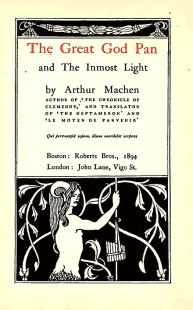

 Feminism and Religion