Telling Stories by Natalie Weaver

Human beings tell stories. This may sound like a simple truth.  To folklorists, literature professors, and people who work in media and in government, I would sound like a rather simple-minded child to be arriving so late in life at this obvious fact.  We tell stories.  And, just as the phrase “telling a story” might connote, our stories are not always true to life.   Our stories are descriptors and meaning-making efforts, largely rooted in our grappling with self and group identity.

Take, for example, the story of human life as exceptional in the animal kingdom.   As a child I would try to answer for myself the question of what made human beings distinct from other animals, since I had learned somewhere along the way that we were and are exceptional.  I considered the stock answer “reason,” which seemed to me sufficient to explain how human beings did everything, from the writing of language to the building of skyscrapers. As a student of theology, I enlarged upon the rational faculty to see it as the divine in the human, operating as the co-creative element with which human beings gain structural manipulation over our environments.  We make things after our image, just as God made us after God’s.   Continue reading “Telling Stories by Natalie Weaver”
Elen of the Ways and the Antlered Goddess (Part 2 of 2) by Deanne Quarrie

Deanne QuarrieClick here to read Part 1, published Sunday March 18.

Imagine a fairy chain stretched from mountain peak to mountain peak, as far as the eye could reach, and paid out til it touched the high places of the earth at a number of ridges, banks and knowls. Then visualize a mound, circular earthwork, or clump of trees, planted on these high points, and in low points in the valley, other mounds ringed with water to be seen from a distance. The giant standing stones brought to mark the way at intervals, and on a bank leading up to a mountain ridge or down to a ford the track cut so deep as to form a guiding notch in the skyline as you come up.
– The Old Straight Track by Alfred Watkins.

The Deer Goddess of the Ancient Caledonians were called Colossal Old Women. They were all local spirits, all with different names.  Their stores were similar, however as they went with the herds, milked them in their respective districts. Their deer were called “fairy cattle.” The deer were always in the care of the female. In many myths the fairy woman transforms herself into a deer, often antlered.

The bean-sidhe are mistresses of the place and are called the Cailleach or Cailleach Mhor (Huge Od Woman). They are the giants of Celtic myth who sang to the deer calling them “darling deer” or “beast of my love.”  All these giantesses are wild, showing no sign of domestication and they date back to Paleolithic times. Continue reading “Elen of the Ways and the Antlered Goddess (Part 2 of 2) by Deanne Quarrie”

Elen of the Ways and the Antlered Goddess (Part 1 of 2) by Deanne Quarrie

Kingdom of the Deer Concept by Wang Rui

Why would a goddess have antlers when only male deer have antlers? These ancient goddesses come from a time when people were closely connected with reindeer.  They were hunter gatherers and followed the Deer trods of the reindeer in their migratory patterns. They depended on the reindeer for food, shelter, warm clothing. They survived because of the reindeer.

Both male and female reindeer grow antlers. The antlers begin to grow on males in March or April, for females it is May or June. The male loses his antlers at the end of rutting season (late fall) and the females keep theirs until they calf in the spring.  They both grow new antlers every year and each year they grow in bigger. Continue reading “Elen of the Ways and the Antlered Goddess (Part 1 of 2) by Deanne Quarrie”

Horse – Symbol of Power and Freedom by Judith Shaw

judith shaw photoThe horse was first depicted in art about 32,000 years ago on the cave walls of southern France and northern Spain. Though  archeologists disagree as to whether the paintings are realistic depictions or symbolic markings, many concur that they are both. Perhaps our ancestors applied a numinous meaning to the horses and the symbols painted on those ancient cave walls.

Continue reading “Horse – Symbol of Power and Freedom by Judith Shaw”

Leia Should Get Her Movie by Trelawney Grenfell-Muir and Tallessyn Grenfell-Lee

This post is written jointly by sisters, Trelawney and Tallessyn, who have been thinking and discussing together about this. 

Contains Spoilers from the movie Star Wars VIII: The Last Jedi (TLJ).

I was born in 1974. Star Wars IV: A New Hope was perhaps the first movie I saw in a movie theater. Back then, I was too young to understand much more than that there were good guys, bad guys, and, yay – the good guys won. Except, for once, there was also a good gal. There was Leia. In a world of Spidermans, Supermans, Batmans, Lukes, Hans, Obi-Wans, and a deluge of male heroes of every kind…. There was Leia. 

It’s hard to overstate how much my sisters and I loved Leia. She was so much cooler than Luke or Han. Luke was whiny and immature. Han was irresponsible and selfish. But Leia – Leia had been fighting for justice long before either Luke or Han entered the picture, and Leia had the smarts, the skills, and the grit to get shit done.  Continue reading “Leia Should Get Her Movie by Trelawney Grenfell-Muir and Tallessyn Grenfell-Lee”

Badb, Goddess of Life and Death by Judith Shaw

judith shaw photoWith the ongoing occurrence of huge hurricanes, floods, mudslides, earthquakes, possible nuclear war and more in both the US and worldwide it seems that the wrath of the Goddess has been awakened. I felt the need to revisit the Celtic Triple War Goddess, The Morrigan. One of Her aspects is Badb, which translates as “Hooded Crow” and “One Who Boils.” She signifies fury, rage and violence. She brings war, death, chaos but also enlightenment, life, and wisdom.  Continue reading “Badb, Goddess of Life and Death by Judith Shaw”

Sacred Water by Molly Remer

“Drinking the water, I thought how earth and sky are generous with their gifts and how good it is to receive them. Most of us are taught, somehow, about giving and accepting human gifts, but not about opening ourselves and our bodies to welcome the sun, the land, the visions of sky and dreaming, not about standing in the rain ecstatic with what is offered.”

–Linda Hogan in Sisters of the Earth

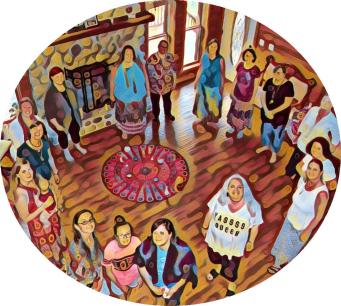
The women have gathered in a large open living room, under high ceilings and banisters draped with goddess tapestries, their faces are turned towards me, waiting expectantly. We are here for our first overnight Red Tent Retreat, our women’s circle’s second only overnight ceremony in ten years. We are preparing to go on a pilgrimage. I tell them a synopsis version of Inanna’s descent into the underworld, her passage through seven gates and the requirement that at each gate she lie down something of herself, to give up or sacrifice something she holds dear, until she arrives naked and shaking in the depths of the underworld, with nothing left to offer, but her life.
In our own lives, I explain, we face Innana’s descents of our own. They may be as difficult as the death of an adult child, the loss of a baby, the diagnosis of significant illness, or a destroyed relationship. They may be as beautiful and yet soul-wrenchingly difficult as journeying through childbirth and walking through the underworld of postpartum with our newborns. They may be as seemingly every day as returning to school after a long absence. There is value in seeing our lives through this mythopoetic lens. When we story our realities, we find a connection to the experiences and courage of others, we find a pattern of our own lives, and we find a strength of purpose to go on. Continue reading “Sacred Water by Molly Remer”

A New Story for the Summer Solstice by Barbara Ardinger

This year the summer solstice occurs on Tuesday, June 20 in the Northern Hemisphere. (In the Southern Hemisphere, it’s the winter solstice and it occurs on June 21.) For us in the Northern Hemisphere, the summer solstice is the longest day of the year. The word “solstice” means “sun stands still.” It’s when the sun reaches its highest point in the sky and seems to stand in the same place before it begins moving toward the winter solstice. We like to think that the primary solar deity is Apollo, but there’s a whole crew of solar gods who are born near the winter solstice and live for a season in great honor, after which they’re sacrificed, spend a season underground, and are reborn.
But before there were solar gods, there were solar goddesses. Patricia Monaghan’s New Book of Goddesses and Heroines (Llewellyn, 1997) lists 58 of them, from Aclla to Xatel-Ekwa, who have been honored all around the world. Monaghan also tells us that Cinderella and Rapunzel may have been goddesses before they became heroines of what the Brothers Grimm called household tales. (Not fairy tales—no fairies in their stories.) Cinderella might have been a goddess of fire, and fire includes the sun. Rapunzel might have been “a sun maiden who would bring spring if she were not held prisoner by the witch of winter” (p. 265). Let’s reimagine Rapunzel in a solstice story… Continue reading “A New Story for the Summer Solstice by Barbara Ardinger”

Do We Need Wonder Woman Today? by Barbara Ardinger

We all remember the protests—and the pink knitted caps with the pussy ears—that filled the streets of our major cities after the inauguration of the Troll-in-Chief. Some members of this FAR community went to those marches and wrote about their thoughts and feelings in this space. I don’t go to marches and demonstrations anymore, mainly because it would be majorly inconvenient if I had an asthma attack right in the middle of when other people are trying to do important things. But I always send my thoughts.

And so I have recently been thinking about a feminist hera who can inspire us resisters. (Note that “hera” is not only the name of the queen of the Olympians, but it’s also the feminine form of “hero.” I’ve heard some women say “shero.” I guess that works, but it’s an ungainly word. Let’s call our courageous women heras and superheras. But I digress.) I’ve been thinking about Wonder Woman since the election. Here’s what I wrote about her in my book Pagan Every Day. (Note that I’m expanding what I wrote in 2003.) Continue reading “Do We Need Wonder Woman Today? by Barbara Ardinger”

Tailtiu, Celtic Earth Goddess of Endurance by Judith Shaw

Judith Shaw photoThe Celts were fascinated by the number three – triple designs, images and triadic ideas. The Goddesses and Gods who related to the mysterious rather than the mundane nature of life were always worshiped in threes. Unlike the Greek triple goddesses who represent the maiden, mother and crone, the Celtic triadic deities reveal the mysterious, unexplainable aspect of nature and human existence. These triple Goddesses are doorways into the unknown and unknowable.
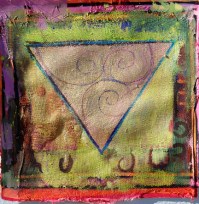
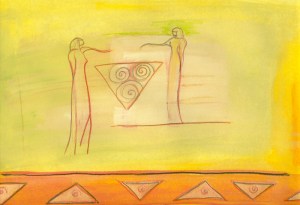
A Celtic Triad, painting by Judith ShawGuardians of the Triad, painting by Judith Shaw

Tailtiu is part of one of the Celtic primary triads. This triad of Anu, Danu, and Tailtiu is one of sovereignty reminding us of the cyclical nature of reality and the mysteries of the deep heart which transforms the ordinary into bright gold. They represent three different aspects of theTialtiu, Celtic Earth Goddess painting by Judith Shaw cycle of birth, death and rebirth. Anu is the source, Danu is the movement and Tailtiu is the endurance inherent in this cycle. Continue reading “Tailtiu, Celtic Earth Goddess of Endurance by Judith Shaw”