Notes from A Goddess Pilgrimage by Joyce Zonana

JZ HEADSHOT

The solar eclipse has had me sensing deep alignment with earth, sea, and sky, with my sisters and brothers and Self. This, then, from my 1995 journal of my first Goddess Pilgrimage to Crete with Carol Christ, a trip still engraved in my heart:

June 3  – Yesterday, anointing us with rose, lavender, or olive oil, Jana said, “Your journey has begun.” But for me it is this morning, with the purchase of this journal at the biblio on the square across from the hotel, where I sit now in the lobby, traffic noise outside, our group gathering, preparing for our journey . . . happy to be here . . .

Bleeding at the home of the Panagia, the all holy, the sacred mother, sacred myrtle, ancient tree of Aphrodite, Mary, black-bent nuns: we tie ribbons to the tree, sing, “all manner of things shall be well. Blessed be, walk in beauty.” And I am utterly in tears as I walk on the grounds of this ancient place, the birds singing everywhere, yet there is quiet, stillness, an ancient peace . . . A pilgrimage, a shrine, a very holy place.

Continue reading “Notes from A Goddess Pilgrimage by Joyce Zonana”

Inanna, Queen of Heaven & Earth Brings Gifts, by Judith Shaw

judith shaw photoIn the early 1990’s I discovered the compelling story of Inanna, the ancient Sumerian Goddess, translated and retold in the book, Inanna, Queen of Heaven and Earth by Diane Wolkstein and Samuel Kramer.  I was inspired to create a series of paintings from Inanna’s story.  

Continue reading “Inanna, Queen of Heaven & Earth Brings Gifts, by Judith Shaw”

A Healing Home of Dreams by Joyce Zonana

I had few expectations before my visit in the winter of 1999 to Cairo’s Rav Moshe Synagogue, also called the “Rambam.” I only knew it to be an obscure synagogue and yeshiva associated with the renowned twelfth-century theologian, sage, and physician, Moses Maimonides.

I left Egypt as an infant with my parents in 1951. Now I was finally back, hoping to experience the place that had shaped my family. Accompanied by a Muslim Egyptian friend, I walked the streets my parents had walked, attended services in the elegant downtown synagogue where they’d been married, tasted the familiar foods of my childhood, listened with delight to the melodious sounds of Egyptian Arabic. But seeking the Rambam was little more than a whim, sparked by a few lines in a Guide to Jewish Travel in Egypt. “Not on any tourist itinerary,” the brief blurb stated about the derelict synagogue in ‘Haret al Yahud, the city’s medieval Jewish quarter, far from where my parents had lived. Still, I had to go.

Continue reading “A Healing Home of Dreams by Joyce Zonana”

Star Tree – Star Goddess by Judith Shaw

judith shaw photo

In a world where humans were small and nature was big, surrounded by forests of trees of immense size and stature, it’s not surprising that the ancient Celts came to hold trees as sacred. Like many others, the Celts revered the World Tree or the Tree of Life as the mythic bridge between heaven and earth. The roots reach down and ground with the Earth while the branches spread their canopy up to the heavens.

Continue reading “Star Tree – Star Goddess by Judith Shaw”

Shapeshifting Goddesses by Judith Shaw

judith shaw photo

Magic, divine intervention, shapeshifting – what do these things offer the modern mind, concerned with time clocks, definitive proofs and skeptical disbelief? Yet to the ancients, shapeshifting was a well known tale, found in stories and mythologies across the world.

Continue reading “Shapeshifting Goddesses by Judith Shaw”

Darkness and Light by Judith Shaw

judith shaw photo“Deep in their roots, all flowers keep the light.” – Theodore Roethke
“Returning violence for violence multiplies violence,
adding deeper darkness to a night already devoid of stars.
Darkness cannot drive out darkness; only light can do that.
Hate cannot drive out hate; only love can do that.”
– Martin Luther King, Jr.

Continue reading “Darkness and Light by Judith Shaw”

A Light Story by Barbara Ardinger

Once upon a midnight dreary, while I pondered, weak and weary,

Over many a quaint and curious volume of forgotten lore—

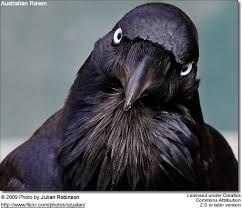
raven—first there was a dark eye at the window. Then a tap-tap-tapping. Then a long black beak came around the edge of the slightly open window. Then the raven hopped inside. “Oh, goody,” said a gravelly voice. “Eyeballs! I dearly love a tender, juicy eyeball.”
The wicked witch looked up from the quaint and curious volume she was perusing. “Oh, Kahlil,” she said, “those are grapes. And,” she added, “do come in.”

Already in, the raven speared a grape. “Pfui! I hate grapes! Back in the city,” he added, “there’s so many dead bodies lying in the streets all the scavengers think it’s a feast day everyday.” He paused and dropped the grape on the floor of the tiny room. “It’s awful in the city. It’s awful everywhere. No sign of yer husband, either. Witchie-pooh, how ya doin’ out here in the country?”

She sighed and pushed the book aside. “Not well. Not well at all. There’s no more room in my house for refugees, and yet they keep coming. The storehouse is nearly empty, and we need to find new seed to plant. I’ve put some of the men in charge of the farming. They’re waiting for the season to change.” She waved one hand over the table. “And I’ve still trying to learn how to be properly wicked. I’ve got all the books I can find. I’m looking for a spell that works. One that will bind el presidente. And his army. Kahlil, has it ever been this dark?”

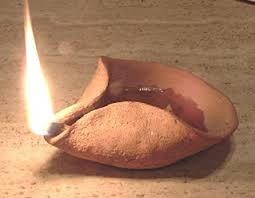
oil-lampThe raven looked around. The tiny room at the top of the tiny wooden house was filled with books and papers written in a dozen ancient languages, which the wicked witch was reading by the light of a sputtering oil lamp with a nearly empty reservoir. “Well,” he told her, “we’re only six weeks past the solstice. Yeah. It’s dark all over. Girlfriend, you could do with a little more light—” Continue reading “A Light Story by Barbara Ardinger”
Triple Goddesses in the Celtic World by Judith Shaw

Judith Shaw photoMany neopagans and modern Goddess worshipers mistakenly equate the triadic nature of some Celtic Goddesses with the Triple Goddess concept first popularized by Robert Graves in his book, The White Goddess. Graves stated that Goddesses were frequently found in triplets as Maiden, Mother and Crone. But there is nothing found in the ancient stories of Celtic Goddesses to indicate that they were known as Maiden, Mother and Crone. 
Continue reading “Triple Goddesses in the Celtic World by Judith Shaw”

Happy New Year by Barbara Ardinger

Here we are, beginning a new year. Let’s hope it’s a good new year. I grew up in a working-class family in St. Louis. We were Calvinist and Republican. I’ve escaped from the last two, but I still claim my working class background. My father was a lithographer, my mother, a housewife. And I will never forget the advice given every year (actually, more than once every year) by my Dutch grandmother: Whenever you start something new, start clean. Take a bath, brush your teeth, wash your hair. More than that, she meant clean your house. Wash dishes. Dust. Vacuum. Pick up stray books and pet toys. Gramma put the fear of god in me, at least about cleaning. Every time she took the bus down to visit me while I was in graduate school, I spent two days cleaning my apartment.

It’s thanks to Gramma that when I wrote a daybook titled Pagan Every Day, I started the year writing about home. Here’s the page for January 1:

Usually, we invoke Janus on this first day of the year. He was the Roman two-faced god of the doorway (ianus), the transition point between the safe indoors and the outside world, where anything could happen. Roman weren’t alone in believing that this opening needed to be protected. The mezuzah, which holds verses from Deuteronomy, is affixed to doors of Jewish houses, the façade around the doorway of a medieval cathedral is as elaborate as the altar, and nearly every pagan is taught to cut a “doorway” into the energy of the circle. As the doorway stands between inside and outside, so does the turning year stand between an old year we knew and a new year we don’t yet know. Janus gave his name to January and the Romans honored him all month. Before he came to the city, however, he was Dioanus, an Italian oak god whose consort was the woodland goddess, Diana. Continue reading “Happy New Year by Barbara Ardinger”

This Time by Joyce Zonana

jz-headshot

And the new sun rose bringing the new year.

Alfred, Lord Tennyson, “The Passing of Arthur,” Idylls of the King

It’s arbitrary, of course, this designation of January 1st as New Year’s Day on the Gregorian Calendar, but it’s also unavoidable.  Everywhere around us, people are gathering, celebrating, making resolutions, ringing out the old, ringing in the new.

The Jewish calendar’s Rosh Hashanah, near the Autumnal Equinox, always feels like the real New Year to me, with its time-honored rituals of renewal and return.  The ancient Persian New Year, observed at the Vernal Equinox and recalled in in the Jewish and Christian celebrations of Purim and Mardi Gras, also moves me.  And, like so many of my brother and sister pagans, I experience the Winter Solstice as a truly numinous moment, a time to release the past and welcome the future as the sun dies and is reborn.

This year, it’s especially meaningful to find Chanukah so close to the solstice, filling the week between Christmas and New Year’s.  I’ve been lighting my candles each night with particular pleasure.  Yet I’m happy, too, to join the rituals associated with the secular, popular New Year.  In my view, there can never be too many moments of renewal and return.

Continue reading “This Time by Joyce Zonana”