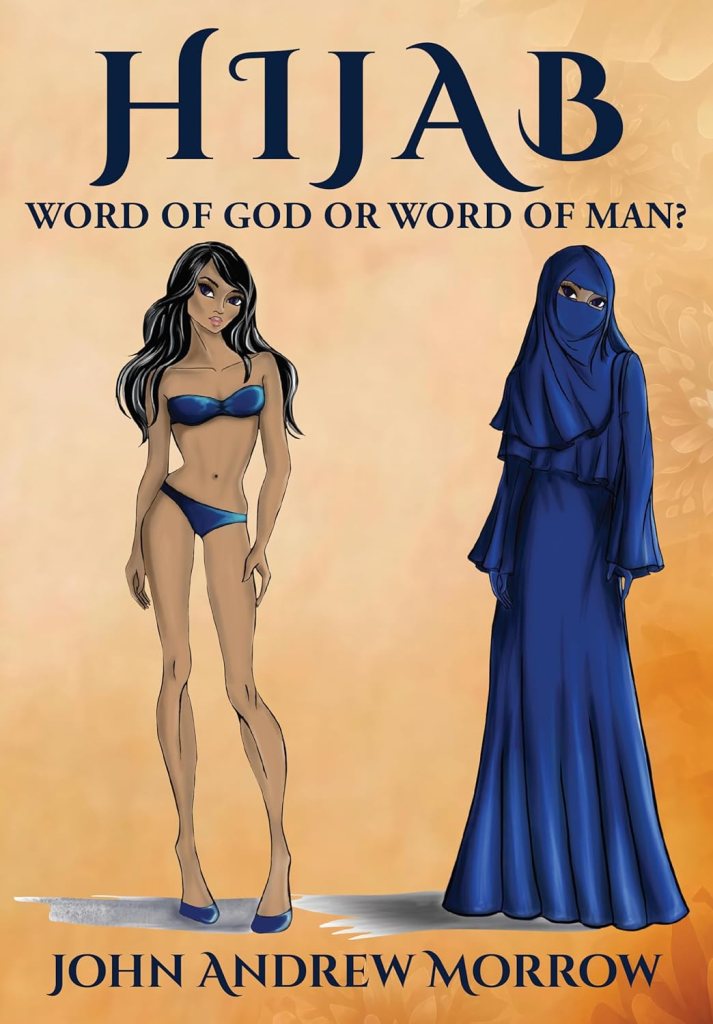
Hijab: Word of God or Word of Man? By John Andrew Morrow: BOOK REVIEW by Esther Nelson

Dr. Morrow’s book is a treasure chest of facts that also includes a wide variety of scholarly opinions regarding hijab.  His meticulous scholarship, laser-like vision, and accessible writing style clearly differentiate between what the Qur’an requires of women’s dress and what the jurists (overwhelmingly male) have enforced.  Morrow’s book would be an invaluable addition to Islamic Studies curricula in the academy, yet it’s comprehensible enough to a lay person interested in learning about hijab.

I thoroughly enjoyed reading this substantial volume.  I got a fuller picture of the meaning of hijab over time.  Dr. Morrow is clear—women ought not to be forced (legally or socially) to wear hijab.  Muslims are fond of saying: There is no priesthood in Islam.  There is no mediator between an individual and Allah.  Yet, many Muslim clergy enforce a patriarchal bent (that social system absorbed from their culture and society) to their juristic rulings that constrict women from making a free choice.

Continue reading “Hijab: Word of God or Word of Man? By John Andrew Morrow: BOOK REVIEW by Esther Nelson”

From the Archives: Earth-Spirituality in the Qur’an and Green Muslims by Elisabeth S.

This was originally posted on March 14, 2017

There is some very helpful guidance in the Qur’an for how we should and should not treat the earth. In my exploration of Qur’anic verses on the environment, I have found a great deal of Earth-love that I want to share.

The first idea is that the earth is not ours to trash and misuse recklessly or indulgently. Sura 2:284 says, “Whatever is in the heavens and in the earth belongs to God.” This sentiment is found throughout the scriptures. Individual wealth and the practice of financial profit and salary as reward has given us the illusion that, if we’ve earned the cash, we can do with it whatever we like. We can buy anything we want, show it off, hoard it, and then trash it. How often do we quell our suffering or attachments through consumerism as if there were no consequences? But we need to begin to shift to the perspective of honoring the earth as not something we are entitled to or even deserve. If we are supposed to be stewards of the earth, then fine. But it seems that selfishness and personal gain have distracted us, making us neglect our duty. The idea that the earth is a bestowed gift is embedded into the Qur’anic “golden rule”: “You who believe, give charitably from the good things you have acquired and that We have produced for you from the earth. Do not seek to give bad things that you yourself would only accept with your eyes closed” (2:267). Yes, we work the land to produce food, but not everything is within our jurisdiction.

Continue reading “From the Archives: Earth-Spirituality in the Qur’an and Green Muslims by Elisabeth S.”

From the Archives: Slavery and God/dess by amina wadud

Moderator’s note: This marvelous FAR site has been running for 10 years and has had more than 3,600 posts in that time. There are so many treasures that have been posted in this decade. They tend to get lost in the archives. We are beginning this column so that we can revisit some of these gems. Today’s blogpost was originally posted January 28, 2014. You can visit it here to see the original comments.

Well the Golden Globe awards have been handed out.  I don’t have a television, so I didn’t actually watch, but a quick google search gives the results.  Highest honors go to a movie about blacks as slaves and whites as criminals.  That’s appropriate. 

But this is feminism and religion, so let me get to the point.  It’s about a chance discussion on social media about the “merciful god” and historical institutions like slavery (holocaust, or oppressions like misogyny, homophobia, Islamaphobia and others…).

My view of the divine, the cosmos and of the world is shaped by my slave ancestry.  Recent area studies about Islam in America estimate that one third of the Africans forced to the Americas were Muslim.   My first African relative on US soil identified as Moor (another term used for “Muslim”).  But Islam did not survive slavery.

Continue reading “From the Archives: Slavery and God/dess by amina wadud”

Fasting During Covid-19 by Jamilah Ali

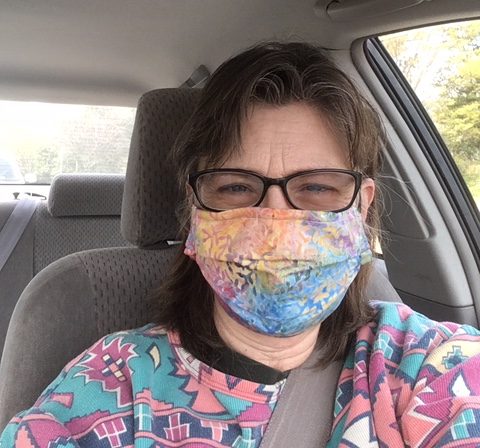
My beautiful mask was made by my sister-in-law, Gloria

“O you who believe, fasting is prescribed for you as it was to those before you, that you may (learn) self-restraint.” Quran 2:183“

This month of Ramadan 2020 is auspicious for me as it is my 30th year of fasting after I converted to Islam in late 1989. For those who do not know, Ramadan is a month of fasting which Muslims are instructed by God to observe unless sick, pregnant or traveling. We are allowed breakfast before dawn and then no food, drink or sexual intercourse during the daylight hours.  Fasting includes your speech; not to lie, argue or backbite.

The fasting hours in my locale this year are from 5 am to 8 pm.  The evening meal after the fast is called iftar and is usually a time to gather at the mosque or friends’ houses to eat together. During Ramadan there are extra evening prayers and the whole Quran is recited. Ramadan is based on the lunar calendar, so the date moves up by 11 days each year. At the end of the month we have community prayer, a sermon and a three-day celebration called Eid.

2020 is like no other Ramadan in memory. The irony is not lost on many of us fasting this year that God timed it this way. During the pandemic, quite surprisingly I am more connected than ever. Normally, as a Progressive Muslim the month is a little lonely for me. Usually my girlfriend is supportive, but not to the point of fasting with me. We had a group who met together to read Quran, but we never completed the effort in full measure due to logistics. We would meet for an iftar every year at a member’s home.  I may go at least once to break my fast at the traditional mosque. Usually Eid was the celebration we would look forward to, meeting with the whole community for prayer and then out to breakfast wearing our best outfits.

Continue reading “Fasting During Covid-19 by Jamilah Ali”

“If All Knowledge Must be Reinterpreted, Why Not Religion?” Says Islamic Feminist

xcelina-feminismo.jpg.pagespeed.ic._RyiiQg3TR.jpg

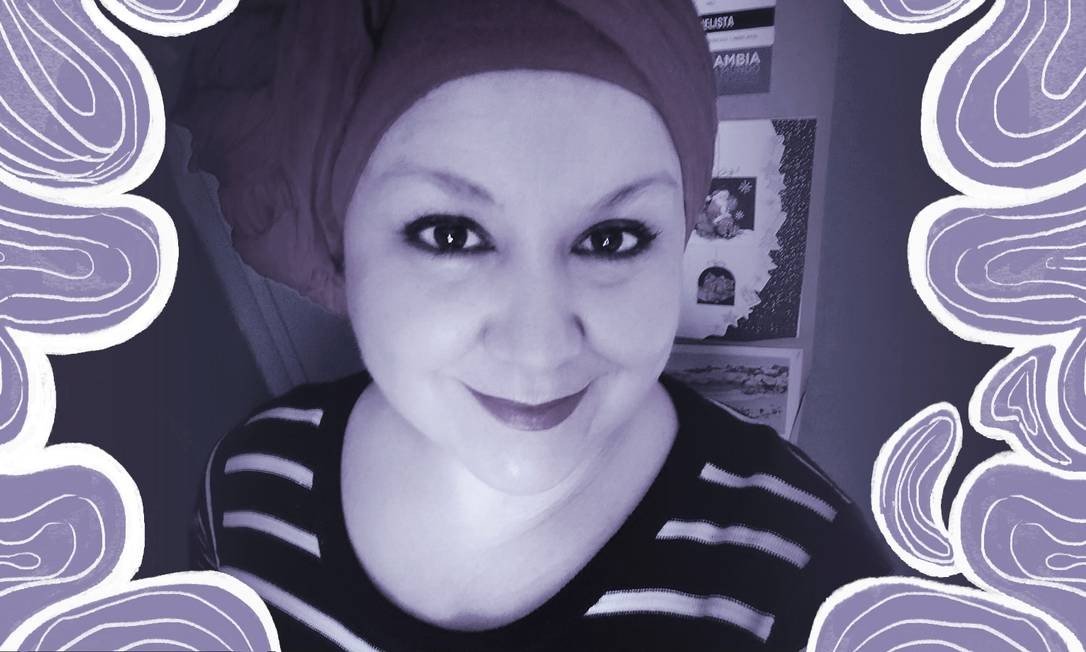
Vanessa Rivera de La Fuente is Muslim, feminist, and a human rights activist
Photo: Personal archive

Background: Journal O ‘Globo, one of the most important newspapers in Brazil, belonging to the transnational media group of the same name, published this interview with Vanessa Rivera de la Fuente on Islamic Feminism. Given its relevance to the discussion on the subject, it was translated by prominent Islamic feminist and scholar Keci Ali to share it with English-speaking readers.

The Muslim women’s movement has different agendas in accordance with the reality of each country. In Latin America, the Muslim Vanessa Rivera fights against prejudice about Islam.

by Isabela Aleixo*

Vanessa Rivera de La Fuente is Chilean and Muslim. Besides being an academic researcher, she’s also an Islamic feminist engaged with questions of gender, human rights, and social development. Vanessa has wide experience in social projects in Latin American countries.

In an interview with CELINA, she discusses the prejudices that Muslim women face in Latin America, explains the movement’s demands, destroys stereotypes, and declares: “I’m a woman and I demand to be treated as a person.”

Do you consider yourself an Islamic feminist? Why?

I consider myself a feminist woman, who lives feminism in all the distinct facets of her life: I’m Muslim; I’m a single mother; I’m a professional woman, an academic; and I’m a women’s rights activist. I’m feminist with all my life experiences. I think being a woman in male-dominated society is itself a political fact, so everything that I am as a woman can be resignified by feminism, including being Muslim. Islam is integrated into my life and my political struggle, which is intersectional. It’s based on the radical idea that all women are people and we deserve equal rights and a world free of violence.

Continue reading ““If All Knowledge Must be Reinterpreted, Why Not Religion?” Says Islamic Feminist”

Religious Practice and Epistemic Justice by Vanessa Rivera de la Fuente

feeling-measured-on-faith

One of the topics that has captured my deep interest during the last year is Epistemic Justice – and its absence, epistemic injustice – a concept which I reflect on often, since it has become a backbone idea in the approach of my work, my activism, my diagnosis of the situation of women in the global south and my vision of the world in which I would like to live. These reflections that I share with you do not intend to articulate a strictly academic presentation. They are my “thinking aloud” and don´t pretend to be completely right nor to establish a truth; rather they express the progress of a personal searching.

I speak as a Muslim feminist who loves to read and write about Feminism and Islam, but is not an academic nor aspires to be recognized as such in this field, although she writes papers and offers lectures in her own capacity on that matters. I speak as a community educator and social entrepreneur, who believes in feminism and spirituality as liberation tools. Since I accepted Islam, I took the experience gained in my work for the political empowerment of grass roots women to nourish an activism in the field of religion and gender justice. Continue reading “Religious Practice and Epistemic Justice by Vanessa Rivera de la Fuente”

Shariah is not a Law by Esther Nelson

I will never forget the day Nasr Abu Zaid (1943-2010), an Islamic Studies scholar and teacher extraordinaire, told me, “Shariah is not a law.”  In spite of his assertion, many people—both Muslims and non-Muslims—are convinced that Shariah is synonymous with archaic legal rulings that are at odds with democracy and modernity.


What is Shariah, then, if not a law?  When we see or hear the word Shariah, the word “Law” almost always follows.  Shariah literally means a path—a well-trodden path such as animals use on their way to a watering hole.  Shariah, then, can be understood as something that when embraced has potential to give life and sustenance.


Muslims believe that the Qur’an was revealed to Prophet Muhammad by the angel Gabriel circa 600 C.E.  That revelation—Muslims believe it to be God’s actual speech—took place over a period of approximately twenty-one years. The Qur’an contains Shariah (path) in the form of information, narrative, and poetry.  Since Shariah is essentially a path that leads to life, the critical question centers on how Shariah can be appropriated, leading us to the water that sustains.

Continue reading “Shariah is not a Law by Esther Nelson”

Earth-Spirituality in the Qur’an and Green Muslims by Elisabeth Schilling

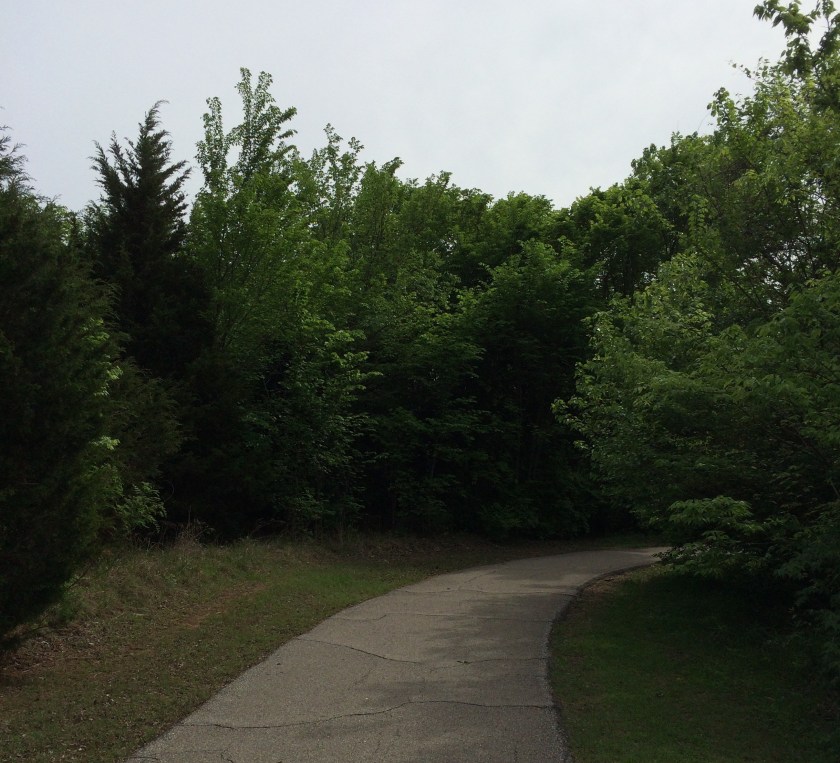
green pathThere is some very helpful guidance in the Qur’an for how we should and should not treat the earth. In my exploration of Qur’anic verses on the environment, I have found a great deal of Earth-love that I want to share.

The first idea is that the earth is not ours to trash and misuse recklessly or indulgently. Sura 2:284 says, “Whatever is in the heavens and in the earth belongs to God.” This sentiment is found throughout the scriptures. Individual wealth and the practice of financial profit and salary as reward has given us the illusion that, if we’ve earned the cash, we can do with it whatever we like. We can buy anything we want, show it off, hoard it, and then trash it. How often do we quell our suffering or attachments through consumerism as if there were no consequences? But we need to begin to shift to the perspective of honoring the earth as not something we are entitled to or even deserve. If we are supposed to be stewards of the earth, then fine. But it seems that selfishness and personal gain have distracted us, making us neglect our duty. The idea that the earth is a bestowed gift is embedded into the Qur’anic “golden rule”: “You who believe, give charitably from the good things you have acquired and that We have produced for you from the earth. Do not seek to give bad things that you yourself would only accept with your eyes closed” (2:267). Yes, we work the land to produce food, but not everything is within our jurisdiction. Continue reading “Earth-Spirituality in the Qur’an and Green Muslims by Elisabeth Schilling”

Offering My First Khutba: On Imaan & The Divine Presence by Vanessa Rivera de la Fuente

Vanessa Rivera First KhutbaFor the last 6 weeks, I’ve been living in Cape Town, South Africa. This has been a blessed opportunity to grow, to gain more knowledge, and to reach outcomes that are beneficial both for my work as an activist and for my life as individual. One of the challenges I took up, on Friday, July 24th, was to offer my first Khutba ever: the text of which I share with you:

Invocation

I thank God for this day. I praise Allah for the paths I had to walk that led me to its light and the present day. I ask the protection of the Divine that lives in the essence of everything. and I invite my female ancestors to walk with me in this journey.

On Imaan and The Divine Presence

Allah speaks about Imaan (Faith) in the Holy Qur’an in Surat number 2 verses 1 to 5, which some scholars call “The verses of faith and belief.” I like especially ayat 2 that says:

“That is the book. There is NO DOUBT in it, a guidance to those who are truly conscious.” Another translation says, “Sure, without doubt, a guidance for those who are God-fearing.”

Let’s think a moment about this:

1.- Allah tells us that the Holy Qur’an is, without doubt, surely, with complete certainty, a guide. There Is No Doubt, that we can put our faith and trust in it, and we won’t be deceived. That’s a beautiful aspect of Faith. We can trust in the promise of Allah that the Qur’an is… without doubt… a guide, a path of spiritual growth and happiness in this world and in the hereafter.

2.- A guide to whom? Allah says in the Qur’an “For those who are truly conscious and God-fearing.” Reflect on this. What kind of Imaan is that? Being “truly conscious” is being aware, and this is to be awakened, alert, attentive,and  in possession of knowledge with our senses and reasoning functioning properly. Then, this is not a blind Faith, but a conscious Faith, an Imaan over which we have direct and personal accountability. Then, the Qur’an is certainly a guide to those who are God-fearing, meaning those who are aware and accountable for their faith; for those who have come to certainty after an effort of conscious reflection, because, as God says in the Qur’an: “Truly in that there are signs for a folk who reflect” (45:13). There is no Imaan without a personal Jihad in matters of belief. Continue reading “Offering My First Khutba: On Imaan & The Divine Presence by Vanessa Rivera de la Fuente”

Islam, Ali, and Reformation by Kile Jones

Kile JonesDoes Islam need a reformation? The ever-controversial Ayaan Hirsi Ali’s new book Heretic: Why Islam Needs a Reformation Now argues that it does. Do you agree with her? Or do you find problems with the way Ayaan Ali frames the discussion?

I ask these questions a few weeks after the first all-women’s mosque was opened. It has also only been a short time since Muslims for Progressive Values (MPV), headed by Ani Zonneveld, sent an open letter to Salman bin Abdul Aziz, King of Saudi Arabia. These, and the innumerable condemnations of the Charlie Hedbo shootings, remind us that this “reformation” Ali is looking for is not entirely absent. Continue reading “Islam, Ali, and Reformation by Kile Jones”