

 The sun was setting on an early Friday evening in October 2008 as I pulled into the parking lot of the Iowa Correctional Institute for Women, a maximum level security prison housing nearly 700 inmates. Though the serene drive on Iowa’s main highway lasted a mere 40 minutes from Grinnell to Mitchellville, my co-teacher and I felt worlds away from our tiny utopian bubble of books and booze. As we gathered our teaching materials for a course we designed called “Feminist Playwriting,” we made sure not to bring in any contraband, one of the many precautions given during our orientation for students participating in Grinnell Liberal Arts in Prison, a program created in 2003 that allows students to design liberal arts courses in either a men or women’s Iowa prison. My experience interacting with an incredible roomful of women, some who would suffer behind bars for the rest of their lives, was needless to say a life changing experience. That semester ignited a fire in me for prison rights, which recently has manifested in a concern for the nexus of religion and prison. Continue reading “The Land of the (Not Quite) Free: Women and Religion Behind Bars by Amy Levin”
Category: Violence Against Women
Son of Man: An Updated Gospel Story of Jesus Set in South Africa by Michele Stopera Freyhauf
January 12, 2012

Son of Man is an updated story of the life of Jesus set in the fictional State of Judea that is modern day South Africa – complete with warlords and child soldiers. It could easily be mistaken for modern day Rwanda or Darfur with its modern issues and political overtones. Roger Ebert stated, “The secret of the movie is that it doesn’t strain to draw parallels with current world events – because it doesn’t have to.” The director draws parallels between the gospels and 21st century Africa. According to Dartford-May, “we wanted to look at the Gospels as if they were written by spin doctors and to strip that away and look at the truth.” The director “captures the rhythms of African life in both rural settings and sprawling townships.” “Feather-clad young angels offer an eerie echo and reminder of Africa’s lost generations.”
The movie also sticks with what Eric Snider calls “Traditional African trial music, dance, and costumes” as a type of worship or or allusion to Jesus’ godhood. Judea is in flux; warlords and corruption take center stage. Poverty, violence, and oppression affect the all of the people. The key idea is that Jesus is a freedom fighter – one that fights injustice and oppression. The director does not emphasize “Jesus’ divinity so much as his leadership, good sense and compassion.” Jesus is not violent and his followers, most of whom were former child soldiers, are encouraged to respond non-violently, which goes against their upbringing and training. Continue reading “Son of Man: An Updated Gospel Story of Jesus Set in South Africa by Michele Stopera Freyhauf”
January 11th is National Human Trafficking Awareness Day
 This information was originally distributed by WATER:
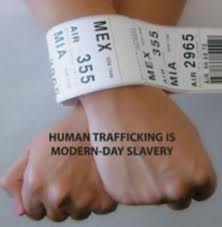
January 11th is National Human Trafficking Awareness Day. Human trafficking, referred to as modern-day slavery, is the fastest growing and second most profitable criminal industry in the world. More than 27 million women, men, and children have become victims of human trafficking for labor and sexual exploitation. Trafficking can and does occur in all parts of the world, including the U.S. Large sporting events like the Super Bowl attract human trafficking, especially for sexual exploitation of women. Read Mary E. Hunt’s new article on human trafficking entitled “Women and Children First.”
Stories of Trafficking
Excerpted from www.polarisproject.org
Amanda learned that her cousin was with a pimp who was advertising her for commercial sex on various websites.
A teacher became concerned about one of her students, a 14 year-old girl, and spoke with classmates who directed the teacher to multiple postings advertising the young girl for commercial sex on backpage.com. Continue reading “January 11th is National Human Trafficking Awareness Day”
Football as a Ritual Re-enacting Male Domination Through Force and Violence By Carol P. Christ
 Carol P. Christ is a founding mother in the study of women and religion, feminist theology, women’s spirituality, and the Goddess movement. She teaches in the Women’s Spirituality program at CIIS and through Ariadne Institute offers Goddess Pilgrimages to Crete. Her books include She Who Changes and Rebirth of the Goddess and the widely used anthologies Womanspirit Rising and Weaving the Visions.
The other day when Paula McGee asked on this blog how Penn State students could rally in support of Sandusky, I was also reading a student paper quoting Rianne Eisler’s opinion that peace and environmental justice cannot be achieved in dominator cultures. Xochitl Alvizo commented that we should not be surprised by the reactions of the students as we live in a “rape” culture. I would add that we must examine the culture of male domination through force that is “football,” one of the “sacred cows” of American patriarchy, just as we need to examine the culture of hierarchical male domination of the Vatican in the context of child-rape by priests. Continue reading “Football as a Ritual Re-enacting Male Domination Through Force and Violence By Carol P. Christ”
Dr. Mercy Oduyoye and the Ninth Annual Patricia Reif Lecture By Gina Messina-Dysert
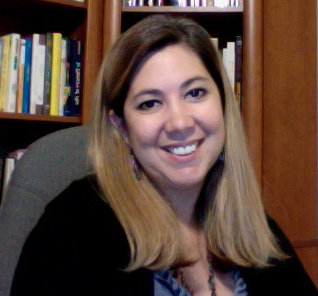 Dr. Mercy Oduyoye is the Ninth Annual Patricia Reif Lecture speaker and will present “Women and Violence in Africa: the Plight of Widows and the Churches Response” on Monday, November 14, 2011 at 7pm at the Mudd Theater on the Claremont School of Theology campus. Oduyoye is Africa’s foremost feminist theologian whose contributions have greatly impacted worldviews on gender and religion. I am familiar with Oduyoye’s work and today had the honor to meet her in person and have a one on one conversation about violence against women, feminism, and religion.
Oduyoye was incredibly gracious and entertained all my questions about her work, her insights in regards to violence against women, and her thoughts about feminism and religion and where the field is going. She explained that although some believe feminism is dead, the marginalization of women continues to be a serious issue. Although the issues women face change over time, women continue to be oppressed. According to Oduyoye, we must recognize that the issues women faced 50 years ago are different from the issues women face today; however this does not mean that gender-based inequalities have seized to exist. Rather, it means that the culture has manifested itself in a new way. We must come to recognize this and continue to work towards the eradication of gender-based violence. Continue reading “Dr. Mercy Oduyoye and the Ninth Annual Patricia Reif Lecture By Gina Messina-Dysert”
Confronting Sexual Harassment Ten Years Later: Speaking Out, Empowerment, and Refusing to Accept Defeat By Gina Messina-Dysert
 Much of my research and activism thus far has centered on rape culture*, sexual violence, and spiritual wounding. This being said, I have given little consideration, and have shared even less, of my own experience of sexual harassment perpetrated by a professor at the end of my undergraduate career. Although I had called myself an advocate for women who had been victimized by various forms of violence, sexual included, I was unable to advocate for myself when confronted with my experience. What’s more, although I have called for a speaking out of one’s experience of sexual violence in order to challenge the rape culture and begin the healing process, I have not been able to do this myself.
My professor sexually harassed me during my final semester of college in the very last course I needed to graduate. The first time he approached me he asked me to stay after class. Initially I was nervous thinking I had done something wrong; however I was surprised when he began to ask me personal questions. I was engaged at the time and Dr. X commented how lucky my now husband was. He then reached out, hugged me, and stroked my hair. I didn’t move, I was scared and wondered what was happening. After a few moments, I forced myself out of his arms and with my head down, unable to look him in the eye, I said I had to leave and darted out the door. My initial reaction was to downplay his inappropriate behavior and I convinced myself that I must have misinterpreted the situation. Continue reading “Confronting Sexual Harassment Ten Years Later: Speaking Out, Empowerment, and Refusing to Accept Defeat By Gina Messina-Dysert”
Mistaken “Miss Representation”: Women in the Media and Necessary Comprehensive Conversations By Jaji Crocker
 This post is written in conjunction with the Feminist Ethics Course Dialogue project sponsored by Claremont School of Theology in the Claremont Lincoln University Consortium, Claremont Graduate University, and directed by Grace Yia-Hei Kao.
Jaji Crocker received her MFA in Creative Writing from Northwestern University, and is now pursuing a dual degree at Claremont Graduate University, studying for her PhD in English and MA in Religion. Her research interests and approach are innately interdisciplinary as she explores the evolution of the ethics buttressing and changing religious philosophies and practices in North America and the Middle East, as well as the evolution of the theological imagination and feminist influences in post WWII American literature. Jaji continues to write fiction and teach creative writing.
Last week, a program graced the Oprah Winfrey Network (OWN) entitled “Miss Representation.” The piece discussed the damaging influence of the media on the psyches and behaviors of girls and women in North America, pointing to the media’s hypersexualized representation of women, emphasizing women’s bodies and clothing rather than their intellect and voice. The message being, a woman’s message – the words she speaks – doesn’t matter; it is trivial and cute and even, sometimes, dangerous. Continue reading “Mistaken “Miss Representation”: Women in the Media and Necessary Comprehensive Conversations By Jaji Crocker”
Finding my Voice through the Vagina Monologues By Anonymous
 This post is written in conjunction with the Feminist Ethics Course Dialogue project sponsored by Claremont School of Theology in the Claremont Lincoln University Consortium, Claremont Graduate University, and directed by Grace Yia-Hei Kao.
“Are you going to the Vagina Monologues try-outs tonight?” my friend asked me last year after class.
“I hadn’t planned on it,” I replied cautiously. Truth be told, the word ‘vagina’ made me uncomfortable. There were yearly productions of the Vagina Monologues at my undergraduate institution, but I never went. I thought it was a time when women gathered and performed monologues they had written, and I thought it demeaning to have these monologues named metonymically. I did not want to be associated with the Monologues: I was in favor of women’s equality, but I did not want to claim my sexuality in so visceral a manner. In my mind, the ‘Vagina’ of Vagina Monologues just referred to the actresses, not the content.
How wrong I was. Continue reading “Finding my Voice through the Vagina Monologues By Anonymous”
Criminalizing Miscarriages: Latin America’s Zero Tolerance Policy on Abortion By Michele Stopera Freyhauf
 Imagine suffering a miscarriage. All of us have or know someone who has suffered one; I had two. For me it was a terrible time and I still remember the day of loss and the expected due date. We all cope differently with this loss, but it is just that – a physical and/or emotional loss. Statistically 15-25% of women in childbearing years will suffer a miscarriage anywhere from 5 to 20 weeks gestation. In the United States, when we suffer a miscarriage we go to the hospital. Often times the visit results in a dilation and curettage (or D&C) to stop bleeding and possible infection. For me this was also done after the doctors removed the baby girl that was dead inside of my womb.
If this would have occurred in certain Latin American countries, especially in El Salvador, Chile, Colombia, Malta, Nicaragua, and even Mexico, the emergency room doctor would notify the authorities of my miscarriage and I would be arrested and jailed anywhere from 3-50 years for having an “abortion.” El Salvador even has a prosecutor’s office responsible for crimes against minors and women whose responsibilities are capturing, trying, and incarcerating women who have abortions and miscarriages. In this office, there are police, investigators, medical spies, and forensic vagina inspectors. Medical providers have an obligation to report abortions; this is focused more on young uneducated and impoverished women. For these women, there is no presumption of innocence; they are guilty. Continue reading “Criminalizing Miscarriages: Latin America’s Zero Tolerance Policy on Abortion By Michele Stopera Freyhauf”
Using the Bible to Promote and Impose Terror on Women By Michele Stopera Freyhauf
Terrorism is a worldwide issue, not specific to one religion. While we attribute the atrocities of 9/11 to Islamic extremists, Christianity has a long history of imposing terror, especially on women. Phyllis Trible’s book Texts of Terror describes texts in the Old Testament that causes harm to women, i.e. abuse, betrayal, torture, rape/gang rape, and mutilation (See Genesis 16, 21; 2 Samuel 13:1-22, Judges 11:29-40, 19:1-30). Texts such as these are used to validate violence against women, because of the fundamental view that the text is divinely revealed or God’s own words.
This phenomenon is not specific to the Old Testament. Writings in the New Testament are used to put women in their place, define their role in church, family, and society. The remedy for disobedience allows for violence to be committed against the offender. The most damning of these texts are derived from the Pastoral Epistles (1 Timothy, 2 Timothy, and Titus). Here, women’s place and role in society is defined. Women should be silent, submissive, and subservient to men. Women are to be veiled, dress modestly without adornment, no gold or pearls. Finally women are not permitted to teach and have no authority over men (See 1 Timothy 2:9-15). Continue reading “Using the Bible to Promote and Impose Terror on Women By Michele Stopera Freyhauf”
 Feminism and Religion