

 Reading the brilliant post Another Brick in the Ivory Wall by Natalie Weaver brought back some old feelings about being an ex-academic who finally let go of the search. While the wound reopened a bit, I can honestly say that I’ve come to a calm peace about walking away from my goal of becoming a professor. This was a messy, emotional process, but through the muck, a lotus emerged within me nurtured by equanimity, humility, peaceful detachment, trust, and surrender. Here’s my story.
When I completed my Ph.D. in Women’s Spirituality in 2015, I was on a MISSION to become a professor and finally become credible in the eyes of the world (or, maybe just my father). From the Bachelors to the Ph.D., I had 15 years of schooling under my belt. Throughout the entire journey, I was told that I would probably never secure a position as a professor in Religious Studies or Women’s Studies for a myriad of reasons (e.g., those topics aren’t relevant anymore, there isn’t any money in academia to fund those fields, they only hire from within, etc.). Of course, the scared parts of me believed them, but nevertheless, I persisted, because truth be told, I was called to study religion, spirituality, gender, god/dess, female-centric philosophies, and diverse ethnic worldviews (everything my degree exposed me to). It wasn’t necessarily a choice to study; I felt called to from a soul level. Continue reading “Walking Away from the Ivory Wall by Vanessa Soriano”
 I recently told my 4-year-old son the following, “son, I pray you fall in love with someone you call your best friend. I pray you both never cross the line and say mean and terrible things to each other, I pray you are not constantly apologizing for your bad behavior, I pray you will complement and enhance each other’s best qualities, and lastly, I really hope you fall in love with a teacher!”
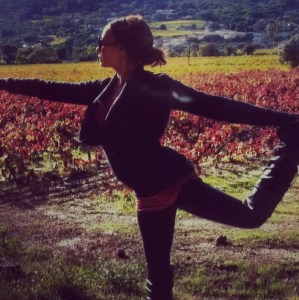 happened when, after a tedious and challenging few years of getting myself through law school, I rewarded myself with an entire summer off to become certified to teach yoga. Yoga got me through sticky times in my young adulthood, from soured relationships, to poor scores on my legal exams. It also kept my feet on the ground when I was flying high, whether from planning my wedding or completing my studies. Yoga was the antidote in my life. I cherished not requiring medication for all the different feelings I’ve had throughout my adult life; whether it was anxiety, depression, loss of focus, too much energy, or the run of the mill aches and pains, I always turned to yoga. The feeling of stretching and flushing out toxins, negative energy, frustration, while building strength and teaching myself how to breath, were all things I wanted to learn in more depth and, eventually, to teach.
  Finding joy has never been a priority for me in terms of how I structure my life. A long-term goal? Certainly, yes. My path to getting there, however, has been misguided. I’ve held the common belief that if I can achieve and succeed enough, joy–or at the very least, contentment–will find its way to me.
 Just the other day, I realized that discussion of my housekeeping has been a fairly regular conversation throughout my life. One of my earliest memories is being about four years old in my yellow bedroom on Ruth Avenue in North Canton, Ohio, sitting amidst what seemed like a mountain of stuff. I was trying to organize and put it away at my mother’s behest. I had a red bandana tied across the top of my hair, and I was pressed up against a large cardboard box decorated with Disney’s slapstick hero, Donald Duck. I was young and apparently had not learned how to differentiate all my consonants, because, as the story goes, I complained that all I ever did was “cwean, cwean, cwean!”
 I watched this short video on facebook about
 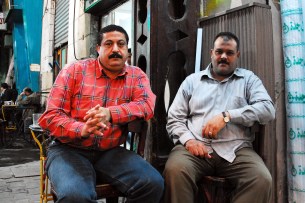 Then Sisa made the news and was honoured by governmental officials. There is footage in the report of Egyptian men watching that footage. Apparently, the men were impressed by Sisa’s efforts and they developed respect for her. One man, who knows Sisa personally, says for camera: “I treat her like a man, because she works like a man”.
 My idleness has been cured as I take a new job teaching college English to high school students at a charter school for eight hours a day. At exactly my 80th and last job application since January 2017, I received the offer just a few hours after my interview and had just a few days to pack up my life and leave. Traveling through desolate flatlands, relieved tornado season was quelled at late summer, I would finally embark on a full-time job, my last one having been almost a decade ago.
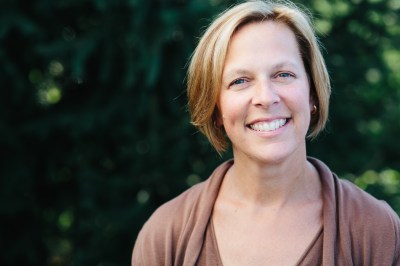 This time last year our move was for me to take a job. No more football. And a move not for football meant massive shifts in the daily life of our family.
 This continues my reflections on the Devidasis in
  I have called it, The Terrible Transition Year, this year of finishing dissertation, uprooting from home, moving cross-country, and starting a new full-time teaching job. Last year at this time I was in LA for a 7-8 week stay, away from home – which at the time was in Boston – writing dissertation nonstop. I spent the holidays apart from my family and shared in none of my traditional holiday celebrations as I intensely pushed forward to complete the dissertation. After (seemingly) endless edits back and forth with my advisor and second reader, I finished the dissertation just in time to successfully defended it in May.
 Feminism and Religion