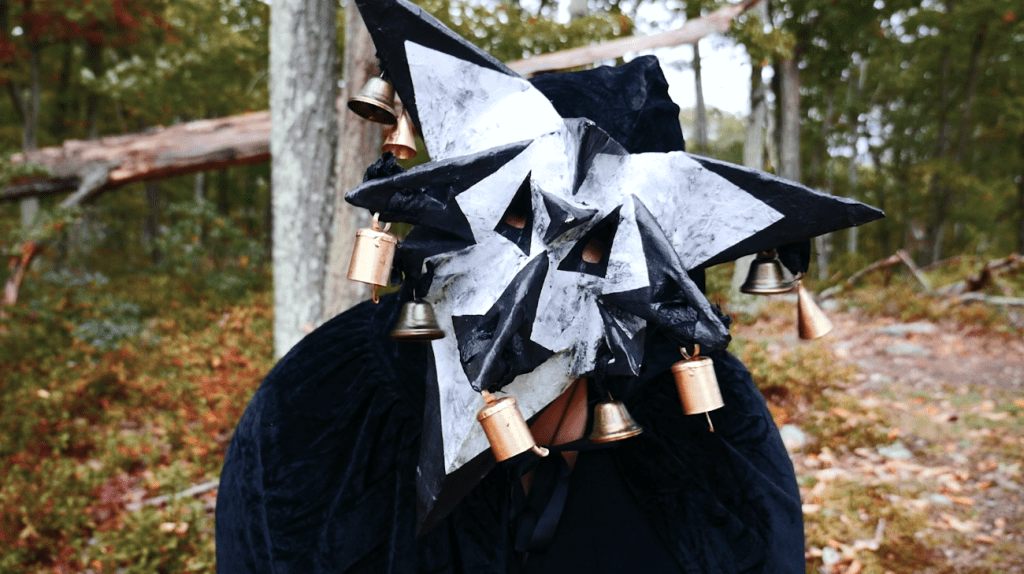
Rhiannon as Midlife Queen Mother by Kelle BanDea

We tend to think of Rhiannon as the fairy maiden on the white horse who entices Pwyll, the King and her future husband, into the Otherworld. Or she is the young mother who is unfairly blamed for the death of her own child until he is restored to her. This is Rhiannon’s story as it is most well-known, and she has become a beloved figure due to it. The image of the beautiful fairy woman on the white horse has become equated, to modern neopagan folks and Goddess-women, with the ancient Celtic and Indo-European horse goddesses. Of all the women in the medieval Welsh lore that we know as the four story ‘branches’ of the Mabinogi, Rhiannon is perhaps the most beloved.

But this is only half of the story.

Continue reading “Rhiannon as Midlife Queen Mother by Kelle BanDea”

FRANCESCA CACCINI (1587-1646): THE FIRST WOMAN TO COMPOSE AN OPERA by Maria Dintino

Moderator’s Note: We are pleased to announce that we are forming a co-operation with The Nasty Women Writers Project, a site dedicated to highlighting and amplifying the voices and visions of powerful women. The site was founded by sisters Theresa and Maria Dintino. To quote Theresa, “by doing this work we are expanding our own writer’s web for nourishment and support.” This was originally posted on their site on January 19, 2024. You can see more of their posts here. 

The featured image above is from the 2018 performance of Caccini’s La Liberazioine at the Morgan Library & Museum’s Gilder Lehrman Hall in New York City. Photo credit goes to Vincent Tullo of the New York Times.

I’ve always been an insomniac and of late I’ve become a regular listener of the app Calm’s sleep stories. One night I listened to an enchanting story called Songbird, written by Eurydice Da Silva and narrated by May Charters. Songbird is about Francesca Caccini, who is said to be the first woman to compose an opera, a musical genius and wonder. The next morning, I set out to learn more about her.

Continue reading “FRANCESCA CACCINI (1587-1646): THE FIRST WOMAN TO COMPOSE AN OPERA by Maria Dintino”

Time to Heal the Ancestral Wounds From the Burning Times by Marilyn Nyborg

My work has been in the areas of social justice and the empowerment of women. Until somewhere in 1990, I saw a series of films from women in Canada on the Early Modern European Witchcraft trials which included “The Burning Times”. (Still available on You Tube.)  The film talked about three centuries of Witch burnings. The narration and graphics really shocked me and awakened an interest.  Intuitively I recognized the way in which women have embedded the limitations and pain of that era from centuries ago.  I now know it to be called ancestral wounding. 

Not to say the abuse of women began there.  It didn’t.  But the intensity of three centuries of extreme violence on women have impacted us and cultures through time: sowing the limitations and lack of respect for women into cultures globally.

Continue reading “Time to Heal the Ancestral Wounds From the Burning Times by Marilyn Nyborg”

What an Outdoor Movie Taught me about Biblical Women By Alicia Jo Rabins

Once I went to a free outdoor movie in Miami Beach. The film was projected on the side of the giant concert hall. There was a grassy park with palm trees stretching out from the wall; families brought picnic dinners and cans of beer and stretched out to watch the movie once the sky darkened.

The movie was Star Wars, but as Princess Leah appeared, I was thinking about a different mythic canon. For over twenty years I’ve been studying and teaching stories of Biblical women from a feminist Jewish perspective, and after all this time, I was surprised to find that the way I feel while interacting with these stories was oddly, powerfully similar to the feeling of watching Star Wars projected on the side of a building on this Miami night.

Continue reading “What an Outdoor Movie Taught me about Biblical Women By Alicia Jo Rabins”

Human Being or Human Doing? by Mary Gelfand

As a cis white woman in her mid-70s, with a family history of arthritis, I am sometimes confronted by various challenging questions that I prefer not to explore. Who am I if I can’t take care of my basic physical needs? Do I have value if I can’t do my fair share of the household tasks? Who am I if I can’t contribute to my communities? Who am I if I can’t ‘do’? Can I learn to just ‘be’?

These questions swirling around in my head are indicative of the fact that, despite my best efforts, I am still shedding the ubiquitous patriarchal conditioning that tells me I have no value or worth unless I can do—something. Traditionally that something was bearing and raising children, cooking and cleaning house, making and mending clothing, growing food. I have long felt that I must ‘do’ in order to earn my right to inhabit this planet.  Patriarchy tells me I am only valued to the extent I am productive. As my body ages, being productive becomes harder. Many women struggle with these questions daily, especially older women like myself. And no doubt some men as well.

Continue reading “Human Being or Human Doing? by Mary Gelfand”

From the Archives: Writing: Changing the World and Ourselves. By Ivy Helman

This was originally posted on October 12, 2014

20140903_180423

I still remember the first time I read Mary Daly’s Gyn/Ecology. It awoke something within me. Her use of language, the power of her writing and the ease with which she created new words taught me so much about the world around me and about the way the language, and subsequently its use in writing, shapes lives, choices, abilities and destinies. She also taught me about myself.

I was hooked, but not just on Mary Daly. Shortly after I finished her book, I moved onto other feminists writing about religion like Katie Cannon, Judith Plaskow, Alice Walker, Carol Christ, Rita Gross, Gloria Anzaldua, Audre Lorde, Adrienne Rich, Margaret Farley and Starhawk to name just a few. All of them, in fact every feminist I’ve ever read, has shown me the way in which words have power and how words speak truth to power. Ever since, I’ve wanted to be the kind of writer whose words carry a power that not only affects people but also inspires a more just, more equal, more compassionate and more humane world. In other words, I wanted to be a writer activist.

Continue reading “From the Archives: Writing: Changing the World and Ourselves. By Ivy Helman”

Ritual Theatre for What Ails You by Caryn MacGrandle

Tanishka the Moon Woman at the Edinburgh Fringe Festival in August in Scotland

The power of the Eleusinian Mysteries: “so powerful that ‘people in Greco-Roman civilization came to Eleusis to be initiated every fall for almost 1300 years.”  The greatest “mystery” about the Mysteries is that they were secret; only the initiates knew what had happened there.”*

Yesterday, I spoke with Tanishka Moon Woman.  I have known Tanishka’s work since I began the divine feminine app a decade ago.  It was wildly popular.  I believe she had about 400,000 in her facebook group.  Tanishka has 27 years of writing books, hosting and teaching Red Tents amongst other online and in person offerings.  She travels extensively between Australia, Bali and the UK. 

Continue reading “Ritual Theatre for What Ails You by Caryn MacGrandle”

Listening to One Another: Part Two by Beth Bartlett

Part 1 was posted yesterday.

What are the conditions necessary to foster an environment in which we can truly listen to one another across differences?  Gathering insights from many perspectives[i], Alison Jaggar outlined the essential conditions for what she called Feminist Practical Discourse or FPD.  These include: 1) the creation of opportunities for participants to talk about their own lives, stressing the importance of first-person narratives and of others listening; 2) the equal importance of each person’s experience; 3) an openness to reevaluating one’s perspective; 4) the inclusion of people whose lives are different from our own and each other’s, especially those whose public voices have been most marginalized; 5) a nurturant, rather than an antagonistic environment, while still allowing for respectful disagreement; 6) participant qualities of self-discipline, responsibility, sensitivity, respect, and trust; and 7) the motivation of care and friendship. 

Continue reading “Listening to One Another: Part Two by Beth Bartlett”

Listening to One Another: Part One by Beth Bartlett

Listen is such a little, ordinary word that it is easily passed over.  Yet we all know the pain of not being listened to, of not being heard.“[i]  

“You heard me.  You heard me all the way.”  So goes the oft-quoted statement of one of the participants in a consciousness-raising (CR) group in which feminist theologian Nelle Morton participated.  It is a testimony to the power of what happens in CR groups – of hearing each other into speech. “When we are listened to, it creates us, makes us unfold and expand.  Ideas actually begin to grow with us and come to life,” wrote Brenda Ueland, the first female journalist in Minneapolis.[ii] This was the blossoming born of CR groups, where women began to discover truths long buried and watch them unfold and come to life. 

Continue reading “Listening to One Another: Part One by Beth Bartlett”

Ariadne and Me – Stumbling Toward the Divine by Arianne MacBean

The Sacred Myrtle Tree with its protective fence at Paliani Monastery

I went to Crete because I longed for some kind of communion with Ariadne. Each time I gathered in ritual with the women on my trip, I hoped She would speak to me, or that I would feel something and know that She was in me, or I within Her. At Paliani, I had these same wishes as I walked toward the over-1000-year-old sacred myrtle tree. Set back in the corner of the quiet convent, I was struck by the contrast between the tree’s black bark and surrounding black fence set against the hopeful flickering of silver ex-votos that filled each branch. I walked around the back of the tree on a slight upper landing and searched for a branch within reach. Finding a spot where I could rest my forearm, albeit awkwardly, I leaned in and waited for Her.

Continue reading “Ariadne and Me – Stumbling Toward the Divine by Arianne MacBean”