My friend Michelle Cameron’s powerful new novel, Beyond the Ghetto Gates, is a deep dive into women’s history that I thoroughly enjoyed.
This is a passionately compelling saga of an ancient way of life on the threshold of radical change. Young Mirelle longs to dedicate her life to running her aging father’s workshop, but her rabbi forbids her on account of her sex. Chafing against the constraints of both her gender and the suffocating strictures of the Ancona Ghetto, Mirelle sees no way forward but dutiful arranged marriage. Yet Napoleon’s armies, sweeping across Europe, threaten to change her way of life forever.
I learned so much from reading Michelle’s novel and from my conversation with her below. I hope my readers are likewise compelled! Reading is our great solace in this time of lockdown.
Mary Sharratt: Michelle, tell us about your new novel, Beyond the Ghetto Gates.
Michelle Cameron: Beyond the Ghetto Gates is a historical novel set during Napoleon Bonaparte’s Italian campaign (1796-97). When French troops occupy the port city of Ancona, freeing the city’s Jews from their repressive ghetto, two very different cultures collide. Mirelle, a young Jewish maiden, must choose between her duty – an arranged marriage to a wealthy Jewish merchant – and her love for a dashing French Catholic soldier. In the meantime, Francesca, a devout Catholic, must decide if she will honor her marriage vows to an abusive and murderous husband. Beyond the Ghetto Gates depicts how the Jews and Catholics of Ancona wrestle with ancient traditions, prejudices, and the challenges of a rapidly changing world.
MS.: How does your faith inspire your fiction?
MC: People often ask if I’m religious, because my historical novels focus on Jewish characters, issues of antisemitism, and the deep conflict between religious tradition and assimilation. I believe it’s precisely because I am a non-observant Jew with deep roots in my ancestral traditions and culture that I can wrestle with these issues in ways that a more religious writer could not. I’ve felt the attraction of being part of “the norm,” much as my characters do, that tug-of-war between religious identity versus being accepted in a secularized society, which is a constant theme in my fiction.
MS: What is the most surprising fact you’ve gleaned from your research into women in Jewish history?
MC: That Jewish women could divorce if their husbands fail in their marital duties. These are spelled out in the marriage contracts (ketubot) that Mirelle’s father creates:
Be my wife according to the law of Moses and Israel. I will work, honor, feed, and support you in the custom of Jewish men, who work, honor, feed, and support their wives faithfully. I will give you the settlement of ______ as well as your food, clothing, necessities of life, and conjugal needs, according to the universal custom.
The shocker here is “and conjugal needs.” Once, when speaking about my previous novel, The Fruit of Her Hands, I was questioned on the pleasure that Shira’s rabbi husband gave her in bed. There’s a common misconception that intercourse is a duty whose sole purpose is procreation. Luckily for me, the group included the rabbi’s wife, who explained that men are actually taught in the Talmud how to satisfy their wives sexually.
But since observant women are discouraged from studying Talmud, men who aren’t adequate to the task aren’t always condemned for their failures. But the fact remains that men are supposed to make the act pleasurable for both parties – and that they can be divorced if they don’t do so.
MS: How do you hope your work might inspire your readers to gain new insights about history and faith?
MC: I hope that, by learning about the cultural underpinnings and the historical struggles of my Jewish characters, my novels might promote greater understanding between all faiths.
MS: What is the one question you never get asked in interviews, but wish you did?
MC: Did you always want to write Jewish historical fiction?
In fact, I did not. My first book, In the Shadow of the Globe, a verse novel about William Shakespeare’s life and loves, was actually the type of book I thought I’d be writing. But then I discovered that I could trace my roots back to my 13th Century rabbi ancestor – Meir of Rothenberg – and realized his life story was the stuff of a novel. Writing that book set me on this path. It helps that I had a much more thorough grounding in Jewish history than most, because I lived in Israel during my high school years.
MS: What are you working on now? Will you continue to explore themes of women and Jewish history?
MC: I’m working on the second book in the series – which takes Napoleon and his troops on a bizarre expedition to Egypt and Israel. Many of the same characters from Beyond the Ghetto Gates will be part of this novel. So yes, I’ll be continuing to explore these themes.
MS: How would you like readers to connect with you?
MC: Via my website. This includes my various social media links, as well as a contact page, allowing readers to write me directly.
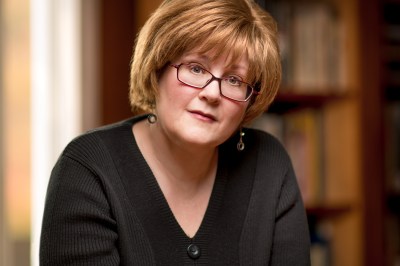
Author, Michelle Cameron
Mary Sharratt is on a mission to write women back into history. Her most recent novel Ecstasy is about the composer Alma Schindler Mahler. If you enjoyed this article, sign up for Mary’s newsletter or visit her website.


 I am a priestess of the divine feminine, ordained in the Fellowship of Isis. So how did I end up becoming ordained for a second time in the Christian Gnostic tradition? It seemed to me, that there were several paradoxes inherent in the situation. My questions and conflictions made me an utter pain to both my mentor and fellow classmates. Ironically, in the end I was the only one who stayed the course.
 Returning home to Maine in April has allowed me to experience winter turning her ancient wisdom filled face towards the maiden of spring. Although the month has been chilly, and until two days ago snow covered tree stripped mountains still held a dusting of snow, all nature is celebrating renewal.
 When I look at the two chapters on Goddess history in my book
  A few weeks ago a Slovak journalist reached out to me about the new Netflix four-part series entitled Unorthodox. In the email, the journalist wrote that they had read about my work as a Jewish feminist and wanted some insight into the new series. Their main question was: how accurate is the portrayal of the Satmar community?
 The meaning we derive from stories—especially religious stories we’ve heard and become familiar with since infancy—shape how we perceive and understand the world. Our beliefs are an amalgam of “my story” (my individual life experience in a specific context) shaped by another story. Who I am is heavily informed by particular narratives and their (often) codified interpretation.
 I am an annoying feminist. I annoy pretty much everyone about it, because I’m never NOT applying a feminist lens to every aspect of life: science (looking at you,
  My eleven-year-old son, Nathan, a fifth grader, is doing his best to deal with changes the coronavirus pandemic has brought to his life. Before this time, Nathan’s biggest daily worries have been keeping his school papers organized and staying on top of his sometimes rigorous homework assignments. Nathan has ADHD, which poses certain challenges to his learning and behaviors, making some tasks that have many intermediary steps nearly intolerable for him. Nathan’s learning is complicated by the fact that, while it has always been apparent that his learning style was different, his teachers and family (including me) have not always had the skills or patience to see Nathan’s exceptional gifts and insights from Nathan’s own point of view.
  I recently returned to Maine after what can only be called a harrowing journey from the Southwest. Grateful to feel beloved earth under my feet, I walk along the pine strewn woodland paths to keep myself sane. My animals have been ill, my neighbor was hospitalized briefly, other neighbors deliberately destroyed my garden wall crushing a baby balsam, and used this property as their personal ski slope, the threat of the C/virus looms – there are no words to describe this kind of exhaustion. As a PTSD survivor all my senses are on permanent scream. The simplest task has become monumental. And I am only one of so many…