Feminist Freedom: Finding, Following, and Painting Freya Stark by Angela Yarber

“There can be no happiness if the things we believe in are different from the things we do.” –Freya Stark

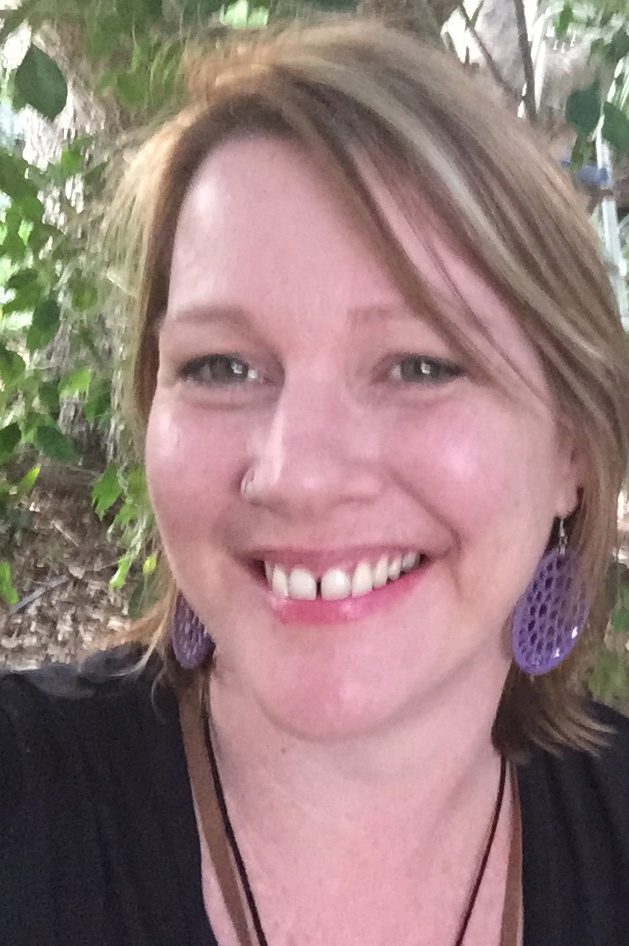
angelaOk. I’ll admit it. We all have our secret indulgences, don’t we? It is Valentine’s Day, after all. Shouldn’t we indulge a moment? After years of having my mind mired in the esoteric quandaries of the academy and the heart-yearnings of ministry, I needed an outlet, an escape. And when I couldn’t literally escape to some beautiful far-flung land via travel, I found my freedom nestled up with a good travel memoir. Travel essays, memoirs of finding oneself in another land, became my way of wandering, wondering, and learning about the world. A shelf full of dusty travel essays became my secret indulgence.

Along the way I decided to support feminist and women writers, pouring through every edition of The Best Women’s Travel Writing, sometimes in one sitting. Over and over I found these thoughtful writers referring back to one person, the pioneer of women’s travel, the founder of this far-flung freedom. Her name was Freya Stark. Years ago I began researching her life, reading The Passionate Nomad, and some of her many writings based on her travels all over the world.

Born in Paris in 1893, she was one of the first European women to travel and write about the Middle East, adding Arabic and Persian to the English, French, Italian, and Latin she already knew. There are tales of her riding camels through rebel territory, taking refuge in Bedouin camps, diving into shark-infested waters off the coast of Turkey simply because the water called to her and was too beautiful to avoid immersion, or in her old age (she lived to age 100), driving wildly in her hand-crafted “camper” through the Italian countryside. She lived boldly, going where few women had gone. She lived wildly, caring little about the restraints of decorum. She claimed, “It is the beckoning that counts, not the clicking latch behind you.” It’s no wonder that she inspired and empowered the many women travel writers that have followed in her fearless footsteps. Continue reading “Feminist Freedom: Finding, Following, and Painting Freya Stark by Angela Yarber”

Must Pluralism Be Noisy? by Esther Nelson

esther-nelson

On January 14, 2015, Duke University (North Carolina) announced that it would start broadcasting the Muslim call to prayer (adhan) from the bell tower of its campus chapel every Friday at 1:00 p.m.  This “moderately amplified” adhan would be sung both in Arabic and in English.

On January 15, 2015, Duke University reversed its decision.  The three-minute adhan would not be “moderately amplified” in the chapel’s bell tower every Friday after all, but would continue to take place in the quadrangle in front of the chapel and from there, students would proceed inside the chapel for their worship service–as they have been doing for some time.  Michael Schoenfeld, vice president for public affairs and government relations at Duke, said, “What began as something that was meant to be unifying [the call to prayer from the chapel’s bell tower] was turning into something that was the opposite.”  The university received hundreds of calls and emails–“many of which were quite vitriolic.”

Continue reading “Must Pluralism Be Noisy? by Esther Nelson”

The Goddess of Willendorf and Does My Uterus Make Me Look Fat? by Molly

editMollyNov 083

 “Loving, knowing, and respecting our bodies is a powerful and invincible act of rebellion in this society.”
~ Inga Muscio

I do not remember the first time I ever saw her, but I do know that I have loved the Goddess of Willendorf sculpture for many years. When someone uses the phrase, “Great Goddess” or “Great Mother,” she’s the figure I see. To me, she honors the female form. I love her full-figure and the fact that she is not “perfect” or beautiful. I love that she is not pregnant* and what I like best is that she is complete unto herself. She is a complete form, not just a headless pregnant belly. She represents a deep, ancient power to me.

In a past post for FAR, I wrote:

I have a strong emotional connection to ancient Paleolithic and Neolithic goddess sculptures. I do not find that I feel as personally connected to later goddess imagery, but very ancient figures call to something deep and powerful within me. I have a sculpture of the Goddess of Willendorf at a central point on my altar. Sometimes I hold her and wonder and muse about who carved the original. I almost feel a thread that reaches out and continues to connect us to that nearly lost past—all the culture and society and how very much we don’t know about early human history. There is such a solid power to these early figures and to me they speak of the numinous, non-personified, Great Goddess weaving her way throughout time and space.

via Echoes of Mesopotamia by Molly Meade |.

Continue reading “The Goddess of Willendorf and Does My Uterus Make Me Look Fat? by Molly”

Painting Women from Judges – Part 1: Jephthah’s Reflective Daughter by Melinda Bielas

Melinda BielasThe story of Jephthah’s daughter – found in the Hebrew Bible, Judges 11:29-40 – is a difficult story to read. The first time I read it, I was in my Christian high school Bible class and I could not understand why our teacher did not address the violence done by a father to his daughter. In my experience, Christians dismiss much of the violence done to women in the Hebrew Bible as evidence that ancient fathers, brothers, and husbands really did not care for their daughters, sisters, and wives. Since today men love the women in their lives, the ancient problem is no longer an issue, and we can continue with more pressing issues – or so the unspoken logic goes.

However, some feminist scholars – such as myself and Dr. Tammi Schnider – argue that it was common for fathers to love their daughters in the Hebrew Bible, and Jephthah is no exception. His daughter is his only relative in the text, and presumably the only person impatiently waiting for him to return from the war he led. Yet, because of the vow he makes to the deity – a vow the deity does not request or acknowledge – he sacrifices his only loved one. Why would he make such a vow? Why would his daughter go along with it? These are two of the questions I could not help but yell as I struggled with the text. Continue reading “Painting Women from Judges – Part 1: Jephthah’s Reflective Daughter by Melinda Bielas”

Has the Vatican Discovered that Women Should Be Running the World? by Carol P. Christ

So it is a [female] generativity that .. is … giving life to social, cultural and economic structures that are inspired by values, ideas, principles and practices oriented to the common good …

carol p. christ photo michael bakasThe above statement from the Pontifical Council’s document on “Women’s Cultures: Equality and Diffference” is a response to Pope Francis’s call for a discussion of “feminine genius” and its role in the Church. If in fact women are  “oriented to the common good,” then this is the best reason I can think of to elect a woman pope. And if a women are in fact hard-wired to think about the good of all, wouldn’t a woman pope’s first act be to dissolve the hierarchy that elected her? Is this why the Vatican is so afraid of the power of women?

From February 4-7, 2015 the Pontifical Council on Culture made up of 32 voting members (29 male clerics and 3 laymen) with the advice of non-voting Consultors (28 men and 7 women), discussed the role and place of women in the church and the world in relation to the preliminary document said to have been prepared by a group of unnamed women cherry-picked by the Vatican. Continue reading “Has the Vatican Discovered that Women Should Be Running the World? by Carol P. Christ”

Education, Anti-Semitism, a Counter Narrative and a Different World by Ivy Helman

meblogIt’s pretty common knowledge that education changes lives. It opens doors, improves health, promotes gender equality, decreases poverty, promotes civic involvement and has many other benefits. This is true for basic literacy campaigns as well as sex education, access to school for girls and institutions of higher education. Yet, what is taught in addition to how it is taught matters a great deal.

In a few days, I’ll begin a new semester teaching “The Jewish Experience in Central Europe” for Anglo-American University in Prague. As a scholar, a Jew and a feminist who recently moved to Prague (in the heart of Central Europe), this course hits home.   It is also timely given rising anti-Semitism in Europe. Coincidentally, this is also the first time I’m teaching a course solely on Jewish history. Continue reading “Education, Anti-Semitism, a Counter Narrative and a Different World by Ivy Helman”

Breaking The Silence About Sexual Violence by Vanessa Rivera de la Fuente

Vanessa Rivera de la Fuente. Rape CultureMy last article for Feminism and Religion had a very brief reference to an episode of sexual violence; since its publication I have received emails from women who decided to tell me their experiences with rape and abuse.

I am deeply grateful, ladies. I read each one of your stories. I am honored by the trust you placed in me to open your heart and let me go in to see your sorrow and hopes. My soul found solidarity in your words and I recognized myself in your struggle with physical and emotional scars, with your courage to pick up the pieces and coming back from the ashes to pursue justice, inner peace and build new self confidence.

Breaking the silence is not easy. We live in a culture where “women are prettier the more they remain quiet.” We’re taught rather to accept violence without complaints; if we talk, we will be blamed and vilified, isolated, ashamed or mocked. Rape is frequent topic of jokes and the medicine many males recommend for disciplining women who don’t behave “as a woman should.” Continue reading “Breaking The Silence About Sexual Violence by Vanessa Rivera de la Fuente”

Religious Education in Australian State Schools by Jassy Watson

JassyWith Australian children returning to school for 2015 over the last couple of weeks, the issue of religious education in public state schools has reared yet again. An online poll was set up by the ABC’s Vote Compass where approximately 69 000 people expressed their opinion on whether religious education should be part of the Australian State school curriculum. Results for the different states were contrasting, however the media chose to focus on the result from Queensland where it was indicated that 46% of participants believe it should remain. While these polls may assist with understanding public attitudes and trends, they cannot be relied upon as an integral or truthful representation. I was not even aware of the poll until I heard the results over the radio.

I feel quite strongly about this issue and so do many parents and educators and a serious discussion needs to happen, not just a yearly random poll and a whole lot of to-ing and fro-ing with letters to the editor and comments on news blogs. Having two children currently attending a secular state primary school in Queensland, I believe that this issue could not only be less problematic, but fairer for all, and a true reflection of democracy, if all Australian state secular schools ousted Religious Education taught by church volunteers and left it up to the parents and faith communities to provide religious instruction. Continue reading “Religious Education in Australian State Schools by Jassy Watson”

Astrology and Its Relevance to the Jewish (and Christian) Belief of Poppaea by Stuart Dean


Poppaea Sabina as portrayed on a Roman coin minted 62-65 CE.

As a follow up to my last post on Poppaea Sabina, I want to focus on Poppaea’s interest in astrology, one of the few facts about her that can be confirmed independently of the hostile (and hence questionable) depiction of her by the Roman historian Tacitus, who, apart from Josephus, is the primary source of information about her.  Indeed, she may have practiced astrology, for as Empress she was given a celestial sphere on her birthday by the poet Leonidas, who said it was a gift “worthy . . . of her learning.”  Another possible indication of Poppaea’s special interest in astrology is the fact that a large banquet hall in the Roman imperial mansion built during Nero’s reign (recently discovered), probably conceived of and designed before Poppaea’s death (perhaps with her input), had some rotational feature, effectively making it a planetarium.

Though Tacitus thus would appear to be accurate on Poppaea’s interest in astrology, there is good reason to be wary of sharing his negative opinion about it.  He never expressly explains himself on the issue, but it is not hard to spot what bothered Tacitus about astrology and hence Poppaea.  Famous for his appreciation of freedom of speech, Tacitus wistfully looked back on a time when that was a freedom enjoyed only by men.  By contrast, ancient astrology was but one part of a comprehensive philosophy of nature that viewed the entire cosmos as governed equally by male–and female–powers. Continue reading “Astrology and Its Relevance to the Jewish (and Christian) Belief of Poppaea by Stuart Dean”

Six Degrees of Separation, Hungarian Royalty Chefs, & A Trip to Lens Crafters by Natalie Weaver

Natalie Weaver editedWe were playing six-degrees of separation, I think.  I don’t know if there are rules to follow.  It was after dinner, and we were talking about people we had encountered and their linkages to others.   Surprisingly quickly, we found ourselves connected to Dwight D. Eisenhower, Elvis, Winston Churchill, and the Queen of England, herself.   My mom had autographs from Jerry Lee Lewis, Duke Ellington, the Globe Trotters, and a gaggle of NFL players and professional golfers.  She once chatted up Tori Spelling in a bathroom in Canton, Ohio at a Football Hall of Fame Induction ceremony.  My husband worked in film in Los Angeles and Cleveland, meeting a crowd of stars and politicians over the years.  One time he had a chance, face-to-face encounter with Prince (the artist himself!) as one rode up and the other rode down an escalator at a Borders in Chicago.   As the distance between them closed, my husband quietly acknowledged him, saying, “Bravo!”  Prince, whose head was angled away so as to avoid having to say anything, apparently, after a moment of consideration, looked back over his shoulder as they passed and silently mouthed, “Thank you.”  I still give my husband kudos here… I mean, what else do you say to Prince?  This connection, moreover, gave us our links to Morris Day, Jerome, Apollonia, and Shelia E., so we were all excited at his impressive list.  I had a far less remarkable cast of characters to contribute, but I could offer a Vatican insider acquaintance, providing thereby a papal connection, which gave us our links to several world leaders.  I felt I had contributed my part, even without autographs and celebrities.

With the exception of a Robert Redford encounter while volunteering on a political campaign, the couple that was with us had fewer serendipitous meetings to report.  But, we did learn that there was a grandfather in their mix who had served as a royal cook in Hungary.  The game now shifted to linkages in history.  Who were our notable ancestors?  Who were our ancestors, period?  Continue reading “Six Degrees of Separation, Hungarian Royalty Chefs, & A Trip to Lens Crafters by Natalie Weaver”