Winter Solstice Meditation by Molly

December 2014 022When the wheel of the year turns towards fall, I always feel the call to retreat, to cocoon, to pull away. I also feel the urge for fall de-cluttering—my eyes cast about the house for things to unload, get rid of, to cast away. I also search my calendar for those things which can be eliminated, trimmed down, cut back on. I think it is the inexorable approach of the winter holiday season that prompts this desire to withdraw, as well as the natural rhythm of the earth which so clearly says: let things go, it is almost time to hibernate.

Late autumn and the shift toward winter is a time of discernment. A time to choose. A time to notice that which has not made it through the summer’s heat and thus needs to be pruned away. In this time of the year, we both recognize the harvest of our labors and that which needs to be released or even sacrificed as we sense the promise of the new year to come. Continue reading “Winter Solstice Meditation by Molly”

Sappho and Ancient India: The Connection and its Implications by Stuart Dean

Stuart WordPress photoSappho was a metrical virtuoso.  Many of her fragments survive because they were quoted solely to illustrate otherwise unattested metrical forms.  Indeed, there is no precedent or parallel in the poetry of other ancient Greeks for both the range of meters Sappho used as well as the individual characteristics of certain of such meters.  The only obvious precedent is in the meters of the Vedic hymns of the Rsis of ancient India.

That may not seem to be a big deal, but it is.  One takeaway is that Sappho represents a very old tradition of poetry.  Exactly how old is impossible to say.  The similarities between Sappho’s meters and those of the Rsis may reflect a poetic tradition common to each that is even older than their respective traditions.

One Vedic aspect of some of Sappho’s meters is that the first two syllables could be either long or short.  Again, this by itself may not seem to be a big deal, especially compared, for example, to the improvisational elements of modern jazz.  But it does represent an unusual degree of freedom compared to all other ancient Greek poetry. Continue reading “Sappho and Ancient India: The Connection and its Implications by Stuart Dean”

The Cop on the Beat is Not Ice-T, the Prosecutor Is Not Sam Waterston, and Mariska Hargitay and S. Epatha Merkerson Are Not in Charge, by Carol P. Christ

carol at green party 2014 croppedI have watched every episode of Law and Order and Law and Order SVU, and most of them more than once. Though there is police violence on these programs, it is usually investigated, and viewers are given the sense that it is not OK. Not living in black America or even in the United States, I guess I was under the illusion that police forces are no longer primarily white and male, that police reforms advocated decades ago have had some effect, and that cops cannot get away with murder.

This despite the fact that I knew that inmates in US prisons are far more likely to be black than their numbers in the population warrant, and that I knew that stop and frisk and arresting black men for petty crimes are ordinary police policies.

For readers who don’t watch MSNBC as avidly as I do, stop and frisk, now banned in New York City, is the policy of searching (primarily) young black men hanging around on street corners to see if they have illegal drugs or weapons on their persons. This policy can lead to the incarceration of young black men for having one or two marijuana cigarettes intended for personal use in their pockets. Stop and frisk is not a policy on college campuses, where police are just as likely to find young white men and women in possession of illegal drugs. Why? Because college authorities and parents of white college students simply would not allow it. Continue reading “The Cop on the Beat is Not Ice-T, the Prosecutor Is Not Sam Waterston, and Mariska Hargitay and S. Epatha Merkerson Are Not in Charge, by Carol P. Christ”

An Archaic Trinity of Goddesses? Not Necessarily. by Barbara Ardinger

Barbara ArdingerIn her comment following my last post which was about mythology, my friend, Carol Christ, expands on my paragraph about how the so-called “ancient triple goddess” was really invented in 1948 by Robert Graves in his book, The White Goddess. (Thanks, Carol.)

Back in the 1970s and 1980s, when the Goddess movement was just getting up on its feet and our ovular books were being published, the idea arose that if “they” have a holy trinity, “we” have one, too. And ours is older and holier. We see it in the three phases of the moon, new (Virgin), full (Mother), and dark (Crone). Here’s a tiny sample of these books that changed the lives of so many women and men:

  • Woman’s Mysteries Ancient and Modern by M. Esther Harding (1971, but first published in 1933)
  • The Goddesses and Gods of Old Europe (1974) by Marija Gimbutas
  • When God Was a Woman (1976) by Merlin Stone
  • Lost Goddesses of Early Greece: A Collection of Pre-Hellenic Myths (1978) by Charlene Spretnak
  • The first edition of The Spiral Dance (1979) by Starhawk
  • The Chalice and the Blade (1987) by Riane Eisler
  • Laughter of Aphrodite (1987) by Carol P. Christ
  • The Holy Book of Women’s Mysteries (1989) by Z. Budapest
  • The Reflowering of the Goddess (1990) by Gloria Feman Orenstein
  • Whence the Goddesses: A Source Book (1990) by Miriam Robbins Dexter

Triple goddess? ’Tain’t so. Our beloved triple goddess is one of our foundational myths. It’s nice and it’s perhaps inspiring, but it’s only a myth. Anyone who looks at a calendar or almanac—or up into the sky every night for a month—can easily see that the moon doesn’t have three phases. It has four: waxing, full, waning, and dark. And since the late 20th century, women have lived long enough to go through more than three stages of life. Continue reading “An Archaic Trinity of Goddesses? Not Necessarily. by Barbara Ardinger”

Journey into Light by Mary Sharratt

mary sharrattDecember 7 marks the Second Sunday of Advent.

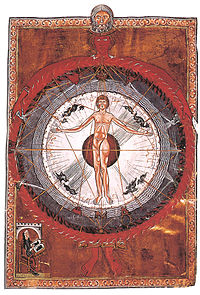
Here in Northern England, I find myself plunged into the depths of midwinter darkness. It is in this dark womb of stillness that the Light is reborn. Through the ages and across cultures, world faith traditions have marked this sacred passage through the darkness.

In Christian tradition, Advent is a period of expectant waiting, of anticipating the birth of Christ. The word Advent comes from the Latin adventus, which means “coming.” This First Sunday of Advent marks the beginning of the Western Christian liturgical year.


hildegard's house of light erickson_house_72dpi

 Image: “Hildegard’s House of Light,” painting by Elizabeth Erickson

The Advent wreath and Advent calendar are relatively recent innovations. Christmas and Advent celebrations have gone through many permutations throughout history. Continue reading “Journey into Light by Mary Sharratt”

When Baby Girls and Old Crones Ruled by Jeri Studebaker

Jeri Studebaker

The data came as somewhat of a shock to me.  I stumbled across it one day in The Civilization of the Goddess, a mammoth book by the late Lithuanian-American archaeologist Marija Gimbutas about what Gimbutas dubbed “Old Europe” – a culture area in southeastern Neolithic Europe that she maintains was centered around female deity.

Until she had the temerity to suggest that people at some point in the past might have worshipped goddesses rather than gods, Gimbutas had a sterling reputation among academics, even being hired to teach at two of the most prestigious of all  American archaeology departments, Harvard’s and UCLA’s.  After presenting her goddess theory of Old Europe, however, Gimbutas came under attack by a few powerful male archaeologists, after which her reputation among academics began to plummet (see Spretnak 2011 for a good accounting of Gimbutas’ fall from grace).

Marija Gimbutas
Marija Gimbutas

Before I get to the data that so startled me, I need to tell you a bit about archaeologists.  Like the members of many academic disciplines, they disagree with each other – sometimes vehemently (and perhaps even somewhat more vehemently than scholars in other disciplines).  One thing however they all agree on is this: the higher the quality and quantity of grave goods buried with an individual, the higher that individual’s status in her or his society. Continue reading “When Baby Girls and Old Crones Ruled by Jeri Studebaker”

Are the Gods Afraid of Black Sexuality? by amina wadud

amina 2014 - croppedThis was the title of a two day conference recently held at Columbia University. At one point on the first day, one presenter asked if there was anyone who is not Christian. Two hands went up, sitting side by side: mine and a film maker friend who had been instrumental in getting me invited to present. She is Buddhist and was showing a trailer from her documentary on rape in the Black community.

One problem with my participation was how to introduce another conception of “God” while still engaging the intersection of race and sexuality with only 15 minutes. So I had to talk really fast.

While the easy answer is, “No,” the God in Islam is not afraid of Black sexuality, I still had a lot of ground to cover about the sex-affirming history and spirit of Islamic thought and practice. Because the preference is to marry, which is a contract and not a sacrament. Marriage is not for the purpose of procreation but for the pleasure of sex. Marriage is preferred over celibacy such that no spiritual virtue is applied to the latter. Marriage is the normative example (sunnah) of the Prophet. Continue reading “Are the Gods Afraid of Black Sexuality? by amina wadud”

The Wedding Dress by Natalie Weaver

Natalie Weaver editedA few weeks back, I was digging around for a picture, and in the process of looking for one picture I uncovered decades worth of memories. Here I was by the pool one Thanksgiving at my old apartment in California. That was where I cooked my first turkey. Here, in another photo, it was Christmas Eve at my mom’s house. I was with my best friend, wearing matching Santa hats. She was so beautiful as a girl. I have become accustomed to her as a woman and had forgotten how much I loved and admired her then as well. Weren’t we supposed to take off and travel the world together? And, then, here were the wedding photos of our Christmas wedding.

I noticed that it was an intimate party. At one point in the service, my father-in-law was holding my flowers since my sister was fixing my veil. He was chided the rest of the night for being my flower girl. I remembered that I did not have my hair professionally coiffed when I saw the backstage image of myself taking out bobby-pinned curls in lingerie before I dressed. Did I look like that? Who took that picture? The flowers were white roses, accented with holly berries and leaves, and my bouquet was a solid bundle of red roses.   Oh yes, and, here was our friend from Chicago… with his hair dyed blond? Why was he hanging out with my girlfriends in my room the night before I was married? And, didn’t my mom inadvertently catch his shirt on fire with some incense? Yes, that’s right. Very innocently, smilingly, moving casually, she patted out the near tragedy sparking on his back side, saying in her best southern accent, “Oh, my! We put a little hole in you, didn’t we?” A little disgruntled, he muttered, “That was a new shirt.”

The one great indulgence of the wedding was the dress itself. It was ivory with blush colored roses embroidered on the tulle overlay of the big skirt. I was not concerned that people would think me a non-virgin in ivory, but it was mentioned to me as a consideration. I loved the bustle in the back that was gathered from the generous material of the gown’s train so that I could walk and dance at the reception. The friendly ladies who sold me the dress came to the wedding specifically to make sure the bustle was perfectly drawn. The bodice had a gentle piping, which made the top sort of stand on its own. The same ladies also insisted that I have some extra padding in the top. Come to think of it, they seemed to have been globally concerned with the success of the garment and me in it. I wore a white silk wrap around my shoulders, which made me feel like Grace Kelly. The covering was my favorite part, which I added at the last minute. The photos prompted me to get out the dress once again, for I had not looked at it in the nearly fifteen years since I had it hermetically preserved following the wedding. So far, it had not yellowed. I was surprised to see how funerary it looked through the peep window, sealed up as it was in a box around cardboard shaped like my torso. It made me think that perhaps I should be buried in it some day. This thought has discomfited me with a complexity of sacramentality, morbidity, practicality, humor, despair, love and sorrow that I have yet to comprehend or shirk. Continue reading “The Wedding Dress by Natalie Weaver”

On Believability, Oppression and Ferguson by Sara Frykenberg

Sara FrykenbergLast week, Amina Wadud wrote an important post,Justice for Mike Brown,” discussing Mike Brown’s death in light of Brown vs. The Board of Education, Plessy vs. Ferguson and the injustice faced by African American Communities, particularly in the US legal/ criminal justice system. She highlights the dehumanizing practices that lead us to criminalize black bodies, beginning in childhood.

Considering her post and many, many other articles and news reports over the past several months, and particularly this last week, since the Grand Jury failed to indict Darren Wilson, I felt compelled to speak about a certain quality of kyriarchal oppression: that of rendering the oppressed “unbelievable.” I will not recount the details of the case here (please see the link above for links to court documents through NPR), nor will I try to “speak for” African American communities– nor can I. However, I think it is important that we bloggers and readers at feminismandreligion.com continue to consider the recent verdict and the critical justice issues it raises, as well as remember the tragedy of Mike Brown’s death, and so many men and women like him.

Actor and activist Jessie Williams, who many know from the popular TV show Grey’s Anatomy, gave a passionate and salient interview on CNN’s “State of the Union,” back in August after Michael Brown was killed. You can watch most of the interview with Williams, LZ Granderson and Tara Wall here; you can watch here for the clip I mention below.  Like Wadud, he too discusses the criminalization of black bodies, drawing from the everyday experience of Black men in the United States to make his case. At the end of the interview, Williams powerfully asserts, “We’re not making this up.” Continue reading “On Believability, Oppression and Ferguson by Sara Frykenberg”

Dance of the Bees: Reading the Language of the Goddess by Carol P. Christ

bee women dancing croppedThe image from an ancient Cretan bowl (c.1700 BCE) from the Sacred Center of Phaistos pictured here has often been interpreted as an early depiction of Persephone’s descent or rising. But are clues from later Greek mythology pointing in the right direction in this case?

Recently, my colleague Mika Scott posted the Phaistos bowl image on our Goddess Pilgrimage Facebook site in conjunction with the bee pendant from Mallia. This juxtaposition led me to think again about the importance of bees and pollination in agricultural societies and to offer an alternative reading of the symbolism on the bowl. Continue reading “Dance of the Bees: Reading the Language of the Goddess by Carol P. Christ”