

 I’ve been called a downer because I take what seems like a jaundiced perspective on the early history of pious and Sufi women. There is a tendency in some scholarship, and nearly all contemporary popular treatments of these women’s lives, to over-focus on the positive. They fasten to aspects of their lives that we (post) moderns regard as “positive” or even “liberating,” while ignoring what we find less attractive or troubling. For them, these treatments tell a story of a lost tradition of feminine and egalitarian spirituality representing a golden period that we only need to reclaim to overcome the present state of sexist affairs in our religion. I know these kinds of stories work for women, or they would not keep retelling them. But they don’t work for me. Continue reading “Dr. Debbie Downer Discourses on the Lives of Early Pious and Sufi Women by Laury Silvers”
Happy International Women’s Day, Men and Women of the World by Oxana Poberejnaia
 I am writing this on International Women’s Day. I know from living in three different countries what different faces this day can have. And I can see how these different perceptions are informed by each country’s history and political situation. This is a Buddhist principle of dependent co-arising: nothing exists in separation from anything else, all phenomena arise in dependence on everything else.
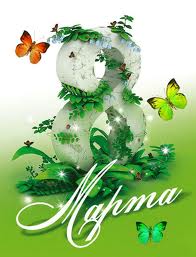
For instance, the Soviet 8th March was a public holiday and culturally it was a day to celebrate femininity, and – separately but connected – awakening of nature in spring. In the US, International Women’s Day was next to non-existing when I lived there in mid-1990s, apart from for hardcore Communists and Socialists, who celebrated it as a milestone on the road to Socialist equality. In the UK nowadays, International Women’s Day takes on a shape of a women-only day, a statement of women’s independence and very often celebration of same-sex love between women.
Continue reading “Happy International Women’s Day, Men and Women of the World by Oxana Poberejnaia”
Terry Pratchett’s Discworld, Feminist Theology, and Finitude by Linn Tonstad
 In David Kelsey’s theological anthropology, Eccentric Existence, he emphasizes that finitude renders creation vulnerable, but he still insists on the goodness of what he terms the “quotidian proximate contexts” in which human life is lived: our ordinary, everyday lives. Terry Pratchett’s Discworld novels bring together a multitude of characters – ethnically, religiously, and otherwise diverse – in the chaotic yet lively city of Ankh-Morpork (a fictionalized London). The Discworld offers what I see as a theology of everyday flourishing that fits with both Kelsey’s analysis of finitude and with significant feminist theological claims.
The books focus on the men and not-men (women, werewolves, vampires, trolls, a six-foot tall dwarf named Carrot, and a Nobby Nobbs) who populate the city and bring it to life. The characters of Pratchett’s city offer a vivid imaginative rendering of the vulnerabilities and possibilities of life in everyday finite contexts that bring together diverse creatures in the service of the goal of common flourishing. Although all theologies outline a social imaginary, whether implicitly or explicitly, the dry and technical character of much theological reflection can make it difficult for the reader to imagine what life would be or could be like given the proposals advanced by a particular author. Pratchett is a consummate observer of the everyday, and his world brings to life what a theology of the everyday would look like. Continue reading “Terry Pratchett’s Discworld, Feminist Theology, and Finitude by Linn Tonstad”
Gendered Imagery of God (Part 1) by Elise M. Edwards
I have been doing a lot of thinking about gendered imagery and language for God over the past few months. Honestly, a lot of this reflection was provoked by hostile comments I got from my college students at the end of the fall semester because I require gender-neutral language for God and gender-inclusive language when referring to people. The policy in my syllabus is this:
For academic discourse, spoken and written, students are expected to use gender-inclusive language for human beings, and gender-neutral language for God. (e.g. “God” instead of “He;” “God’s” instead of “His;” etc.) This is to prepare students to communicate to the world beyond the Christian university setting. I want to equip you to succeed in graduate school, in the corporate world, and in public communication, all settings in which gender inclusive language for is increasingly expected.
I provide links to websites that discuss the issue, and we talk about it more when we discuss 20th century feminist issues in my course on the Christian Heritage and when we discuss prejudice and sexism in my ethics class. Some students have thanked me for the policy. But many students are perplexed by it, and I’m perplexed by their confusion. It shocks my system when I hear people refer to “man” for all people; I first became aware of the issue when I was in 2nd or 3rd grade and the Girl Scouts changed their pledge because it referred to “mankind.” That was over 30 years ago!
While I’m confused as to why replacing “man” with “people” is such a difficult task, I am more empathetic to the reorientation required to replace “He” with “God.” (And I also acknowledge that the term “God” is not completely genderless either.) I recognize that for many of my students, I might be the first one to challenge their gendered conceptions of God. So I am empathetic, but insistent.
The way discussions about the “gender” of God and Savior are often dismissed as irrelevant, unimportant, silly, or the remote concern of “those feminists” bothers me. Traditional Christian theology asserts that God is a different kind of being than humans are. Therefore, God (the first person of the Trinity) and the Holy Spirit do not have a sex or gender, as sex is a characteristic associated with physical creature-ness and gender is (to simplify) a social construction related to sex. The second person of the Trinity, Jesus, is thought to be male. In the Incarnation, the eternal God became human while also divine, and therefore has a sex and gender in the person of Jesus. But the Trinity as a whole is without sex and has characteristics that we would associate with femininity, masculinity, and genders in between. According to this logic, references to the maleness of God should only be understood metaphoricall,y not literally, and therefore replacing that language with genderless/sexless language should not be inherently problematic.
I’m not saying that the use of any language in reference to God is appropriate or acceptable within the bounds of traditional theology. We (traditionals and non-traditionals alike) should be concerned with how we refer to God, because as Sallie McFague and others remind us, these metaphors/models of God have consequences in the world beyond language. Maleness becomes deified or closer to godliness than femaleness, maleness becomes the model for the priesthood, maleness is the true form of authority, etc. I believe that many of the concerns about feminine imagery for God are based in this same concern: that by associating God with one sex or gender, we claim God’s preference for that sex or gender. In a patriarchal system, this correlation between God and the feminine simply will not do. Feminists who assert feminine qualities of God are merely making projections of themselves, critics claim.
How we conceptualize the being we worship matters. It matters to me, at least. While I acknowledge that there is a danger of simply projecting an image of myself as a deity that I worship, I also think there is great harm in loving and worshiping the divine imaged as those who are at times hostile to me, and historically have been so to my ancestors and kin. So although I know and have good relationships with older, white males, I see no reason why I should image and worship God “the Father” who looks like an old white man. How would that benefit my spiritual practice?
Thank you Carol Christ, for asking me to state my views about this in the comments to my last post. I look forward to more discussions with you and the members of this community. When I read your work years ago, I was convinced about the validity and rightness of affirming feminine forms of divinity. Although the Christian (patriarchal) tradition does not have much room for Goddess language, I am comfortable with it, at least for the first and third persons of the Trinity. In my next post, I’ll talk more about the ways I am considering the gender of the Christ.
Elise M. Edwards, PhD is a Lecturer in Christian Ethics at Baylor University and a graduate of Claremont Graduate University. She is also a registered architect in the State of Florida. Her interdisciplinary work examines issues of civic engagement and how beliefs and commitments are expressed publicly. As a black feminist, she primarily focuses on cultural expressions by, for, and about women and marginalized communities. Follow her on twitter, google+ or academia.edu.
Abortion–the topic that won’t go away–or even morph by Esther Nelson
 Recently, I got involved in a conversation about abortion. It happened on Facebook when a relative posted that her heart hurts when she considers her “sweet baby girl” and how the law (Roe v. Wade, 1973) in the United States gave her the choice as to “whether [or not] I would have her killed.” She’s sincere. Many of her friends “liked” her post and, with few exceptions, commented in agreement. I was one of the exceptions.
March celebrates Women’s History Month–a month to remember the accomplishments of our foremothers, noting their work helping to secure for us (their progeny) certain rights, most notably the right to vote (Elizabeth Cady Stanton, 1815-1902) and reproductive rights (Margaret Sanger, 1879-1966). Support for abortion nowadays almost always falls under the rubric of “women’s reproductive rights.” So when we hear, “It’s my body and I’ll decide what I’ll do with my own body,” the speaker is giving voice to what many consider to be a fundamental right–the right to be autonomous and exercise free agency over one’s own person. Continue reading “Abortion–the topic that won’t go away–or even morph by Esther Nelson”
Religion: Trapped in Love Through Shame by Andreea Nica
 I was first introduced to shame in the church. Shame paradoxically drew me closer to God, prevented me from committing sins, and helped me repress certain natural urges. The church I grew up in indoctrinated its congregation to believe that shame would transform us into true and wholehearted believers – that as carnal beings, we needed to feel both guilt and shame in order to be saved and transformed into spiritual entities.
One question that permeated my mind growing up, but I’d never dare to publicly ask:
Why would Jesus die for me when I never asked Him to? Continue reading “Religion: Trapped in Love Through Shame by Andreea Nica”
“Immanent Inclusive Monotheism” with a Multiplicity of Symbols Affirming All the Diversity and Difference in the World by Carol P. Christ
 In recent years monotheism has been attacked as a “totalizing discourse” that justifies the domination of others in the name of a universal truth. In addition, from the Bible to the present day some have used their own definitions of “exclusive monotheism” to disparage the religions of others. Moreover, feminists have come to recognize that monotheism as we know it has been a “male monotheism” that for the most part excludes female symbols and metaphors for God. With all of this going against monotheism, who would want to affirm it?
In response to some or all of the above critiques, many modern pagans define themselves as polytheists, affirming at minimum, the Goddess and the God, and at maximum a vast pantheon of individual deities, both female and male, from a single culture or from many, including divinities with animal characteristics. Other pagans define themselves as animists, affirming a plurality of spirits in the natural world. A group of Christian feminists have argued that the Christian Trinity, the notion of God Three-in-One, provides a multiple and relational understanding of divinity.
While also rejecting exclusive monotheism and male monotheism, Jewish poet, ritualist, and theologian Marcia Falk provided a definition of inclusive monotheism that I find compelling.
Monotheism means that, with all our differences, I am more like you than unlike you. It means that we all share the same source, and that one principle of justice must govern us equally. . . Continue reading ““Immanent Inclusive Monotheism” with a Multiplicity of Symbols Affirming All the Diversity and Difference in the World by Carol P. Christ”
The Politics of Miztvot by Ivy Helman
 Recently, Ben of Ben’s Tallit Shop commented on an older post of mine on this website entitled: “How Literal is Too Literal? My Experience with Tallit Katan.” He wrote, “In my opinion, it makes sense to first try the mitzvah of tzitzit in private for a month or two to ensure you are undertaking it for the right reasons. Making a political statement is not a valid reason (though some people, I imagine, would argue otherwise). Mitzvahs and politics don’t mix.”
First of all, this comment is both sexist and patronizing! A man would never suggest to another man to do what he suggested I do and “try the mitzvah… in private… to ensure you are undertaking it for the right reasons.” I’d dismiss it entirely if I was that kind of person, but I’m not. Sexism and patronizing aside (as if one could do that really), I would like to engage with his thoughts on the mixing of politics and mitzvot because I think that can lead to great reflection and insight for Jewish feminists.
Not all mitzvot have an inherently political nature, but many do. In fact, one could even argue something as seemingly apolitical as lighting Shabbat candles could be political. Lighting candles ushers in Shabbat peace for one’s household and ideally for one’s community even if that peace is only for one day a week. Since this is at odds with the world’s political environment of fighting, war and violence, it could be interpreted as a political act. After all, won’t every day in the redeemed world be Shabbat? Continue reading “The Politics of Miztvot by Ivy Helman”
Please Welcome Kate and Safa!
Hello Friends! Please let us introduce to you Kate Brunner and Safa Plenty; both have signed on for internships with Feminism and Religion. We are thrilled that they have joined the FAR community! You will see from their brief biographies below that both Kate and Safa come to FAR with much experience, talent, and insight; we look forward to the many gifts they will share. Please join us in welcoming Kate and Safa!
 Kate Brunner is a freelance writer & member of The Sisterhood of Avalon, studying at the Avalonian Thealogical Seminary. She is an American expat, living in Queensland, Australia and homeschooling her children, with the world as their classroom. Before motherhood, Kate earned a Bachelor of Arts from Tulane University, while studying Economics, International Relations, & Religion. She then served four years as a logistics officer in the US Army.
Shortly after the birth of her first child, Kate left military service, eventually becoming a birth doula & holistic birth educator. She is a regular contributor to The Sisterhood of Avalon’s online journal, The Tor Stone and is active in the Red Tent Movement. Kate volunteered in Houston as a presenter for monthly Red Tents and semi-annual women’s retreats before relocating overseas. She enjoys international travel, perfecting her cooking, reading great books, & having fascinating conversations with friends; old or new.
Kate is thrilled to be interning at FAR and believes very strongly in the power of interfaith feminist dialogue as a tool for building the diverse community necessary for effective activism. Furthering this effort, she hosts a grassroots gathering at the Solstices & Equinoxes. These relaxed evenings give her the opportunity to share sacred space with local women from myriad cultures and faith traditions around the world. Kate’s interests at the intersection of feminism & religion include manifestations of the Sacred Feminine, female leadership roles, and female indigenous perspectives across the array of spiritual traditions practiced around the world today.
 Safa N. Plenty is an educator and mental health counselor, hoping to pursue a doctorate at Claremont School of Theology with a focus in spiritual formation and peacemaking. She holds a Masters of Social Work from Columbia University in Applied Generalist Practice and Programming and an undergraduate degree in interdisciplinary studies with a minor in Africana Studies.
For the past two years, Safa has worked as a K-12 educational contractor and assistant counselor at a local community college. Her research interest include Sufism, Attachment to God, indigenous metaphysics, particularly Native American and Somatic psychology. She is also interested in religious mysticism, mindfulness practice in Buddhism and the role of feminism and religion in cultivating a peacemaking capacity among young Muslim women. Safa is currently working to develop a faith based healthy relationships program for Mothers and daughters. She enjoys writing poetry, research, and contemplative practice in art and crafts.
Painting and Ordaining the Holy Woman Icon by Angela Yarber
 This month on the Spring Equinox I celebrate ten years of ordination. And for the first time in over fourteen years I am not employed as a minister at a local church. While I miss preaching and occasionally long for liturgy, I have never been more happy, and I find company and solace in the myriad holy women that fill my life. They have become my beloved community. They hold me accountable to my calling. They celebrate the birth of my child, dry my tears, laugh with me heartily, and remind me to dance for justice even when it’s difficult.
Most of them are real flesh and blood women—my wife, friends, family, colleagues, even the Feminism and Religion virtual community. Many are also the Holy Woman Icons with a folk feminist twist that I feature each month: Virginia Woolf , the Shulamite, Mary Daly, Baby Suggs, Pachamama and Gaia, Frida Kahlo, Salome, Guadalupe and Mary, Fatima, Sojourner Truth, Saraswati, Jarena Lee, Isadora Duncan, Miriam, Lilith, Georgia O’Keeffe, Guanyin, Dorothy Day, Sappho, Jephthah’s daughter, Anna Julia Cooper.
So, as winter turns to spring and I enter the next decade of ordained life now outside the church’s walls, I find myself clinging to Walt Whitman’s admonition: “From this hour forward I ordain myself loos’d of limits and imaginary lines.” As I think about this great cloud of witnesses surrounding me—my beloved Holy Women—I recall the ways in which we are all called to be prophets for justice.
Many have claimed that artists are our contemporary prophets, those who rage against the status quo, and call us to actions of justice that create beauty in the lives of all humanity, even all creation. So I turn to a great artist whose music has set free countless women and queer folk in search of new symbols, new language, new stories that are deep and wide enough to contain our subverted and searching spiritualities. The great womanist prophet, Tracy Chapman, sings these words in her song, New Beginnings: Continue reading “Painting and Ordaining the Holy Woman Icon by Angela Yarber”

