The comments forum will remain open and we will be checking our email periodically. We look forward to seeing you in August.

Exploring the F-word in religion at the intersection of scholarship, activism, and community.

The comments forum will remain open and we will be checking our email periodically. We look forward to seeing you in August.
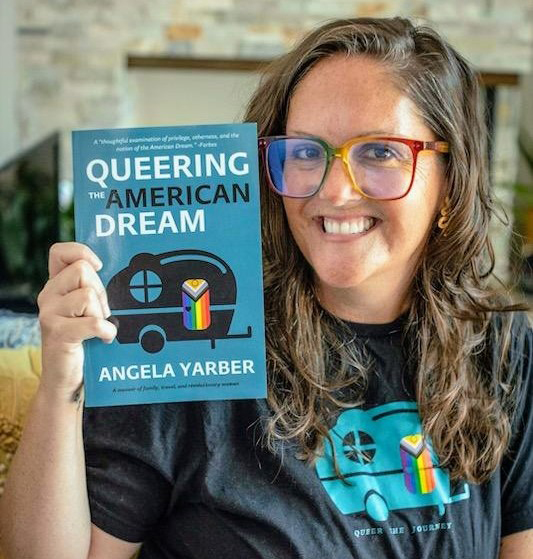
I love stories about journeys or pilgrimages. They are quests that take us out into the world even as we are forced to face our innermost selves. They are sure to be filled with adventure, challenges, and unexpected beauty. Such a journey has the ability to rip apart our world and reform it in new and unexpected ways. Like I said an adventure. Each journey not only affects us personally but changes corners of the world and all the people that it touches. Angela Yarber’s book is one such journey. Reading it changed my world.
Rev Ang traveled with what she calls her “queer little family;” herself, her wife Elizabeth and their toddler son Ru. They set off into the country where they could not take for granted they would be accepted. They knew they might be seen as other and have to face down hatred. It is a vulnerable place to be, and it can be frightening, especially in the backcountry where being queer can be seen as an invitation for violence. That takes even an extra level of courage.
Rev Ang speaks with an honesty that is remarkable.
Continue reading “Queering the American Dream by Angela Yarber, Book Review by Janet Maika’i Rudolph”Moderator’s Note: We inadvertently left out the photos from Beth’s posts on Sojourner Truth. The photos, all by themselves, pack an emotional punch and so we want to be sure they can be seen. These are Beth’s photos from Sojourner Truth Legacy Plaza in Akron, Ohio
You can see Beth’s posts here. Part 1 and Part 2


Dan and I celebrated our 25th anniversary recently. I asked my adult daughters whether it might be fun to make a big event of it – a worship service, a reception, an opportunity to see beloved family and friends. My older daughter thought it sounded wonderful. My younger daughter was so moved, she wept.
It’s no accident that our two daughters felt so joyful. Of course, they love us, and want to celebrate, to sing and dance with loved ones. But it’s also part of something bigger. Something they don’t take for granted, ever. Something feminist. And something religious.
It’s part of a larger story that several people have asked me to write up over the years; so in celebration, I thought now would be a good time. I met Dan as an undergrad in the 90s – he was a grad student in my first biology lab. He had such a nice smile; I thought to myself, wow, he sure is friendly for a guy with a mohawk and a Gwar T shirt. Later, I found out he was a PK, like me. We preacher’s kids are a unique breed. We understand each other. Just rebellious enough to stay sane; otherwise, fairly wholesome. He asked if I’d found a church I liked, and then invited himself along; and the rest is sort of nerdy PK history. Through lots of fascinating post-sermon conversations over late night snacks, we became great friends. After a few years of that, we realized what others had already seen – we were also perfect for each other.
Continue reading “What’s In A (Last) Name: My Mom’s Solution for Feminist Families”Artists tend to develop their own visual language over the course of a career, returning again and again to certain motifs. That’s certainly the case for me with trees, women and goddesses, doorways and passages, ancient symbols, flowers, and animals — in particular birds — emerging again and again.
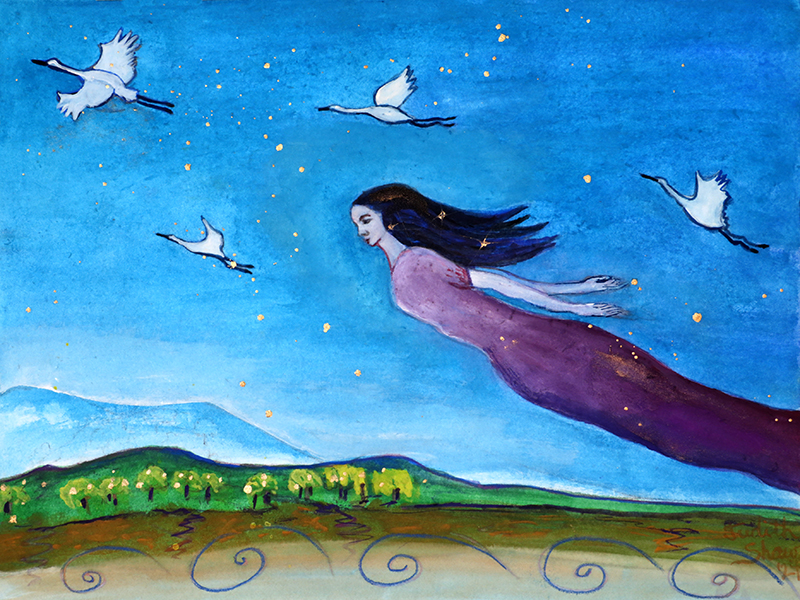

I won’t walk in this fog bound soup – the air is so toxic it’s literally not breathable – let’s hope this is not a prelude to the rest of the summer like it was last year. The solstice marks a turning of the wheel in ancient cultures – a process (more than an event) that is still celebrated by countryfolk and by those who are attached to the land.
As we move deeper into the first days of summer many (most) wildflowers are seeding up even as the sun’s heat intensifies around the longest, days of the year… As I walk through the woods and around my home, I note the first yellowing leaves dropping from fruit trees, others are shriveling, insect ridden. My beans are spiraling skyward … Overall, a vibrant deep green canopy appears to replace luminous lime, and for a moment luminous fireflies light up the night…gardens are overflowing. Tadpoles are birthing back legs, and within the month a radical transformation will have occurred as miniature froglets begin their adult lives in seeps, brooks. ponds or greenery… a miracle of Becoming. There is a poignancy to this turning for me. The birds are fledging, birdsong is somewhat muted. Summer heat and fierce thunderstorms mark the season ahead…cold clear waters and forests are calling…
Continue reading “Turning Towards the Light by Sara Wright”This was originally posted on June 17, 2013
Rape is not something that “just happens” in the military. It is an inevitable product of military training. Unless and until we understand this and change the way soldiers are trained, we will never be able to stop rape in the US military or any other military system.

The right to rape women of the enemy has been considered one of the “prerogatives” of warriors since the beginning of warfare. Could “military training” which “turns boys into men” by calling them “girls” or “women” or “gay” in order to break down their self-esteem and remold their “character” as soldiers be one of the reasons rape is such a pervasive problem in the military? Are “boys” being taught that the only way to “prove” their “manhood” is to replace “identification” with women—their mothers, sisters, girlfriends, wives—with a new “identity” as a “dominant male” who “dominates” women and weaker men? I fear that if we fail to address the “core issue” of “military training,” we will never get to the root of the rape culture that pervades the military.
Continue reading “Legacy of Carol P. Christ: RAPE CULTURE IN THE MILITARY AND “TURNING BOYS INTO MEN””‘Four thousand years ago, in the ancient Near East, women were poets, drummers, scholars, dancers, healers, prophets and keepers of sacred space.’ In The Hebrew Priestess (2015), Rabbi Jill Hammer argues that as the Israelite cult became more centralised, leadership roles were restricted to men and women’s spiritual leadership was gradually repressed. Yet, as Hammer and co-author Taya Shere demonstrate, ‘the remnants of the priestesshood remain for those who seek them out.’ Combining a close reading of biblical and rabbinic texts, alongside other contemporary sources and archaeological evidence, Hammer has identified thirteen models or netivot of feminine Jewish leadership, which she argues persisted, albeit in altered and marginalised forms, into the medieval, early modern and even modern periods. My own research supports these conclusions, suggesting that Hammer’s netivot framework provides a useful lens by which to better understand Jewish women’s traditions that, in a patriarchal culture, have often been marginalised.
Continue reading “Priestesses of the Shtetl? The Jewish Women Spiritual Leaders of Eastern Europe by Annabel Gottfried Cohen”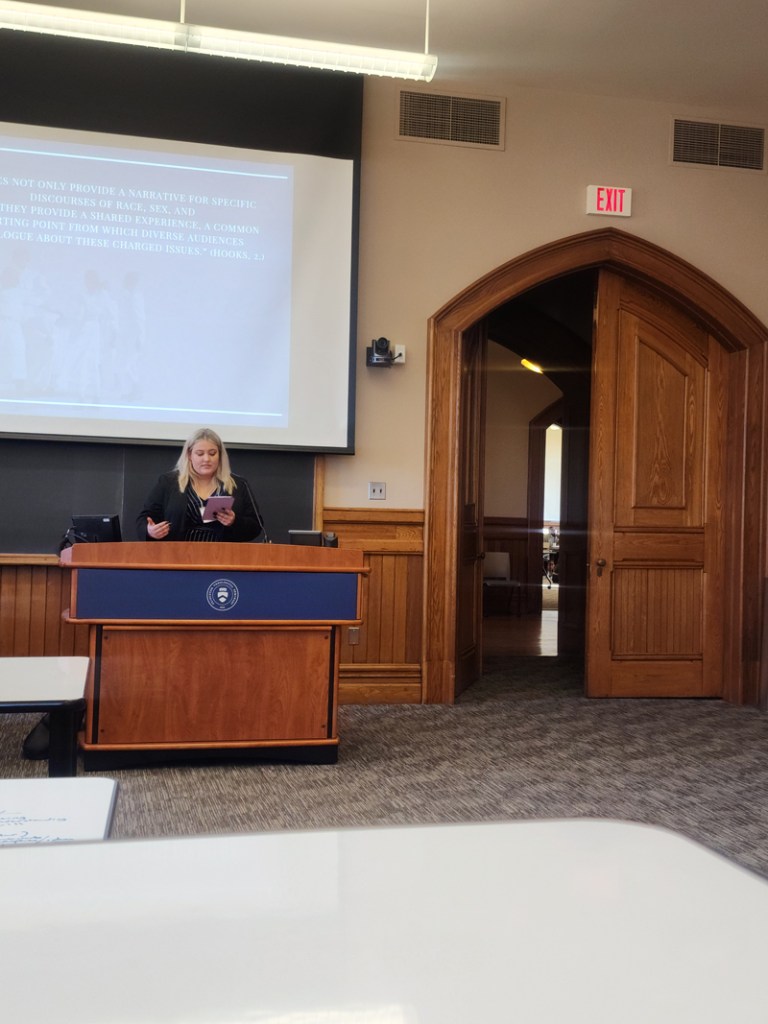
Recently tasked with the co-creation of a film ethics course, I thought extensively about what material would best serve film acting students in a New York City Conservatory. I wanted to include films that would focus on diversity, story inclusivity, and encourage them to wonder if what they saw on screen impacted or influenced their reality. In a course centered on ethics, religion and spirituality tend to enter the conversation. This entrance provided me with the opportunity to introduce a plethora of women’s visionary films that would be used to examine the spiritual lives of women and how religion and spirituality impact the film narrative. Women’s visionary films can be defined as films that are “written, directed, and/or produced primarily by women and share women’s vision of realities. The sacred themes of these films, in diverse cultural contexts, engage women’s self-reflective use of the arts to convey greater insight into the colors, shapes, emotions, and spirituality of women’s lives—women’s imagination, suffering, hopes, beliefs, and dreams.” (Mara Keller, 2018)
Continue reading “Women’s Spirituality in the Film Classroom by Freia Serafina”part 1 appeared yesterday
Leila Brammer in her book Excluded from Suffrage History: Matilda Joslyn Gage, Nineteenth-Century American Feminist, explains the long-term impact of the dismissal of Gage:
“The loss of Matlida Joslyn Gage from the history of the woman suffrage movement and her ideas from the intellectual history of feminism speaks to the influence of exclusionary processes in social movements as well as their unfortunate consequences…we must remember that Joslyn Gage was intricately involved in the movement, wrote in newspapers and magazines, and published a book, but all these activities and her significant feminist thought had to be re-created and rediscovered nearly a century later”(120).
Continue reading “MATILDA JOSLYN GAGE: IN HER NAME, AMERICAN WOMAN WRITER AND ACTIVIST (1826-1898), part 2 by Maria Dintino” Feminism and Religion