Small Victories by Sara Frykenberg

Last year was a hard year. I wrote about this difficulty—vaguely eluding to challenges of environment, home, and work—in my last post. In this blog, which was a copy of my reflection for our last faculty meeting of the year, I asked my colleagues and myself: should I take the year apart or find thoughts that will help us put ourselves back together again in the fall? I am pretty good at taking things apart. But returning to school in less than a week, I find myself most concerned with the latter question: have I put myself back together again? Have I found these thoughts?

I have slept more, but am I rested?

I have taken space, but am I ready to be close again?

I don’t know. But I am beginning to find the answers, the fragments of thought, in my small victories.

Bringing my panic to ‘get it together’ before school starts to my brother, he said to me: “You have a stubborn Taurus heart.” He’s right. My Taurus moon, which tends towards obstinacy, perfectly suits my Libra (in)decisiveness. I might have a lot of trouble coming to a decision, but once I have, you better believe that I am going to hold onto that decision—particularly in matters of the heart. I tend to hold onto anger too, problematically. I once lived an entire year in perpetual rage. But, I eventually had to let it go to learn how to breathe again (literally and figuratively). This summer has also been a practice in breathing; and the process feels at best, incomplete. Continue reading “Small Victories by Sara Frykenberg”

A feminist closet? by Linn Marie Tonstad

Linn Marie TonstadEvery now and again, a budding systematic theologian comes to my office and wants to talk about how to avoid being pegged as a feminist, and therewith avoid not being taken seriously as a theologian. Sometimes the students are feminists, but don’t want that aspect of their work to dominate or perhaps even to be visible for a time; in other cases, the students aren’t feminist – or didn’t start out that way – but are having experiences as they enter the guild that are raising these concerns for them in a new way. Perhaps professors are assuming that they are feminist simply because they are female, or perhaps male students are dominating in class and the professor is doing nothing to rein them in.

These students seek me out knowing that I am an avowed feminist and an avowedly feminist theologian. But they are concerned about the effects being or appearing feminist might have on their future careers. After all, they want to join the theological conversation in order to shape it – and their ambitions are right and justified. Continue reading “A feminist closet? by Linn Marie Tonstad”

Feminist Professors Are Not Secluded Monks by Kwok Pui-lan

Pui Lan.high resolutionIn his column “Professors, We Need You!” New York Times columnist Nicholas Kristof charges that most university professors “just don’t matter in today’s great debates” and admonishes them not to cloister themselves “like medieval monks.”

Many academics and others took offense at what he has written. A Twitter hashtag #engagedacademics sprung up and many have posted opposing views.

That Kristof imagines the professors who isolate themselves from the real world as “medieval monks” betrays his bias that the professors to whom he is addressing and the public intellectuals he longs to see are male (and possibly white)! Continue reading “Feminist Professors Are Not Secluded Monks by Kwok Pui-lan”

What It’s Like To Be A Woman In The Academy: Mentoring Edition by Linn Marie Tonstad

Linn Marie TonstadIn my first post, I promised to return to the topic of mentoring. Mentoring is a survival strategy for feminists inside hostile or difficult-to-navigate environments; in its best possibilities, mentoring is a strategy for flourishing, not just surviving. But when a mentoring relationship goes wrong, it is so destructive an experience that it may even be characterized as traumatic. Mentoring is also a practice rife with possibilities for abuse: the recent Yale study of gender bias in the sciences shows the extent to which gender alone serves as a significant variable for scientists assessing the possible rewards of mentoring a student.

I have given a lot of thought to mentoring in recent months – as I transition into new mentoring roles in a new institution, as I negotiate changing relationships with current and former mentors, as I reflect on successful and unsuccessful mentoring relationships I’ve been involved in, and as I seek to develop policies and practices that will serve me (and more importantly, my mentees) well.  Continue reading “What It’s Like To Be A Woman In The Academy: Mentoring Edition by Linn Marie Tonstad”

The Boldness of Grace Ji-Sun Kim by Grace Yia-Hei Kao

“The Grace of Sophia is an openly ‘syncretistic’ work.”

Continue reading “The Boldness of Grace Ji-Sun Kim by Grace Yia-Hei Kao”

Navigating the Academy with an Accent by Amanda Pumphrey

“Where are you from?” I wish I had a dollar for every time someone has asked me that question since moving to California. I would be able to make a substantial payment towards my student loan debt by now. No one knows I’m “different” here in SoCal until I open my mouth. My thick Southern accent happens to be my signifier.

Before I moved to Claremont to begin graduate school, I never considered my accent a problem. Despite the fact that when I moved outside of my hometown to college only two hours away, some of my friends teased me about my accent. Since I grew up in the very southwestern corner of Georgia, I lived right along the Alabama border. Some of my college friends from other regions of Georgia thought I sounded more Alabamian. Still, mostly everyone I went to college with had some form of a Southern accent and that was okay. It was safe. It was normative.  Continue reading “Navigating the Academy with an Accent by Amanda Pumphrey”

(Non-Human) Animals on the Agenda by Grace Yia-Hei Kao

“[E]thical interest in nonhuman animals is flourishing.”

To my delight, the New York Times recently chronicled the growing scholarly interest in human/non-human animal interactions in a story entitled “Animal Studies Cross Campus to Lecture Hall.” There are now more than 100 courses in colleges and universities in the burgeoning field of animal studies. At least 40 U.S. law schools now routinely offer courses in animal law. A growing number of formal academic programs, book series, journals, conferences, institutes, and fellowships are also dedicated to (re)examining human-animal relations from a variety of disciplinary perspectives—“art, literature, sociology, anthropology, film, theater, philosophy, [and] religion,” to name a few.

Continue reading “(Non-Human) Animals on the Agenda by Grace Yia-Hei Kao”

Getting Tenure, Part II: On Being the First of My Kind by Grace Yia-Hei Kao

“I am honored to be the first person of Taiwanese heritage, and first Asian American woman, to have earned tenure at CST.”

I’ve recently recounted how it took a village for me to complete the rite of passage known as tenure review. I want to reflect now on the significance of my having become the first Asian American woman (n.b., third Asian American of any gender), and first person of Taiwanese descent to have earned tenure at my institution.

My first thought upon realizing those statistics was something like:  “Wow−what an honor!”

But my second thought has been more like:  “Really?  How is it possible that simply being a newly tenured Asian American who is neither Korean nor male would be enough for me to make institutional history?”   Continue reading “Getting Tenure, Part II: On Being the First of My Kind by Grace Yia-Hei Kao”

Hearing Each Other to Speech in the Academy By Xochitl Alvizo

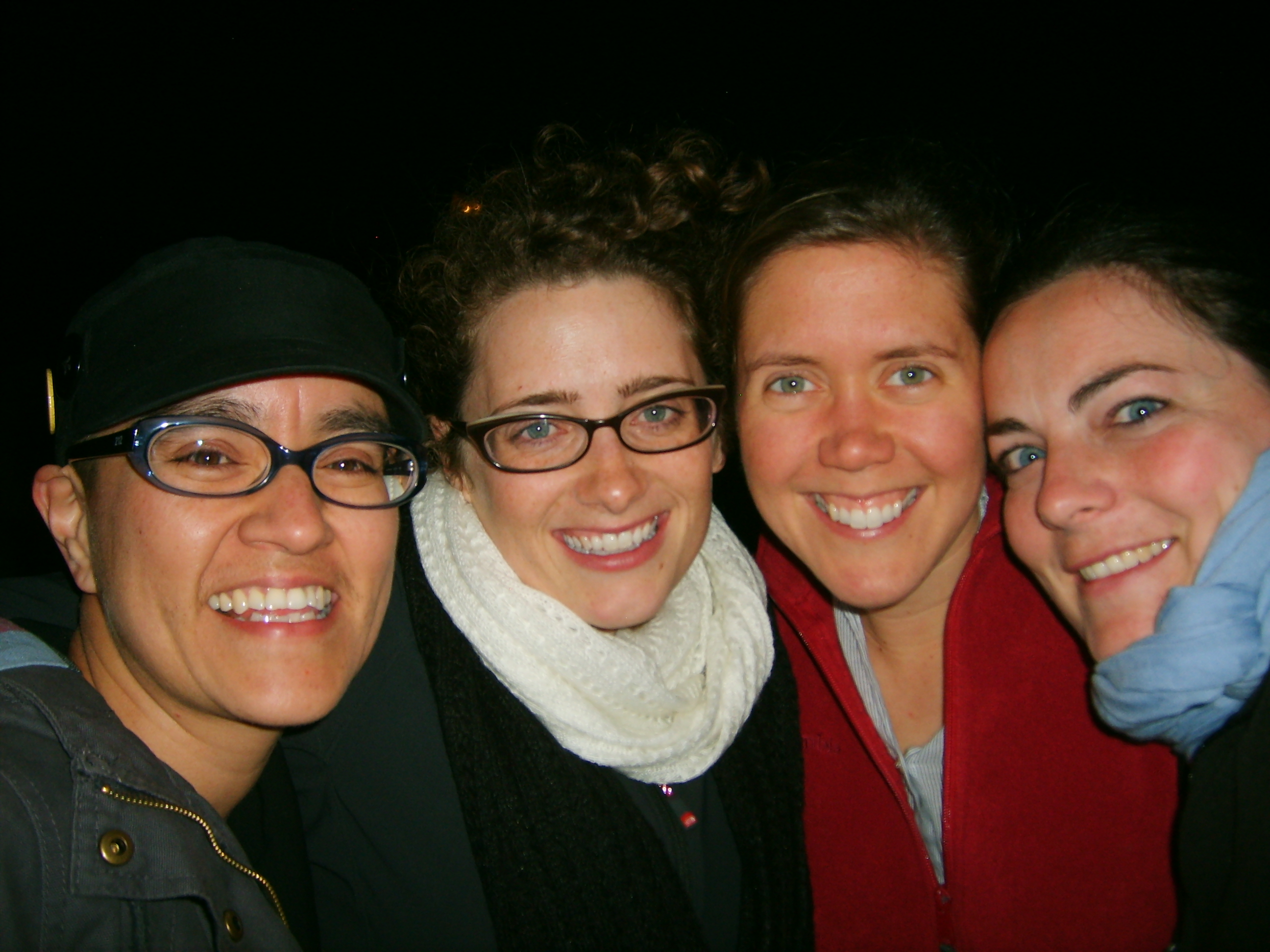
Sometimes when I write, especially when I am writing an academic paper but even when I am writing for this blog, I imagine that I am writing it to my feminist peer-group.  I am part of a group of four feminist women who have intentionally decided to stay involved in our religious traditions.  We are Unitarian Universalist, American Baptist, Presbyterian, and Disciples of Christ, and we started our peer-group in order to enCourage, support, and inspire each other as we participate in our churches with our full feminism selves. We get together regularly and we listen deeply to each other, we celebrate, we cry, we mourn, we rage, we laugh, and, of course, we eat together. On many occasions we have each expressed that we are better versions of ourselves because we are part of each others lives.

One of the reasons it is easier for me to write to my peer-group instead of my academic audience is because I know that my peer-group is invested in my empowerment, my liberation, and my continual be-coming – they understand that my well-being contributes to theirs, and vice versa. Thus, when I write for them, I do not fear; I trust that my peer-group will truly hear me and encourage me, and that when they raise questions and point out weaknesses in my writing, they do so not in an attempt to tear down my work but in order to strengthen it and build on it.

My peer-group

My peer-group, while being able to point out the blind spots and shortcomings on my work, never fail to recognize, honor, and express appreciation for my contribution as well. They hear me to speech and understand the importance of that for bringing out my academic best. Continue reading “Hearing Each Other to Speech in the Academy By Xochitl Alvizo”