Patriarchy as a System of Male Dominance Created at the Intersection of the Control of Women, Private Property, and War by Carol P. Christ


Recently feminist scholar Vicki Noble said this is the best definition of patriarchy she has read–but she hadn’t known of it earlier! I am am republishing it now in hopes that all of you will share it on your social media so that it becomes more widely known. Thanks!

Patriarchy is often defined as a system of male dominance. This definition does not illuminate, but rather obscures, the complex set of factors that function together in the patriarchal system.  We need more complex definition if we are to understand and challenge the the patriarchal system in all of its aspects.

Patriarchy is a system of male dominance, rooted in the ethos of war which legitimates violence, sanctified by religious symbols, in which men dominate women through the control of female sexuality, with the intent of passing property to male heirs, and in which men who are heroes of war are told to kill men, and are permitted to rape women, to seize land and treasures, to exploit resources, and to own or otherwise dominate conquered people.* Continue reading “Patriarchy as a System of Male Dominance Created at the Intersection of the Control of Women, Private Property, and War by Carol P. Christ”

Masculine: Aggressive/Feminine: Passive: Can We Imagine Alternatives? by Carol P. Christ

Today a couple of friends and I were discussing egalitarian matriarchal values. I stated that in these societies there is no great difference in male and female personalities because both males and females are expected to be as kind and loving and generous as their own mothers. “Oh no I would not want that,” the other woman responded. “I want my man to be masculine–not wishy washy or namby pamby.” This woman soon acknowledged that she did not want her man to be dominant or aggressive. Yet her first reaction was to reject the idea that men might do well to emulate the values of their mothers.

This conversation illustrates the difficulty we have in conceiving alternatives to the way we assign gender roles. Masculine: assertive and aggressive. Feminine: weak and passive.

In fact. being as kind, loving, and generous as mothers in egalitarian matriarchies has nothing to do with these familiar gender binaries. Mothers in egalitarian matriarchies are assertive, but not aggressive, and there is nothing weak or passive about them. Love, kindness, and generosity are not about standing back and letting others walk over you. Instead they are active values that require intelligence, reflection, and strength. Continue reading “Masculine: Aggressive/Feminine: Passive: Can We Imagine Alternatives? by Carol P. Christ”

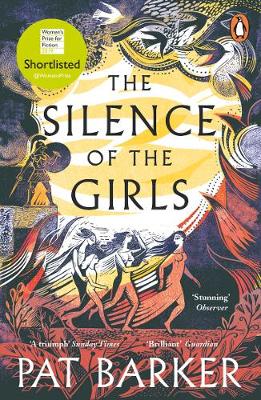
The Silence of the Girls: A Reflection on War by Carol P. Christ

Suppose, suppose just once, once in all these centuries, the slippery gods keep their word and Achilles is granted eternal glory for his early death under the walls of Troy. . .? What will they make of us, the people of those unimaginably distant times? One thing I do know: they won’t want the brutal reality of conquest and slavery. They won’t want to be told about the massacres of men and boys, the enslavement of women and girls. They won’t want to know that we were living in a rape camp. (324)

In The Silence of the Girls Pat Barker retells the story of the siege of Troy from the perspective of Breseis, a captured Trojan princess who became the slave and concubine of Achilles and Agamemnon. She was among the “spoils of war” allotted to the “great heroes” to “honor” their success as killers in war. Breseis does not tell her story of terror in The Iliad, but despite her not speaking, her story and that of the other captured and raped women—many of whom fared much worse that she did–is there is plain sight.

The problem is not that we who have read The Iliad don’t know these women were living in a rape camp. The problem is not that we have read The Iliad do not know that the heroes of the Trojan war were awarded women and loot as a reward for good fighting. Nor is the problem that we do not know that in the times of the Trojan war a man’s “honor” was everything to him and that it was defined by the prizes (women and loot) that he commanded, as well as by the respect of other men his deeds and property inspired.

When I first taught The Iliad in 1972, I was appalled by the women’s story. While my colleagues spoke of the “spear captive” who was the focus of the conflict between Achilles and Agamemnon, I urged them to call her a “rape victim.” Needless to say, I was summarily silenced. “That is not the point of the story,” I was told. “This is a story about men, their glorious deeds, and the honor due to warriors. This story speaks of the origin of culture.” A few guffaws signaling agreement followed. And that was the end of the discussion.

Although I enjoyed reading The Silence of the Girls, it did not provide me with any new insights into the horrors of war or the pervasiveness of rape in war. These were stories I already imagined. Indeed, rape, looting, slavery, and the spoils of war are at the heart of my “A New Definition of Patriarchy.”

The question I ask after reading The Silence of the Girls is how western culture managed to “silence” the women whose stories were there in plain sight for anyone who read The Iliad to see. Breseis was forced to have sex with and wait upon the man who killed her four brothers and her husband and who treated her as a possession not as a person. (283) She learned that when Achilles tired of her, she would probably be offered to his favorite men, and when they had their fill of her, she would be sent to live with the women who were at the mercy of the foot soldiers. “But that’s war,” (284) the Trojan king Priam replied when she asked him to help her escape.
There is more than one “conspiracy of silence” at play here. The conspiracy was compounded when the first person who questioned euphemisms such as “spear captive” was ridiculed and when every man or woman who recognized that rape is an ordinary part of war was told to keep silent about that. It was justified by the phrase “that’s war.”

If The Iliad is the origin of western culture, then western culture originated in a rape camp. Let’s not keep silent about that any longer! We must name the atrocities at the origins of so-called “culture” if we wish to create a more just world. These atrocities did not end with the Trojan war. They continue up to the present day. Ask any woman who has been in the path of invading armies. Ask the soldiers what they did and were permitted to do.

Refuse to accept the aeons-old cover-up: “that’s war.” If that is war, it is time to end war.

Carol P. Christ is an internationally known feminist and ecofeminist writer, activist, and educator who lives in Heraklion, Crete. Carol’s recent book is Goddess and God in the World: Conversations in Embodied Theology. Carol has been leading Goddess Pilgrimage to Crete for over twenty years: join her in Crete. Carol’s photo by Michael Honneger.

Listen to Carol’s a-mazing interview with Mary Hynes on CBC’s Tapestry recorded in conjunction with her keynote address to the Parliament of World’s Religions.

With Beauty Around Me by Carol P. Christ

With Beauty Around Me by Carol P. Christ


When I moved from Lesbos to Crete, I decided to take some 30 large and medium-sized handmade terra cotta pots acquired over the years along with me. As I had been living part-time in Crete for several years, most of the plants had died, but I managed to salvage freesia bulbs, chives, and cuttings from nutmeg-scented geraniums.


My friend Mavroudis helped me empty the soil into feed bags provided by a neighbor who keeps sheep. I decided to move the dirt too, as I didn’t fancy carrying numerous bags up to my apartment. The movers were not too happy about this, and by the time they were deposited higgledy-piggledy on my balconies in Crete, several of the pots were broken and the bags were leaking.

I mended the broken pots with trusty epoxy glue before I got sick, which was lucky, because, since then, I would not have been able to do it. A few weeks after arriving, I felt tired and had trouble eating. I was diagnosed with cancer and began chemo-therapy. I have little physical energy and spend much of my days resting in bed or sleeping. There are still many boxes to unpack and they can wait, but I felt the need to tend the balconies. Continue reading “With Beauty Around Me by Carol P. Christ”

Women, like Goddesses, Come in All Colors, Shapes, and Sizes…by Vanessa Soriano


I wish I could have gotten this phrase tattooed on my arm when I started the serpentine journey into womanhood.  Like most of us, growing up, all I ever saw in media were thin female bodies with impossible proportions.  As one article put it:

Although body size and weight perception differ across race and ethnicity, women in western society are subject to images of women as not only thin, but also athletic and toned, with small waists, large buttocks, and large breasts, a body type that is largely unattainable.  Because of this ideal, all girls and women typically have weight concerns that ultimately shape body image, satisfaction, and appreciation. Continue reading “Women, like Goddesses, Come in All Colors, Shapes, and Sizes…by Vanessa Soriano”

Judaism or Christianity: Which Tradition Is More Open to Feminist Change? by Carol P. Christ

Jill Hammer’s recent post on midrash surrounding the Biblical figure of Eve (Hava in Hebrew) sparked me to muse again about the fact that, despite its patriarchal roots and overlay, Judaism is a much more flexible tradition than Christianity and, therefore, much more open to feminist change.

Part of this is due to the fact that Judaism is midrashic while Christianity has been and remains a doctrinal tradition. Midrash is a form of Biblical interpretation that includes retelling the story to fill in the blanks and to answer contemporary questions left unanswered in the original text. Jews consider the Torah (the 5 books of Moses) to be the “Word of God” though opinions vary as to what this means. In the rabbinical tradition, the Torah is interpreted through the Talmud which is an extensive collection of discussions and disputes that draw on Biblical texts in relation to contemporary (to the rabbis) questions. Midrash included in the Mishnah (a collection of teachings that preceded the Talmud) and the Talmud are considered part of the “oral Torah.” which is also “the Word of God.”

The Talmud is considered to be authoritative, but it includes conflicting interpretations that were never resolved into a single definitive view. Though different Jewish groups have declared certain views to be normative, other groups have disagreed. There is no central authority (such as a Pope or council) to resolve these disputes. Though some Jewish groups disagree strongly with the beliefs or practices of others, in Judaism as a whole an attitude of “live and let live” leads to inclusion rather than exclusion. Indeed. The Talmud records that in the midst of a particularly vehement dispute between two rabbis, a voice intervened, stating: “These and these are the words of the Living God.” (Quoted by Judith Plaskow in Goddess and God in the World.) Continue reading “Judaism or Christianity: Which Tradition Is More Open to Feminist Change? by Carol P. Christ”

Seven Days in a Greek Hospital by Carol P. Christ

I was released from a national hospital in Crete on Friday afternoon after a seven day stay. During that time, I had over fifteen tests, including several ultrasounds, two CTs, a colonoscopy, a gastroscopy, and an excruciating forty-five minute MRI.

The cost: nothing. As a Greek citizen, I am fully covered under the national health, due to a change in the laws initiated by the SYRIZA government a few years ago.

I had not been feeling well for a few weeks. I had little appetite, no energy, and my tummy was sore. I chalked it all up to the stress of moving from Lesbos to Crete, not to mention the stress of quarantine that preceded the move. When I was taken to the emergency room by friends, I expected to be given a few pills and sent home. Continue reading “Seven Days in a Greek Hospital by Carol P. Christ”

Losing My Skin by Carol P. Christ

I arrived to Crete on June 6. Movers were in my house in Lesbos on the 4th and 5th. I put myself, my car, and my cat on an overnight ferry from Lesbos to Athens on June 5, and, after a day, took a second overnight ferry from Athens to Heraklion. Then another day moving my furniture and belongings up to my 5th floor apartment using a crane. The agreement was that the moving company would put all of the furniture in its place, while I would unpack over the next few days.

This was the end of a very long journey. I bought the apartment at the end of September and expected to be in Crete by Christmas. Paperwork problems delayed the contract of sale until the end of February. My architect was ready to begin renovations. I hoped to be in Crete by the end of March. Then the Covid quarantine hit Greece. Luckily work on the apartment was allowed to continue during the quarantine. And my architect sent copious photographs and asked my opinion about everything. Continue reading “Losing My Skin by Carol P. Christ”

Women Invented Agriculture, Pottery, and Weaving and Created Neolithic Religion by Carol P. Christ

When I look at the two chapters on Goddess history in my book Rebirth of the Goddess (1996), there is very little I would change, but there is new evidence I would add.* Before discussing that, I would like to underscore two important points I made in discussing Goddess history that are often overlooked or ignored by other writers. The first is that women were the likely inventors of three new technologies at the beginning of the Neolithic age: agriculture (because they were the gatherers of plants and the preparers of plant foods), pottery (primarily used for food storage and preparation), and weaving (women’s role in almost all traditional societies). The second is that the so-called “age of the Goddess” is not a more “primitive” or “unconscious” stage of culture that needed to be superseded or overthrown by more “evolved” or more “rational” patriarchal warrior cultures.

Cultural theorists like the archetypal psychologist Carl Jung assert that “the feminine” represents the unconscious and nonrational ways of knowing such as intuition. From this it follows for them that the age of the Goddess was the age of the unconscious. This sounds good to some women and even to some feminists who have experienced aspects of so-called rational philosophical, theological, and scientific traditions as dogmatic, authoritative and wrong! Wrong about women and wrong when they exclude other than narrowly defined “rational” ways of knowing. However, there are important reasons to reject Jung’s theory.

The theory that earlier more “feminine” or pre-patriarchal cultures are unconscious or pre-rational has been used by Jung and his followers to justify the overthrow of earlier cultures by patriarchal warrior groups in order to allow humanity to develop so-called rational ways of thinking which are identified as “masculine.” That the so-called rational men of these cultures were warlike, subordinated women, seized other people’s lands, and held slaves is rarely counted against their alleged superiority. Moreover, the theory that the pre-patriarchal Goddess cultures of the Neolithic can be categorized as unconscious in no way accounts for the technological inventions that define the Neolithic era. Continue reading “Women Invented Agriculture, Pottery, and Weaving and Created Neolithic Religion by Carol P. Christ”

Visions of the Goddess: A White Horse by Carol P. Christ

Imagine my surprise when, a few days ago, I looked out my window to see a dappled horse munching on flowers in the field across the street from my house. In the next days I got used to her being there. I would look for her in the mornings and at odd times during the day. Sometimes she was visible and sometimes she was not. When I could see her, I would open the window and call out, “Hello, white horse, you are very beautiful.” Once or twice she turned her head to look at me and seemed to respond, “Thank you for noticing.”

Many hundreds of years ago, Sappho must have had a similar vision in a field near a grove of trees where she and her students waited for the Goddess to appear, for she wrote: “In meadows where horses have grown sleek among spring flowers, dill scents the air.“ These lines are part of a longer poem addressed to Aphrodite that begins: “Leave Crete and come to us.” In this place, “incense smokes on the altar,” there is a stream, there are apple trees and rose bushes and horses in a field of flowers. Continue reading “Visions of the Goddess: A White Horse by Carol P. Christ”