Opening Our Hearts Through Armenian Dance by Laura Shannon

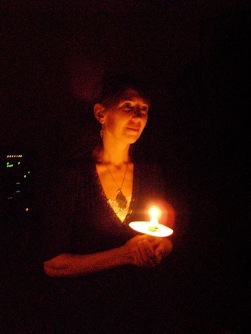
The candle represents the light of love, compassion and connection kindled in our hearts as we dance.
In these challenging times, one of the hardest things to do is to keep our hearts open. Grief and despair tend to shut them down. And even among close friends, colleagues, family members, and people with whom we share worship, when we clash over differing political opinions, trust can swiftly erode. These kinds of losses and sorrows can make us just want to close the doors to our hearts.
Yet hardened hearts and minds are not going to help us overcome conflicts and affirm connections. Only if we can open our hearts to one another, holding the fullness of our (and others’) feelings in a compassionate way, can we weather the storms which threaten to divide us further. And only if we are united can we find our way together through those storms.
One of the best ways I know to connect with others and to open my heart is through the joyful experience of traditional circle dance, particularly Armenian dances. I have written previously on this blog (The Dance of MemoryThe Wishing Tree) about Armenian dances and their ancient roots, their links to the pre-Christian Goddess, and how they affirm survival throughout the traumas of history. I have also written about my friend and colleague Shakeh Major Tchilingirian and her inspiring Circle of Life project, which brings Armenians, Turks, Kurds, Assyrians, and other survivors of atrocities and genocide to dance together for reconciliation.

Continue reading “Opening Our Hearts Through Armenian Dance by Laura Shannon”

If You Can’t Flirt, Don’t Have Sex by Trelawney Grenfell-Muir

If you don’t know how to flirt, you shouldn’t be having sex with anyone.
I admit it… I used to love flirting. It can be incredibly fun. I flirted outrageously with guys I had no intention of dating, and guys flirted with me who weren’t interested in dating me. It wasn’t about sex, either. It was just awesomely fun. The only time I minded was if it turned out they were married/in a committed relationship.
Flirting is like dancing. Both people have to agree to participate. It involves a lot of asking the other person what s/he is comfortable with. Sometimes it is kind of sexual, sometimes it is beautifully spiritual or exciting intellectually. Sometimes it’s tequila body shots, sometimes it’s holding a gaze just a little longer than normal, sometimes it’s making witty but not cruel jokes at the other person’s expense. But it has to be fun, it has to be happy. Like sexual intimacy. If at any point, one party becomes uncomfortable, the other party has to back up and figure out why, and what is needed now.

Continue reading “If You Can’t Flirt, Don’t Have Sex by Trelawney Grenfell-Muir”

Rest and Renewal: Gifts of Women’s Ritual Dance by Laura Shannon

 Samhain is past, and we in the northern hemisphere are once again entering the final outbreath of the solar year. At the winter solstice, light will be reborn. Until then, it is important to embrace the time of rest and renewal which is the great gift of this season. Like the falling leaves and the drying seeds, we too can relax and release old burdens. This is the best way, perhaps the only way, to draw new strength for the next active phase in the ever-changing cycles of our lives.
Many of us no longer follow the rhythms of the year and consequently subsist in an ongoing state of near-exhaustion. But rather than letting our energies get too depleted, we can learn to thrive within the limits of our available resources. As well as vastly improving the quality of our lives, this may lead to solutions for sustainable living in the long term – perhaps the most important skill humanity needs to develop now.  Continue reading “Rest and Renewal: Gifts of Women’s Ritual Dance by Laura Shannon”

Beginning Conversations about the Body at Ease by Stephanie Arel

A topic that continually perplexes me, both personally and professionally, concerns the connection, or harmonization if you will, between our cognitive capacities and our physical expression and comfort, between thinking and feeling. Yoga, dance, working out, meditating, and other modalities which explicitly bring body and mind together often achieve their goal at the point of practice, and while these disciplines have residual effects, how do they have staying power?

For instance, how do we maintain rootedness in the body when we are caught off guard – for instance, by traumatic affect? When we are faced with information about reality that disturbs us – the truth about a relationship or a physical illness – how do we stay physically present? Or when we (I) spend an inordinate amount of time immersed in activities that are essentially not embodied despite the efforts at theorizing such embodiment – reading, researching and writing – what happens to the body?

Sustaining a mind/body (and spirit) connection is a little tricky. Some psychologists would call this connection a kind of attunement (between a dyad) that fosters a form of affective regulation. This means that subjective experiences, correlating thoughts, physiological responses, and the bodily expressions these provoke come into alignment but not in the manner of repression or suppression, rather as a form of accord or modulation that brings us to our best adult selves and enables decision making that supports our most core self. Capable of achieving this? I think it’s an art. Continue reading “Beginning Conversations about the Body at Ease by Stephanie Arel”

Present in Our Bodies: Sensuality, Movement, Feelings, and Joy by Chris Ash

Christy CroftChristmas morning. I don’t usually have Sundays free and our family holiday celebrations lean nontraditional, so I’d come to a special ecstatic dance celebration and brought my 9-year-old daughter with me. As the music started and people all around us began to flow and move, I reached out to touch her hand. As if she’d been doing it for years, she shifted into a beautiful contact improv flow with me, rolling her arm down and across mine as she beamed love and radiance right into my heart.
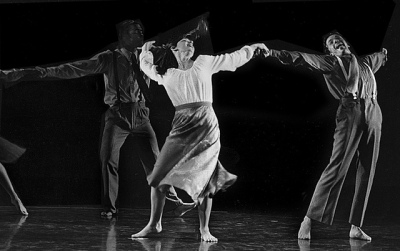
This child brings up so many feelings in me as I watch her grow.

On many occasions at ecstatic dance, I’ve looked around the room and been overwhelmed by the beauty of the dancers and their joyful embodiment. When delight, peace, and ease are conditioned out of many of our bodily relationships through past traumas, body issues, or simply living in a disembodied or misembodied culture, feeling comfortable in our own skins is simultaneously an intentional act of cultural resistance and a profound act of self-care and self-love. Being present in the ecstatic dance space with lovely people moving confidently in fluid, sensual, emphatic, and silly ways fills my heart to overflowing on any given dance day.

Joyful dancers move ecstatically
Photo by Flickr user dannysoar

Being present in that space with my daughter, looking around the room and imagining what it must look like through the eyes of a 9-year-old girl, gave it a whole new hue of meaning. People danced alone or with partners, men danced with men and women with women, all without shame over their bodies or feelings. The occasional dancer who slipped off to sit on the periphery, nursing tears that flow in the way holidays bring for some, was joined, held, hugged, cried with. My little girl danced with joyful abandon surrounded by men and women of all ages and shapes, present in their bodies and feelings, moving in ways that felt good, glowing with presence and the freedom of acceptance. Continue reading “Present in Our Bodies: Sensuality, Movement, Feelings, and Joy by Chris Ash”

Touch and Presence as Intimate Communion by Chris Ash

Christy CroftOver the past 20 years, I’ve been blessed with many moments in which fully aware or embodied presence has intersected spiritual transformation, both in my own life and in the lives of others. In my work on a crisis hotline, I’ve held space for strangers to open up and speak freely about pain, grief, and despair.  In my work as a minister, I’ve held a couple’s hands as I blessed their marriage, and I’ve held space with the dying and their loved ones.

In my work as a doula, I’ve supported women draped over my arms as they pushed new life into being; I’ve also held crying fathers in hospital hallways while their lovers were being prepped for emergency surgeries. In my rape crisis work, I’ve held the hands of women in hospitals through fear and sorrow, and I’ve facilitated support groups for survivors to reconnect with their own embodied sexuality and the fullness of its complexity as they worked toward greater compassion for themselves and their processes.

I’ve worked to build a practice of presence and compassion in my life that extends beyond my family, even beyond people. Last spring, I was late to a party because I’d stopped to help a stumbling fawn out of the highway. Seeing that it was unable to move, I sat with it at the edge of the woods and sang it to its sleep.

Each of these experiences has transformed me, my way of viewing the world, and how I see the role of touch and presence in friendship, service, and worship. Continue reading “Touch and Presence as Intimate Communion by Chris Ash”

When I Dance I Am I Greek by Carol P. Christ

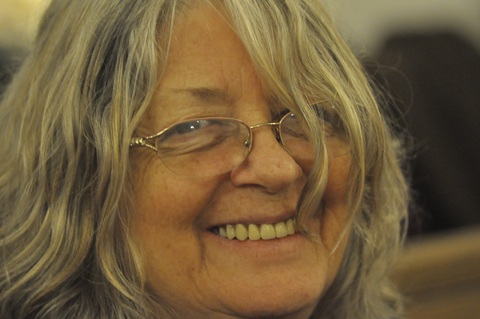
Carol Molivos by Andrea Sarris 2When I first moved to Greece I spoke of being attracted to a culture in which people express their emotions easily and do not hold on to anger. In the part of American culture I know, the opposite is often the case: people do not express their emotions easily and hold onto their anger. When I joined a therapy group in Greece, my therapist said that I made the right decision to move to Greece. “You needed to learn to live from here,” she said touching her belly, “and this is where Greeks live.”
During the first years I lived in Greece, I often said that I wanted to become Greek. Like others had done before me, I romanticized Greece and the Greeks. Then one winter I learned that family violence is as prevalent in Greece as it is in every other country. The cultural ability to express emotion does not stop Greek men from beating their wives or Greek women from hitting children. Indeed the more expressive nature of the Greek culture may make it easier for Greeks to resort to physical violence. On the other hand, violence stemming from withheld feelings can be cruel and unpredictable. Continue reading “When I Dance I Am I Greek by Carol P. Christ”

Spring by Deanne Quarrie

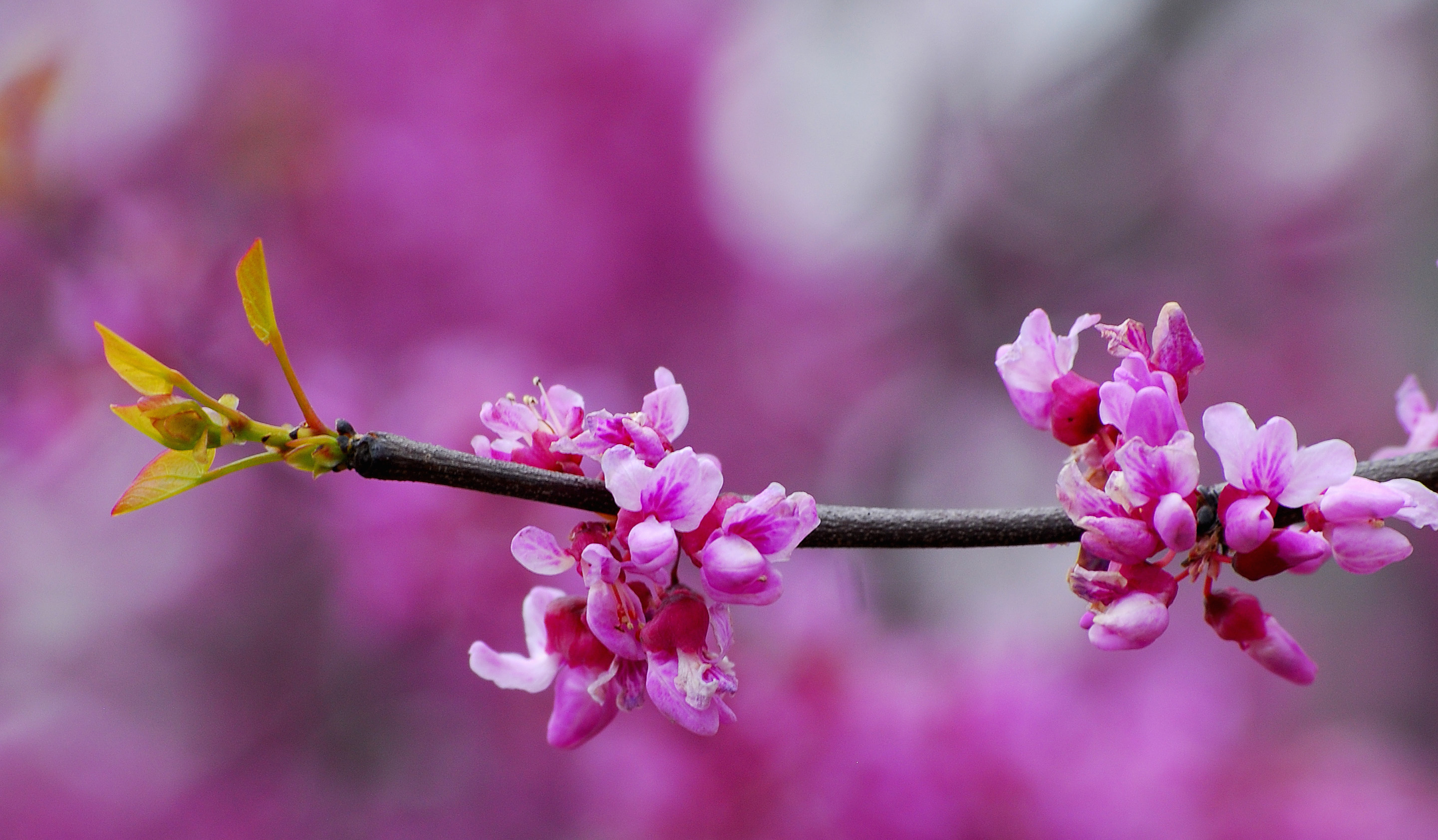
deanne_2011_B_smWe celebrate the Spring Equinox as a reflection of the birthing time of the year. We have made it through the winter’s cold and ice, experienced the warming of the Earth and the flood waters that prepared for the birth of all that is new. Seeds are germinating and beginning to sprout. We see that around us, depending on where we live. Here in Texas the red buds are in bloom and some of the trees have their fresh green leaves opening up at the tips. Just seeing these indicators, brings an internal feeling of birth. My heart expands in joy when I see my first red bud tree in bloom – the first buttercup opening to the sun!

Red BudThis is the time that the Goddess makes herself known by birthing all into existence. She first creates day and night and on this day they are equal, only to rise and fall as the year changes. Then She creates the stars, the heavens, the green things upon the earth, the animals and us – all Her children. All of us glistening in Her birth waters, ready to dance in Her rhythms.

I see the creation of day and night in equal portions coming first, as a lesson for all that follows; balance, a moment of equilibrium, manifesting everything else. We attempt to have that place of balance in our lives, but know from experience it never stays exactly in the center. All we can do is hope to bring it back as we move between states. It is like the pendulum, swinging back and forth from one side to the center then to the other side, but always seeking center.Balance Continue reading “Spring by Deanne Quarrie”

Creativity as our Primal Instinct

JassyYears of patriarchy and masculine domination, rapid technological advances, exclusivist religious dogma, separation from nature, materialistic attitudes and the daily course of our busy lives have left women (and men) largely disconnected from their essential primal feminine energies. We get so caught up in all these “doings” that we fail to tend, nurture or even recognize the primal part of our self that is essential to our being. Women from all walks of life are seeking ways and means to connect back to their core, primal feminine self. But who is she really? Moreover, how do we connect to, or awaken her? Continue reading “Creativity as our Primal Instinct”

Painting Miriam by Angela Yarber

 We are your subtlest instruments:
no music branches to your breast
that does not sound in us,
no music dies away from you,
that in us lives not,
and even in your absence
your cadence journeys…

Allen Mandelbaum, Chelmaxioms

The path to freedom is often muddy.  Water sloshes through your sandals and the soles of your shoes stick, clinging to the past, weighing down the future.  No one said dancing in wet sand was easy.  But it is very holy.  Just ask the brave prophetess who celebrated liberation by dancing on the shores of a reedy sea.

Often relegated to the submissive role of sister, the character of Miriam is typically overshadowed by the triumphs of her younger brother. Like many of her canonical contemporaries, Miriam receives little attention in scripture. Her name is only mentioned twice and the story of her song is left unsung by the writers of Exodus.  Yet she is there, her song hidden in the crevices of the canon, her dance demanding that we notice the ritual event of liberation, her courageous voice prophesying, leaving a legacy for all the dancing women who will follow in her intrepid food steps. Continue reading “Painting Miriam by Angela Yarber”