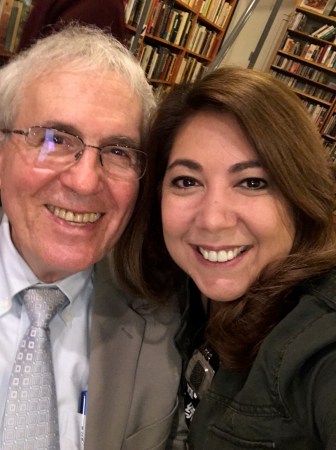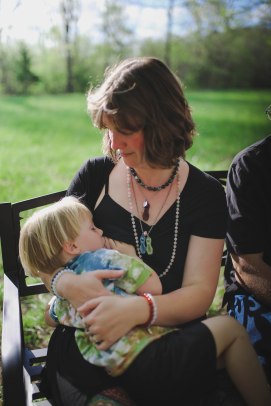
We Don’t Need Armed Guards, We Need Grandmas by Karen Moon

(Written the day after the Parkland high school, Florida shooting.)

Last night, my husband and I went outside to our driveway to sit in the car and have a beer.  Those of you with lots of children will understand that sometimes you just do not have the time, energy or funds for babysitting, but at least we have some uninterrupted time to talk to each other. Our youngest is six years old, so the older ones can easily watch her for twenty minutes.  We are not leaving toddlers to fend for themselves.  And it is cold out.  That is why we are in the car.

Only last night, there was no ‘unwinding’ going on. Somehow, we started speaking about the Parkland, Florida high school gun shooting, and his voice became raised.

He calls it ‘Meditarranean’ and ‘passionate’; I call it an ineffective way of communicating.  I would like to say that I replied calmly. But I did not. He had me, and my voice became raised in response.

Continue reading “We Don’t Need Armed Guards, We Need Grandmas by Karen Moon”

Carrying Our Mothers by Chris Ash

The past few weeks, I’ve been sitting with the many layers held by the concept, and the manifest reality, of mother, mothering, and motherhood. Mother is seen in the divine feminine, in the cosmos, and in the sea and the glow of the moon. She is held in our genes and our histories and the eyes of our children. She is found in archetypes of healing, nurturing, and comfort, as well as in stories of criticism, coldness, and abuse. She is the soft one who tends grief and holds hands and braids hair, and she is the unbreakable one whose labor and caregiving is taken for granted in most areas of her life. We carry our mothers with us in our DNA, in our stories, and in the way we navigate the impacts of intergenerational trauma.

She doesn’t always appear in our stories in simple or easy ways. Some of us mother children we did not or could not grow in our bodies; some of us birth babies who are now mothered by others. Some of us are not mothers at all. Some of us had mothers who could not love us unconditionally, or did not have mothers in our lives, or had mothers who brought us more pain and humiliation than comfort, from whose effects we are still recovering, are still healing. Others have mother wounds, mother blessings, that escape delineation in a single blog post restrained both by its word count and the sometimes-limited imagination of its author.

Mother is a tough concept for me. My own relationship with my biological mother was a source of confusion and heartache for years; the resolution of that internal conflict left me feeling cut off from my maternal grandparents, whose influence on my early life was wholly positive, loving, and stabilizing. Connecting with my ancestors is a part of my spiritual practice, so this loss was present with me, in my heart and waking meditations as well as in my rich dream life, which included frequent visits to my grandparents’ home. Each morning I’d awaken from a dream spent in that space to the stifling realization that their home – my childhood home for my earliest memories – had been torn down years ago. Continue reading “Carrying Our Mothers by Chris Ash”

Grieving through the Holidays: Painting Holy Women Icons of Grief by Angela Yarber

The holiday season is a particularly difficult time for grief. Whether it is grieving someone who died earlier in the year as you celebrate your first holiday season without them, or the lasting memories of loved ones who are no longer present at family gatherings, this time of year makes grief bubble to the surface. Since this is my first holiday season without my little brother, who died in March, I’ve planned ahead with coping strategies that I’d like to share with other feminists struggling to grieve through the holidays.

Upon the death of a loved one, most people in the West are offered commodified grief, costly funerals, and stifled feelings pre-packaged as dignified tradition. When deathcare became a commercial enterprise at the turn of the twentieth century, there was what mortician and author Caitlin Doughty calls a seismic shift in who was responsible for the dead. “Caring for the corpse went from visceral, primeval work performed by women to a ‘profession,’ an ‘art,’ and even a ‘science,’ performed by well-paid men. The corpse, with all its physical and emotional messiness, was taken from women. It was made neat and clean, and placed in its casket on a pedestal, always just out of our grasp (Caitlin Doughty, From Here to Eternity: Traveling the World to Find the Good Death, 136).”

Continue reading “Grieving through the Holidays: Painting Holy Women Icons of Grief by Angela Yarber”

In Memory of Joseph R. LaGuardia: The Good and Faithful Servant by Gina Messina

There are so many massive tragedies in the world that need to be addressed at the moment. However, for me, there is only one that I want to write about today and it is the passing of my dear friend, Joseph LaGuardia. Although he often referred to himself as a “nobody,” Joe is a person who touched countless lives and made our world a more loving place.

Joe was the first person to welcome me to Ursuline College more than four years ago. Before I began my position as dean, Joe, who was serving as interim dean, met with me every week for about 2 months. As we both transitioned to new roles, we exchanged gifts without knowing the other had purchased one. We laughed that we both bought each other books. Joe shared with me his book of poetry Life Seasons, which of course is brilliant. And I gave Joe the book The Presidents’ Club and joked with him that as only those who had served as presidents knew what it was like in the oval office, he and I were in the Dean’s Club, and we were among the few who knew what it was like to serve in the dean’s office.

I was so fortunate that Joe agreed to continue to mentor me and we met weekly for breakfast, lunch, etc. to discuss how to manage the many things that would pop up in the world of academic administration. It was not long before Joe and I became very close friends. Continue reading “In Memory of Joseph R. LaGuardia: The Good and Faithful Servant by Gina Messina”

The Last Time, by Molly Remer

I lie in bed with him, cementing the details in my memory. The way the morning air is heavy and green. The sound of last night’s raindrops continuing to drip from the overfull gutters on the roof. The insistent stab of a single-note bird song in the air. His head nestles in the crook of my arm the way it has done every morning for three years. Blond hair against my nose, breathing in the slightly baby smell of him. “This is the last time,” I whisper softly. “We are all done after this. This is the last time we will have nonnies.”

This is not the first last time for me, but it is the last, last time.  The first baby was born 14 years ago and gathered to my breast with all the tenderness and uncertainty and instinctiveness of a first, first. “Do you want nursies?” I whisper to that new little boy, and we begin the next steps in our bond, nursing for nearly three years, until one day, six weeks away from the birth of the next baby boy, I decide that we truly have to be done. I am a breastfeeding counselor for other nursing mothers and I feel like I should want to tandem nurse my two boys. I fondly envision their hands joining across my body, the easy love and camaraderie between them blossoming through this shared time with their mother. But, I feel an intense irritation with nursing while pregnant, nearly a sense of revulsion and the almost irresistible urge to shove away my sweet little boy as I prepare to greet the life of another. I talk to my midwife about my feelings and she explains that with her own two daughters, the agitated feeling at nursing the older one did not go away with the birth of the second, but instead became dramatically worse. After hearing this, I feel panicky and I decide we do, in fact, have to wean. He is a very verbal and precocious toddler and I am easily able to explain to him that it is time to be finished nursing. One night though, he lies in bed with me crying and begging to nurse. He says he really needs to. I tell him, “remember, we’re all done, but if you really, really need me, if you really, really still need to have nursies, you can.” He doesn’t nurse, but instead falls asleep, reassured that while our nursing relationship might be over, I’m still here.

Continue reading “The Last Time, by Molly Remer”

Family, Interdependence, and Mutual Support by Chris Ash

Christy CroftOver the past few months, a precious person has come closer into my family’s life in such a way that their presence in my home, among my loved ones, has come to feel natural and easy. This is someone I love, someone who adores my children and appreciates my partner of 18 years and whose sweet spirit and vibrant laughter have added joy and mirth to our family home.

Yesterday, they rode with me to drop my freshly-mohawked teenager off at a farm to help with preparations for an upcoming arts camp. I introduced them by name to the camp assistant and walked over to chat with the camp director for a bit. Later, as we got back into the car to head to lunch, I asked what they thought of the farm.

“It was nice,” they said. “I’m glad your children have a place like that. Also, while I was chatting with the camp assistant, she asked if I was family.”

“What did you say?”

“I said yes.”

They weren’t wrong.

The meaning the word “family” holds for me is something I’ve given much consideration over the years. For generations, many of us have been expected to turn a blind eye to the ways patriarchal domination of women’s and children’s bodies perpetuates abuse in our own family systems. My inability to sweep these abuses under the carpet, to keep silence and pretend all is well, has led to my estrangement from one entire side of my family. It’s an estrangement I feel will be permanent, and while I grieve the loss of an ideal I never had, I welcome the opportunity to live authentically and boldly, confident in my dedication to my ideals, which include honesty, justice, and the unconditional protection of children and vulnerable populations.

For a while, I sat with the gap this estrangement created in my life, unwilling to fill it with harmful relationships with those to whom I am blood-related, yet hesitant to broadly redefine it in a way that negates the importance of those who have chosen to love and raise up a child, however imperfectly. Continue reading “Family, Interdependence, and Mutual Support by Chris Ash”

Breaking Down the Concept of Arranged Marriages by Vibha Shetiya

13327613_10208448645447348_6913754683590458893_nOne of the first things my American friends and family ask me when they learn I used to be married to an Indian man is: was it an arranged marriage? I understand the intrigue, the bewilderment and even horror that the phrase “arranged marriage” can conjure up in unfamiliar Western minds. Images of forcing women to marry strangers encountered upon the street or child betrothals or women being dragged to the wedding site to be married off to mustachioed men are likely to flash before one’s eyes. While such incidents may have occurred from time to time, and in the past, as with child marriages, the long-established concept of “arranged marriage” is very different and not as frightening as may seem.

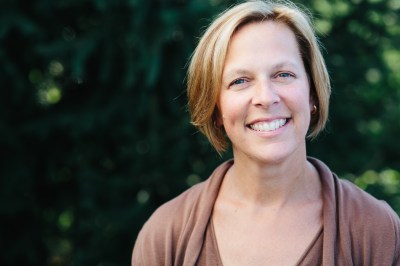
Traditionally speaking, proposals materialized through word-of-mouth – family and friends recommended a good alliance, or a parent would approach someone directly or indirectly to ask for a daughter or son’s hand in marriage. Even then, personal histories were well researched into, before both parties decided to “see” each other. Marriages in India continue to be alliances between families, and so it is important to check into family background – what are the parents’ and siblings’ occupations? How much does the prospective groom earn? After all, he may be the sole earning member of his family and may not be able to provide for his own family once he starts one. Is there a history of crime or mental illness? This investigation makes perfect sense in a society that is community and family-oriented, and wherein joint family situations are still the norm, especially in smaller towns and villages. It is thus imperative that everyone try and get along. “Arranged marriage” is certainly not synonymous with an “Oh-let’s-just-get-rid-of-our-daughter” arrangement.

Continue reading “Breaking Down the Concept of Arranged Marriages by Vibha Shetiya”

Remembering My Saints by Katie M. Deaver

My mother and I have always been very interested in our personal connection to the spirit realm.  This connection, for us, is an important one.  We pay attention to the signs and messages that remind us of our continued connection to those we love who no longer occupy our own physical time and space.  Each cardinal, butterfly, and ceaselessly repetitive number (310 in our case) promises the continuation of relationship with the ones we miss so dearly.

A few years ago my mother and I were able to see a live show at the Chicago Theater featuring Long Island Medium Teresa Caputo.  Even with hundreds of people in the audience, specific moments of Caputo’s readings spoke to images and memories that resonated and connected to our experiences.  The show allowed us to once again be reminded of the continued connection between us and those special ones who we love and miss. Continue reading “Remembering My Saints by Katie M. Deaver”

My Turn: A Femifesto by Marcia Mount Shoop

It’s coming up on a year now that pretty much everything changed in my family’s life. My over twenty years of married life, up until last year around this time, our lives had been built around my husband’s job. John’s work as a coach in the NFL and Division I collegiate football had moved us all over the country—coast to coast and in between.

MMS Headshot 2015This time last year our move was for me to take a job. No more football. And a move not for football meant massive shifts in the daily life of our family.

I cannot count the number of times since I took this new job that people have said to me, “Finally, it’s your turn!” Continue reading “My Turn: A Femifesto by Marcia Mount Shoop”

Down on the Farm by Carol P. Christ

iloff-grave-with-carolIn the past week I visited Cherry Ridge, Honesdale, Wayne, Pennsylvania in the Pokonos, where I was welcomed by my third cousin Marcia Perry Gager whose family never left the place where our ancestors settled.  Marcia and I have been corresponding about our family’s history since Ancesty.com connected us about three years ago. During that time, together with another cousin, Debra Ball, we have managed to decipher the complicated history of Henry Iloff, his two wives, and their eighteen children.

My visit to Honesdale began at John’s Evangelical (formerly German) Lutheran Church.  Following a last-minute discovery that the baptism, marriage, and funeral  records of the church were not in the Wayne County Historical Musem archives as I had been led to believe, I made a call to the “emergency number” of Pastor Richard Mowery the day before our scheduled visit, not knowing how he would respond to this “not-really-emergency” invasion of his personal space. Continue reading “Down on the Farm by Carol P. Christ”