Legacy of Carol P. Christ: Transcendence, Immanence, and the Sixth Great Extinction

This was originally posted August 4, 2014

In my recent blog “The Flourishing of Life and Feminist Theology” I discussed Grace Jantzen’s view that theology should focus on “natality” or birth and life, rather than life after death or life apart from this world. This week Tikkun magazine published its summer issue with a feature called “Thinking Anew about God.” In it two male thinkers, one Buddhist and one Christian, argue for a similar turn toward the world in their traditions. Their calls for religions to focus on this world were published the same week scientists warned that the world stands on the brink of the sixth great extinction.

I have come to believe that any religion espousing cosmological dualism (devaluing this world in favor of a superior reality such as heaven) and individual salvation (the idea that what ultimately happens to me is disconnected from what ultimately happens to you) is contributing to our world’s problems rather than offering a solution. … [Religions should] stop emphasizing the hereafter and focus instead on how to overcome the illusion that we are separate from this precious, endangered earth. –David Loy, Buddhist, writing in Tikkun Summer 2014

Continue reading “Legacy of Carol P. Christ: Transcendence, Immanence, and the Sixth Great Extinction”
Legacy of Carol P. Christ: The Flourishing of Life and Feminist Theology

This was originally posted on July 28, 2014

I first encountered the image and concept of “flourishing” in Grace M. Jatzen’s feminist philosophy of religion, Becoming Divine. For Jantzen “flourishing” is a symbol of a theology of “natality” or birth and life, which she contrasts to the focus on death and life after death in traditional Christian theologies.

Jantzen argues that the focus on death and life after death is a rejection of birth. Birth is rejected because birth through a body into a body implies finitude. Birth ends in death.  Jantzen argues that embracing natality means embracing finitude and death.

Continue reading “Legacy of Carol P. Christ: The Flourishing of Life and Feminist Theology”

Image and Likeness by Dale Allen

I attended a beautiful women’s circle to celebrate my dear friend Gloria’s birthday recently.  Each woman was invited to bring a sharing for Gloria – a poem, reflection, oracle card, song or dance – whatever felt right.  Each sharing that day was not only a gift to Gloria, but to each of us.

I had met Gloria during the period of my life when I had written a play titled, “Dancers of the Dawn,” with a cast of seven women of different ages, shapes, sizes and colors. The play featured original music, drummers, myth, history, dance, even comedy for a sumptuous experience of the sacred feminine emerging in modern women.  Gloria was a part of the women’s sacred circles that we co-created during that time – circles that continued for a decade and still retain heart-connections today. 

Continue reading “Image and Likeness by Dale Allen”

Legacy of Carol P. Christ: TWO TORTOISES IN THE WEB OF LIFE

This was originally posted on March 14, 2014

The Gods made only one creature like them—man.  Greek TV documentary

The sight of a reptile or an amphibian usually provokes, at the very least, a feeling of repulsion in most people. Natural History of Lesbos

testudo marginata face

In the past days and weeks thetwo tortoises with whom I share my garden have woken up from a long winter’s sleep.  Henry, testudo marginata, has been up for a while now.  More than a month ago when I was cutting back and weeding in the area of the garden where he had been sleeping, Henry roused himself to sit in the sun near me for a few hours each day before creeping back under a shrub.  At first I thought I had disturbed him, but when he came back out day after day while I worked, I began to wonder if he was coming out to say hello.

Continue reading “Legacy of Carol P. Christ: TWO TORTOISES IN THE WEB OF LIFE”

Legacy of Carol P. Christ: Remembering Audre Lorde and “The Uses Of The Erotic”

This was originally posted on March 18, 2013

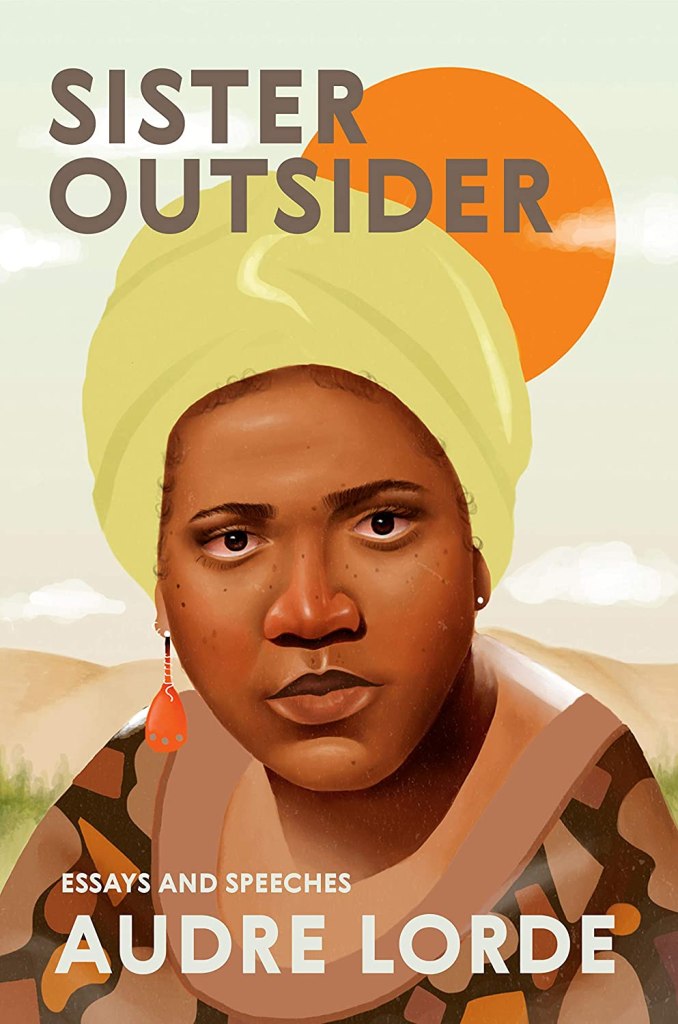
Moderator’s Note: Carol’s original essay had links to the essay which are no longer active. The essay can be found in Sister Outsider.

I was  given a copy of Audre Lorde’s essay “The Uses of the Erotic” in my first year of teaching at San Jose State by a young white lesbian M.A. student named Terry.  It was 1978.  I was in my early 30s.  This essay came into my life and the lives of my students, friends, and colleagues at “the right time.”  It became a kind of “sacred text” that authorized us to continue to explore the feelings of our bodies and to take them seriously.

The second wave of the women’s movement was about to enter its second decade. We had already been through years of consciousness raising groups.  There we learned to “hear each other to speech” about feelings we had learned to suppress because we had been told they were not acceptable for us as women to have or to express.  Those early days of the women’s movement were one big “coming out” movement.  We were bringing our feelings and ourselves out of the closet.

Continue reading “Legacy of Carol P. Christ: Remembering Audre Lorde and “The Uses Of The Erotic””

Legacy of Carol P. Christ: Argument from “Absence” and Absence of Dialogue

This was originally posted August 31, 2015

Recently in a conversation with a noted archaeologist and his male graduate student assistant, I proposed that the absence of war and the trappings of war, including images of larger than life-size warrior kings, suggested to me that we should not understand the social structure of ancient Crete on the model of patriarchal kingship. “Kings are always warriors,” I said, “yet there is no clear and convincing evidence of organized warfare in ancient Crete. And,” I continued, “because warrior kingship is not a ‘natural state,’ but one achieved through warfare and domination, kings must legitimate and celebrate their power through larger than life-size images of themselves. Such images were common in ancient Sumer and in ancient Egypt, but are not found in ancient Crete.”

The response I received was unexpected: both archaeologists seemed dumbfounded. “Is kingship always associated with war?” they asked. “Yes,” I responded, “this is a conclusion I reached many years ago while studying the cultures of ancient Greece and ancient Israel, and I have recently elaborated this theory in a series of essays on the blog Feminism and Religion ( See “Patriarchy as a System of Male Dominance Created at the Intersection of the the Control of Women, Private Property, and War”).”

Continue reading “Legacy of Carol P. Christ: Argument from “Absence” and Absence of Dialogue”

Legacy of Carol P. Christ: “God is Not a Man, God Is Not a White Man”

This was originally posted February 1, 2016

“The pictures that line the halls speak volumes about the history of racism and sexism and they shape the future in powerful ways.”–Simon Timm

The author of these words recently posted a short video on Youtube entitled “Mirror Mirror on the Wall: The Legacies of Sexism and White Supremacy at Yale Divinity School.”* The video begins with a catchy little ditty with the words, “God is not a man, God is not a white man.” It tracks paintings and photographs of professors and other luminaries in the field of theology on the walls of the Yale Divinity School. By Timm’s count: 99 white males, 6 women, and 3 blacks. The single black woman is counted in both categories.

Continue reading “Legacy of Carol P. Christ: “God is Not a Man, God Is Not a White Man””

Archives from FAR Founders: Rosemary Radford Ruether’s Quests for Hope and Meaning by Gina Messina-Dysert

This was originally posted on December 18, 2013. This is part of a project to highlight the work of the four women who founded FAR: Xochitl Alivizo, Caroline Kline, Gina Messina, and Cynthia Garrity-Bond

Rosemary Radford Ruether is one of the most brilliant theologians of our time and her newly released autobiography, My Quest for Hope and Meaning, is a gift to those of us who have been so touched by her work.  In this intimate and beautiful piece, Ruether shares her personal journey in feminist scholarship and activism.  The autobiography opens with a profound forward by Renny Golden (that is also shared here on Feminism and Religion) and continues with an introduction and six chapters where Ruether guides us through an exploration of the influence of the matriarchs in her life, her interactions with Catholicism, her continued exploration of interfaith relations, her family’s struggle with mental illness, and her commitment to ecofeminist responses to the ecological crisis.

Ruether states that “Humans are hope and meaning creators” (xii), and her autobiography details her own quests for hope and meaning.  She reflects on the incredible impact made by the female-centered patterns in family and community in her life.  According to Ruether, these “matricentric enclaves” grounded and shaped her interest in feminist theory and women’s history.  She also describes the spiritually and intellectually serious Catholicism that she received from her mother and articulates her continued frustration with Vatican leadership that has undermined the efforts of Vatican II.  For Ruether, her ongoing affiliation with feminist theological circles is crucial as she continues to work toward shaping an ecumenical and interfaith Catholicism.

Continue reading “Archives from FAR Founders: Rosemary Radford Ruether’s Quests for Hope and Meaning by Gina Messina-Dysert”

Legacy of Carol P. Christ: Gender, Friendship, Collaboration, and Unacknowledged Authorship

This was originally posted on April 20, 2015 and was updated by Carol on August 23, 2019

In recent weeks Judith Plaskow and I have been revising the manuscript of our new book Goddess and God in the World in preparation for sending it to the publisher. Yes, we have a publisher. We signed a contract with Fortress Press a short time ago. The book should be out in 2016.

We have been hard—and I mean very hard—at work revising the four chapters in the book that are jointly written. The versions have been going back and forth and forth and back as we revision what we want to say and revise each other’s revisions of the drafts we have. We both want the final manuscript to say things just right and it is very hard not to make one more set of (alleged) improvements.

In the process we have realized that while we often disagree on words and wording, we have come to think alike on a wide variety of issues to the point that it becomes hard to say who had the ideas first. In addition we have both become so familiar with each other’s positions that we can each easily articulate both sides of our dialogue on the issues on which we disagree.

Continue reading “Legacy of Carol P. Christ: Gender, Friendship, Collaboration, and Unacknowledged Authorship”

Future of Mifepristone by Winifred Nathan

Today is the one year anniversary of the Dobbs decision.

The alarm grows louder. How far will the antiabortion lobby restrict women’s reproductive health care before they are satisfied? If they successfully secure a complete abortion ban, will they stop? Or will they go on to control women’s dress, education, travel, etc.?

Reportedly, Dobbs v Jackson overturned Roe v Wade so the states could set the legal boundaries of abortion through the democratic process. But on November 18, 2022, the US District Court of Northern Texas delivered Alliance for Hippocratic Medicine et al. v US Fodd and Drug Administration et al., a decision that stops medical abortion in all fifty states by ending FDA approval of mifepristone. The Supreme Court has stayed (paused) the Texas order as the appeal works its way to their docket. Mifepristone continues to be available, but for how long? Will the Supreme Court eventually side with the plaintiffs?

Continue reading “Future of Mifepristone by Winifred Nathan”