

,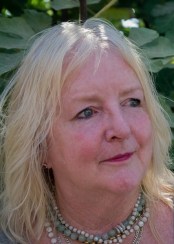 A few years ago, I visited the family farm founded by ancestors from Germany in the Pokonos with a newly discovered cousin. The woman I met was delightful: warm and friendly and very much connected to family still living in the area. Her mother had vivid memories of the farm. In contrast, my great-grandmother left home to marry in Brooklyn. My father had fond memories of visiting the farm as a child, but lost touch with the relatives there when his family moved to California in the 1930s.
My cousin was working as a department manager at Walmart. She seemed smart as a button, so I asked her why she had not gone to college. She said that though she had the grades no one encouraged her to do so. Her response made me wonder if I would have gone to college if my part of the family had remained close to the family farm. I was stunned by the roles chance and the choices of others play in our lives. Though I had more education than my cousin, I was not sure that mine was a happier life. I envied the family ties that shaped and defined her days.
About two weeks ago my cousin wrote on facebook:
I have often wondered about why Whites are racists, and no other race is. Someone finally said it. How many are actually paying attention to this? Continue reading “Dear Cousin: Can We Talk about Structural Racism? by Carol P. Christ”
 I arrived to Crete on June 6. Movers were in my house in Lesbos on the 4th and 5th. I put myself, my car, and my cat on an overnight ferry from Lesbos to Athens on June 5, and, after a day, took a second overnight ferry from Athens to Heraklion. Then another day moving my furniture and belongings up to my 5th floor apartment using a crane. The agreement was that the moving company would put all of the furniture in its place, while I would unpack over the next few days.
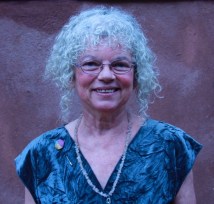 Amongst Celtic peoples, the capacity to speak poetically was a divine attribute, regarded as a transformative power of the Deity, who was named by those peoples as the Great Goddess Brigid: She was a poet, a Matron of Poetry (along with her capacities of smithcraft and healing). And at Delphi in Greece, the oracular priestesses delivered their prophecies in poetic form: Phemonoe invented the poetic meter, the hexameter. And from Sumeria, humans have the first Western written records of literature, which is poetry written by the High Priestess of Inanna, Enheduanna in approximately 2300 B.C.E.. Poetry has been recognised as a powerful modality: Barbara Mor and Monica Sjoo described “poetic thinking” as an wholistic mode, wherein “paradox and ambiguity … can be felt and synthesized. The most ancient becomes the most modern; for in the holographic universe, each ‘subjective’ part contains the ‘objective’ whole, and chronological time is just one aspect of a simultaneous universe” (
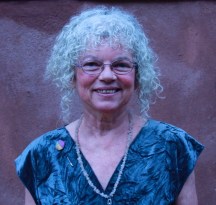 The term ‘PaGaian’, which became the title of my work, was conceived in at least two places on the planet and in the opposite hemispheres within a year of each other, without either inventor being aware of the other’s new expression. It was some time before they found each other … one party in Australia, myself having published a book with
  Have you forgotten yet? Have you forgotten what it felt like to go about your life pre-pandemic?
 Imagine that you are a young mother of three from Syria, and that after fleeing your home with your husband and family, you arrived in Lesbos and have been waiting for months to have your asylum papers processed. You don’t know when that will happen, it could take more than a year, you have been told. You are staying in a tent with other families because the containers are full. You have no privacy. When it is cold you are cold, and when it rains you get wet. You try to keep your family clean and healthy, but there are not enough toilets and showers for everyone. In addition, you are afraid to leave the tent at night because some of the men without families drink too much and harass you and the other women.
  Feminist spirituality is often disparaged in academic feminist and progressive communities. Many of the strongest critics are Marxists, but there is a general agreement that religion is the opiate of the people, a false belief system that diverts energy from the difficult work of creating justice in this world. This view is rooted in the habit of thought known as classical dualism in which spirit and nature, spirit and body, and this world and the next are viewed as antithetical. From this, it would seem to follow, feminist spirituality focuses attention on an imagined spiritual world as opposed to the material world in which real people live and interact with each other. Nothing could be farther from the truth.
 Over the past few weeks of lockdown in Greece, I have asked myself numerous times: if we can shut down the world economy because of a virus, why don’t we shut everything down until we end war or find real solutions to global climate change? In my mind the horrors of war are much worse than the horrors of disease and dying and the threat and reality of global extinctions pose a much greater threat to humanity (not to mention nature) than the Coronavirus.
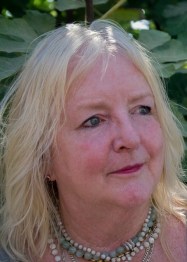 Just over a month ago and shortly before Greece went into Coronavirus lockdown, I signed the contract on my new apartment in Crete (after waiting 6 months for the owner to submit his paperwork). Though I did not realize it until I had been sitting in the notary’s office for several hours, the date of the signing was February 25, my father’s birthday. My father and I had a troubled relationship, due to the fact that he could not accept that I did not “know my place” in a world where women were expected to be submissive to men.
 Feminism and Religion