

we need a god who bleeds now
a god whose wounds are not
some small male vengeance
some pitiful concession to humility
a desert swept with dryin marrow in honor of the lord
we need a god who bleeds
spreads her lunar vulva & showers us in shades of scarlet
thick & warm like the breath of her
our mothers tearing to let us in
this place breaks open
like our mothers bleeding
the planet is heaving mourning our ignorance
the moon tugs the seas
to hold her/to hold her
embrace swelling hills/i am
not wounded i am bleeding to life
we need a god who bleeds now
whose wounds are not the end of anything
–Ntozake Shange
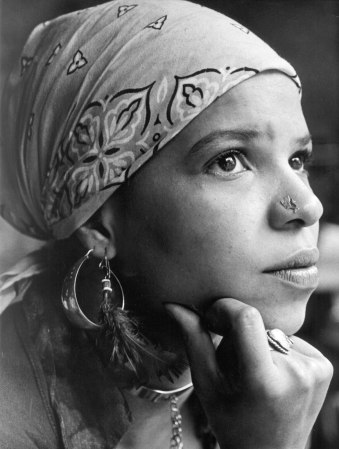 Continue reading “Let Us Proclaim the God Who Bleeds Now by Carol P. Christ”

 From the 1993 Re-Imagining Conference:
 A pilgrim leaves home and sets off on a journey, seeking healing, revelation, and direction in her life. She finds companions along the way whose stories reflect her own, validating her quest and shedding light on her journey. According to anthropologists Victor Turner and Edith Turner, pilgrimages have common structural elements. A pilgrim separates from family and friends, work and obligations. She steps across a threshold into “liminal space” in which daily routines are suspended, opening herself to discovering new ways of being and living.
 Though represented by its detractors as an incursion of paganism into Christianity, and presented as an integrally and intrinsically Christian phenomenon by its supporters, the truth about the Re-Imagining Conference and movement is that it was a product of a wider feminist awakening. The critique of patriarchal religions that emerged in the academy and in churches and synagogues in the late 1960s and early 1970s was part of the emerging feminist uprising. The feminist movement placed a question mark over all patriarchal texts and traditions, secular and religious, and as such was beholden to none.
 The Goddess is the “All of Creation.” She is the Creatress and the Created. She is the life force of all there is. She is one, whole, and complete. Before Her, nothing was. She arose from the Great Void, the source of all potential, giving birth to Herself before anything else had ever been born. She separated the sky and the water, and She danced. In the ecstasy of Her Dance She conceived of all there is.
 Feminism and Religion