

 Freyja is an Old Icelandic goddess of the Earth, fertility, and beauty. Her name means “Lady.” Freyja is known to be very beautiful and sexual. It is thought that Freyja was first in union with Od. This union represented what is known in Old Icelandic as sam-vit, a state of united consciousness. In other words, consciousness that reflects a state of being united, integrated, or whole. Od had vanished from Her life causing her to weep for his loss. Where her tears fell on the land, they turned to amber and where they fell in the Sea they became gold. Amber and gold are both sacred to Freyja. From the time he left, she continued to travel and search for him. Continue reading “Our Loss of Od by Deanne Quarrie”
Tag: goddess
MATRIARCHY: DARING TO USE THE “M” WORD by Carol P. Christ
 For me the word “matriarchy” expresses the certainty that “another world” can exist—a world not based in domination and hierarchy or violence and war.
The word “matriarchy” makes people’s hair stand on end as they imagine the mirror-image of patriarchy: societies in which women dominate men, beat men, rape men, hold men as slaves, and demand obedience from men. Some who do not protest very loudly or at all against patriarchy are horrified by the very idea of matriarchy. To be fair, most feminists have also been schooled not to use the “m” word.
Early in my academic career, I read “The Myth of Matriarchy” by Joan Bamberger and learned that the idea of matriarchy gone wrong has been used by men to justify patriarchy. From other academics I learned that in matrilineal societies, uncles have a great deal of power—so therefore there never was a matriarchy. I was also aware that Jungian and other proponents of a “matriarchal stage” in the development of culture have argued that matriarchy had to be succeeded by patriarchy in order for societies to evolve to a “higher” stage. Unlike many of my colleagues I stubbornly held onto the belief that there must have been “a better way” prior to patriarchy. Continue reading “MATRIARCHY: DARING TO USE THE “M” WORD by Carol P. Christ”
Brigid, Archetype of Inspiration and Activation by Stephanie Anderson Ladd
 Brigid, Goddess of the Fire, greets us on Brigid’s Day, February 1. She is a Celtic sun goddess whose light burns brightly, illuminating the darkness of the land, of a heavy heart, and the dark night of our soul. With her shining light to guide us, we are lifted out of the Underworld darkness where we tend to descend in Winter, to the light of the World above, teeming with life as Spring begins to unfold her wet wings.
Brigid is a beloved goddess throughout the British Isles, particularly Ireland, where she is seen as the Mother of the Land and Her people. As a feminine archetype, she activates our solar, active nature. Much like the sun rising from below the Earth’s horizon, she urges us to come out of hiding and shine our light on the world. This may be done in a quiet manner, such as sitting by the hearthfire and doing needlework, finding inspiration by a walk in nature and writing a poem, moving about the kitchen making soup, getting busy with an art or craft project, or in big ways by taking on new roles as healers, artists, and leaders and calling others to join us. Continue reading “Brigid, Archetype of Inspiration and Activation by Stephanie Anderson Ladd”
Why I Need the Goddess by Judith Shaw
 I have been drawn to the Goddess for a variety of reasons. Initially, as a young woman, She spoke to me of my own power, self-worth, self-determination and my/every woman’s inherent beauty. She lent Her hand to my emerging sense of independence from male domination.
Over the years my experience of Goddess deepened. At times I feel Her as manifest in me and as a symbol of my own power. At other times She is who I pray to for both personal and community help.
The Pagan Wheel of the Year by Deanne Quarrie
Barbara Ardinger (one blogger here – watch for her “twist” on this in January!) and I were discussing that an explanation of the pagan year and our Sabbats might be in order. Sometimes when we are immersed in our own spiritual practice, we forget that those who read what we have written may not have a clear understanding of what forms the basis of the holy days we speak of in our articles. These holidays are called Sabbats. The word sabbat is of obscure etymology but was understood in the Middle Ages to mean a gathering of witches and heretics. The word comes from the Hebrew Shabbath meaning a day of rest. Christians use the word Sabbath for Sunday, their traditional day of worship. It is interesting to note this was not a term originally coined by pagans, themselves. It has been borrowed or adopted for use today.
Pagans see the journey traveled in a year or a lifetime as kind of wheel. It is based on the earth’s journey around the sun. One rotation equals one year. We call it the Wheel of the Year. Since the origins of most of the traditions practiced by pagans in this country come from the Northern Hemisphere, the turning of the wheel is based on the Earth’s travel around the sun and the impact that is felt in the Northern Hemisphere. It would be exactly the opposite for those in the Southern Hemisphere. Continue reading “The Pagan Wheel of the Year by Deanne Quarrie”
IS IT ESSENTIALIST TO SPEAK OF EARTH AS OUR MOTHER? by Carol P. Christ
The charge of “essentialism” has become equivalent to the “kiss of death” in recent feminist discussions. In this context it is taboo to speak of Mother Earth. Yet, I would argue there are good reasons for speaking of Mother Earth that do not add up to essentialism. What if the values associated with motherhood are viewed as the highest values? What if the image of Mother Earth encourages all of us to recognize the gift of life and to share the gifts we have been given with others?
For those not familiar with the “essentialism” debate in feminist theory, it might be useful to define “essentialism.” In philosophy, essentialism is the idea that every “thing” has an “essence” which defines it. In its pure form, essentialism is a by-product of Platonic “idealism” which states, for example, that the “idea” of table is prior to every actual table and that every actual table is an embodiment of the idea of table.
Aristotle disagreed with the Platonic view “way back then,” arguing that the idea of what a table is can be inferred from actual tables, and so on for every “thing.” There is no need for an idea to exist prior to the existence of anything. Rather ideas help us to name and categorize existing things. In the 20th century “existentialism” again challenged “essentialism,” asserting that “existence precedes essence.” Existentialism argued that free individuals are defined by what they do, not by what they “are” prior to or apart from their actions.
When Whitehead said that all western philosophy can be understood as a footnote to Plato, he was referring in part to disagreements among philosophers about the relationship of ideas to things and existence to essence.
In the context of feminist theory, the charge of “essentialism” is used to criticize theories which speak of woman as opposed to man or feminine as opposed to masculine. Continue reading “IS IT ESSENTIALIST TO SPEAK OF EARTH AS OUR MOTHER? by Carol P. Christ”
The Quiet Voice of the Frame Drum by Oxana Poberejnaia
 Layne Redmond passed away on 28 October 2013. Days before her death I received by post her signature Lotus Tambourine which Layne developed with Remo, manufacturer of world frame drums. Remo posted a tribute to her on her page as a Remo artist. Percussive Arts Society published an In Memoriam of her, along with the link to an article by Layne Redmond “Frame Drums and History”. Facebook and especially Women Frame Drumming page exploded with expressions of gratitude, sympathy and testimonials of how Layne changed people’s lives. Here is an account of Layne’s last summer by a person who supported her in her end-of-life transition.
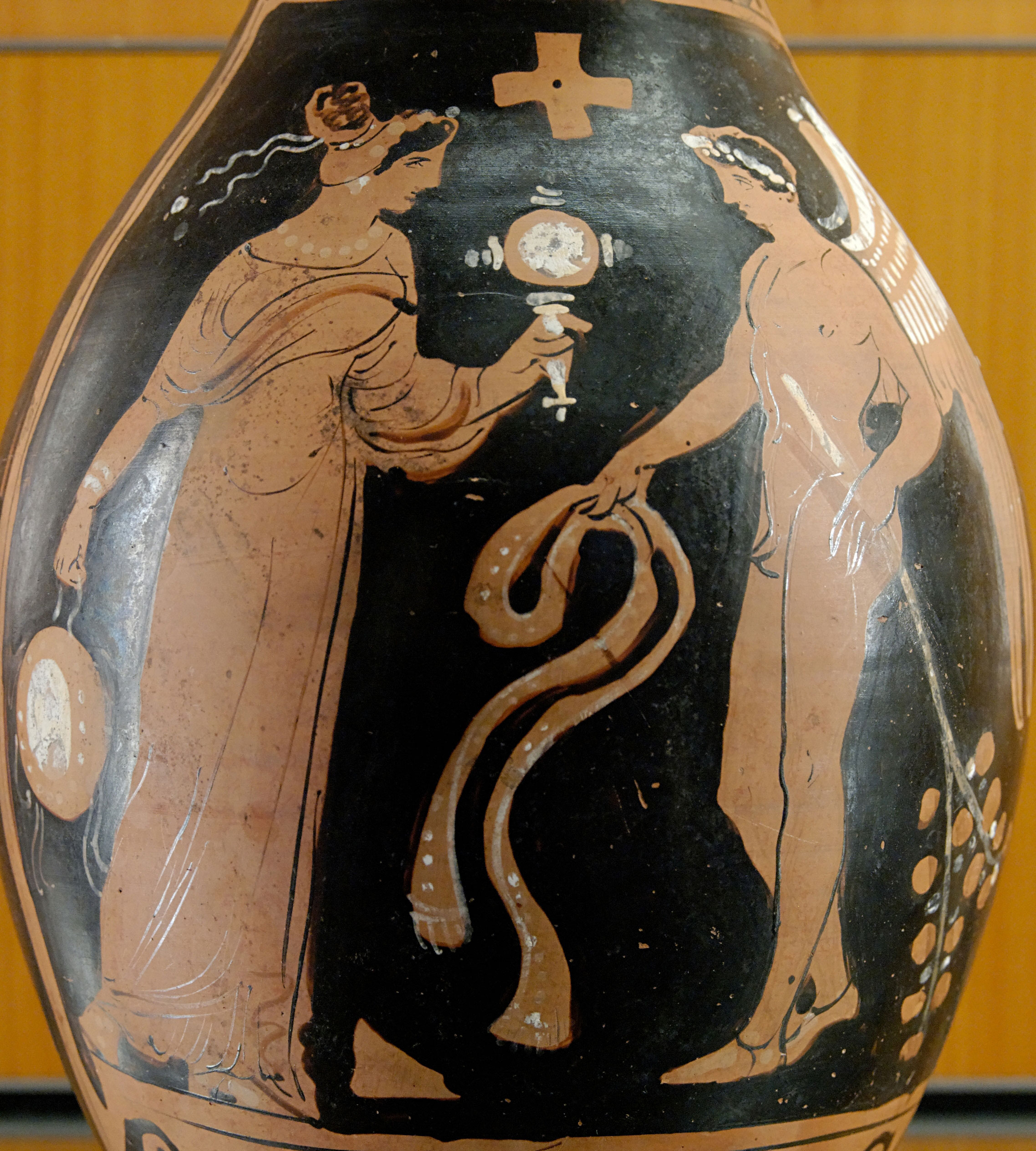 Layne Redmond was intensely busy with two projects during this time: completing her film about drumming spiritual practices to dream awake Afro-Brazilian Gods and Goddesses, and preparing her seminal book When The Drummers Were Women for re-printing with new materials and photos. She put out appeals for both projects, including on Karen Tate’s show “The Voices of the Sacred Feminine” in June 2013, and people helped with their money and time.
Continue reading “The Quiet Voice of the Frame Drum by Oxana Poberejnaia”
“THE DIVINE MYSTERY”? by Carol P. Christ
“The mystery of God in feminist theological discourse” is the subtitle of Elizabeth Johnson’s widely read She Who Is. The notion that God is “a mystery” is rarely questioned in feminist theologies. But maybe it should be.
Although it is true that the finite cannot encompass the infinite, and that all knowledge is rooted in particular standpoints, I do not agree that the first and last thing to be said about the divine power is that it is “a mystery.” Indeed as I will argue here, speaking about God as “a mystery” obscures more than it “reveals.”
 The notion that Goddess or God is “a mystery” is rooted in notions of “a God out there” that most spiritual feminists reject. Goddess or God “in” the world is, I suggest, not unknown, but known, not hidden, but revealed–in the beauty of the world and in ordinary acts of love and generosity.
The notion that God is “a mystery” is a well-worn trope in Roman Catholic theology. Protestants make similar claims when they speak of the hiddenness of God Continue reading ““THE DIVINE MYSTERY”? by Carol P. Christ”
Fand – Goddess of the Sea – a Shapeshifter for Samhain by Judith Shaw
Fand is a Celtic Sea Goddess whom some scholars believe originated as a Manx sea deity (the original inhabitants of the Isle of Man). With time She became the most loved of Ireland’s fairy queens, called “Queen of the Fairies. Fand, meaning “Pearl of Beauty” or “Tear” was stunningly beautiful. Though she was married to the Celtic Irish Sea God, Manannan Mac Lir, She, like other faery queens, fell in love with and then enchanted a mortal man, linking our world with Her Otherworld. Being the Goddess/Faery Queen she was, Fand fell in love not with any common man but with Cuchulainn, the greatest Irish hero.
Continue reading “Fand – Goddess of the Sea – a Shapeshifter for Samhain by Judith Shaw”
Three Poems by Janine Canan
The Visit
I came here
in order to lie in the sand
on a sunny day
and feel the warmth
the way it lifted me
weightlessly
we were one
the Earth and I
seamless
she pressed her face
to mine, I ran
my hands through her
and we streamed
with timeless
happiness
I came to lie in the sand
and feel
her living warmth.
Continue reading “Three Poems by Janine Canan”
 Feminism and Religion