Thealogy of the Ordinary by Molly

crop027

The Goddess Gaia is alive
In this time and in this space
She speaks in sunrises
And waves against the shore
She sings with the wind
She dances in moonlight
She holds you close
Your heart beats in time with hers
A great, grand hope and possibility
For this planet…

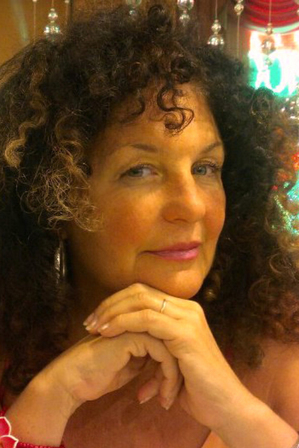
Over the last two months, I have been listening to a wonderful telesummit about priestesses. I am also a huge fan of the radio show, Voices of the Sacred Feminine. However, as I listen to both, I sometimes find myself wondering if walking a Goddess path is also viewed as synonymous with, “believe everything, question nothing.” Crystal essences, gemstone healing, soul contracts, past lives, spirit guides, astrology, the many realms and dimensions of the occult, mystical, New Age and metaphysical. Is wholesale suspension of logic required to join hands with the Goddess? Is deft management of the tarot essential to the priestess path?  Is excavating my “inner masculine” relevant or appropriate? Must I ascribe to “enlightened” tenets like, “you are not your body,” “I am a spiritual being having a spiritual experience” and “we made an agreement to do this work before we showed up in this body at this time and place” in order to move forward? Continue reading “Thealogy of the Ordinary by Molly”

A Radical Conclusion: We Are Our Own Authorities by Carol P. Christ

Carol Christ in LesbosElisabeth Schussler Fiorenza articulated a widely held tenet of feminist theology when she stated that feminism places a question mark over all inherited texts and traditions. This means that feminists cannot and must not accept any teaching or traditional way of performing religious acts simply because “the Bible [or the Koran or the minister or the priest or the rabbi or the imam or the guru] tells me so.”

Instead, feminists must question every text and tradition and the words of every religious leader to see whether or not they promote the full humanity of women. The implication of this is that we must acknowledge and take responsibility for becoming our own authorities—as individuals and in communities.

A tongue –in-cheek letter that began circulating on the internet in 2000 under the title “Why Can’t I Own a Canadian?” makes the point that even those who claim to be adhering to every “jot and tittle” of the Holy Book are in fact choosing to accept some aspects of tradition while rejecting others. Continue reading “A Radical Conclusion: We Are Our Own Authorities by Carol P. Christ”

Branwen, Welsh Goddess of Love and Beauty by Judith Shaw

judith Shaw photoBranwen, Goddess of Love and Beauty, daughter of Penardim and Llyr, sister of Bran the Blessed, King over all the Island of the Mighty, was loved by her people for her gentleness, compassion and beauty. As Mother of the king to come in the tradition of the Old Tribes of the British Isles, she is the embodiment of Sovereignty. She is the Center from which all life emerges. She rules over the Land, both its spirit and its manifestation. Her vision is long, seeing the whole, the greater scheme of things. Sometimes this knowledge can be too much to bear.

Branwen (“white raven”), is most likely an ancient Goddess whose sacred spot is Cadair Bronwen (Branwen’s Seat), a mountain peak in the Berwyn range of Wales. Cadair Bronwen is topped with a cairn that resembles a nipple from afar.

Continue reading “Branwen, Welsh Goddess of Love and Beauty by Judith Shaw”

Good Theology is Feminist Theology by Carol P. Christ

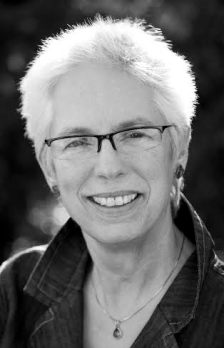
carol christJudith Plaskow and I are just now completing the draft of the manuscript of the book we have been working on for the past 2 ½ years. It has a new title: Two Views of Goddess and God for Our Time.* I have been thinking of little else for the past few weeks. An editor who is considering our book said that she was hoping we could address our book to an audience larger than the feminist theology community. Thinking about this, a light dawned: if feminist theology is right that traditional theology denies the full humanity of women, then good theology must be feminist theology. Our work is not tangential to the theological mainstream, but is at its center.

We have revised the Introduction and Conclusion to the book with the assumption that our work should appeal not just to other feminists, but to a wide range of intelligent readers and thinkers. The fact that we were asked to participate in a dialogue about the nature of God in Tikkun magazine’s Summer 2014 inspires us to hope that we are right that feminist theology is becoming part of the progressive theological mainstream.

We began our new book because – though we agree about many things – we disagree about God and Goddess. After working together for decades with shared commitments to feminism, justice, the environment, and the flourishing of life, it was a bit of a shock to come face to face with our differences on such a major theological issue as the nature of divinity. We began our discussion with a shared critique of the God of Biblical traditions as a dominating male other. We agreed that this God has justified not only male domination of women, but other forms of domination as well, including myriad forms of injustice and war. We questioned the theological doctrine of divine omnipotence in light of the holocaust, the on-going domination of one half of the human race, and other oppressions including slavery, colonialism, and war.

But as we articulated our own views of divinity in light of this critique, our views diverged: Judith concluded that God is an impersonal power of creativity that is the ground of all being and becoming, including all good and all evil. Carol understands Goddess as the intelligent embodied love that is the ground of all being and becoming, a personal presence who cares about the world and all individuals it, but who does not have the power to intervene with a mighty arm to set things straight.

We both can give reasons for our views, and in the course of our theological discussion in our book, we give many. Our different views of Goddess and God are significant both theologically and personally. Is God or Goddess good? Or does the divine power include both good and evil? Does Goddess or God care about the fate of the world and our individual lives? Or are love, care, and understanding qualities that are not appropriately attributed to divinity? Is there someone listening to us when we worship, pray, or meditate? Or is addressing Goddess or God a metaphoric way of speaking that inspires feeling in individuals and communities but not in a divine individual? Is the notion that Goddess is love likely to inspire us to love the world more deeply and to promote its flourishing? Or does the notion that God includes both good and evil remind us more clearly of our own capacities to do both?

The fact that we could not agree about the nature of Goddess or God despite our many attempts to persuade each other with rational arguments, led us to conclude that the philosophical, theological, and moral reasons we give in justification of our views are only part of the story. All of these reasons are situated in our individual bodies and in communities and histories. We do not believe there is any simple link between experience and theological views. On the other hand, our experiences form the matrix from which we all begin to think theologically. As we develop our theological views, we constantly test them against our experiences, asking if they ring true, if they help us make sense of our personal, communal, and social lives.

In the first chapters of our book Judith and I locate our theologies in the contexts of our lives. We not only articulate our views of Goddess and God, but also situate them in community. Judith is committed the feminist transformation of Judaism, while I am one of the early voices of the feminist Goddess movement. In the concluding chapters we probe and query each other’s views–from experiential, rational, and moral perspectives. We are hoping to model the kind of feminist dialogue we would like to see more of—one that crosses religious boundaries and is not afraid to probe the differences in standpoints and theological views.

We also hope that our book will inspire a lively feminist–and wider–dialogue about the nature of divinity—something that has been oddly missing heretofore in feminist theology. Engaging in a thoroughly open and honest theological debate is not always easy—even among friends. But we can both testify that doing so has not only illuminated important issues in feminist theology, but also has strengthened our friendship.

*Much this essay is adapted from a draft of the book.

Carol P. Christ is looking forward to the fall Goddess Pilgrimage to Crete which she leads through Ariadne Institute.   Space available.  Carol can be heard in a recent interviews on Voices of the Sacred Feminine, Goddess Alive Radio, and Voices of Women.  Carol is a founding voice in feminism and religion and Goddess spirituality. Her books include She Who Changes and Rebirth of the Goddess and with Judith Plaskow, the widely-used anthologies Womanspirit Rising and Weaving the Visions.  Follow Carol on GoddessCrete on Twitter.

JUSTICE AND PREJUDICE IN THE “PROPHETIC TRADITION” by Carol P. Christ

carol christBesides being advocates of social justice, the prophets of Israel were advocates of “exclusive monotheism,” exclusively “male monotheism,” “religious othering,” and “religious prejudice.” 

Many progressive Jews and Christians find inspiration in prophets because of their insistence that their God cares about the poor and “the widow at the gate.” For progressive Christians, Jesus stands in the prophetic tradition, and the core of his message is “concern for the poor.” For progressive Jews the prophetic tradition is the root of their concern for human rights.

Those who locate their spirituality and concern for social justice in the prophets can point proudly to Martin Luther King and the many priests, ministers, and rabbis, as well as ordinary Christians and Jews who marched with him as exemplars of the prophetic tradition.

But the prophetic tradition also has a nasty underside. Continue reading “JUSTICE AND PREJUDICE IN THE “PROPHETIC TRADITION” by Carol P. Christ”

Mountain Mother, I Hear You Calling by Carol P. Christ

carol christThe mountaintop shrines of Mount Juctas in Archanes, Crete are situated on twin peaks, which may have symbolized breasts. Ancient shrines on the northern peak date from 2200 BCE until at least the end of the Ariadnian (Minoan) period in 1450 BCE. A crevice in the rock was filled with offerings of pottery, clay images of women and men in ritual dress, diseased bodies and body parts, sheep and cattle, and other objects. Excavations to a depth of 13 meters did not reach the bottom layers. Many offerings had been burned, suggesting that the objects were first thrown into fire and then dropped into the crevice. People who climbed the mountain for the festivals would have spilled over both peaks and there may have been shrines as well as fires on both of them.

Goddess Pilgrim on Mount Juctas

With lack of imagination, archaeologists often write that worship in mountaintop shrines in Crete began when the king ascended the mountain to survey his realm. This ignores the fact that people are like goats and will climb anything if they can. Bones provide evidence of domesticated sheep, goats, and cattle in Crete long before there were kings. Surely shepherds climbed Mount Juctas before any kings did.

The idea that mountains are for kings also ignores the fact that there are no kings in Crete today, no realms to be surveyed, and yet the people of Archanes still ascend the mountain for the summer festival known as the Transfiguration of Christ on August 5th and 6th. A church called Afendis Christos or Christ the Lord on the southern peak of Juctas is the destination of current pilgrims. Today the uneven dirt road recently cut into the mountain is clogged with cars (only) during the festival. Continue reading “Mountain Mother, I Hear You Calling by Carol P. Christ”

COMPLICATIONS AND CONFUSIONS IN DISCUSSIONS OF THE GODDESS by Carol P. Christ

carol christAlthough writing in patriarchal Greece from a patriarchal perspective, Hesiod said in his Theogony or Birth of the Gods that Gaia or Earth alone was the mother of the Mountains, Sky, and Sea. With the male Sky she gave birth to the next generation of deities known as the “Titans,” who were overthrown by Zeus. Hesiod’s was a “tale with a point of view” in which “it was necessary” for the “forces of civilization”–for him represented by warrior God and rapist Zeus–to violently overthrow and replace earlier conceptions of the origin life on earth and presumably also to overthrow and replace the people and societies that created them.

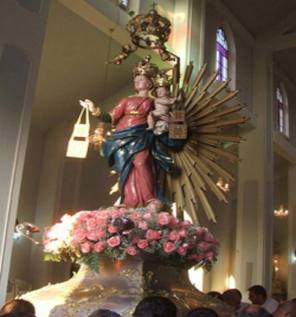
With the triumph of Christianity in the age of Constantine in the 4th century AD, Christus Victor replaced Zeus in the cities, while the religion of Mother Earth continued to be practiced in the countryside. Over time, many of the attributes of Mother Earth were assimilated into the image of Mary, and priests began to perform rituals earlier dedicated to Mother Earth, such as blessing the fields and the seeds before planting. In the Middle Ages “the Goddess” re-emerged within Western Christianity in devotion to the Virgin Mary, the female saints, and figures such as Lady Wisdom, at the same time that the history of the Goddess was being erased.

In the middle of the 19th century, in Das Mutterrecht (The Mother Right), J. J. Bachofen stunned the scholarly world with his theory that matrilineal kinship, matrilineal inheritance, and reverence for the Great Mother were to be found at the origins of civilization. Bachofen challenged the view that patriarchy and the worship of male Gods had existed “from the beginning .” Continue reading “COMPLICATIONS AND CONFUSIONS IN DISCUSSIONS OF THE GODDESS by Carol P. Christ”

Danu, Celtic Mother Goddess by Judith Shaw

judith Shaw

Danu, of the flowing waters, Queen of the fertile land – Danu, the Great Mother Goddess of the Irish Celts, known as Don by the Welsh Celts, is the Creator Goddess of the Tuatha De Danann, the first wave of Celtic tribes to invade Ireland.   She is also known as Danann, Ana, and Anann.  She gave birth to all life in the land of the Celts.

No stories of Her survive but Her power remains strong. She is the most ancient of all the Celtic deities. In a silver flash of iridescence she appears in my mind’s eye.

As the “Flowing One” She is associated with the seas, wells, springs and the Danube River, gifting Her children the magic of transformation, inspiration, and wisdom. As an Earth Goddess, She bestows abundance and earth mysteries. She embodies the wisdom of living in balance with the Earth. She is sometimes associated with Flidais of the cattle and deer. She is also connected with Brigid, Goddess of Healing, Poetry and Smithcraft, who the original Neolithic people of Ireland worshiped long before the Celts arrived. Continue reading “Danu, Celtic Mother Goddess by Judith Shaw”

Honoring the Sacred Yoni by Deanne Quarrie

Deanne QuarrieThe word Yoni is a Sanskrit word. Translated, it means womb, origin, source, and vulva. It is also known as the divine passage or sacred temple. The Yoni consists of the entire female genital system. Many of us have chosen to use the word Yoni in preference to vagina as it offers us the opportunity to reclaim the sacredness and power of our sexuality as women, as goddesses. The Yoni is where we find Shakti, the universal creative energy.

A woman’s yoni has been worshipped all over the world. In India the yoni is worshipped as the sacred symbol of the Divine Feminine, referred to as the Devi, the Great Goddess, the source of life, the Universal Womb. Continue reading “Honoring the Sacred Yoni by Deanne Quarrie”

TWO TORTOISES IN THE WEB OF LIFE by Carol P. Christ

carol-christThe Gods made only one creature like them—man.  Greek TV documentary

The sight of a reptile or an amphibian usually provokes, at the very least, a feeling of repulsion in most people. Natural History of Lesbos

In the past days and weeks the two tortoises with whom I share my garden have woken up from a long winter’s sleep.  Henry, testudo marginata, has been up for a while now.  More than a month ago when I was cutting back and weeding in the area of the garden where he had been sleeping, Henry roused himself to sit in the sun near me for a few hours each day before creeping back under a shrub.  At first I thought I had disturbed him, but when he came back out day after day while I worked, I began to wonder if he was coming out to say hello.

KONICA MINOLTA DIGITAL CAMERAScotty, testudo graeca, was nowhere to be found.  As I moved my work around the garden, I did not find him in the corner where he had slept the previous winter.  This worried me slightly, but I figured he must be under the rue in the one area of the garden still to be trimmed back.  Imagine my surprise when I almost tripped on him on my way down the stairs to the cellar.  Clever boy, he must have found the garden entrance to the cellar open one day in early winter and slipped in.  The fact that I found him at the foot of the stairs and not in a dark corner was evidence that he too had heard the call of spring.

What we love we protect and what we know we love.  Natural History of Lesbos Continue reading “TWO TORTOISES IN THE WEB OF LIFE by Carol P. Christ”