Inanna’s Return and Bread and Waters of Life By Deanne Quarrie

Most of us know the story of Inanna’s descent into the Underworld to visit with her sister Erishkigal. The reason for her visit is that Erishkigal’s husband has died.  Inanna was a childhood friend of his, and she will visit to pay her respects.  As she travels to meet her sister, Inanna must pass through seven gates where she is asked to to remove and part with aspects of herself before she approaches Ereshkigal.

Upon Inann’s arrival, her sister, who is angry because she believes that her husband loved Inanna, hangs Inanna from a meat hook to die.

While Inanna was in the Underworld, Ninshubur waited three days for Her to return, and when she did not she thought all was lost and began to mourn for her. Continue reading “Inanna’s Return and Bread and Waters of Life By Deanne Quarrie”

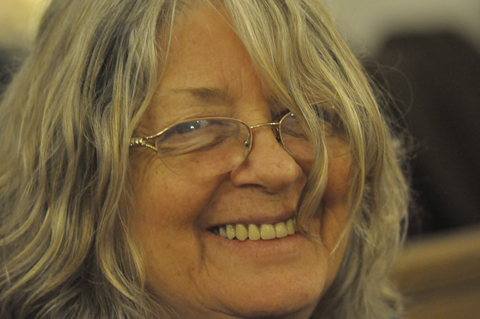
Bird Watching and Geology in the Body of Goddess by Carol P. Christ

carol p. christ 2002 color

The notion of the earth as the body of Goddess has taken on deeper meaning for me in recent years.  I have felt connected to nature all of my life.  Yet often, though not always, I have related to nature in general rather than in specific ways. Some years ago, after reading Hartshorne’s essay “Do Birds Love Singing?” I stopped for the first time in the wetlands of Kalloni, Lesbos, to see the flamingoes that live in the salt pans there.

Flamingo's-Kalloni3-Saltpan

One thing led to another, and I met someone with whom I spent the next six weeks visiting every pool and puddle where birds were stopping in Lesbos that spring.  Continue reading “Bird Watching and Geology in the Body of Goddess by Carol P. Christ”

Textual Religion and the Marginalization of Two Huldas by Dirk von der Horst

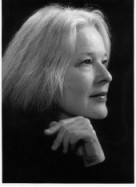
DirkI am a Protestant in large part because I like to read.  Even after grappling with feminist critiques of patriarchal religions, a spirituality rooted in the Word (capital “W”) is very deep-seated in me.  One reason I think of my faith as biblical is that a scriptural religion engages me in my favorite activity.  At the same time, there are real connections between exclusive dependence on written records and the erasure of women’s history, as well as various ways in which women have been excluded from literary production.  The opposition between text and world often becomes a manifestation of the hierarchy of mind and body that many feminists have seen as damaging.  It’s like the question of “why are there no great women composers?”  The problem with this question is not only that it ignores great women composers such as Hildegard of Bingen, Barbara Strozzi, Louise Farrenc, or Thea Musgrave.  As feminist musicologists Marcia Citron and Suzanne Cusick have shown, the question reinforces a hierarchy in which composers, those who create musical texts, have precedence over those who perform and listen.  It also relegates places where women’s contribution has been essential to the production of music – educating children, for example – to irrelevance. Continue reading “Textual Religion and the Marginalization of Two Huldas by Dirk von der Horst”

Mystery by Janine Canan

Janine Canan

You are the living Goddess
and I bow to You.
All the crickets chant OM
and the moon glows.

Time lies down
in the corpse pose.
And the night births
hundreds of thousands of galaxies. Continue reading “Mystery by Janine Canan”

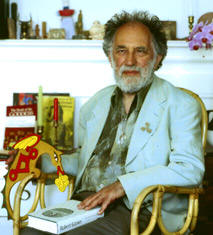
The Ferryman by Daniel Cohen

 She’s changeable in Her ways. She is power, love, justice, mercy, and also rage, anger, sometimes even despair and misery, and more besides. She once said, “I am all that is, was, and ever will be”.

~~~~~~~~~~

Would I like a change from rowing this ferryboat? No, sir, I would not, and you folks wouldn’t like it if I did change. Why wouldn’t you like it? I was created for this job when the first human being came into existence, and I’ll continue in it till the last human dies – the way you people go on that may not be long.

Yes, many people do think they are going to go a different way, but they all take this boat in the end. What about near-death experiences? Those people may have been near Death, but they hadn’t got far enough to be anywhere near me.

Do I mind that they used to bring money for me but have stopped doing so? No, sir, I do not mind – that was just their own idea, that all ferrymen should be paid. Still, it was a nice thought, but they might have considered that there was nowhere for me to spend the money. In fact, getting rid of it used to be a bit of a bother. Continue reading “The Ferryman by Daniel Cohen”

Thank You, Goddess By Barbara Ardinger

Actually, it’s very hard to say what the Goddess is. She’s ineffable. She’s both abstract and concrete at the same time. She created the universe, but she also brings destruction to beings and things whose time has ended. Even as she is (perhaps) the earth embodied and is (perhaps) a sort of universal spirit of loving-kindness and is (perhaps) the powers of life, death, and rebirth, she is as global as the oxygen we must breathe to live.

I do my end-of-the-month spending tables and balance my checkbook and find that there’s enough for me to send donations to politicians and nonprofits I want to support, like the Brady Campaign to Prevent Gun Violence. I write a couple checks, put stamps on the envelopes, and as I drop them in the mailbox, I say, “Thank you, Goddess.” Everybody who lives in Long Beach knows there is no place to park in the whole city. I rent a parking space in a driveway across the street. Thank you, Goddess. I have nice little chats with strangers in adjacent seats during the intermissions of Les Miserables and Spamalot. Thank you, Goddess. I’m breathing every day, I live with two friendly cats, I earn my living doing something I enjoy doing and that’s useful to the people I do it with. Thank you, Goddess.

Does the Goddess run my life? Not the way you may be thinking. Please don’t think I think the Goddess is a big fat woman wearing a crown and sitting on a big fat throne up in the sky and sending little goddessettes and superheros and superheras down to earth to chase editing clients to me, puff my lungs full of oxygen, and carefully arrange that I sit next to nice folks at the theater or find places to park when I need them. (I have a Magic Parking Place Word for that last item.) That’s not the Goddess. She’s not the Boss of the Universe, she doesn’t live “up there,” she doesn’t dictate how I should live my life. Continue reading “Thank You, Goddess By Barbara Ardinger”

WHAT DOES “GOD INTEND”? by Carol P. Christ

Indiana Republican candidate Richard Mourdock’s statement that pregnancies resulting from rape are “something God intended” not only shows an appalling lack of empathy and distain for the experiences of raped women, it also is bad theology.

The controversy ignited by Mourdock provides a good opportunity to discuss the theological mistake of “divine omnipotence” also known as the “zero fallacy.”  Mourdock’s belief that God intends the pregnancies of raped women is rooted in the notion that “whatever happens” is the will of God.

The theological category of “divine omnipotence” means that God is all-powerful.  It also means that God has all the power. From this it is said to follow that everything that happens must in some way be the will of God.  Such views are held not only by many devout believers, but also by everyone else who asserts that “there must be a reason” when bad things happen.

The notion that a good God is responsible for all the events that occur in the world is rendered questionable by every bad thing that happens–particularly by bad things that happen to good people. This was the question of Job, and there has never been a satisfactory answer to it. If God can intervene to stop the innocent from being harmed, why does he not do so?  God’s failure to stop rape suggests that either that God is not good, or that a good God chooses a really bad outcome, or that God is not the cause of everything that happens in the world.

Charles Hartshorne called the notion of divine omnipotence the “zero fallacy.” Continue reading “WHAT DOES “GOD INTEND”? by Carol P. Christ”

Visions of My Grandmother by John Erickson

“I never told my grandmother I was gay. I’ve often wanted to visit her grave, clench my hands together, and pray that she forgive me for betraying the trust she instilled upon me long ago. However, even today, I cannot bring myself to make that trek, up the hill into the countryside where her ashes lay below the ground.”

I haven’t dreamt of my grandmother since her passing one hot summer July evening.

The night, and the days that followed, continue to be a blur.  However, as my family members continue to see her in their nightly visions, I, go on unabatedly longing to see and hear the voice of a woman who made me feel the presence of the divine with each passing story.

My sister saw her in a dream when she was buying shoes, my mother has seen her multiple times when she would be undergoing a particularly stressful situation, and I, left alone and oftentimes wondering through an abyss of loneliness and disarray, wake up each morning wondering why, I am left all alone. Continue reading “Visions of My Grandmother by John Erickson”

“The Language of the Goddess” In Minoan Crete by Carol P. Christ

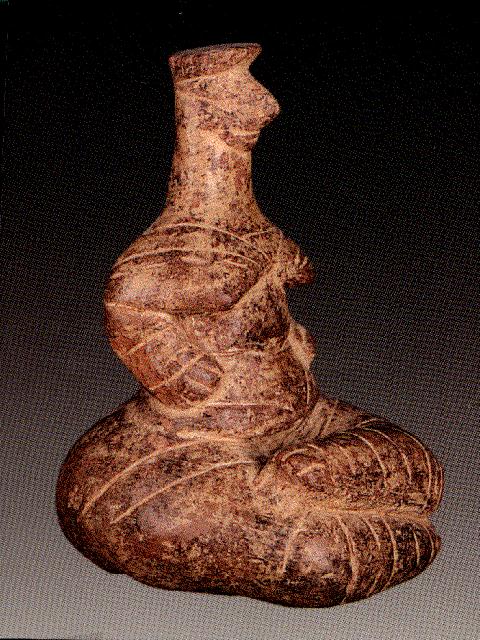
While the “war against Marija Gimbutas,” rooted in what my friend Mara Keller calls “theaphobia,” is being waged in the academy, her theories continue to unlock the meaning of hundreds of thousands of artifacts from the culture she named “Old Europe.”

According to Gimbutas, the Neolithic and Chalcolithic cultures of Old Europe c. 6500-3500 BCE were peaceful, sedentary, agricultural, matrifocal and probably matrilineal, egalitarian, and worshipped the Goddess as the power of birth, death, and regeneration in human and all forms of life.  The cultures of the Old Europe contrasted with the Bronze Age cultures of the Indo-Europeans who brought the Indo-European languages and value systems to Europe and India and to all of the European colonies.  The Indo-European cultures were patriarchal, patrilineal, nomadic, horse-riding, and warlike, and worshipped the shining Gods of the sky. 

“The language of the Goddess” includes a series of signs and symbols that the people of Old Europe could “read” as surely as you and I know that a cross on top of a building marks it as Christian or that a woman wearing a star of David pendant is Jewish.  Gimbutas identified the meaning of these symbols through a painstaking process that involved comparison of artifacts, attention to where they were found, and clues from the recurrence of similar symbols in later cultures.  In twenty years of leading Goddess Pilgrimages to Crete, I have found Gimbutas’ theories an indispensible “hermeneutical principle” which unlocks the meanings of the artifacts we encounter.

  Continue reading ““The Language of the Goddess” In Minoan Crete by Carol P. Christ”

Goddess as Love: From Experience To Thealogy by Carol P. Christ

If theology is rooted in experience, how do we move from experience to theology? In my life there have been a number of key moments of “revelation” that have shaped my thealogy. One of these was the moment of my mother’s death.

In 1991 my mother was diagnosed with cancer. While she was being treated, I realized that I had never loved anyone as much as I loved her. When I wrote that to her, she responded that “this was the nicest letter” she “had ever received” in her life and she invited me to come home to be with her and my Dad.

My mother died only a few weeks after I arrived, in her own bed as she wished. She was on an oxygen machine, and I heard her call out in the dark of early morning. When my Dad got to the room, he tried to turn up the oxygen, but it didn’t help. Then he called the doctor who reminded him that my mother did not want to go to the hospital under any circumstances.

My Dad then sat by my mother’s bed and held her hand.  As my mother died, I felt that the room was” filled with love.” I sensed that my mother was “going to love.” Continue reading “Goddess as Love: From Experience To Thealogy by Carol P. Christ”