The holiday season is a particularly difficult time for grief. Whether it is grieving someone who died earlier in the year as you celebrate your first holiday season without them, or the lasting memories of loved ones who are no longer present at family gatherings, this time of year makes grief bubble to the surface. Since this is my first holiday season without my little brother, who died in March, I’ve planned ahead with coping strategies that I’d like to share with other feminists struggling to grieve through the holidays.
Upon the death of a loved one, most people in the West are offered commodified grief, costly funerals, and stifled feelings pre-packaged as dignified tradition. When deathcare became a commercial enterprise at the turn of the twentieth century, there was what mortician and author Caitlin Doughty calls a seismic shift in who was responsible for the dead. “Caring for the corpse went from visceral, primeval work performed by women to a ‘profession,’ an ‘art,’ and even a ‘science,’ performed by well-paid men. The corpse, with all its physical and emotional messiness, was taken from women. It was made neat and clean, and placed in its casket on a pedestal, always just out of our grasp (Caitlin Doughty, From Here to Eternity: Traveling the World to Find the Good Death, 136).”
December seems to have more holidays than the rest of the year put together. Days to honor Ix Chel, the Virgin of Guadalupe, St. Lucy (aka Santa Lucia), the Declaration of Human Rights, and the publication of the Rider-Waite Tarot. Saturnalia. Hanukkah. Christmas. Kwanza. Yule. Innumerable reasons to go shopping for gifts and banquets. Here, to help you survive the holiday season, are two Found Goddesses.
Who, you may ask, is a Found Goddess? The term comes from Found Goddesses, published in 1988 by Morgan Grey and Julia Penelope. Found Goddesses are modern ones that we invent to deal with modern issues that the classical pantheons can probably not cope with. Like going to the mall and cleaning our houses before our guests arrive. (Note that I’ve rewritten these pieces a bit to bring them more or less up to date.)
At Thanksgiving and the solstice holidays many of us are reminded that we are the “black sheep” of our families. In my case this means that I am too “assertive,” too “aggressive,” too “demanding,” too “political,” too “willing to upset my father,” too “opinionated,” too “feminist,” and so on.
“In the English language, black sheep is an idiom used to describe an odd or disreputable member of a group, especially within a family. The term stems from the genetic effect in sheep whereby a recessive gene occasionally manifests in the birth of a sheep with black rather than white coloring; these sheep stand out in the flock [emphasis added] and their wool was traditionally considered less valuable.” (Wikepedia, “Black Sheep”)
Remembering to be thankful may just be a privileged illusion that individuals in positions of power get to write about in the December of each year to self-congratulate themselves about being actually able to be able to be thankful. It may just seem like people who write about being thankful are complaining or pontificating that being thankful is in itself a chore.
With the holidays just around the corner and the frazzled, crisp ping of anxiety, rush, and panic take over the air around us, it is easy to forget to stop and “smell the roses.” In times where teaching positions continue to shrink and more universities switch to adjunct labor, fees and class costs continue to rise, or just simply life becomes a little more complicated, due to the nature of balancing life, activism, work, friendships, or relationships, remembering to remind myself to be thankful is another task, I find adding to the never-ending list of stuff I always seem I have to do.
However, remembering to be thankful, scheduling it into one’s daily schedule are vital to our success as new and emerging faculty or activists or just in general because being thankful reminds us that we have aspects of our lives that are worth being thankful for. Remembering to be thankful proves that we are in some way, connected to a larger sense of life that, at times, grants our wishes, wants, or desires, brings us despair, and then allows us to get through it, or even makes us feel alive.
As I sit back and look at the personal and professional landscape around me I understand that I have a lot to be thankful for both consciously and unconsciously. Most recently at AAR, I participated on a panel in response to Bernadette Barton’s Pray the Gay Away. During the course of our panel, the conversation of chosen vs. biological families came up. Most recently, my mentor and panel moderator, Dr. Marie Cartier, talked about the same topic here on FAR and the difficulties many of us experience in regards to our chosen families vs. our biological families. With the holiday season all around us, and regardless of what or if, you celebrate it or not, it is quite hard to get away from it all without realizing who your “family” is and whether or not you’re close or connected with them can be traumatizing during these times where we’re taught or expected to be with them.
After our discussion on the panel and then at the hotel bar, people discussed the pains and traumas in relation to not having a biological family to go home to during the holidays. Sitting there and listening to the conversations, I realized that, for once in my life, I had nothing to say. Continue reading “Remembering to Be Thankful by John Erickson”
Barbara Ardinger (one blogger here – watch for her “twist” on this in January!) and I were discussing that an explanation of the pagan year and our Sabbats might be in order. Sometimes when we are immersed in our own spiritual practice, we forget that those who read what we have written may not have a clear understanding of what forms the basis of the holy days we speak of in our articles. These holidays are called Sabbats. The word sabbat is of obscure etymology but was understood in the Middle Ages to mean a gathering of witches and heretics. The word comes from the Hebrew Shabbath meaning a day of rest. Christians use the word Sabbath for Sunday, their traditional day of worship. It is interesting to note this was not a term originally coined by pagans, themselves. It has been borrowed or adopted for use today.
Pagans see the journey traveled in a year or a lifetime as kind of wheel. It is based on the earth’s journey around the sun. One rotation equals one year. We call it the Wheel of the Year. Since the origins of most of the traditions practiced by pagans in this country come from the Northern Hemisphere, the turning of the wheel is based on the Earth’s travel around the sun and the impact that is felt in the Northern Hemisphere. It would be exactly the opposite for those in the Southern Hemisphere. Continue reading “The Pagan Wheel of the Year by Deanne Quarrie”
This holiday season I have something warm and fuzzy to be thankful for—Goldilocks, the kitten who came for the holidays.
As I was preparing for Thanksgiving, I opened my front door to the sound of really loud really pitiful crying. A tiny grey kitten with a large golden spot on nape of her neck was howling in the middle of the street just a few feet from my door. Living as I do in a town where there are many homeless cats and kittens, I do not usually respond to such cries. My dogs maintain “cat patrol” in my back garden and quickly chase strays away.
However, the cries of this little kitten were so insistent that I picked her up. She was smaller than my hand. My neighbor who was sweeping his porch offered to take her in. A few hours later he returned her. She was still mewing loudly, and, he said, she had not stopped crying all day long. I found a syringe and fed her some milk. Soon the crying stopped and she began purring in my lap. Continue reading “The Kitten Who Came For The Holidays by Carol P. Christ”



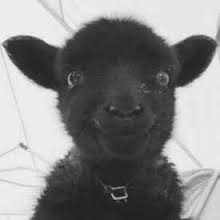 At Thanksgiving and the solstice holidays many of us are reminded that we are the “black sheep” of our families. In my case this means that I am too “assertive,” too “aggressive,” too “demanding,” too “political,” too “willing to upset my father,” too “opinionated,” too “feminist,” and so on.

 This holiday season I have something warm and fuzzy to be thankful for—Goldilocks, the kitten who came for the holidays.
  Feminism and Religion