Write on Lilith! (Write on Eve!) by Ivy Helman

Over the past few months, I’ve been struggling to write posts.  This month is no different.  I am currently sitting with four different half-drafts on three semi-related topics, none of which I seem to be able to complete.  I’ve gone back to each of them numerous times.  I write.  I erase.  I rewrite.  I copy bits of one into another to save for some other time.  I’m left with one sentence:  this week’s Torah parshah is Bereshit (Genesis 1:1-6:8).  Great.  Glad to know that.  Now what?  

When writing, I often find myself in one of two camps given the current state of the world.  Either, I have so much to say that I have no clear idea where to start, so I write three pages of more or less nonsense.  Or, I find myself just so inundated with information that I don’t know where my opinion begins and another’s ends.  I write another 3 pages of completely different nonsense.  I get fed up with both.  I start praying better thoughts will just write themselves.  They don’t.  

Continue reading “Write on Lilith! (Write on Eve!) by Ivy Helman”

What is Natural? The Wooden Chair Discussion by Ivy Helman

When I begin my class discussion about defining nature, I often start with a wooden chair or table.  I point to it and ask the students, “Is this chair natural?”  I pause.  

They have already been introduced to the idea that humans are embodied and embedded beings, and therefore dependent on and interconnected to nature.  I remind them of those ideas.  Then, I ask again, “Is this chair natural?”  I continue, “Humans are part of nature and humans made the chair, so would that mean the chair is natural?  The chair is made from wood, a natural material.  Does that make it natural?  I could just as easily sit on a rock or a stump if those were here.  They are natural, right?”  The discussion begins.  

At some point in the discussion, we pause to define what nature is according to the ecofeminists we read for class that day.  Mary Mellor, in Feminism and Ecology: An Introduction, defines nature as “the non-human natural world,” (8).  It is probably the simplest definition out there.  I quite like its simplicity.

Continue reading “What is Natural? The Wooden Chair Discussion by Ivy Helman”

Post-Hysterectomy Reflections: Not All Women Bleed by Ivy Helman

Around the age of 8, or maybe 10, I learned my aunt had had a hysterectomy.  I remember visiting her house either shortly before or after the operation.  I can’t remember which, and it doesn’t really matter.  At the time, I don’t think I even knew what a uterus was or that I too had one.  
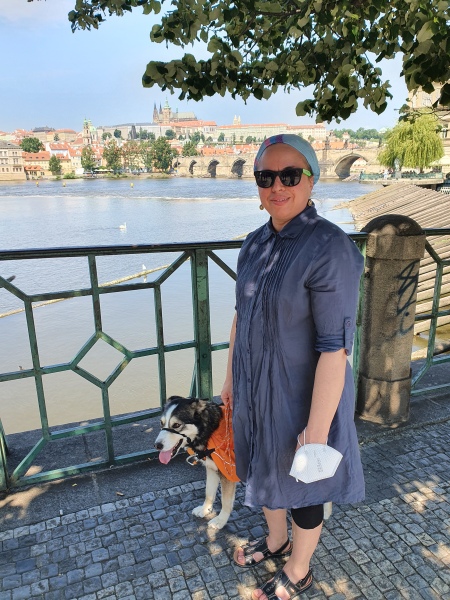
Just like me, she had suffered from uterine fibroids. This year, at the end of May, after nearly two years of various treatments including a failed myomectomy and ineffective prescription medication, I followed in her footsteps.  It was really the only option for me, although it was not an easy decision.  After surgery, there was the usual post-op pain and restrictions, but luckily my body has been healing well.  

Since the surgery, and as I prepare to teach “Gender and Religion” again in the fall, I’ve been thinking about a conversation I had with a student the first time I offered the class at Charles University.  We were about to begin discussing the article, “Why Women Need a Feminist Spirituality,” by Judith G. Martin, when a student pressed me on why we weren’t acknowledging that not all women bleed.  What he really wanted was to make sure that in our category of women, we were including transwomen.   Continue reading “Post-Hysterectomy Reflections: Not All Women Bleed by Ivy Helman”

Listening to the Noise: The Connections between Milada Horáková, Anti-Semitism, and the Black Lives Matter Movement by Ivy Helman.

20200627_112934This month more than most, I feel like I have so much to say that I don’t really know where to begin.  It doesn’t help that next door they are remodelling an apartment and, outside my window, there is a crew drilling up the sidewalk and another roofing the house across the street.  The noise and its echoing are overwhelming on Prague’s narrow streets.  
Perhaps the best place to start is with a similarly loud occurrence.  On June 27th, Prague commemorated the 70th anniversary of the execution of Milada Horáková using the city-wide intercom system.  Minute-long excerpts from her trial and execution were broadcast throughout the day.  Horáková, the only woman to be executed during the Communist regime in Czechoslovakia, was a long-time proponent of democracy and  women’s rights.  In the field of women’s rights,  she focused on the status of women and children, spending considerable effort on women in the workplace and reconciling their work with family responsibilities.  She was also an outspoken critic of the Nazi Regime, having spent time as a political prisoner in Terezin.  When the war ended, she joined parliament, but resigned right after the communist take-over.  After continuing to speak out against the Communists,  she was arrested in September of 1949 and charged with attempting to overthrown the government.  She along with 12 others were interrogated and tried.  Four of them, including Horáková were sentenced to death.  She was publicly hanged on the 27th of June 1950.  Eighteen long years later, she was posthumously exonerated, and in 2000, the Czech Republic unveiled a commemorative tombstone for her in the National Cemetery at Vyšehrad Castle.  In 2017, a film was made about her life and legacy. Continue reading “Listening to the Noise: The Connections between Milada Horáková, Anti-Semitism, and the Black Lives Matter Movement by Ivy Helman.”

Unorthodox: How Looking for “Truth” Misses the Point by Ivy Helman.


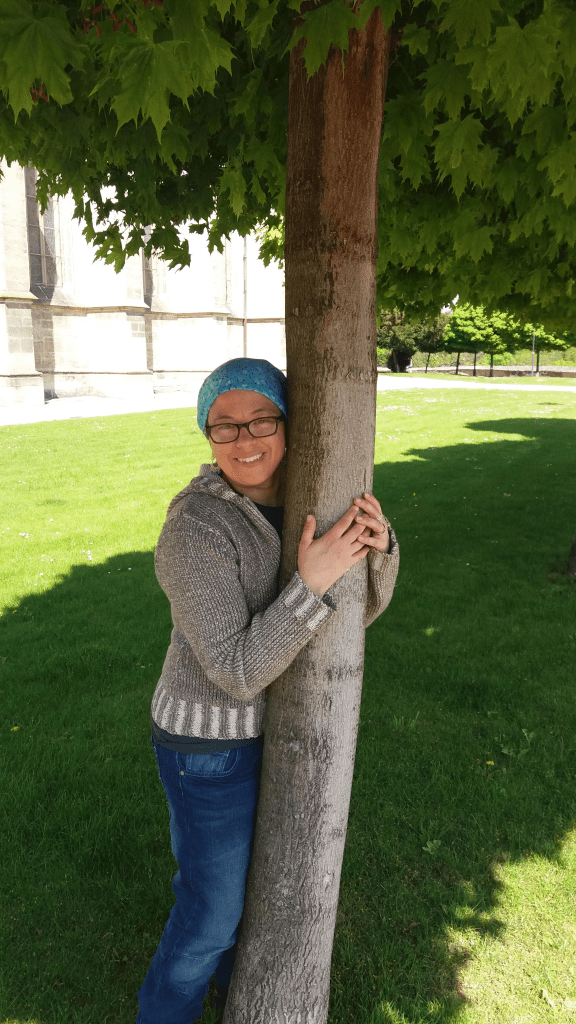
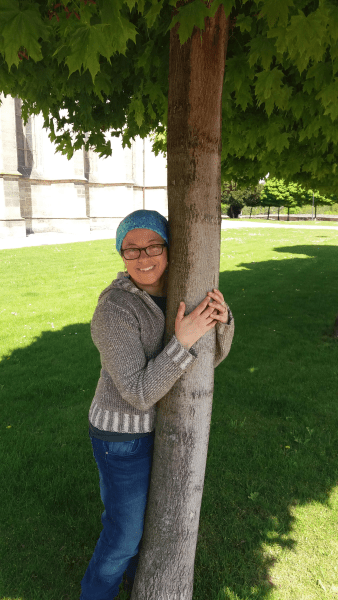
ivy tree huggingA few weeks ago a Slovak journalist reached out to me about the new Netflix four-part series entitled Unorthodox.  In the email, the journalist wrote that they had read about my work as a Jewish feminist and wanted some insight into the new series.  Their main question was: how accurate is the portrayal of the Satmar community?
I was slightly surprised.  The journalist wasn’t looking for my opinion on Esty as a young Jewish woman who takes control over her life and works tirelessly to quite literally have her voice heard.  Rather, the questions were: is the Satmar community really like that; do they not use the internet or have smart phones; is quality education so lacking; is marriage arranged; would a woman really be that clueless about her own body; is sex like that; and, do they really have no privacy?  

Fast forward.  I did the interview.  I figured that if I could offer the article’s Slovak and Czech readers a better understanding of Jewish life, my efforts were worth it.  I tried to focus the interview toward those  goals and my feminist take on the story.  The piece was published, and somewhat proud of my efforts, I posted a link to the article on my Facebook page.  Continue reading “Unorthodox: How Looking for “Truth” Misses the Point by Ivy Helman.”

Monotheism and the Shema: Lessons on Oneness and Unity by Ivy Helman

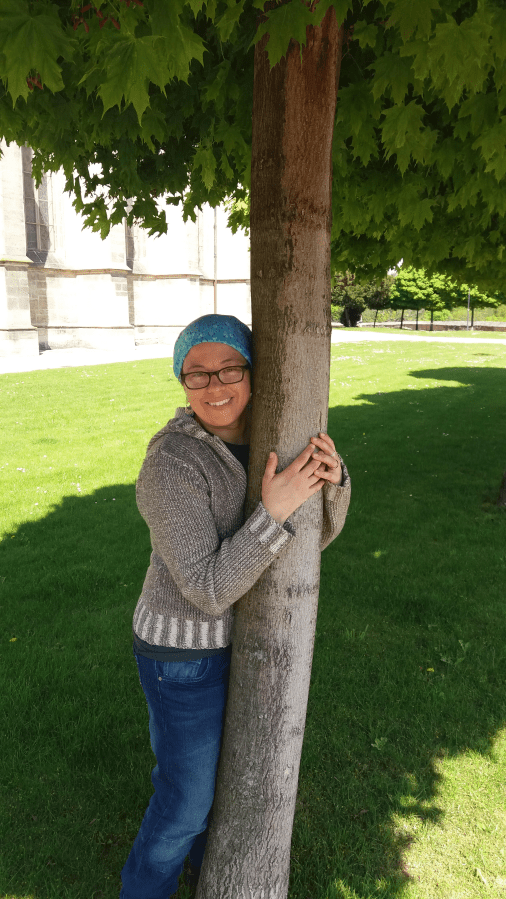
ivy tree huggingIn my last blog post, I explained what we lost when the Israelites became monotheists.  That post looked at the move to monotheism from a more historical, feminist perspective.  In this post, I want to understand monotheism from a more modern, feminist lens.  Using the Shema as a starting point for modern Jewish monotheistic thinking, my question is: how do we honor the deity based on who we understand that deity to be?  In my opinion, Jewish monotheism requires we honor G-d by moving away from one-sided gendered depictions of the deity and think about how we act in light of the interconnectedness of life.

Judaism highlights the Shema as the description of the divine.  It reads, “Hear, O Israel! The L-rd is Our G-d, The L-rd is One!,” (Deut. 6:4).  The key aspect of this verse is twofold. First, we have a relationship with the deity hence the description of the deity as “our,” and, second, this deity is one. 

Oneness used to imply that no other deities count, and perhaps also that no other deities literally exist.  For example, if one were to read the Torah, one would understand the deity differently.  On the one hand, the deity is one of many possible deities one could worship. On the other, it is quite clear that no matter what the deity is called, there is one specific deity that chose to help the Israelites.  In the Torah, the divine is always referred to as he, using only masculine pronouns for the deity. In addition, he is often called king, lord, and master. G-d is depicted as powerful, wrathful, jealous, and even scary.   Continue reading “Monotheism and the Shema: Lessons on Oneness and Unity by Ivy Helman”

What We Lost When We Became Monotheists by Ivy Helman

imageThe Tanakh, Jewish scriptures, predominately call the deity king and lord and use the masculine pronoun.  These images evoke a certain level of power. Just how powerful the deity is in then multiplied when “he” is addressed as  “G-d of Gods,” “Lord of Lords,” judge, almighty, all-powerful, and warrior-like with vengeance, fury and flaring nostrils. Events like war, army invasion, disease, drought,  and famine are often described as divine punishments for wrongs done throughout the Tanakh.

All of these images bring forth a certain mindset regarding who the divine is and what “he” does.  Indeed, such images may well have been crucial in those ancient days when famine, drought, war, and disease  were ever present and, day-to-day survival was often extremely difficult. People sought understanding as to why they were suffering, and the workings of divine beings offered such explanations.   Continue reading “What We Lost When We Became Monotheists by Ivy Helman”

When Every Day Will Be Tu B’Shevat by Ivy Helman.

ivy tree huggingTomorrow is Tu B’Shevat, the New Year of the Trees, or their birthday.  It is the day of the year when all trees, regardless of when they have been planted, turn another year older.  The rabbis standardized this day in an effort to minimize complexities, since in the land of Israel, fruit can only be eaten from trees that are four or older (Leviticus 23-25).  Tu B’Shevat, then, on a practical level, marks how old fruit bearing trees are.   

The holiday has evolved since then.  In the 16th century, Kabbalistic mystics developed a seder to celebrate the holiday, which involved eating certain fruits, drinking both red and white wine, saying blessings, and reading certain mystical texts.  Each type of fruit one eats has a specific mystical meaning whether the fruit is completely edible (i.e. apple), has an inedible pit (i.e. olive), has an inedible shell (i.e. pistachio) or has a covering one generally wouldn’t eat, but could (i.e. orange). To this day, many congregations observe the holiday by hosting their own Tu B’Shevat seders often ripe with such kabbalistic overtones.  Continue reading “When Every Day Will Be Tu B’Shevat by Ivy Helman.”

Shemot: Women’s Misbehaving and Disobeying as the Key to Liberation by Ivy Helman.

imageThis week’s Torah portion, or parshah, is Shemot (Exodus 1:1-6:1).  This parshah sets the scene for the liberation of the Israelites from slavery both by introducing main characters and elaborating on just how difficult life was for the Isrealites under Pharoah’s rule.  The parshah contains many noteworthy aspects: the death of Joseph and the multiplication of the Isrealites in Egypt; the increasing wrath of the Egptians; the birth and adoption of Moses; Moses’ encounter with the Divine in the form of a burning, yet unconsumed, bush; the revelation of the divine name, G-d’s plan for Moses’ role in the liberation of the Israelites from slavery; Moses’ attempts to get out of his assigned role; and Moses’ first confrontation with Pharoah.   

In addition, there are many women, who are integral to the salvation of the Israelites, in this parshah.  For the most part, Jewish tradition has acknowledged their part when it comes to discussions of this parshah, especially Shifra and Puah.  Yet, their role is often overshadowed by Moses’ varied miracles, the mighty power of the divine, the revelation of the Torah, the wanderings in the desert, and so on.  However, the Israelites’ liberation from slavery would have looked quite different without women.   Continue reading “Shemot: Women’s Misbehaving and Disobeying as the Key to Liberation by Ivy Helman.”

On My Invitation as a Jew to Participate in Advent and Christmas by Ivy Helman.

imageI attend Czech classes twice a week.  This time of year the courses focus on Christmas.  I’ve attended three different schools over the last five years, and all handle Christmas similarly.  Even though the Czech Republic is only marginally Christian, for many Czechs being Czech and observing Christmas seem to go hand-in-hand.  In fact, Czech customs around Christmas even figure into the citizenship exam.

In last Tuesday’s class, my teacher asked me how I celebrate Christmas here.  She knows I’m Jewish.  When I said that I don’t observe Christmas traditions in my home, she responded, “you don’t have to be a believer to do Advent-related and Christmasy things.  Only 20% of Czechs are, and yet we all participate in Advent and Christmas.” It was part invitation, part assimilation request.  However, the excited in-class discussion felt more like an attempt at conversion. Don’t you want to be a part of this amazingly joyful time?   Continue reading “On My Invitation as a Jew to Participate in Advent and Christmas by Ivy Helman.”