Mothers and Dragon-ing by Sara Frykenberg

But what if there was a space for the danger of dragon-ing? What if society expected it, welcomed it, and made room for our, women’s, subsequent growth? It might still be hard and risky, as is all growth and change. But as I believe Barnhill is trying to suggest, it might also be less traumatic, less splitting, and give us so much more space to be.

Knowing that I like dragons and feminism, a friend of mine recently recommended the book, When Women Were Dragons (2022) by Kelly Barnhill. I have been reading it (okay listening to it on audiobook, but that counts right?) all week. The premise of the book is that women dragon, as an act, and can do so by choice or spontaneously; and in the “Mass Dragon-ing of 1955” over 600,000 women flew away from American homes, “wives and mothers all” (Barnhill, 2022). But despite the destruction, eaten husbands and bosses, and destroyed homes that dragons leave in their wake, society, the government, and individual families do everything they can to forget it happened. The history is repressed. Individual memory is policed and repressed. The dragon-ing goes on.

 Beginning this book the week before Mother’s Day, I found the recommendation timely, or even fateful, because with every chapter and hour that I listen, I find myself thinking of my mother. And I wonder if or when she would have dragon-ed if given the chance.

Continue reading “Mothers and Dragon-ing by Sara Frykenberg”

May Day by Sara Wright

 To Death in Spring

‘Experts’ 
told me

you would
not rise

too old
they said

abandoned
purple and rose

Continue reading “May Day by Sara Wright”

Mother’s Day: From Pagan Origins to Modern Celebrations by Judith Shaw

On May 12th families will gather together in the United States to celebrate another Mother’s Day. This is a good time to reflect on mothers, motherhood and why we take a day to celebrate our mothers.  

“Yemayá, Mother Goddess,” oil on canvas by Judith Shaw
Continue reading “Mother’s Day: From Pagan Origins to Modern Celebrations by Judith Shaw”

Mayflower Memories by Sara Wright

Introduction to MAYFLOWER MEMORIES (‘Blood – Root’)

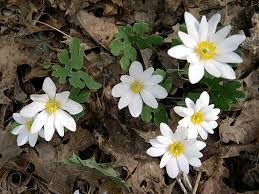
For the past two weeks I have been obsessed by the thought of emerging bloodroot, a wildflower I have loved since childhood that grows just outside my door (among other places). This obsession, and I take each one seriously, always provokes the same question: what’s really going on here? Bloodroot does not bloom under four feet of snow, and my guess is that this year one of my favorite wildflowers won’t burst with white stars until June.

Today, I also remembered with astonishment that in the old ways, Mother’s Day occurred on March 25th, the time when ‘Becoming’ begins, long before the snow recedes. I’m struck by the difference between the two mothers’ days, this one seems so much more authentic, no room for sentimentality when we face this messy, muddy turning from winter to spring (at least in the Northeast).

Continue reading “Mayflower Memories by Sara Wright”

Legacy of Carol P. Christ: What Does Mother’s Day Mean in a Patriarchal and Matricidal Culture?

This was originally posted on May 9, 2016

When we seek immortality or spiritual “rebirth,” are we not saying that there is something wrong with the “birth” that was given to us through the body of our mothers? In She Who Changes and in “Reading Plato’s Allegory of the Cave as Matricide and Theacide,” I asserted that our culture is “matricidal” because it is based on the assumption that life in the body in this world “just isn’t good enough.”

What is so wrong with the life that our mothers gave us that we must reject it in the name of a “higher” spiritual life? The answer of course death.

Can we love life without accepting death?

Can we love our mothers if we do not accept a life that ends in death?

Jesus was said to have encouraged his disciples to leave their wives and families in order to follow him.  When he was told that his mother and brothers were outside and waiting to speak to him, he is said to have said:

“Who is my mother, and who are my brothers?” And stretching out his hand toward his disciples, he said, “Here are my mother and my brothers!  For whoever does the will of my Father in heaven is my brother, and sister, and mother. (Matt. 12:48-50)

Continue reading “Legacy of Carol P. Christ: What Does Mother’s Day Mean in a Patriarchal and Matricidal Culture?”

‘Mother’ West Wind and Mary’s Gold by Sara Wright

One day last week it almost drizzled. When I stepped outside that morning I was engulfed by fragrant mist. Rarely does light fog give the thirst- driven forest a temporary reprieve, greening needles, and encouraging tiny leaves to unfurl. With this destructive weather pattern in place the next round of west wind hits the following day, graying out the green and cracking open the earth, perhaps bringing down another round of trees. The Cloud people continue to withhold the precious gift of water…

We have been suffering from drought for so long now that every tree, bush, and plant appears without an emerald coat. Harsh northwest winds, unseasonable heat, cold, and air so dry my lips are cracking have stunted most spring growth. Wildflowers have shrunk to half their size, and in places the woods are bare. High ground is parched. Lowlands are dry, and frogs, toads, and salamanders have few vernal pools in which to lay eggs. A glaring sky that denies the earth healing rain month after month brings on deadly headaches, my body’s response to endless frustration and longing.

Continue reading “‘Mother’ West Wind and Mary’s Gold by Sara Wright”

Her Love is the Love of God by Natalie Weaver

I used to hate Mother’s Day.  I have written about this before, so I won’t belabor the point.  Suffice it to say, I used to believe that Mother’s Day was the one of the biggest lies of all.  It was a day of demonstrated appreciation that seemed to say to me something like, “This card and dinner at Red Lobster is our way of not having to carry our part for the other 364 days each year.  You don’t have to clean up (pause) today, sucka!”  I know I’m getting better and better in my own skin, though, because this year I am not dreading Mother’s Day.  I’m not calling it Mule’s Day.  I’m actually sort of excited about it.

I haven’t swallowed a magic elixir that makes things easier or tidier.  I’m not taking anything for my mood.  My house is messier than ever as I prepare to move homes, and I am working harder than I ever have before.  My kids’ needs are greater than they were when they were babies, and I am doing things I have never done before, such as pleading for financial aid from the school and seeking county assistance for the medical needs of one of my children.  I’m exhausted, but I’m making decisions and signing deeds and taking out loans all by myself.  I get calls from people seeking payment on stuff I never thought possible, such as the daily phone call from the finance department at the cemetery.  My one hundred/month apparently isn’t sufficient.  But, I buried my dad with dignity, and I’m keeping my kids fed, clothed, and educated.  I pass kidney stones almost monthly, and my teaching is laborious, but I feel on fire with the zeal of God.  Truly, I’m starting to feel happy again, and my happiness is rooted in my gratitude.  I think the shittiness of recent years has finely tuned in me an appreciation of decency, and my eyes are opening once more to the radical joy of mere being when being is experienced as gratitude. Continue reading “Her Love is the Love of God by Natalie Weaver”

My Church Won’t Let Me Call the Divine “Father” by Trelawney Grenfell-Muir

I had a startling experience in church recently. It was Father’s Day, and the pastor was talking about how “God is our heavenly Father.” For the first time in 17 years, that idea held some appeal to me. But no sooner did the thought enter my mind, then it was ripped away by the realization that my church will never allow me to symbolize the divine as a “father.”
I grew up with “God the Father” language saturating my churches. I also grew up with a rageful, unsafe, sometimes abusive father, who was also wonderful, empowering, and feminist in many ways. Seventeen years ago, I attended my first seminary lecture on the topic of Feminist Theology. That day changed my life, as did my exposure to feminist theology throughout seminary and at a queer Methodist congregation. My journey took me through more scholarship and liturgy, jobs as chaplain or as assistant pastor struggling to convince my communities that sexism matters, parenting young daughters who lament their own subconscious male divine programming, and finding a prophetic call to speak, write, and sing the Female Divine. Continue reading “My Church Won’t Let Me Call the Divine “Father” by Trelawney Grenfell-Muir”

An Open Letter to Mom by Natalie Weaver

Dear Mom,

I want to take this opportunity to tell you I have learned so much from you over these years that I have been privileged to call you “mom.” I watch you, as you get older, as I also get older, and I continue to learn from you.  You are always telling me that a person cannot know something truly until they get there; that every decade of life is different; and that life becomes, in the end-game, a process of letting go.  I see you, and I know by watching you that this is true.

I remembered you today, from when I was just a child, getting ready to go out for the evening with Dad.  You were spraying your hair into an impressive beehive, pulling on stockings, and fragrancing your wrists with Fabergé cologne.  You were beautiful then, and you taught me that life should be beautiful, our home should be a place of refuge, and every day was worth celebrating.  You used to sing about loving your home, and you maintained it so elegantly.  It was lovely to be your child in that home.  Thank you. Continue reading “An Open Letter to Mom by Natalie Weaver”

A Mother’s Gifts by Dawn Morais Webster

Dawn Morais Webster, the Pope off to his summer palace, Castel Gandolfo. He tells the world he will now become just a “humble pilgrim.”Parvati is a gentle mother goddess. But as Kali, she also wields enormous power. The daughter of Himavan, the king of the Himalayas, consort of Lord Shiva, and mother of Ganesha, the Elephant-Headed Lord, Parvati is the embodiment of all the energy in the universe.  Her seat is on a lion or a tiger.  In the words of a hymn to this goddess, she is “the auspiciousness of all that is auspicious.”

Lakshmi, the consort of Sri Maha Vishnu is often depicted as a very beautiful woman, seated on a full-bloomed lotus, holding lotus buds in two of her hands, a pot of gold in the third. She is flanked by elephants, reflecting her royal status. Lakshmi, as the Goddess of Prosperity, is brilliant in red silk, gold and precious stones. She also offers peace and a sense of balance.

Mother’s Day provided good reason to remember these Hindu deities. They lent their names to the two cows who were milked daily to feed me in the first six months of my life in my grandparents’ home by the sea in Thiruvananthapuram—or Trivandrum, Kerala. I wrote those foreign place names for decades in application letters and immigration forms but it was more than five decades before I first returned to the place where I was born. Continue reading “A Mother’s Gifts by Dawn Morais Webster”