The Wisdom of the Beguines: The Forgotten Story of a Medieval Women’s Movement by Laura Swan, part 2 by Theresa C. Dintino 

Part 1 was posted yesterday

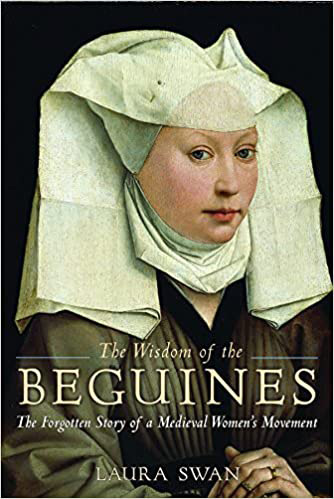
Praying people out of purgatory

Beguines excelled at this. By the Middle Ages, the belief in many Christian circles was that one did not go directly to heaven but to a sort of “holding place” after death to be cleansed of their sins before being allowed into heaven. Eventually “the medieval church also taught that people could pray for the souls in purgatory and that their prayers would effectively aid those souls in their transition from purgatory to heaven”(108).

It’s important to note that these women were esteemed by the communities they lived in as spiritually gifted, able to intercede with God on their own without permission from the church, clergy or men. This is radical for the time.

“Beguines, as we have seen, were understood to have extraordinary spiritual powers. People believed that having a beguine intercede before God on their behalf was an assurance that their petition was heard by God—and perhaps in no instance more than for “those poor souls in purgatory.” And beguines believed that they did indeed exercise the authority to release countless souls from purgatory. Many of the stories included in the vitae of beguines grapple with the fate of the deceased in purgatory (or hell)”(109).

Continue reading “The Wisdom of the Beguines: The Forgotten Story of a Medieval Women’s Movement by Laura Swan, part 2 by Theresa C. Dintino “

The Wisdom of the Beguines: The Forgotten Story of a Medieval Women’s Movement by Laura Swan, part 1 by Theresa C. Dintino 

Moderator’s Note: This piece is in co-operation with The Nasty Women Writers Project, a site dedicated to highlighting and amplifying the voices and visions of powerful women. The site was founded by sisters Theresa and Maria Dintino. To quote Theresa, “by doing this work we are expanding our own writer’s web for nourishment and support.” This was originally posted on their site on July 5, 2022. You can see more of their posts here. 

Around 1200 AD in Europe, communities of women often called beguines began to form. These women were not nuns, they were devout and devoted to the tenets of Christianity but did not belong to any church. They were independent communities of women who often created their own industry, trade or other means to produce income. They were self-sufficient and generally concerned with helping the poor, especially women. They lived in convents. This was the origin of that word.

“These women were essentially self-defined, in opposition to the many attempts to control and define them. They lived by themselves or together in so-called beguinages, which could be single houses for as few as a handful of beguines or, as in Brugge, walled-in rows of houses enclosing a central court with a chapel where over a thousand beguines might live—a village of women within a medieval town or city”(2).

Continue reading “The Wisdom of the Beguines: The Forgotten Story of a Medieval Women’s Movement by Laura Swan, part 1 by Theresa C. Dintino “

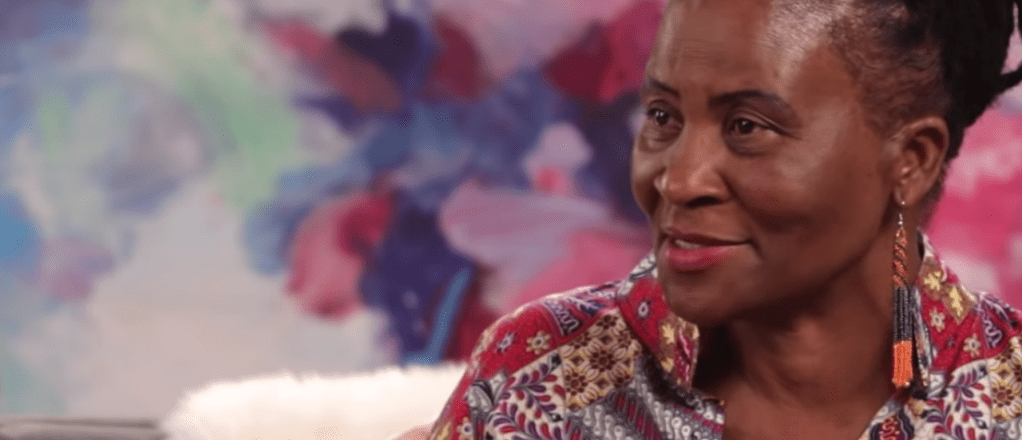
The Awakened Woman: Remembering and Reigniting Our Sacred Dreams by Woman Writer Dr. Tererai Trent by Maria Dintino

Moderator’s Note: This piece is in co-operation with The Nasty Women Writers Project, a site dedicated to highlighting and amplifying the voices and visions of powerful women. The site was founded by sisters Theresa and Maria Dintino. To quote Theresa, “by doing this work we are expanding our own writer’s web for nourishment and support.” This was originally posted on their site on January 14, 2020. You can see more of their posts here. 

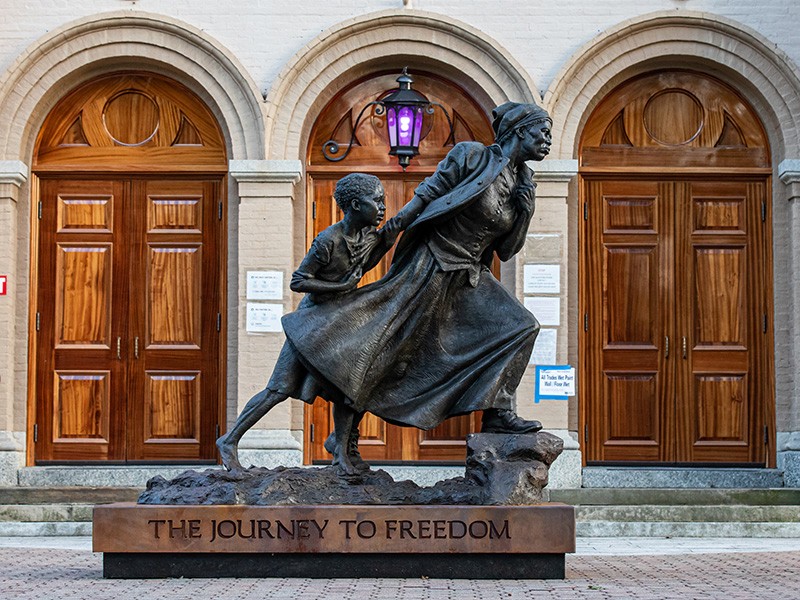
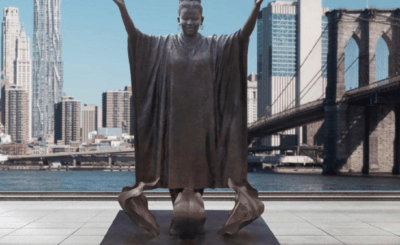
Breaking the Bronze Ceiling – Statues of Real Women in Public Spaces

I cannot imagine a woman more deserving than Dr. Tererai Trent, her likeness one of ten life-size bronze statues unveiled in New York City on Women’s Equality Day on August 26, 2019.

Australian global public artists and activists, Gillie and Marc Schattner, revealed the statues of these inspirational women on 6th Avenue (Avenue of the Americas) that glorious summer day! Their organization, Statues for Equality, is on a mission to achieve gender balance in public statues worldwide. In NYC prior to their unveiling, only 3% of the statues depicted females; this climbed to 10% on August 26.

Continue reading “The Awakened Woman: Remembering and Reigniting Our Sacred Dreams by Woman Writer Dr. Tererai Trent by Maria Dintino”

How the Nineteenth-Century Spiritualist Movement Gave Voice to American Women -Part 2 by Theresa Dintino

Moderator’s Note: This post is presented as part of FAR’s co-operation with The Nasty Women Writers Project, a site dedicated to highlighting and amplifying the voices and visions of powerful women. The site was founded by sisters Theresa and Maria Dintino. Part 1 was posted yesterday

Spiritualism began with two young girls, the Fox sisters, hearing knocking sounds in their home near Rochester, N.Y . They determined the knocking to be coming from a man who was murdered and buried under their home. The knocking was soon categorized into an alphabet out of which seances began. In seances groups of people gathered and put their hands on a table while asking questions of ancestors who made themselves known by rapping and knocking in response. Next, mediums in the form of young women speaking the answers of the dead as the bereaved asked them questions, emerged. Instructions were disseminated on how to be a medium and how to run a seance. The movement took off.

The movement was largely white, northern Protestants but other ethnicities were  involved. The Black population may have influenced the arising of these practices with traditions brought with them from West Africa.

Continue reading “How the Nineteenth-Century Spiritualist Movement Gave Voice to American Women -Part 2 by Theresa Dintino”

How the Nineteenth-Century Spiritualist Movement Gave Voice to American Women -Part One by Theresa Dintino

Moderator’s Note: This post is presented as part of FAR’s co-operation with The Nasty Women Writers Project, a site dedicated to highlighting and amplifying the voices and visions of powerful women. The site was founded by sisters Theresa and Maria Dintino.

Throughout history women have found power and position in spiritual communities. They have acted as leaders, priestesses, oracles, mediums, disciples, saints, preachers and more. And yet these roles and positions of power are often overlooked in the story of women, and the general story of humans.

Still today many women function as leaders in a variety of spiritual disciplines, yet they do not receive the attention, respect and clout that men in similar positions do. More often women who hold roles of power in spiritual communities are dismissed or discredited.

If their spiritual community is not considered a formally accepted religion where their position was bestowed to them by a man ranking above them, women spiritual leaders are often ignored. This marginalization goes unquestioned.

Continue reading “How the Nineteenth-Century Spiritualist Movement Gave Voice to American Women -Part One by Theresa Dintino”

FRANCESCA CACCINI (1587-1646): THE FIRST WOMAN TO COMPOSE AN OPERA by Maria Dintino

Moderator’s Note: We are pleased to announce that we are forming a co-operation with The Nasty Women Writers Project, a site dedicated to highlighting and amplifying the voices and visions of powerful women. The site was founded by sisters Theresa and Maria Dintino. To quote Theresa, “by doing this work we are expanding our own writer’s web for nourishment and support.” This was originally posted on their site on January 19, 2024. You can see more of their posts here. 

The featured image above is from the 2018 performance of Caccini’s La Liberazioine at the Morgan Library & Museum’s Gilder Lehrman Hall in New York City. Photo credit goes to Vincent Tullo of the New York Times.

I’ve always been an insomniac and of late I’ve become a regular listener of the app Calm’s sleep stories. One night I listened to an enchanting story called Songbird, written by Eurydice Da Silva and narrated by May Charters. Songbird is about Francesca Caccini, who is said to be the first woman to compose an opera, a musical genius and wonder. The next morning, I set out to learn more about her.

Continue reading “FRANCESCA CACCINI (1587-1646): THE FIRST WOMAN TO COMPOSE AN OPERA by Maria Dintino”

RACHEL KADISH:  TRANSCENDENCE AND TEXT, part 2 by Theresa C. Dintino

THE SYMBOL OF THE GENIZAH

Being a non-Jew, the first word I had to look up while reading The Weight of Ink was  genizah—a hiding place or the act of hiding sacred texts until they can receive proper burial in the earth. In Jewish tradition this is a required honoring of the written word, especially if it is writing about God. It can also mean depository or treasure; something hidden away in time with hope for more welcome in the future that finds it.

Genizah was the perfect word for me to have etched into my mind with regard to The Weight of Ink as it set the stage and opened a space in my heart for a novel which concerns itself with the power of writing and words through time. The story is centered around human lives engaged in passionate intellectual pursuits, the love of books and learning, and imaginations set afire by the academic.

Continue reading “RACHEL KADISH:  TRANSCENDENCE AND TEXT, part 2 by Theresa C. Dintino”

RACHEL KADISH:  TRANSCENDENCE AND TEXT, part 1 by Theresa C. Dintino

Moderator’s Note: This post is presented as part of FAR’s co-operation with The Nasty Women Writers Project, a site dedicated to highlighting and amplifying the voices and visions of powerful women. The site was founded by sisters Theresa and Maria Dintino. This was posted on their site on November 7, 2023

I love recognizing Toni Morrison’s influence on a writer as I am reading a book. Reading Rachel Kadish’s novel, The Weight of Ink, immediately sunk into Jewish reality, life, and experience without any explanation or apology, I sniffed a familiar point of view, a ghost of novels prior, detected the faint fingerprints of a giant. I liked it and when I recognized it for what it was, I thought to myself, Good for her.

Kadish had taken Toni Morrison’s advice to black writers that says you don’t have to explain yourself to white readers and applied it to not explaining herself to non-Jewish readers.

Why not?

Continue reading “RACHEL KADISH:  TRANSCENDENCE AND TEXT, part 1 by Theresa C. Dintino”

POET WARRIOR BY JOY HARJO: HEALING HEARTS AND NATIONS by Maria Dintino

Moderator’s Note: This post is presented as part of FAR’s co-operation with The Nasty Women Writers Project, a site dedicated to highlighting and amplifying the voices and visions of powerful women. The site was founded by sisters Theresa and Maria Dintino. This was posted on their site in 2021 and then again on March 21, 2023. You can see more of their posts here. 

“MY INNATE IMPULSE IS HEALING, WHICH IS ALSO STANDING UP FOR JUSTICE, WHICH CAN HEAL HEARTS AND NATIONS.” – JOY HARJO

Healing hearts and nations is what Joy Harjo does. Standing up for justice is what Joy Harjo does. Joy Harjo is a teacher and leader for our times, for all times.

When she asks this question in her book, Poet Warrior:

“What do I do with this overwhelming need for justice in my family, for my tribal nation, for those of us in this country who have been written out of the story or those who appear to be destroyed or perverted by false story?” (46),

Continue reading “POET WARRIOR BY JOY HARJO: HEALING HEARTS AND NATIONS by Maria Dintino”

Invisible Connections: The Hidden Web of Women Writers, part 2 by Theresa C. Dintino

You can read part 1 here. 

The erasure of this web is to make women feel alone and disconnected. Maybe it would make them want to give up. 

Angela Davis and Toni Morrison

This may sound extreme but imagine this scenario: You are a young woman starting out and you are told that the path you wish to follow is one of pain, loneliness and lacks any kind of support or network with other women that came before you. There are plenty of men but you are left out of that network. 

Why would you want to do it? Because in your soul of souls you are a writer, or an artist or a scientist . . . So you decide to do it anyway. But instead of expecting support and connection you have already decided, based on what you have been told, that there won’t be any and so you start to not expect it. 

Continue reading “Invisible Connections: The Hidden Web of Women Writers, part 2 by Theresa C. Dintino”