My students are taking their final exams this week, which means I will be spending the week frantically, but attentively grading in order to make our grade submission deadline next week. End of semester grading is a mountain of careful criticism we educators scale one step at a time, with deliberateness, towards an ultimate goal of student success (if not in our classes, then in the next, or in life, relationships, etc.). Thus, I often find myself returning to the question: what am I hoping to create in what I say and write, and in how I critique?
One of the goals of feminist pedagogies is to help us prevent recreating the domination of kyrio-patriarchy in classroom spaces. While activism is not the same thing as education, and strategies of resistance are different than pedagogy in important ways, the concern for careful critique is warranted in both praxes. What do we create in how we critique, resist, and protest? What do we recreate, wittingly or no? I have found myself concerned with this since the election of Trump, DT (cause I can only write that name so many times), to the presidency. Continue reading “From the Archives: Careful Criticism: Resisting Hetero-Patriarchy while Resisting Trump by Sara Frykenberg”
Part of discovering my love for teaching and moving through my anxiety involved reconsidering my “ideals” of teaching, which were numerous and high minded.
I always wanted to be a teacher. Sure, I had other career dreams as a child too. I wanted to be a model, because I wanted to be pretty like a model. I wanted to be a flying missionary to please my father—you see, it was not quite enough just to do missions. I also needed “save” (pun intended) people with my daring airplane recuses. And in moments of practical mindedness, I thought I should definitely be a “cleaning lady” (aka a housekeeper), because I was very good at cleaning, which was a way of life and survival in my home. But “teacher” was a persistent calling, so I followed in my teacher-mother’s footsteps AND tried to satisfy paternal aggrandizement by becoming a professor.
It occurred to me recently that I have actually been teaching now for nine years. I’ve also discovered in the last few years that I like teaching. And no, I didn’t always know this. I always wanted to like teaching; and sometimes I was sure that I did indeed like teaching. But non-teaching associated trauma during my early career and my social anxiety also sometimes made (and makes) the process excruciating. (Neo-liberal and late-capitalist academic practice, politics and policy don’t help either.) Part of discovering my love for teaching and moving through my anxiety involved reconsidering my “ideals” of teaching, which were numerous and high minded.
Friends, it has been a few months since I’ve posted in this community. I’m amazed at how much our world has changed since then. Here in the northern hemisphere, spring came and went. It felt like a tide of turmoil rolled in, leaving debris all along the shore and now we are trying to clean it up while keeping our eyes on the sea for more dangerous waves that are coming.
The issues we now face began before March, but for many of us, that was when the COVID-19 pandemic began to alter our patterns of daily existence. In-person instruction at my university and most schools was suspended and spring semester courses shifted online. In March and April, we quarantined, self-isolated, and sheltered in place. While a gradual re-opening of businesses and services has occurred in the months since then, I don’t know anyone who has resumed daily life as it was before. The virus continues to spread and the death toll rises.
As a professor, I find myself returning to a similar struggle again and again. I know what I know; and I know what I hope students will gain from the class, in terms of content knowledge, critical thinking, classroom community-making, etc. But often, I don’t know what they don’t know.
This might seem a silly kind of observation. No duh, Sara, you barely know this group of people. Also, this may seem an easy question to answer. And sometimes it is; and I do have part of the answer when I begin a class. My “Intro to Ethics” students, for example, will understand and be frustrated by the way people use the Bible to justify their own positions, but they usually won’t know the term “proof texting,” or easily understand “hermeneutics.” My “Women in Christianity” students will understand sexism and often, the idea of gender as a social construct, but they are usually unfamiliar with the dualistic gendering and ranking of larger social realities, like nature and culture, production and reproduction, etc.
There are obvious differences in academic training—that’s why I’m allowed to teach at a university after all. But I’m not really wrestling with what I can contribute in terms of content knowledge or historical/ theoretical contextualization. I think what I don’t know is what understandings of reality they bring into the classroom and what these realities have allowed them to see. Learning and/or teaching feminist theory and theo/alogy for the last fifteen years at least, I also often take my own reality for granted. I “know what I know,” after all—I just can’t always remember what it was like to learn it. And all of these classroom dynamics can make it harder to catch the realities we can’t yet know or can’t see. Continue reading “What We Can’t See by Sara Frykenberg”
On a recent Friday, I learned that the 43 year old husband of someone I went to graduate school with, parent of four young children, died suddenly. Though I had been out of touch with my grad school friend for some years, I felt deeply for her loss, her unexpected plunge into single parenting, the way her life and the lives of her children would forever be shaped by this grievous tragedy.
I carried this family in my heart as I drove to my weekly Sunday visit with one of my adult sons, who lives about 75 miles from me. At this time, disabled by mental illness, he lives in an AA recovery house, surviving on Supplemental Security Income of $740.00/month and SNAP food allotments. Now 27, he dropped out of college after one semester, has never held a job for more than a month, and has been hospitalized three times for psychiatric care.
I usually enjoy our weekly visits, during which we sit at a coffee shop or do an errand. But I never know how he will be doing. When he is doing poorly, my own tendency to depression means that being present as best I can, even for just a few hours, to his deep suffering may utterly deplete me for the rest of the day or several days following. Continue reading “Sunday Shaming by Alison Downie”
My students are taking their final exams this week, which means I will be spending the week frantically, but attentively grading in order to make our grade submission deadline next week. End of semester grading is a mountain of careful criticism we educators scale one step at a time, with deliberateness, towards an ultimate goal of student success (if not in our classes, then in the next, or in life, relationships, etc.). Thus, I often find myself returning to the question: what am I hoping to create in what I say and write, and in how I critique?
One of the goals of feminist pedagogies is to help us prevent recreating the domination of kyrio-patriarchy in classroom spaces. While activism is not the same thing as education, and strategies of resistance are different than pedagogy in important ways, the concern for careful critique is warranted in both praxes. What do we create in how we critique, resist, and protest? What do we recreate, wittingly or no? I have found myself concerned with this since the election of Trump, DT (cause I can only write that name so many times), to the presidency. Continue reading “Careful Criticism: Resisting Hetero-Patriarchy while Resisting Trump by Sara Frykenberg”
It’s pretty common knowledge that education changes lives. It opens doors, improves health, promotes gender equality, decreases poverty, promotes civic involvement and has many other benefits. This is true for basic literacy campaigns as well as sex education, access to school for girls and institutions of higher education. Yet, what is taught in addition to how it is taught matters a great deal.
In a few days, I’ll begin a new semester teaching “The Jewish Experience in Central Europe” for Anglo-American University in Prague. As a scholar, a Jew and a feminist who recently moved to Prague (in the heart of Central Europe), this course hits home. It is also timely given rising anti-Semitism in Europe. Coincidentally, this is also the first time I’m teaching a course solely on Jewish history. Continue reading “Education, Anti-Semitism, a Counter Narrative and a Different World by Ivy Helman”
You will be handed a sheet of paper. The paper will have a quote from the Torah or the Gemara or Abraham Joshua Heschel. The ‘what’ and ‘who’ and ‘why’ behind those sources will not be explained. You will read the passage and reflect on it with a partner. In ten minutes, you will share a piece of your conversation with the rest of the group. Then, the Jewish part of the Jewish social justice program you’re about to experience will be complete.
I have read and reflected on countless texts as part of that ritual. I don’t remember any of them. I do remember being embarrassed that I didn’t know who Rebbe Nachman was. I remember sensing that my training in literary criticism didn’t “count” as Jewish knowledge. I do remember every time I revealed that I misunderstood a detail or a Hebrew word, and all of the times that a (usually male identified) peer excessively explained it. I remember feeling left out of an exclusive club, one that I was embarrassed to want to join to begin with. Continue reading “Wrestling with Jewish Learning By Casey Tova Markenson”
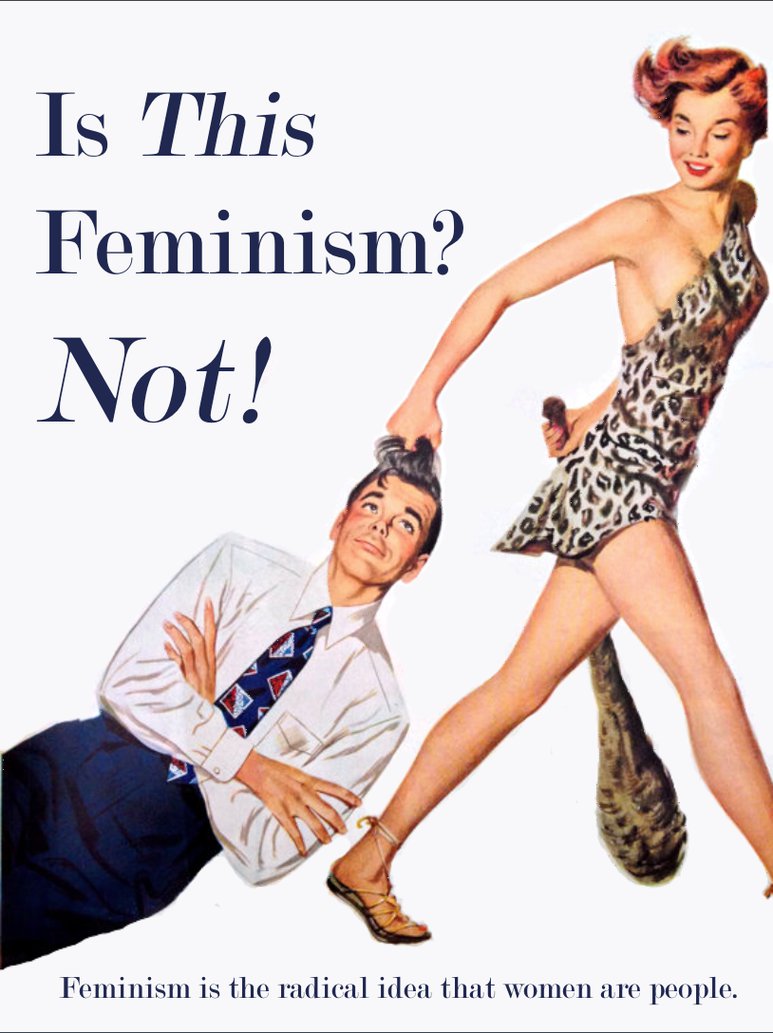
It is so easy to blame feminism for the ills of the world – mainly because of continued misconceptions and misunderstandings about the definition or meaning of feminism. Feminism is responsible for poverty, bad leadership, wars, the polar vortex, the list goes on. Feminism is still considered a derogatory term that serves to incite prejudice against those who label themselves as one. In fact, negative connotations surrounding feminism are exacerbated in today’s culture, especially in the media. Fox News seems to be the poster child of “femiphobia” – a term coined by Stephen Ducat and defined as “wanting to repress every man’s feminine side and demonize the feminine and gay wherever we see them.” Elisabeth Hasselbeck and Nick Adams, in a recent interview, illustrate this femiphobic viewpoint by blaming feminism for raising a culture of “wimps” and “wussies” and thus compromising the U. S.’s national security and weakening its global presence. In other words, feminism is to blame for the problems of the world.
According to Adams, men around the world are no longer allowed to be “manly” and that this phenomenon is a “dangerous” problem:
American men are of course very susceptible to it. It’s really important particularly in America given the leadership role that America has in the world that American men be allowed to be men.
What does in mean to be a man and how is Adams defining that stereotype? While I am aware of the discussion of gender identity and roles even gendered stereotypes, this post is not about what those roles mean. Rather, for this point of discussion, I want to address the issue of masculinity, feminism, and what it means to be a “wimp” as portrayed by popular media.
With that caveat in mind, I ask the following questions:
Is the author suggesting a move to a “hypermasculinity”?
Is Adams identifying masculinity with aggression and violence in a world where feminists and perhaps all women are demonized?
In a society dominated by the “alpha male” character trait,male honor and pride are paramount. Is Fox News telling men to replace so-called passive behavior with pride, abrasiveness, authoritarianism, and arrogance–in such a world if where women are demonized, then assaultand rape will follow. The call for “real men” or “hyper-masculinity” therefore provides a real potential to move us further towards a misogynistic rape culture of violence–in the direction of barbarianism.
Of the many reasons I am grateful for feminismandreligion.com, I have to say that I am most grateful for the time it requires of me to reflect about feminism’s impact in my life, faith, and work. I decided it was time to reflect on this question: What difference does feminism make for the way I structure and approach my classes?
I recently started a new position as a full-time lecturer in the Department of Religion at Baylor University. Earlier this week, I attended a gathering for the department, where I was introduced, along with a few others, as new faculty. At the end of the evening, the wife of a retired male professor introduced herself to me and remarked about how happy she was to see more women in the department. (Four full-time faculty members were hired this year, and three of us are women.) She had been looking forward to this kind of change for quite a while. I was appreciative of her remarks, just as I have been generally pleased with the warm reception I have received around the University.
Her excitement about the increase in the number of women faculty provoked me to reflect on what I add to my department, particularly for my undergraduate students. I have thought before about how, from a purely representative standpoint, I bring something different to the faculty. I have thought about how my students may not have previously had a professor–especially a religion professor–who looks like me. Even if they had, I’ve had different life experiences than many of my colleagues, and that this bears on my approach to theology and ethics. Therefore, the research I do and share is distinctive in its approach. Yet, I am slightly embarrassed to admit that I have not given much thought about how my being a black feminist woman might impact my students. I am tempted to blame it on the fact that I have just been trying to keep my head above water in a new position. Of the many reasons I am grateful for feminismandreligion.com, I have to say that I am most grateful for the time it requires of me to reflect about feminism’s impact in my life, faith, and work. So I decided to reflect on this question: What difference does feminism make for the way I structure and approach my classes? Continue reading “The Difference a Feminist Makes by Elise M. Edwards”


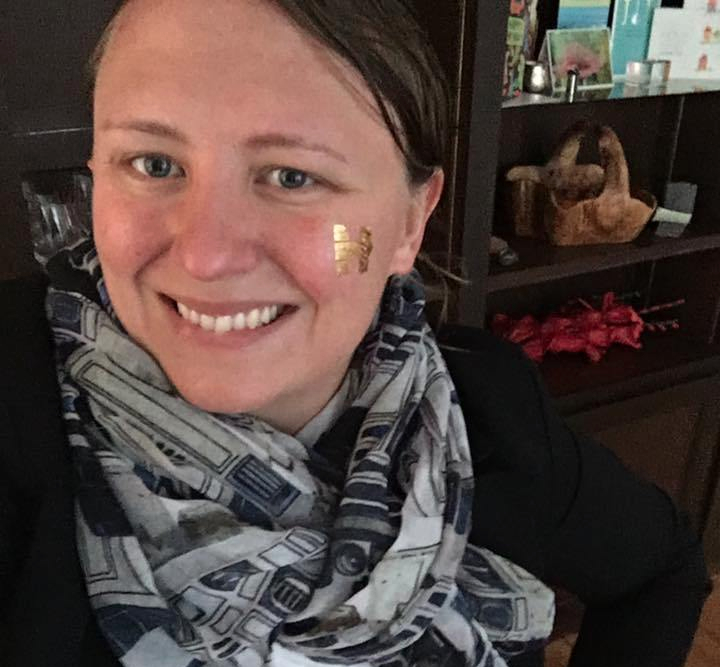 My students are taking their final exams this week, which means I will be spending the week frantically, but attentively grading in order to make our grade submission deadline next week. End of semester grading is a mountain of careful criticism we educators scale one step at a time, with deliberateness, towards an ultimate goal of student success (if not in our classes, then in the next, or in life, relationships, etc.). Thus, I often find myself returning to the question: what am I hoping to create in what I say and write, and in how I critique?
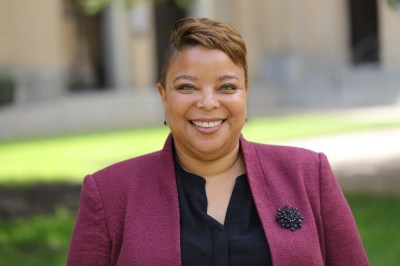 Friends, it has been a few months since I’ve posted in this community. I’m amazed at how much our world has changed since then. Here in the northern hemisphere, spring came and went. It felt like a tide of turmoil rolled in, leaving debris all along the shore and now we are trying to clean it up while keeping our eyes on the sea for more dangerous waves that are coming.
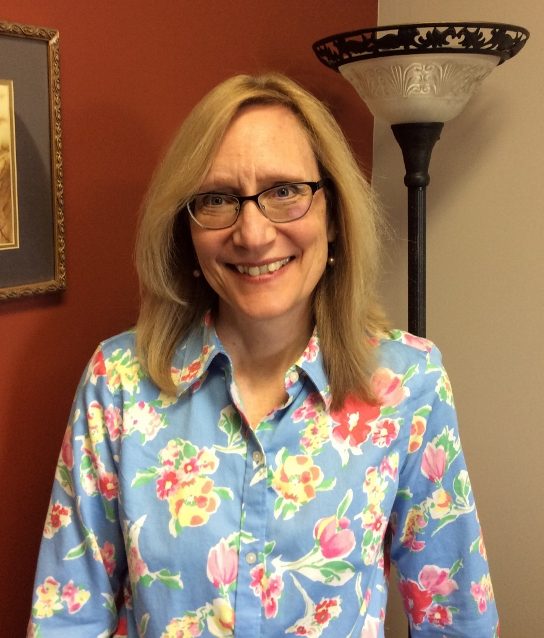 On a recent Friday, I learned that the 43 year old husband of someone I went to graduate school with, parent of four young children, died suddenly. Though I had been out of touch with my grad school friend for some years, I felt deeply for her loss, her unexpected plunge into single parenting, the way her life and the lives of her children would forever be shaped by this grievous tragedy.

 Feminism and Religion