

 Ms. Mentor warned me that October would be tough.
A few weeks ago, I was walking through the library, looking up books on women and pedagogy, when I saw a newer version of a book I’d seen on my sister’s bookshelf: Ms. Mentor’s Impeccable Advice for Women in Academia. The newer version, appropriately titled Ms. Mentor’s New and Ever More Impeccable Advice for Women and Men in Academia, jumped into my stack of books and invited me to take it home where I read it during the wee hours of the night instead of doing something more “productive.” I’ve always been a fan of advice columns, so I was delighted to find that this book features several advice letters organized in chapters on various topics about work and life in the academy. On page 112, I came across a piece called “My Head is Exploding.” It spoke to me.
Ms. Mentor (aka Emily Toth, a professor and columnist for The Chronicle of Higher Education) notes that in October, people in academic careers have proposals and papers to submit, midterms to write and grade, conferences to organize and attend, and classes to plan and lead. I have these and a dissertation. To make life more complicated, my technology decided this would be a good month to confound me, not assist me. Ms. Mentor’s advice to the poor letter writer was to simplify wherever possible, commit to scheduled writing blocks, determine priorities, and at the end of it all, celebrate Halloween and blow off some steam.
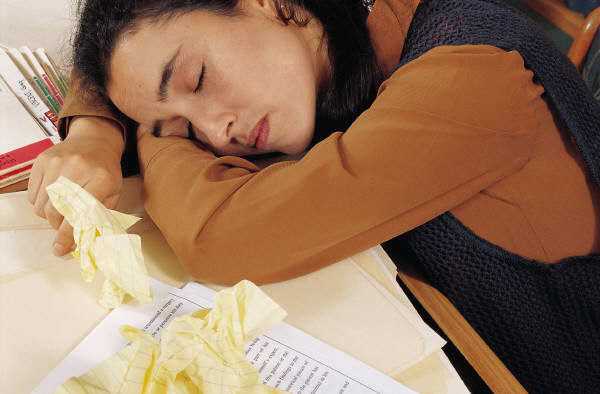 Ms. Mentor’s advice seekers have anonymity, but because I chose to expose my tiredness on this blog, I don’t have that shield of anonymity. In one sense it doesn’t matter – I don’t think it’s smart or heroic to deny that we feel tired, hungry, achy, or sick, when our bodies have been dealing with things that make us tired, hungry, achy, or sick. So I have no problem admitting that I’m tired from staying up late to work on multiple projects that I knowingly and inadvertently scheduled for this month and next. And admitting that to my friends on Facebook actually helped me out. One day when I updated my status to say that I wished for a car wash, a home-cooked and healthy meal, and a massage, friends responded with food. Home-cooked food made in a single serving size for me to reheat the next day. I nearly cried with gratitude. In fact, I think I did shed a tear.
But the exhaustion I’m feeling is not merely physical. I’m feeling a kind of emotional and intellectual weariness. Talking about that kind of weariness reveals the vulnerability that contributes to some of my fatigue. The different tasks I’m taking on this October have me facing questions about my identity as a black woman and my commitments as a religious, yet socially liberal person. I’m figuring how to be the person I am in the world I inhabit.
It seems that every day I have to make multiple decisions about how I present myself to my colleagues, students, and mentors. I also worry about my credibility. There are other questions: How do I want to appear to future potential employers? How do I uphold my commitment to honor the dignity of every person when I need to mediate tense situations in the classroom, online, and in my personal relationships?
It is this kind of thinking that really wears me out. And unfortunately, it’s not resolved in the way physical exhaustion is–by getting enough sleep, drinking lots of water, staying physically active, and eating the healthy meals my generous friends have prepared for me. I’ve been told that spiritual practice – prayer, reading, meditation, worship – can help. But in my experience, it provides emotional peace but not actual resolution to internal conflict. Part of the spiritual life is wrestling with difficult questions. I believe that personal growth occurs when we really engage questions about our identity and our commitments. And it’s the wrestling with difficult questions that drew me to theology and ethics in the first place. I wouldn’t be in this position if I didn’t want to think through difficult issues.
So you can see my dilemma. And I’m sure you’ve experienced it too. I even see it on the TV shows I watch when I take a break. A woman on The Good Wife provokes other professional women to question why it is rarely asked whether men “can have it all.” On Scandal, Olivia Pope deals with employees and former friends who question her decisions and motivations. The contestants on Dancing with the Stars struggle to overcome their nerves, have fun, and mask their uber-competitive spirit while wearing high heels and sequined fringe. (At least that last one isn’t a challenge I have to face in real life! Phew!)
How are you coping with these issues, my feminist friends?
Elise M. Edwards is a Ph.D. candidate in Theology, Ethics, and Culture at Claremont Graduate University and registered architect in the State of Florida. She does interdisciplinary work in the fields of theology, ethics, and aesthetics, examining issues of civic engagement and how beliefs and commitments are expressed publicly. As a black feminist, she primarily focuses on cultural expressions by, for, and about women and marginalized communities. Follow her on twitter, google+ or academia.edu.
Discover more from Feminism and Religion
Subscribe to get the latest posts sent to your email.

 Feminism and Religion
You totally have my sympathy. Do something restful for yourself. When I was taking my Ph.D. exams–“Write everything you know about the work of John Milton”–I spent one afternoon at the movies. Blazing Saddles. It helped a lot. About that time, I also ran into a article in some academic journal or other that compared graduate work to pregnancy–you’re tired all the time, your back hurts for carrying that burden (books, not a baby), you get crabby, you’re forever talking to doctors (academic not medical) (which may be why you get crabby), you have only one topic of conversation (ditto). Take good care of yourself!
LikeLike
I do my best to take care of myself – I’m actually nicer to my body in times of stress than non-stressful times because I actually pay attention to the basics. Thanks for the support and advice!
LikeLike
Elise – I don’t know how we do it, really. Mostly it’s a process and an ongoing struggle to stay grounded and connected to that which gives us life and reminds us of the very reasons we do the work we do in the first place. For me one of the post important things to do is get together with my girlfriends – I need time with them, to reconnect and to get my gynergy! :)
LikeLike
Gynergy! I love it! Yes, I truly value time with my girlfriends. Thanks for the support.
LikeLike
This is just way too much Elise. One thing I’ve learned throughout the years is that I will only work on that which truly energizes me. If I don’t care about an issue or a cause or a group, or don’t like a lot of female assigned pressured into tasks— NEVER clean up, make men do it. NEVER say YES for a week— practice a say NO to men day, week….
Then focus on what is truly important, not urgent but important. This burnout feminism has always perplexed me, but then the life of most women perplexes me….
But what does count with me is the surest route to revolution for women, women’s political space,
women’s intellectual virtuosity. I’m not sure if these academic environments in “religious/gender blender studies are all that good to begin with. Kind of like racking up student debt for the all time female favorite degree of master of social work lowest paid job on earth.
SAY NO! Do what you want! Say NO to all male serving tasks and all boredom!!! And good for saying hey I’m tired! And then radically declare energizing time, and eliminating all that heteronormative work-a-holism that women seem to get saddled with.
LikeLike
The funny thing is that I learned a long time ago to say no and to not feel a lick of guilt about things I don’t want to do or don’t see some benefit in doing. My problem is a little different. I once had a counselor describe it to me as putting too much cake on my plate. There’s a whole world of enjoyable stuff out there that I like do. It’s like cake (or whatever dessert you like). But too much cake can make you sick. So I have to remember that life is long and not everything – even the fun, rewarding stuff – needs to be done RIGHT NOW. I have to save some cake for later.
But the problem I’m naming here isn’t just about having too many obligations and deadlines. I can manage that for the next few weeks. It’s the larger sense of unease, of fatigue, of confusion that comes with times of transition and figuring out who I am and want to be when I emerge. It takes a different kind of energy to set a vision, follow it, and articulate it to others. I’m still figuring out how to keep the energy needed for that. I know this is not an experience unusual to feminists and others working to change the world.
LikeLike
Hi Elise,
I really appreicated reading this blog. I too am very tired. I am tired from good things and tired from bad things. And yes, spiritually tired is a good way to put this– because no matter how I’ve tried to ‘sleep it off’ I can’t. And, it definitely makes me groutchy!! I feel like Oscar the Growtch– I want to make muppet leave-me-alone faces, yell at people to leave me alone and throw trash at them sometimes.
I’m not sure what I do to get untired lately (other than sleep); and I think that is the problem. I am not doing anything constructive about this. … So I guess to get untired I will probably need to have a dialogue with my spirit– which for me sometimes means meditation. I so into my “house” so to speak to see what’s disrupting the space.
Thank you for the thoughts here! It also helps me sometimes, when I am tired, to know that I am not alone.
LikeLike
Thank YOU, Sara for sharing. I figured I couldn’t be the only one who can’t “get untired” at an internal level. I think you may be right about needed to have a dialogue with my spirit. If I create the time and space to get clear about whats ahead, perhaps it would feel less challenging in day-to-day life.
LikeLike
I would say be yourself and read and write about things that really interest you, pursue the truth of your life and listen to the truths of others. This may not be a formula for “success” in the academy, but it is a formula for a meaningful way of living.
LikeLike
Carol – your way of engaging across difference, and encouraging and always drawing out your own and other people’s truth is such an inspiration to me. I consider you an exemplar – thank you for the witness you offer the world, and me.
LikeLike