

This was originally posted Oct 18, 2023
Imagine a world where beauty is revered just for bringing pleasure and joy; where buildings abound in graceful, naturalistic, lively renderings of animals and plants; where the human body is magnificent art; where everyday objects for all are ornamented with complex, graceful imagery. Imagine a world where “beauty” is not a narrowly defined style of attractiveness or an attribute of works created by a small elite, but a revelation of life’s joy created by all, an expression of delight in the Earth, and a bridge to the worlds within us. If we look back across human history, we will find all these expressions of “beauty for beauty’s sake,”
From our earliest millennia, “where you find humans, you will find art,” says pre-historian Jean Clottes (Marchant). People carved zig zags in shells 500,000 years ago (Handwerk). About 164,000 years ago, people left behind in South African caves ochre and pierced shells, perhaps for jewelry (Marchant). Artists created the oldest cave paintings yet found, stunning in their realism and movement, in Spain 65,000 years ago (Handwerk).
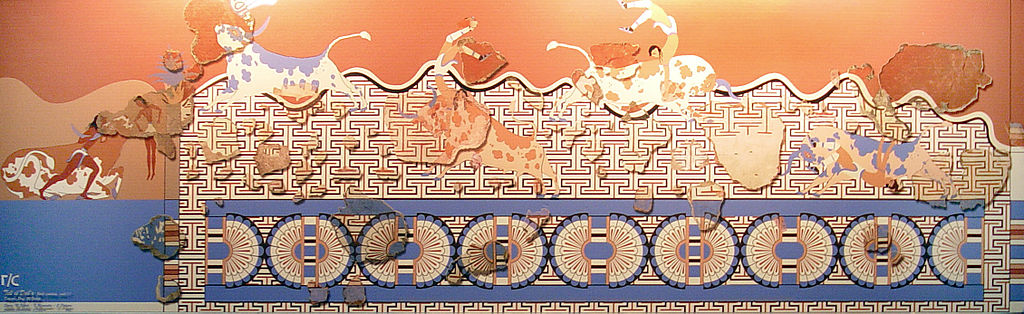
While the love of beauty is certainly expressed in many ancient and contemporary cultures, it is a particularly strong theme running through Old European cultures in which women played a powerful spiritual and social role. Marija Gimbutas documented, for example, the incised and painted pottery and other objects of matriarchal Old European societies from 7,000 years ago and the still stunning colorful wall paintings from places like Minoan Crete (Gimbutas). Statues of women and goddesses amazing in their artistry and variety are being excavated from these cultures as are sacred and everyday objects with intricate, graceful ornamentation symbolic of female sacredness and divinity.
In our own era, an outpouring of fine art, music, dance, drama poetry and literature began as soon as the 20th century feminist spirituality and religion movement dawned. We also see a tradition of encouraging the creativity of everyone in homemade home altars, the creation of meaningful, sensual, and poetic rituals, and even colorful, individualistic, highly decorated clothing many feminist spiritualists wear to ceremonies or every day, evoking the elaborate regalia of goddesses and priestesses of the past. Art by contemporary feminists also brings a special quality to protest, sidestepping patriarchal assumptions that change must come about through conflict, instead persuading and educating by offering new visions and perspectives.
We can see the relationship of beauty to the feminist spirituality movement also in Carol Christ’s nine Touchstones of Goddess spirituality (Christ) as well. “Nurture life,” “Walk in love and beauty,” “Trust the knowledge that comes through the body,” “Practice great generosity,” and “Repair the web” have obvious relevance to art and its physical, life-affirming, and healing aspects. But, love, respect, and reverence for beauty are also evident in: “Speak the truth about conflict, pain, and suffering,” “Take only what you need,” “Think about the consequences of your actions for seven generations,” and “Approach the taking of life with great restraint.” In these we remember that art is an expression of the importance of our physical existence on the Earth, that it has always been a means for women artists to speak hard truths while attesting to life’s meaningfulness and joy; and that the love of beauty encourages us to preserve the source of all beauty, the Earth, and the living beings who live on Her.

Unfortunately, our Western society does not always live by these principles, and it is not hard to see a connection between our society’s commodification of women, of art, and of the Earth. Each of these is a repudiation of the sacredness of our lives as physical beings on the planet to which we owe respect and care. In exploiting women, art, and the Earth, our mainstream culture deems second class and disposable the creation of life and those who give birth, the impulse to create beautiful objects, music, poetry, and dance as more than an economic activity, and the living force of our Earth that, day after day, season after season, and year after year gives abundantly to all living beings in a way that is the font of all beauty.
What does our society lose when women are not able to sustain themselves through art and their work is rarely experienced? We lose their voices and our essential perspectives for all time, points of view that could lead us to solutions of our greatest challenges. Our cultural lives are less rich and inspired, our communities less honest and just. People lack self-awareness and the personal benefits of creating art when they become primarily paying consumers of art, never exploring their own ideas and visions. Our environment becomes standardized, drabber, and severed from vitality and joy.
When true beauty for beauty’s sake is valued, it softens our individual and cultural hard edges while exciting those parts of us that are most alive. Our vision is expanded beyond our narrow, everyday field of vision. We are protected from the tyranny of conformity because all, or at least more, perspectives are on view. We see the benefits of beauty for beauty’s sake in the immense cultural and social achievements of those ancient matriarchal societies in which it was practiced.
Appreciating beauty for its own sake and integrating it into many aspects of everyday life is one key to creating a society that is vibrant and soul-affirming, Earth-honoring, peaceful, and just. The feminist spirituality and religion community has already found ways, by instinct or perhaps a deep remembering, to welcome beauty into all that we think and do. It is a great gift to ourselves and to the world as a model for other communities and even our global society as a whole. May we find beauty in every day of our lives and pass along this blessing to all we meet.
Sources:
Christ, Carol,”Ethics of Goddess Religion: Healing the World,” Feminism and Religion, June 25, 2018, https://feminismandreligion.com/2018/06/25/ethics-of-goddess-religion-by-carol-p-christ/
Gimbutas, Marija. The Civilization of the Goddess: The World of Old Europe. New York: HarperCollins Publishers, 1991.
Handwerk, Brian. “Oldest Known Neanderthal Engravings Were Sealed in a Cave for 57,000 Years.” Smithsonian Magazine, June 21, 2023. https://www.smithsonianmag.com/science-nature/oldest-known-neanderthal-engravings-discovered-in-french-cave-180982408/.
Marchant, J. “A Journey to the Oldest Cave Paintings in the World.” Smithsonian Magazine, January, 2016, https://www.smithsonianmag.com/history/journey-oldest-cave-paintings-world-180957685/.
Discover more from Feminism and Religion
Subscribe to get the latest posts sent to your email.

 Feminism and Religion
Thank you for this, Carolyn, and for the reminder of the Nine Touchstones.
LikeLiked by 1 person
Thank you so much, Beth! Yes, I love Carol’s touchstones – I think they are great guidelines for how to live.
LikeLike
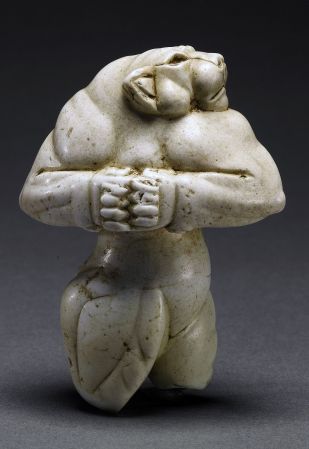
These examples of art are stunning! The Lioness is brilliant. And the Minoan frescoes- I could lose myself in them for hours. It seems that was a teaching we got from Aphrodite- beauty for beauty’s sake. Thank you so much Carolyn.
LikeLiked by 1 person
Thank you for your kind words, Annelinde! Yes, I was struck especially by the lioness and how that was a piece that would be at home in any museum of modern art. Beauty truly is universal.
LikeLike