

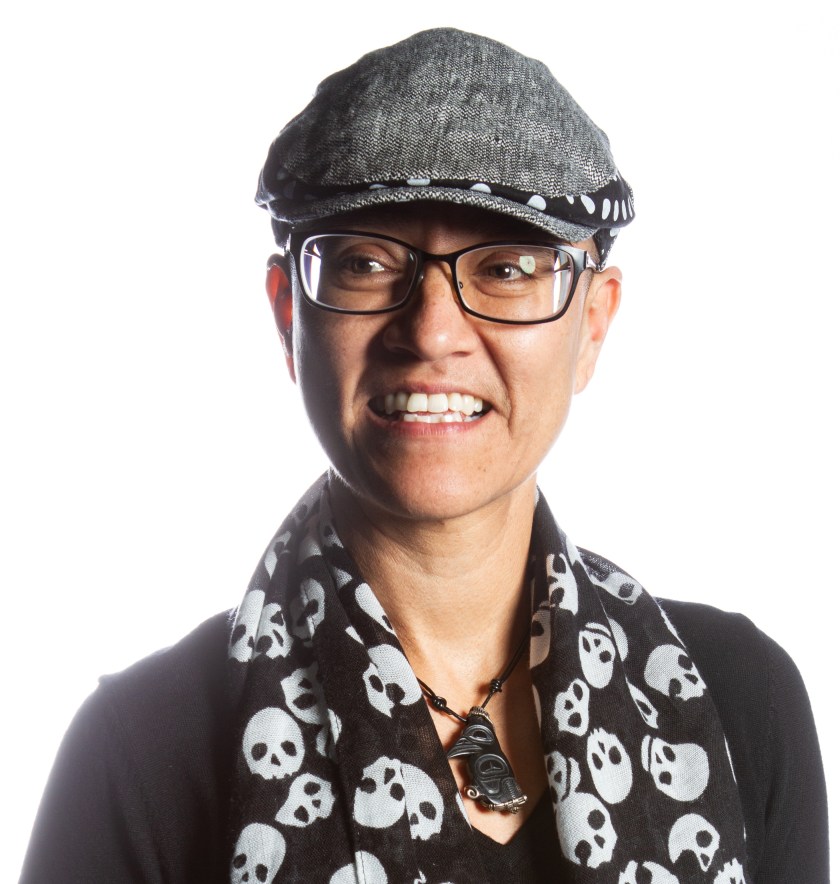
One of my earliest lessons from karate, which I am still working to integrate, is about the necessity of making mistakes. I used to apologize every time I make a mistake, “I’m sorry,” I’d immediately say to my instructor. She would smile at me and at the end of class would say, “You don’t have to apologize for making a mistake; your body is just learning to do this for the first time, so of course you’re going to make mistakes. Mistakes are part of the process.”
The necessity of making mistakes was something I needed to learn to embrace. As with other areas of life, making mistakes in karate made me feel like a fool. I would get frustrated with myself and would feel embarrassed, and would feel like my teachers were disappointed in me too. But one of the things that has helped me embrace my mistakes is seeing how I have indeed improved in my practice. The mistakes I now make are new ones and are about higher level forms and techniques—things that used to absolutely seem impossible for me.
The other big lesson, or in this case, discovery, was learning how disconnected I have been from my body. I have lived in a classic mind/body dualism. I live out of my mind by default, with strained access to my body-knowledge. Most of my mistakes in karate come from the lack of practice in communication between my mind and my body. Instead of allowing my body to move into or experiment with the new techniques I am practicing, my body often freezes while my mind scrolls, trying to recall the correct next move. I get stuck in my head instead of being able to trust my body to know what to do, even when I’m trying to do something it has already done a hundred times before. It’s been really revealing.
Starting to take karate lessons in my late forties took a lot of courage even though it had been part of my imagination since I was very young. There is a picture that exists somewhere in my family’s photo albums of me and my dad sitting on the couch pretending to do karate moves—I’m about 2 years old. My dad always loved Bruce Lee movies and we grew up watching them (I say “we grew up” because my parents were both teenagers when I was born). I always daydreamed about doing karate and being able to “fight” like in the movies (it was always about the skill for me, not the fighting). But after my partner and our kiddos had already signed up for classes, it still took me a couple extra weeks to build up the courage to join them. Actual karate classes intimidated me, as much as I was drawn to it. I saw it as something only strong and athletic people could do, which I didn’t think could be me.
I’ve had some heartbreak in the last couple of years, so at times I’d arrive at karate class on edge, barely able to function and keep from crying. A few times, class would start, and just minutes in, I’d have to step off the matt and go to the restroom to pull myself together. I’d take a pause, take some deep breaths, and sometimes let out some tears, before heading back to the floor. But inevitably, and I could never exactly tell when it took place, but by the end of the 70-minutes long class, I’d be in a completely different place—grounded, calm, back to myself and feeling more whole again.
Learning something new, though, is so much about getting past the obstacles our own mind puts in place; and for me, one of my obstacles was the fear of mistakes. Karate helps me reconnect me to my body and helps me stay present. It helps me remember that to stumble is not only human, but it is a good sign of my willingness to learn. And, it also keeps me humble. And all this is also connected to my spiritual life, or, how easily I can am alienated from it. When I say spiritual life, I really see this as a life of embodiment with our whole being.
I still make mistakes at an impressively high rate, but it’s a practice, and by definition learning involves entering into something that one is not yet proficient or knowledgeable in and struggling through the missteps. I find that the experience requires me to trust and remain open at some deeper, more sacred, level. I don’t know how to explain it yet, but I’m starting to reflect on it, and will continue to do so. For now, what is your particular practice that has a similar effect?
Just for Fun…two of my board breaks
P.S. It does feel odd and even out of place to write about something personal and mundane like my karate practice when we are in the midst a devastating political and global reality. I can only say that all the devastation remains true, and still, we have to keep on, we have to stay grounded, and keep hold of that which keeps up sane and connected to ourselves and our deeper source of life. It’s part of what has me reflecting on karate in the first place. There is strength in our connection with the divine, within and all around us, as we learn and practice something that helps bring us back to ourselves.
Discover more from Feminism and Religion
Subscribe to get the latest posts sent to your email.

 Feminism and Religion
Oxichitl – this is a such a wonderful post – nothing mundane here at all – and everything to do with everything else – we have all lived a classic mind- body dualism – it’s the root of what’s wrong in this country – western culture – all of it – recall Indigenous folk have no word for ‘spiritual’ – why? Because for them spiritual is embodiment – THERE IS NO SEPARATION – I’ll say it again – spiritual is embodiment – we can’t have one without the other – and we trick ourselves when we think we can – (I’m getting to the point where I am repulsed by the ‘spiritual’ anything because the split is going to be highlighted again) Our greatest challenge is to become aware of the split and then become willing to work with it – disembodied means trickster is a foot with not benign intentions. Hurrah for you and hurray for karate – you are learning to live in your body and therefore the door is open to spirit because spirit is body at least on this planet! I love being old because it’s real to me that mistakes are just part of the process of learning and we won’t learn without them – I make them constantly – and yes I get furious with myself – falling into self abusive patterns but only temporarily – then I ask myself – what am I supposed to learn – and goodness there is always new insight waiting. I was totally disembodied until mid – life – when I finally got it – genuine spirit interventions pulled me out of my body and I didn’t know why but I dedicated the rest of my life to getting into my body and learning how to stay there…. and boy has that been a process – in my case it was my love for nature that taught me – you have karate – all I can say is HURRAH for Xochitl – may you be a beacon for others. We all have different ways of getting into our bodies – we just have to figure out what works for us…. I love that picture of you glorious creature that you are! Many blessings dear one and thank you on behalf of myself and all the rest of us who are trying to begin a healing of ourselves and the earth – regardless of outcome – this is our path. love to you – S
LikeLike
Thank you for this post, Xochitl! I began studying tai chi chuan when I was 50. I found/find that it teaches me about everything, including conflict resolution. It keeps me ground and centered and aware that everything is circling and spinning. I LOVED watching you break the blocks!
LikeLike
I love this Xochitl. I took karate too because I felt unsafe in the world. It helped me to reclaim my body and while I don’t know if I could have ever used the techniques on another human being, I did feel stronger and more in command. I got to a brown belt.
I am also reminded that karate is part of the martial arts – arts being the important word here. It is an “art.” It trains us to be focused, to respond in the moment, to be instinctual, to move fluidly, and as you noted, to be centered. With the right teacher it is a wonderful art.
LikeLike
I am glad you wrote something personal, Xochitl, and I did not read anything mundane. It’s exciting, inspiring. I started learning to play the violin in my forties. The “order” you speak of resonates with the “harmony” I feel when practicing violin. I believe the spiritual principle of order and harmony overcomes devastation. Thank you for sharing.
LikeLike