

part 1 appeared yesterday
It is mind-boggling to consider how standards for women’s bodies have been normalized over time. Centuries ago, practices like binding women’s feet in ancient China or forcing the use of corsets to narrow the waist which are now universally condemned as cruel and uncivilized. Throughout history, women have been subjected to extreme and often harmful beauty standards. Foot binding created tiny “lotus feet,” causing lifelong pain and disability, while in Europe, tightly laced corsets compressed ribs and displaced organs to produce an exaggerated hourglass figure. In parts of Southeast Asia, neck rings elongated the neck but weakened muscles over time, and in Africa, South America, and Asia, lip and ear stretching permanently altered tissue as a marker of beauty or status. Pale skin was prized in ancient Egypt, Asia, and Europe, often achieved through toxic powders containing lead or arsenic, while teeth were filed, blackened, or inlaid to meet local ideals. Women were also expected to meticulously shape or remove hair and conform to strict weight norms, whether forced thinness or fattening, depending on the era. Across centuries, these practices reveal a clear pattern: women’s bodies were controlled, altered, and harmed in the name of beauty , a coercion that, in many ways, continues today through cosmetic interventions and socially enforced aesthetic standards.
And yet, today, we have moved into a new era of body coercion but the script remains the same one where injecting a neurotoxin into the face or sculpting flesh with fillers and surgical procedures is considered routine, even glamorous. The justification remains eerily familiar: women must resist the natural aging process, conform to youth ideals, and maintain socially sanctioned beauty.
Injecting a neurotoxin, dissolving fat, or surgically reshaping a rib may be marketed as self-care or empowerment, yet these procedures echo the same principle which is to satisfy societal ideals, often at the expense of autonomy, health, and natural function.
Even the everyday makeup we use contains a cocktail of synthetic chemicals, many of which are known to be potential toxins and allergens. These ingredients are right there on the label, yet we lack a holistic view of their true cost. We urgently need a more human-cantered and intelligent approach, rethinking how these products are designed, approved for sale, and ultimately used. Just popularizing a pink ribbon on breast cancer week won’t do.
Unfortunately, the conversation is distorted by relentless marketing. Feminine products are hyper-glamorized, and strategically marketed , placing the pressure to use them squarely on women. The pursuit of an idealized image should not come at the expense of our health. Shelves glitter with lipsticks, foundations, shampoos, and serums laced with parabens, phthalates, lead traces, and synthetic fragrances—chemicals linked to hormonal disruption, infertility, and long-term health risks. The irony is stark: in order to appear “healthy” and “desirable,” women are encouraged to invest in products that slowly compromise their well-being. Behind the glossy packaging lies another hidden violence—animal testing. The allure of a lipstick or mascara often comes at the cost of pain inflicted on voiceless creatures in laboratories, exposing the cruelty masked beneath glamour. Nor is the damage confined to the body or the lab: cosmetic waste, microplastics, and chemical runoff seep into rivers and soil, embedding the pursuit of beauty into a larger chain of ecological harm. What emerges is an ethical dilemma: how can society normalize products that simultaneously degrade the body, exploit animals, and pollute the planet? That they remain so deeply woven into daily life reveals not simply a crisis of consumption, but a fracture of integrity itself , a willingness to sacrifice health, morality, and environment at the altar of an aesthetic ideal we did not freely choose.
While I have never fully agreed with many of Simone de Beauvoir’s views, symbolically, I feel her notion of women as the “second sex” resonates profoundly with the realities we continue to face. From centuries of foot binding, corsets, and organ mutilation to the modern pressures of Botox, fillers, and chemically sculpted bodies, women have been treated as objects to be molded, priced, and displayed. The Pink Tax, aesthetic coercion, and cinematic ideals are not just economic or cultural phenomena but they are part of a long continuum in which women’s bodies remain secondary, subjected to control and commodification. Recognizing this does not mean resignation; rather, it illuminates the subtle and persistent ways in which society continues to demand conformity, urging us to question who truly profits when flesh, beauty, and autonomy are taxed in the name of ideals we did not choose.
While writing this essay, I found myself deeply allured by the very idea of beauty, its meaning, its morality, its quiet tyranny. It was then that Immanuel Kant’s notion of disinterested pleasure captivated me the most. True beauty is to be admired, not possessed; perceived, not consumed. In its purest sense, beauty is the freedom of perception itself—a reverence untainted by desire. Yet our age has wedded beauty to profit and possession, stripping it of grace and binding it to power. Nietzsche’s reminder echoes sharply: “If you kill a cockroach, you are a hero; if you kill a butterfly, you are evil. Morals have aesthetic standards” Truly our morals, too, have become aesthetic, judging virtue by appearance while violating the essence. For what morality remains when the ideal of femininity is worshipped in art but murdered in life? True beauty, then, is not in the painted face but in freedom, dignity, and being itself in the light we admire without the desire to own.
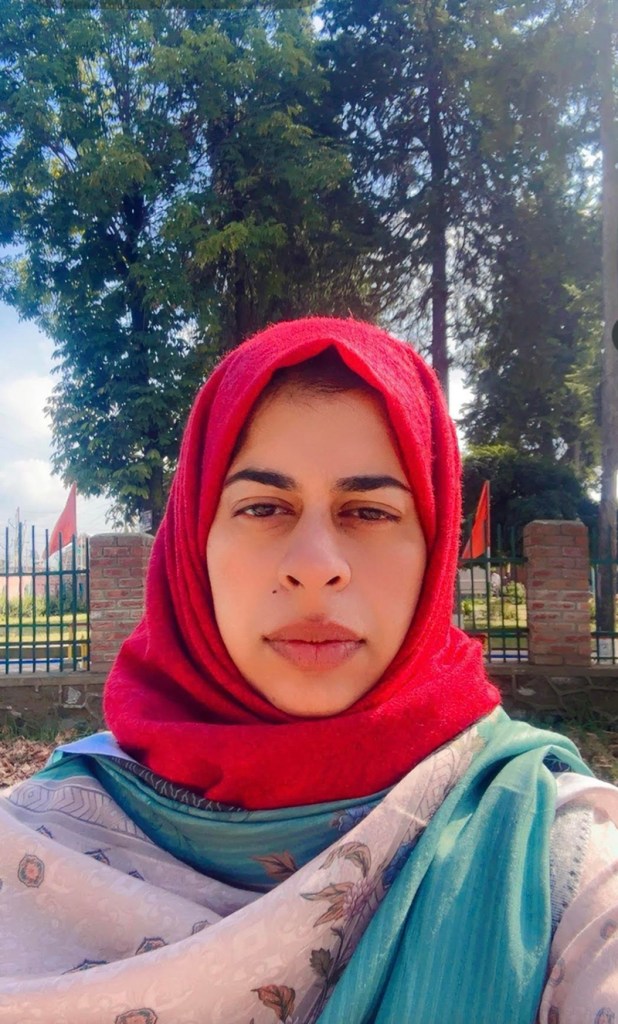
Bio: Sabahat Fida is an educator based in Kashmir with masters in the field of Zoology and Philosophy. She writes at the crossroads of philosophy, metaphysics, science and religion aiming for common ground for spiritual insights and human flourishing. Her work has appeared in Daily philosophy, Metapsychosis,Interalia and The Wire .
Discover more from Feminism and Religion
Subscribe to get the latest posts sent to your email.
 Feminism and Religion
This essay addresses some long criticized practices that, despite the long criticisms, continue to flourish.
Body modification seems to be a deep part of human culture. Men engage in this as well as women. Then there are the males and females who want to modify their bodies to appear the opposite sex. How does that square with the traditional criticism of ‘beauty standards that control women’? Are the breast-binders used by pubescent girls akin to foot-binding? Or are they a route to liberation? Opinions on that differ widely. Can we compare the breast binders in current Western cultures to breast ironing in Cameroon?
What about the now extremely popular practice of tattooing huge parts of one’s body? Tatoos are forbidden in some cultures/religions. In others, tattoos are essential marks of belonging.
In my own personal opinion, some body modifications and/or clothing/coverings are oppressive and some are not, but I am far from believing that my opinion on what is oppressive is shared widely, even among those who call themselves feminists and advocate for the rights of women and girls.
It’s all very complicated and stating an outright opinion on various habits or styles or fashions or what might even be thought of as a need– whether for health or to demonstrate conformity with a religion or group identity– risks alienating people. It would be nice to think that practices harmful to human health could be safely criticized without risking angering others, but that is not the case.
LikeLike
I think a lot of these practices are still seen as women’s survival and anchored in the desire to be swept away, the romance myth. You brought up idealized image and this is very different for a true self image, which is the reflection of our authentic self, usually a million miles away from the idealized image, which is the false image. Our cultures hatred of wise women elders is clear, burn the crone, for fear of her truth talking. Still we hear about so and so trying to kill grandmother, as if crones are weak or helpless. Women must stop buying into our own demise.
LikeLiked by 1 person