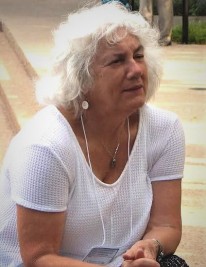
The Gathering: A Womanist Church BOOK REVIEW by Mary Ann Beavis

Book title: The Gathering: A Womanist Church—Origins, Stories, Sermons, and Litanies

Authors: Irie Lynne Session, Kamilah Hall Sharp and Jann Aldredge-Clanton

Publisher: Wipf & Stock, 2020

Womanist theology is a form of theological reflection that centers on Black women’s experience, sensitive to issues of race, class and gender. It originated in the United States in the mid-1980s and has grown in scope, sophistication and influence, but until recently there has been no expressly womanist church. This book charts the founding and development of a womanist church from the perspectives not only of its pastors (Irie Lynne Session and Kamilah Hall Sharp) but also of its ministry partners (Jann Aldredge-Clanton and others). Continue reading “The Gathering: A Womanist Church BOOK REVIEW by Mary Ann Beavis”
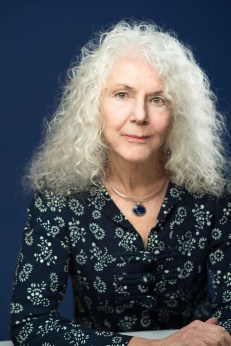
Buddhist Misogyny Revisited – Part II by Barbara McHugh

Read Part I here first

Webster defines myth as “a usually traditional story of ostensibly historical events that serves to unfold part of the world view of a people or explain a practice, belief, or natural phenomenon,” and in this way myths tell us who we are. Unfortunately, they include stories, from Adam and Eve to Cinderella and Sleeping Beauty, that define women by using criteria such as gullibility, passivity, and the size of their feet.

But today women are shining light on the likes of Circe, Mary Magdalene, and Briseus, the young woman dismissed by Homer as an impediment to Achilles’s higher purposes. These stories counter the traditional narratives that restrict women, as well as men, to roles that rob them of their full humanity. In my novel, Bride of the Buddha, the Buddha’s wife embarks on a spiritual journey of her own. When her quest leads her to the Buddha’s all-male sangha, she disguises herself as a monk, eventually becoming Ananda, who in the scriptures is the Buddha’s attendant, the one who struggles with all the questions unenlightened practitioners face today.  The answers to these questions cannot be stated as propositions; they must be felt and lived. Hopefully, my version of Ananda suggests new possibilities for feeling and living these responses. If this “violates” the myth, it does not violate the Buddha’s fundamental views.

Continue reading “Buddhist Misogyny Revisited – Part II by Barbara McHugh”

Buddhist Misogyny Revisited – Part I by Barbara McHugh

Recently, I wrote a novel about the Buddha’s wife disguising herself as a man to join his religious community. When I showed the manuscript to a Buddhist friend, whose knowledge and practice I respect greatly, he expressed apprehension that it violated the basic myth of Buddhism. I assumed he meant that my storyline of gender deception strays too far from the versions of the Buddha’s life as recorded in the traditional canon, which adherents regard as the Buddha’s inviolable teachings. The last thing I wanted to do was to misrepresent these teachings.

What does it mean “to violate a myth”?  If I had portrayed the Buddha as a psycho-killer or wife-beater, I could appreciate this charge, but I had presented an enlightened Buddha whose values were in alignment with standard scripture and the mores of his day. The change I made was to tell the story from a woman’s point of view, and to do so, I modified some of the traditional legends and created new material to make my choices plausible. Predictably, my modifications came up against many of the stories’ misogynistic elements.

Continue reading “Buddhist Misogyny Revisited – Part I by Barbara McHugh”

Be Strong and Resolute by Judith Plaskow

January 29, 2021

Dear President Biden, Vice President Harris, and Members of the 117th Congress,

At a crucial moment of leadership transition in the history of ancient Israel, the Israelites were about to cross the Jordan River without Moses at their head. As Moses passed on the mantle of authority to Joshua, he enjoined his successor and the assembled community, “Be strong and resolute” (Deuteronomy 31:8).  The challenges before the people were multiple and daunting, but Moses urged them not to be afraid or dismayed. His powerful words, which are repeated three times in Deuteronomy 31 (vv. 6, 7, 23), contain a bracing message for the new administration and new Congress as you confront multiple crises facing our divided nation. Continue reading “Be Strong and Resolute by Judith Plaskow”

The Sacred Face of Death by Eirini Delaki

The archetype of the Weaver is being widely activated. Thousands of women and men come forth to incarnate it by creating webs of spiritual awakening, by honoring ancestral ways of being, and by promoting practical and sustainable ways of living and thriving.

However, many of these efforts collapse due to a lack of genuine communication inside the group.  How can we direct our intentions into grounding a vision that is broader than ourselves? How can we weave together in such a way that each feels heard and, at the same time, willing to deeply listen and feel into, not only the group as a set of individuals, but also to what is making its way into birth out of the group as a unit?

Although it seems easy, group synchronization is not a light task and, in order for this to happen at a substantial level, one has to start from oneself.  It is necessary for a kind of initiation to take place, an initiation called “soul individuation.” Soul individuation is a deep dive into one´s own underworld in order to unearth and liberate experiences that have caused one´s soul to fragment. Until this is achieved, one can communicate only from that broken place, not from a place of wholeness and authenticity.  Journeying to the underworld is not a pleasant process but, it is a necessary step towards balance and integrity. Continue reading “The Sacred Face of Death by Eirini Delaki”

About Bridgerton: A Different Feminist Perspective by Christine Irving


First of all, I’m grateful to Bridgerton for providing several spirited conversations between my friends and me, not to mention the POVs penned recently in these pages.  It was fun to take part in exchanges that did not highlight or veer off into either politics or the COVID-19 epidemic.

What first drew me to Bridgerton was the fun of it – the blatant over the top spoofery and satire so like the Commedia dell’arte it so brilliantly imitates.  The Commedia got away with its mockery of society because it disguised it beneath a froth of opulent, frippery, and coarse buffoonery that distracted the rich (but not the poor) from its real message about the foolishness and vanity of the ruling class.  So does Bridgerton, but in this case, the culture being satirized and unveiled is ours.  Unlike those earlier dramatists, in our age we fortunately and so far, at least in this country, still enjoy much greater leeway in making mockery.  “Huzzah!” I say. Continue reading “About Bridgerton: A Different Feminist Perspective by Christine Irving”

A Thanksgiving Litany for Living through Fractious Times by Alla Renée Bozarth

Alla Renée Bozarth, Philadelphia 11, Philadelphia ordinations
All things being relative, remember
that collective and individual histories
are cyclical but open-ended, and discern
the kind of moment you are in and part of.

Remember how to make it better
by holding on to all that is dear in life,
and becoming more prayerful and thoughtful.

When deprivation comes, return to what is essential—
first, beauty, so look for and create beautiful behavior 
and encourage it.

Continue reading “A Thanksgiving Litany for Living through Fractious Times by Alla Renée Bozarth”

St. Brigid to Brigid of Danu By Anne Fricke

AnneOh, bright flame of the dawn, You,

who came before me and still breathe into the forge,

whisper into the ears of poets, long after my bones

have ground into dust upon the earth, I held your place


claimed it for my own—but what choice did I have?

Patrick had arrived, cast his fire atop the Hill of Slaine

brought my God to your people


But you were fading already, your son’s deceit

bleeding tradition onto the battlefield, the blood of matriarchal

death seeping into the soil to find underground waterways

Continue reading “St. Brigid to Brigid of Danu By Anne Fricke”

A Story to Inspire Hope by Elizabeth Chloe Erdmann

These days deep emotions seem to burst forth at unexpected moments.

While in the car between visiting a pumpkin farm owned by friends and the local cider mill, I decided to pull out a crumpled paper with my brief presentation on the history of Crete.  “Does anybody want to hear a story?” I asked my captive audience of one of my best friends and her three boys. “Yes!” As the fall foliage whirled by, I started reading, thinking that attention would wander soon, and I’d put it away. To my surprise the boys wanted me to keep reading and even asked that I continue the story when we returned to the car after a break to feed ducks.

When I finished, the youngest boy exclaimed “that was the best story I’ve ever heard!” I was thrilled I had related it in a way that he enjoyed so much and recognized in his giddy exclamation that mysterious emotional pull of the story of Crete that seemed to reach into his soul.  Later he said to me as we watched the moon together, “you have to finish that story and add more about hope and the positive.” I told him, “The hope is in those who hear this story and others like it and strive to create a better world.”

So would you like to hear a story? Continue reading “A Story to Inspire Hope by Elizabeth Chloe Erdmann”

Matriarchal Manifesta by Heide Goettner-Abendroth

What is the STATUS of WOMEN today?

To cite a brief summary of the 1980 UN Report:

 WOMEN make up half of the world population, work nearly two thirds of all hours worked, receive one tenth of worldwide income, and own less than one hundredth of worldwide property.                             (United Nations Report 1980)

What a SCANDAL that is! Yet no one seems to get worked up about it.

But if we women believe a lot has changed in the meantime, then we are mistaken.

In 2010, the President of the UN Economic and Social Council cited the following figures:

WOMEN work 66% of all hours worked worldwide and produce 50% of the  food.  But they get 10% of the world income, own 1% of the property and represent 60% of the world’s poorest.” (Hamidon Ali, UN Press Conference on June 25, 2010)

This was the sitaution in 2000, in 2010, in 2018. The U.N.report is published annually, but nothing changes.  The SCANDAL continues, and we are outraged! Continue reading “Matriarchal Manifesta by Heide Goettner-Abendroth”