In Memoriam: bell hooks by Elizabeth Ann Bartlett

In a world where the words of black women writers, even our very names are often soon forgotten, it is essential and necessary that we live through writing and teaching the words of our great and good writers, whose voices must no longer be silenced, even by death.[i]

                                                                                    – bell hooks

On December 15, 2021, the world lost the great feminist theorist, teacher, activist, and writer bell hooks.  As a white feminist theorist, I valued immensely the ways her work widened my partial perspective, challenged my blind sports, and gave me important viewpoints on everything from sexism, racism, classism, pedagogy, militarism, work, and parenting.   Her piece on feminist solidarity is the best I know — examining not just the ways we are divided by classism and racism, but also by sexism, addressing the very real and destructive ways that women undermine, abuse, and disregard each other, and how important it is to unlearn this with each other. She used the term “feminist movement,” rather than the feminist movement, knowing it not to be one thing, but rather a verb, a process of moving, changing, and transforming. Championing the power of coming to voice, she spoke truth to power, engaging in honest exploration of often difficult and divisive topics. It was this honest, liberatory voice that spoke throughout her work and made her voice so compelling, and so valuable.

Continue reading “In Memoriam: bell hooks by Elizabeth Ann Bartlett”

Nettie’s Lament by Christine Irving

Reading Elizabeth Ann Bartlett’s beautiful post inspired me to share the following poem. I wrote it many years ago for my friend Lynette Eldridge to honor her love of the darker shorter days of winter.

As a devotee of the Divine Feminine, I have received many gifts that have enhanced and enriched heart, mind and soul. The greatest of these is the friendship of women. I became friends with Nettie during the hours-long drives we made together once a month for nine months from Nevada City, CA to Santa Cruz, CA to prepare for a Vision Quest in the Mojave Desert. Our journeys began in January, in the early morning dark of the short days following winter solstice.

Continue reading “Nettie’s Lament by Christine Irving”

Longing for Darkness by Elizabeth Ann Bartlett

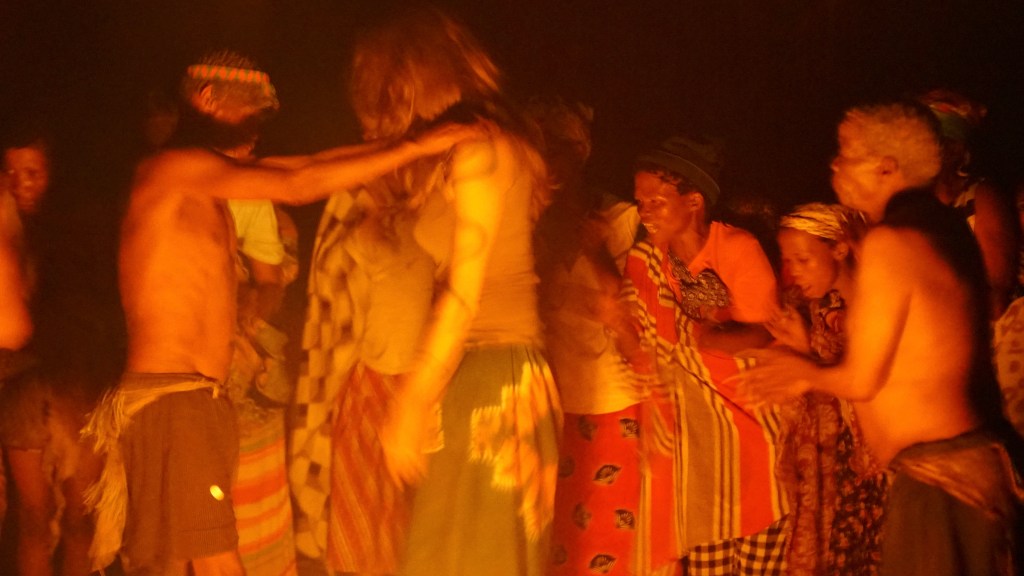
When I moved to Minnesota, everyone back home voiced concern about how cold the winters would be.  Nobody warned me about how dark they would be, nor how long the dark would last.  For years, I complained, but gradually I have come to embrace the dark.  The dark invites us to slow down, to rest, to sleep, to dream.  It is a time to open to our depths, and to others. There is a kind of magic in the dark. Without the harsh light of judgment, in the dark we are more likely to share our secrets and stories, our wounds and our wonderings, our hearts and hopes with each other. As the deciduous trees lose their leaves, the sky opens as well, giving birth to the night sky.  The winter dark gives us the gift of stars, giving me a sense of my place in the universe. They arrive like old friends. The Seven Sisters of the Pleiades appear in the evening, and Orion greets me every morning. When Hale-Bopp was visible from earth, I looked for her on my late-night drives home, and there she would be, my constant companion on those cold winter nights.  The stars remind us that we are not alone, that we are all related, for we are all made of the stuff of stars.

Continue reading “Longing for Darkness by Elizabeth Ann Bartlett”

For Love of This Life: Carol Christ’s Contribution to Ecofeminist Thought by Elizabeth Ann Bartlett

Journeying with students into the woods to dive deep into our spiritual connections with nature, I would invoke these words from Carol Christ: “There are no hierarchies among beings on earth.  We are different from the swallows who fly in spring, from the many-faceted stones on the beach, from the redwood tree in the forest.  We may have more capacity to shape our lives than other beings, but you and I will never fly with the grace of a swallow, live as long as a redwood tree, nor endure the endless tossing of the sea like a stone.  Each being has its own intrinsic beauty and value….”[i]  How can one listen to these words and not be changed?  Taking in the meaning of these words, paradigm shift happens.  Herein lies the gift of Carol Christ to ecofeminism.

            Ecofeminism posits that the oppression and domination of women, nature, and colonized others are inextricably linked. This is largely due to two aspects of the Western cultural paradigm: 1) mind/body value dualism, and 2) what ecofeminist Karen Warren has called “the logic of domination.” Mind/body value dualism is the creation of an artificial binary of opposites which values everything associated with the mind — spirit, transcendent, men, humans, white-bodied peoples, over everything associated with the body – earth, immanent, women, nature, colonized Others.  The “logic of domination” is the use of this supposed inherent superiority of those associated with the mind to justify their domination of everything associated with the body. As Western culture has spread throughout the world, this value system is now found practically every on earth.

Continue reading “For Love of This Life: Carol Christ’s Contribution to Ecofeminist Thought by Elizabeth Ann Bartlett”

Strength by Chasity Jones Selenga

To be transparent, these last four weeks have unintentionally flown by and have been filled with great pain, sorrow, depression, loss, and grief to be honest. I can feel my own spirit at the beginning of a long healing process and have a feeling that these words kept between you and I will be a tremendous part of my healing. Healing in itself is an essential aspect of Womanism and how I found my way to it. I have been privileged to develop spiritual practices that encourage and assist with healing in emotional, physical, mental, and wisdom ways!

Today, I acknowledge the Africana Womanism (Clenora Hudson-Weems) characteristic of strength. I must admit I have a strained relationship with the word as a Black woman. I was raised by strong women to be strong in an environment in which we will always have to strong. As a result, being soft is interpreted as weak. I mourn that Black women rarely find spaces in which they can turn off their survival mode- fight or flight nervous system responses and relax while being soft. It is so foreign. At this point in my life softness is so inconvenient and also something that I don’t even know how to maintain consistently.

Continue reading “Strength by Chasity Jones Selenga”

Happy Birthday, to a Woman Who Used a Crisis to Benefit Humanity by Cheryl Petersen

Born two-hundred years ago in 1821, Mary Baker was raised by a doting mother and strict father. By the age of twenty-eight, she endured personal crises typical to privileged white girls. Lost lovers and unfulfilled dreams. Mary wed her second husband, Daniel Patterson, in 1853, fancying he would make things better. But in 1857, while ill in bed a few weeks, forlornly pining her dead mother, Mary noted in her scrapbook, “My dear dear…Mother waits for me in the far beyond and through the discipline, the darkness and the trials of life, I am walking unto her.”

In 1861, Daniel urged Mary to investigate mind-cure and wrote a letter to practitioner, Dr. Phineas Quimby, to request treatment for Mary’s periodic spinal and emotional challenges.

But the plan was interrupted by another crisis. The American Civil War (1861-1865).

Continue reading “Happy Birthday, to a Woman Who Used a Crisis to Benefit Humanity by Cheryl Petersen”

Carol Christ Symposium ~ Call for Papers by Mara Lynn Keller ~ Deadline for Proposals this Week!

Carol P. Christ
A Symposium in Celebration of Her Spiritual-Feminist Activism and Women’s Spirituality Scholarship

“The Goddess is the intelligent embodied love that is in all being.”
~ Carol P. Christ

Free Symposium via Zoom hosted by
Women’s Spirituality Graduate Studies Program California Institute of Integral Studies
October 22, 2021. 10:00 am to 4:00 pm

Call for papers focusing on Carol P. Christ’s scholarship and activism in the key areas of Women’s Spirituality, Goddess Studies, Ecofeminism, and Women and Religion.*

Please speak to what you think and feel are Carol P. Christ’s most important contributions to one of the academic fields listed below, and then also, to how her writings are important to you personally. We will arrange papers into the following six panels of 3-4 presenters.

  1. Ecofeminist Philosophy and Activism 
  2. Goddess Studies and Egalitarian Matriarchal Studies 
  3. Spiritual Feminism and Peace Activism 
  4. Spiritual Feminist Literary Criticism  
  5. Women and Religion
  6. Women’s Spiritual Pilgrimage 

Please send an abstract of your proposed paper (in 300 words or less) to Mara Lynn Keller at mkeller@ciis.edu, by Wednesday, September 16, 2021. Acceptances will be sent out Friday-Monday, 9/24-27/2021. Papers are to be 12 minutes in length.  

*Primary Sources include:

  1. Diving Deep and Surfacing: Women Writers on Spiritual Quest (1986)
  2. Woman Spirit Rising: A Feminist Reader in Religion, anthology co-edited with Judith Plaskow (1992)
  3. Odyssey with the Goddess: A Spiritual Quest in Crete (1995) 
  4. Weaving the Visions: New Patterns in Feminist Spirituality. Anthology co-edited with Judith Plaskow (1989) 
  5. Laughter of Aphrodite: Reflections on a Journey to the Goddess (1987)
  6. Rebirth of the Goddess: Finding Meaning in Feminist Spirituality (1998)
  7. She Who Changes: Re-imaging the Divine in the World (2004)
  8. Goddess and God in the World: Conversations in Embodied Theology. Co-authored with Judith Plaskow (2016) 
  9. Carol’s blogs on Feminism and Religion can be found at: Carol P. Christ (feminismandreligion.com)

In addition to the panels, the Symposium will include:        
In Memoriam: Ritual Honoring Carol’s Life and Death (1946-2021)
Circle of Remembrance: Personal reminiscences and reflections on Carol’s life and work.


Leonora Carrington’s THE HEARING TRUMPET – Book Review by Sally Abbott

Sally Abbott

Long a fan of Surrealist artist Leonora Carrington, I was initially hesitant when the New York Review of Books reissued her 1974 novel, The Hearing Trumpet.  I didn’t know what to expect when this extraordinary painter picked up a pen.

To my delight and surprise, Carrington shows the same artistry and whimsy in her writing that she does in her painting.  She also reveals herself to be an astute feminist and aficionado of the Goddess, well-versed in arcane lore, with which she accents her fantastical world.  The Hearing Trumpet is full of British humor and eccentricity, set in a finely spun, other-worldly landscape.

The World of the Maya

Her heroine Marian Leatherby is a 92-year-old, who lacks teeth, is hard of hearing, and sports a beard–a whimsical, endearing character who loves cats.  She has been given a hearing trumpet by her great friend Carmella, and thereby learns that her son and his wife plan to send her away to an old folks’ home run by a Dr. Gambit and the Well of Light Brotherhood.

Continue reading “Leonora Carrington’s THE HEARING TRUMPET – Book Review by Sally Abbott”

We Are Not Oppressed Because We Remember pt. 3: Sowing Seeds and Braiding Hair by Chasity Jones

Today, once again, I got to touch the earth!

While planting and constructing my indoor container garden, I thought about how my ancestors put seeds into their children’s hair so that in case they were taken away to live and die in chains, they would at least be able to sustain themselves with a piece of the motherland. Rice, okra, yams, watermelon, and so MANY more crops that would go on to make white slaveholding Americans so rich (passing their wealth to their descendants and zero reparations for the descendants of enslaved Africans), that they were willing to fight a war to sustain their evil practices of owning human beings as chattel (Check out High on the Hog Netflix documentary which was adapted from a book by Dr. Jessica B. Harris). Enslaved Africans brought these foods to the new world, a direct result of slavery.

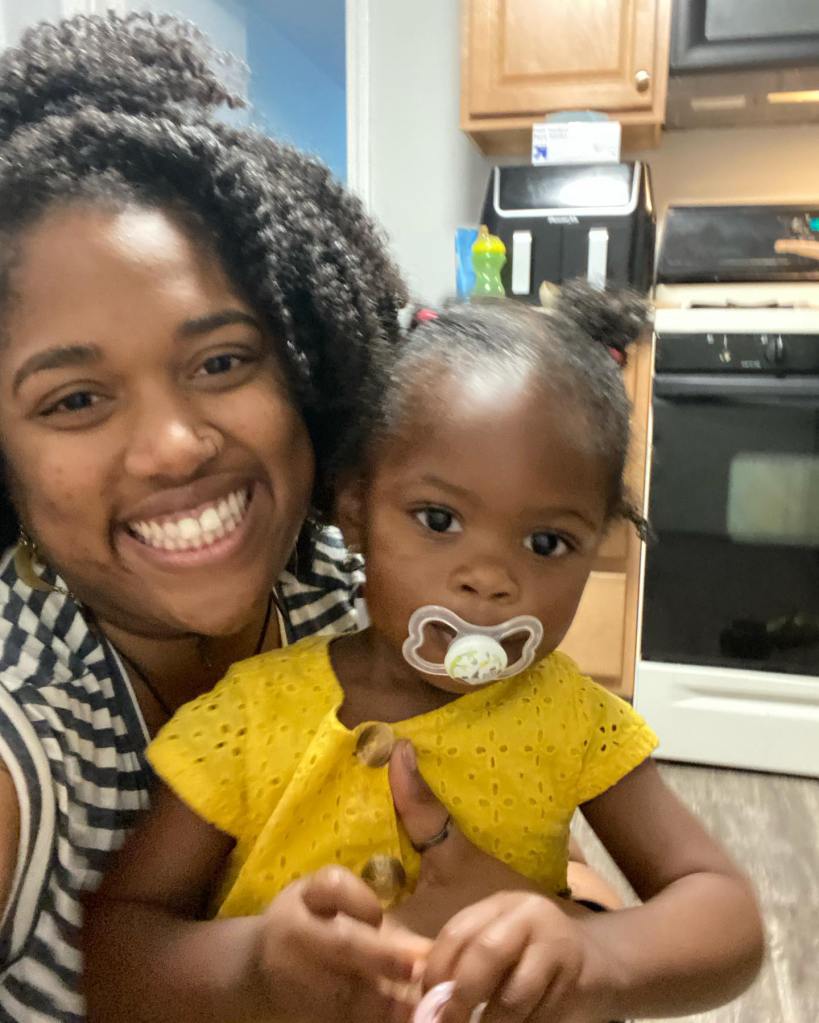
As I wash my daughter’s hair (which for Black women and girls is a PROCESS!!), as I moisturize her hair, and as I braid my hair, I am thankful that no one has a right to my child and that I do not need to fear her enslavement. Instead, I manifest her revolutionary future to carry the torch of our ancestors. A Torch and a commitment to elevate our community and move the community forward. I leave it up to her to choose how she will carry that torch forward!

Continue reading “We Are Not Oppressed Because We Remember pt. 3: Sowing Seeds and Braiding Hair by Chasity Jones”

We are Not Oppressed Because We Remember Part 2 – Diaries of a young black woman by Chasity Jones

Read Part 1 here.

One of the 18 characteristics of Africana Womanism is being a self-definer. This piece is a sliver of my process to do and be exactly that.

I am striving to be a whole Black woman. I have an awareness that I am a whole person and transcend the role that Amerikkkan* society has given black women. Wholeness is justice and justice/liberation is wholeness. We are unaware of the full extent that racism has impacted Black women psychologically and emotionally. I’m saying racism constricts us in exhausting ways- the results have been wearing on our mental and sexual health, senses, nerves, physical health for years. And it still is.

Continue reading “We are Not Oppressed Because We Remember Part 2 – Diaries of a young black woman by Chasity Jones”