

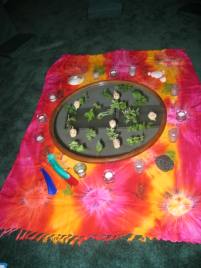
 Women’s Well Series ( 1 of 3)
From the most ancient times, women have gathered in circles to transform themselves, their communities and nations, and the world. Today, when millions of women are finding their voices, when they are joining with other women to advocate for and demand what is needed for a just, peaceful, sustainable planet, when a revitalized women’s movement is being reborn, women’s circles are needed more than ever. For almost 20 years, the Women’s Well organization, a non-profit based in Concord, Massachusetts, offered thousands of women the opportunity to participate in women’s circles of all kinds. Here, in their own words in this three-part series, Anne Yeomans, a co-founder of the Women’s Well, and others who co-created the Women’s Well, share with you the power and wisdom of the circle.
We imagine that all of you reading this series may have felt some longing for a woman-honoring space, a place to rest, to feel seen and recognized, to listen, to learn. We also imagine that you, like many of us, may have had a long and challenging journey through a male-dominated world where women’s experience and wisdom have been neither valued nor acknowledged. We know that when this happens it can lead to feelings of disorientation, isolation, and doubt of one’s inherent worth. Continue reading “The Power of the Women’s Circle by Anne Yeomans and the Women’s Well”
 Recently I was hurled across the existential divide that separates the millions of people around the world who have experienced a life-threatening extreme weather event from those who have not. In December 2017 unseasonal Santa Ana winds roared off a California desert across two drought-parched counties, not for the usual 48 hours but for more than a week, blowing a brush fire across 440 square miles. It was named the Thomas fire, the largest in California history.
 My Name Is Isis by Susan Morgaine is the fourth book in the My Name Is series from
 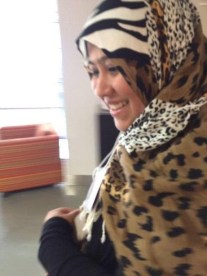 Before coming to the U.S., I felt disconnected from feminist theory. I thought this framework labels women as haters of men and seekers of obscure rights. I was not sure who could identify with it or belong to it. For me, it was just a scholarly concept women used to justify their rights. I could not perceive it as an empowering tool, even if it is being so popular. While there is no problem having the concept to be loud and popular, this loud voice did not speak for me. I could not let it represent me or speak on my behalf. Every time I google it, I see angry faces, naked women, people yelling, women in chains, and much more. Instead of accepting it, I resisted it.
 In my dream, two large cats are walking towards me on a sidewalk. They are large cats, not house cats, rather, lions or tigers and they are walking on two legs, standing up, like humans. Wait, their bodies are human, only their heads are feline. As they come closer, they appear to have top hats on their heads. They look like twins. I step aside and they stroll past me.
 On a recent Friday, I learned that the 43 year old husband of someone I went to graduate school with, parent of four young children, died suddenly. Though I had been out of touch with my grad school friend for some years, I felt deeply for her loss, her unexpected plunge into single parenting, the way her life and the lives of her children would forever be shaped by this grievous tragedy.
 Feminism and Religion