She Rises Goddess Feminist Activism Collective Writing Project: Call for Contributions
She Rises: What … Goddess Feminism, Activism, and Spirituality? Volume 3 Two books: The main book and a sectional booklet including poetry, prose, art, the like.
Coeditors include Deanne Quarrie, D.Min., Helen Hye-Sook Hwang, Ph.D.
I am the source, I dream the dreams, I am the spark, Creation lives in me. Jana Runnalls, The Source, Speaking in Tongues
Using She Rises Volume 1 and Volume 2 as a springboard, the collective writing project of She Rises Volume 3 aspires to interweave new patterns in the tapestry of Goddess feminist activism. She Rises Volume 3 invites possible contributors by asking the questions: What do you envision for Goddess Feminism, Activism, and Spirituality? What is Goddess Feminism, Activism, and Spirituality for you? What do you seek from Goddess Feminism, Activism, and Spirituality? What are our practices that will bring more Goddess Feminism, Activism, and Spirituality into the world?
You may like to engineer the question on your behalf or answer it for us all. Here are some examples of the question: “What keeps me continuing in Goddess Feminism, Activism, and Spirituality?” or “What does Goddess Feminism, Activism, and Spirituality mean to me?”
The first volume evolved around stating/proclaiming the rational or cause of our Goddessian/Magoist commitment by answering the question, “Why Goddess Feminism, Activism, and Spirituality?” and the second volume took a step further to ask the “How?” question, “How… Goddess Feminism, Activism, and Spirituality?”
It is our hope that the question “What?” potentially produces a record number of ways we engage in Goddess Feminism, Activism and Spirituality. We foresee the possibility that She Rises Volume 3 may become a guidebook of the common cause for Goddess feminists and activists.
She Rises, Volume One, asked WHY? and 93 contributors answered the question with depth, honesty, insight, creativity, imagination, and inspiration. She Rises, Volume Two, asked How? and 96 contributors answered the question with depth, honesty, insight, creativity, imagination, and inspiration.
Now we are asking What? Your answers will offer:
- a guidebook for those beginning their journey with Goddess feminism, activism, and spirituality,
- a confirmation for those already engaged with Goddess feminism, activism, and spirituality,
- another thread in the tapestry of Goddess feminism, activism, and spirituality that is being woven by women and men all over the World.
Let’s weave a tapestry of answers! Are you interested?
To be part of this weaving, please send your contribution to both emails (please indicate “She Rises Volume 3” in the subject line) See submission form and guidelines below:
Deanne Quarrie – deanne.quarrie@outlook.com
Helen Hwang – magoism@gmail.com
Primary Deadline: January 31, 2018
Submission details:
Short writing – up to 200 words
Longer essays – up to 4,000 words
Research papers – 4,000-12,000 words,
Poetry – any length (please indicate formatting)
Art, photography, illustrations – any form, which may be accompanied by a descriptive paragraph attached as a separate Word file
Please include a brief bio of no more than 100 words at the end of your Word document.
Text: As attachment of Word files (.doc or.docx)
Font: Garamond or Times New Roman (12 font size, 1 spaced)
Style: Chicago Style, footnotes
Art, photography, and illustrations: As attachment of jpg files (must be 300 dpi)
For sample short writings, see below:
http://magoism.net/…/special-post-1-why-goddess…/
For ongoing submissions, see below:
https://www.facebook.com/groups/magoism/
Multiple proposals are allowed. The submission form is included below.
Submission Form
Please fill out the following form and pasted it in the body of your email submission.
| Your name and email address:
“I agree that my proposals may be published in the main book AND the secondary sectional book (poetry, prose, and art).” |
| Number of proposals and their genres: |
| List the titles/contents of attachments including your short bio: |


 If there are devotees of the Dark Goddess on your Yuletide gift list, Starr Goode’s gorgeous book, Sheela na gig: The Dark Goddess of Sacred Power, may be the best gift you could choose for them.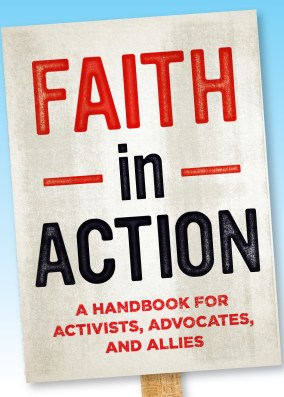

 The indigenous Brazilian tribes worshiped all Mothers and believed they created life without the male presence. All Goddesses were virgins, but their virginity was only a symbol of independence and self-sufficiency, without any physical meaning. In some myths, the virgins are impregnated by numinous energies, manifested as animals (snake, birds, porpoise), forces of Nature (rain, thunderbolts, rays of light), ancestors or Deities. As other native people, they weren’t aware of the male participation in the conception and respected and revered the menstrual blood as something sacred, filled with magical powers, because after the “supernatural” ceasing of the monthly flow, life was created. Only after the interference of the white settlers and the massive Catholic indoctrination that the native cosmology was distorted, the Father assumed the main place, the Son became the second one in the divine hierarchy and the Mother was transformed in a suffering and silent virgin. Even so, many native traditions survived in the legends, folk beliefs, shamanic healing and magical practices as the Pajelança and Encantaria.