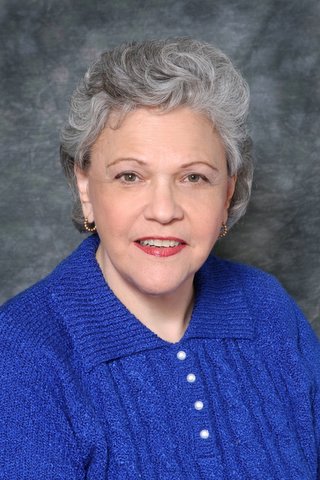
The Crime of Being a Girl Scout: The Sin of Raising Strong Female Leaders by Michele Stopera Freyhauf

Cradle Catholic and Woman

Educated by the U. S. Vowed Religious

Support the U. S. Catholic Sisters

Support, Minister, and Live the Social Gospel

Theologian, Feminist, and Critical Thinker

Former Girl Scout Leader of Three Troops

Former Girl Scout

I am all of these things and more.  By the recent attacks by the hierarchy of the Catholic Church, I am beginning to think I am the problem.  I seem to stand for everything the Vatican and USCCB seek to silence.  Is it because of my organizational ties with the U. S. Vowed Religious and Girl Scouts, or my writings as a Feminist and Theologian?  Maybe the answer is simply – because I am a woman.

According to the criticisms launched by the USCCB and the Vatican, I seem to be part of the problem rather than the solution.  Why is this so?  It was not until I started my journey in ministry that my idealistic “Catholic” bubble popped – not so much by me, but by those in ministry and leadership, by those that did not like laity to pose questions and think critically about their faith beliefs, and by  those that do not like people who do not fit within the preconceived mold of what a “good Catholic” should be.  This ideological construct is difficult enough when you are part of a Church community, but when you begin to embrace leadership as a woman, question teachings, exercise your canonical rights, your peers and even people you thought were your friends, no longer talk or associate with you. The betrayal is vicious and runs deep – it is behavior not becoming of a minister or one who professes the Catholic faith.

If the attack on you is not enough, these same people victimize your children through their words and behavior.  It is a difficult position for anyone to survive spiritually.  For children of the Church who bear witness to this hypocritical behavior, a journey begins – they search for meaning within the spiritual realm and become disgruntled with anything that resembles organized religion.  A place where one seeks community and spiritual nourishment becomes a place of oppression and starvation.  If attacking family is not enough, let’s start attacking groups that promote community – groups like the Girl Scouts of America.

So, what is the USCCB’s problem with the Girl Scouts of America?  Basically, this organization is under fire for suspected deviant thinking and positions that stand opposed to Church teaching. Continue reading “The Crime of Being a Girl Scout: The Sin of Raising Strong Female Leaders by Michele Stopera Freyhauf”

Hoy, Canto de Mujer Que Se Libera – Un Canto de Ada María Isasi-Díaz, By Michele Stopera Freyhauf

“Yo soy mujer en busca de igualdad, no aguantar abuso ni maldad. Yo soy mujer y tengo dignidad, y pronto la justicia serd una realidad.  Mujer, tù eres mujer, porque supiste ver, la realidad de tu poder. Hoy canto al Dios del Pueblo en mi guitarra, un canto de mujer que se libera” – From “Mujeristas: A Name of Our Own!” – Ada María Isasi-Díaz [i]

Translation:  I am woman searching for equality; I will not put up with abuse and wickedness.  I am a woman and I have dignity, and justice will soon be a reality.  Woman, you are woman, because you have known how to recognize the fact that you are powerful.  Today I sing to the God of my people with my guitar, I sing a song of a woman who liberates herself.

Labels, names, and categories can evoke prejudice and oppression.  Ada Maria Isasi-Díaz, the founder of Mujerista Theology, wrote:

To be able to name oneself is one of the most powerful abilities a person can have.  A name is not just a word by which one is identified.  A name provides the conceptual framework and the mental constructs that are used in thinking, understanding and relating to a person. [ii]

These words relate to U. S. Hispanic women, who, according to Isasi-Díaz, struggle against ethnic prejudice, sexism, and in many cases classism [and who] have been at a loss as to what they should be called.[iii]  In finding that common name, lyrics from three different songs inspired Isasi-Díaz who developed the term “Mujerista Theology,” replacing Hispanic women’s liberation theology:

“Yo soy mujer en busca de igualdad, no aguantar abuso ni maldad. Yo soy mujer y tengo dignidad, y pronto la justicia serd una realidad.  Mujer, tù eres mujer, porque supiste ver, la realidad de tu poder. Hoy canto al Dios del Pueblo en mi guitarra, un canto de mujer que se libera” [iv]

For Isasi-Díaz, mujerista unifies Hispanic women and embodies strength.  Mujeristas are those:

Ada Maria Isasi-Díaz
Picture From Drew University’s website
  • Who desire a society and a world where there is no oppression.
  • Who struggle for a society in which differences and diversity are valued.
  • Who know that our world has limits and that we have to live simply so others can simply live.
  • Who understand that material richness is not a limitless right but it carries a “social mortgage” that we have to pay to the poor of the world.
  • Who savor the struggle for justice, which, after all, is one of the main reasons for living.
  • Who try no matter what to know, maintain, and promote our Latina culture.
  • Who know that a “glorified” self-abnegation is many times the source of our oppression.
  • Who know women are made in the image of God and, as such, value ourselves.
  • Who know we are called to birth new women and men, a strong Latino people.
  • Who recognize that we have to be source of hope and of a reconciling love.
  • Who love ourselves so we can love God and our neighbor.[v] 

For Isasi-Díaz, Mujerista Theology is defined as:

“a process of enablement for Latina Women, insisting on the development of a strong sense of moral agency, and clarifying the importance and value of who they are, what they think, and what they do….mujerista theology [also] seems to impact mainline theologies, the theologies which support what is normative in church, and, to a large degree, in society.”[vi]

Continue reading “Hoy, Canto de Mujer Que Se Libera – Un Canto de Ada María Isasi-Díaz, By Michele Stopera Freyhauf”

Abuse of Power in the Catholic Church: Undoing Almost Fifty Years of Progress – Part I, by Michele Stopera Freyhauf

“Now the Vatican says that nuns are too interested in “the social Gospel” (which is the Gospel), when they should be more interested in Gospel teachings about abortion and contraception (which do not exist).  Nuns were quick to respond to the AIDS crisis, and to the spiritual needs of gay people—which earned them an earlier rebuke from Rome. They were active in the civil rights movement.  They ran soup kitchens.” —  Roman Catholic Women Priests (via Facebook)

I once had a conversation with my New Testament Professor about the issue of women ordination.  He was optimistic and thought there might be a possibility that change was in the air – that was six years ago.  The basis for his statement had to do with language.  Of the journals and articles read, he felt the language used was more inclusive and that once people adjust to this discrete change in gender inclusive language, change for women in the Church can come.

He was right about change coming.  The result was not equality and ordination for women, but an attempt to silence and force these women back into their habits and cloisters. Continue reading “Abuse of Power in the Catholic Church: Undoing Almost Fifty Years of Progress – Part I, by Michele Stopera Freyhauf”

Feminists Be Silent! Making a Stand in Solidarity with our LGBT Friends Against Bullying and Harassment By Michele Stopera Freyhauf

“A Day of Silence” occurs tomorrow, April 20th.  Created in 1996, University of Virginia students wanted to raise awareness of the bullying and harassment of issues that LGBT students faced on campus.  Since then, A Day of Silence makes a statement against those who have tried to silence LGBT teens and young adults in school through harassment, bias, abuse, and bullying. Participating students, led by GLSEN, will hand out cards that read the following:

“Please understand my reasons for not speaking today. I am participating in the Day of Silence, a national youth movement protesting the silence faced by lesbian, gay, bisexual and transgender people and their allies in schools. My deliberate silence echoes that silence, which is caused by harassment, prejudice, and discrimination. I believe that ending the silence is the first step toward fighting these injustices. Think about the voices you are not hearing today. What are you going to do to end the silence?”

Family Picture (wikipedi.com)
Family Picture from wikipedia.com

The issue of bullying LGBT teens resonated with the world when Tyler Clementi took his life in 2010 after his roommate secretly transmitted via webcam Tyler’s sexual encounter with someone of the same sex. Tyler’s suicide brought national attention to the issue of bullying and harassment that LGBT people face.  To my chagrin, while writing this article, another victim fell.  Kenneth Weishuhn, Jr., a 14-year-old gay teen, committed suicide because of the intolerable harassment and bullying he dealt with at school.

To really understand the magnitude of this issue, I wanted to examine the statistics surrounding bullying. The numbers are staggering. However, when adding the LGBT component to that same teen, the numbers escalate.  Continue reading “Feminists Be Silent! Making a Stand in Solidarity with our LGBT Friends Against Bullying and Harassment By Michele Stopera Freyhauf”

Do Man-Made Laws Trump the Authority of Jesus? Reflecting on the Meaning of Humility, Priestly Service, and the Issue of Women’s Ordination by Michele Stopera Freyhauf

Maundy Thursday – the imitation of Jesus’ act of service and submission is re-created.  Controversy surrounds the “disciples” – must they be all men?  Are women allowed?  Who steps into Jesus’ role?  Men, women, or both?  Why, when it comes to imitating the act of  humility and priestly service (rooted in our baptismal call), does a distinction of gender need to made at all?

As I progressed towards the intersection, I looked up to witness a grand procession of men dressed in white albs with stoles that often contained subtle hints of gold, worn in a manner to distinguish their role as priests and deacons.  They moved slowly down the sidewalk entering the Cathedral to begin their celebration of the Chrism Mass – a celebration of priesthood and priestly service within the Diocese where all priests and deacons gather to celebrate and re-affirm their commitment to ministry and service to the Church.  It is also during this Mass that the oils used in sacramental celebrations, used by each church, are blessed by the Bishop.

As I continued to watch, I could not help but search the processional line for those with a hair color other than gray.  I wanted to see  how many young priests were in that processional line.  What I found was no surprise –  an aging group of men with the sporadic appearance of younger priests.   The numbers stood as a staunch reminder that we, as a Church, may be faced with a severe shortage of priests in the future.  Something already known and planned for by the Diocese in its campaign to consolidate and close parishes.

Another sad observation was put on public display  –  the absolute absence of women. Continue reading “Do Man-Made Laws Trump the Authority of Jesus? Reflecting on the Meaning of Humility, Priestly Service, and the Issue of Women’s Ordination by Michele Stopera Freyhauf”

Is Baptism a Male Birthing Ritual? By Michele Stopera Freyhauf

Quite a number of years ago I had a conversation with one of my professors, a feminist theologian, who posed the question “Why do I need a man to purify my baby with the waters of baptism?  Is there something wrong or impure about the blood and water from a mother’s womb – my womb?”  Before you jump and shout the words Sacrament or removal of original sin, this question bears merit in exploring, especially in today’s world where women are taking a serious beating religiously, politically, and socially.  In today’s world, violations and rants are causing women to stand up and say STOP!  This is MY Body.  This outcry was provoked by chants of ethical slurs against women– Slut! Prostitute! Whore!  The cry got even louder when the issue of religion and government was raised in the fight of healthcare coverage of contraception. The cry got even louder with the enactment of the laws in Virginia and Texas (and many other states to follow suit) that forces women to undergo transvaginal ultrasounds in early stage abortions.  The mandatory insertion of a wand into a woman’s vagina (mandated by the government, mind you), is a violation and has women crying RAPE!

The memory of this conversation did not re-appear by chance, it was prompted by a book I read for my History of Sexuality Class – Imperial Leather: Race, Gender, and Sexuality in the Colonial Context by Anne McClintock who addresses the notion of baptism through origins, property, and power.  So many things are currently being taken away from women and reading McClintock’s assertion regarding male baptism is perplexing.  She believes that male baptism or baptism by a man takes women’s role in child bearing and diminishes it.  These are the same men who historically treated and regarded women as vessels.  She further asserts that this act is a proactive removal of creative agency with respect to a woman’s ability to have the power to name.  That is, the last name of the child belongs to the husband.  A point that supports the notion that patrimony marks the denial of women.  Anyone doing genealogy encounters a perplexing struggle to identify mothers because their names are essentially erased from memory and rarely attached to a child’s name. Continue reading “Is Baptism a Male Birthing Ritual? By Michele Stopera Freyhauf”

Preying on Victims: Radical Christianity and Exploitation of Tragedy in the Name of God By Michele Stopera Freyhauf

It is our moral responsibility, whether we identify as Christians or not, to pray for not prey on the victims of tragedies.

Over the last month, dare I say years, society has witnessed or been subjected to an all out war from radical Christians across America deploying the wrath of God and reveling in the tragedy of others to perpetuate their apocalyptic message of rhetoric and terror.   As I hear the news over the last few months, an old Billy Joel song starts to play in my head “We didn’t start the fire.”  Whether we started the fire or not, we should not feed the flames of hatred but figure out a way to extinguish it.

Here is a brief synopsis of current events that reflect this hatred and radicalism perpetuated in the name of God – examples of Christianity terrorizing or preying on victims through their actions.

The Westboro Southern Baptist Church: Preying on Victims at Funerals and Thanking God for their Tragic Deaths

Original Picture found at http://www.newsnet5.com

Their web address says it all: www.godhatesfags.com.  This group, which one cannot call Christian but rather “hate-mongers,” threatened to burn the Qur’an, was banned from Facebook for spreading hatred against homosexuals, and recently had the audacity to picket funerals of Americans killed in natural disasters, most recently, a teen-age shooting victim, Daniel Parmertor (age 16), from Chardon, Ohio.  Thankfully, volunteers across Ohio and a local group of bikers formed a human barricade to keep these people away from the funeral and grieving family and community.

This group preys on tragedy.  They “praise God for sending a shooter to a High School in Ohio.”  They “praise God for killing a coast guard member.’  They praise God for killing UK Singer Davy Jones.”  They also picketed the funerals of the Arizona shooting victims where Congresswomen Gabrielle Giffords was shot and six others, including federal Judge John M. Roll was killed stating, “God sent the shooter to shoot you!  And He’s sitting in Heaven laughing at you!”  The article goes on into quite graphic detail, which you can read for yourself  but concludes with the statement “Thank God for his Righteous Judgments!”  This group picketed over 47,500 funerals and events to date. One has to wonder what bible they are reading and what God they are praying to. Continue reading “Preying on Victims: Radical Christianity and Exploitation of Tragedy in the Name of God By Michele Stopera Freyhauf”

Catholicism, Contraception, and Conscience: Church Imposed Teaching, God’s Gift of Free Will, and Political Rhetoric by Michele Stopera Freyhauf

Certainly one cannot turn on the news without seeing a story about the feud over the Catholic Church’s stance on forbidding the use of contraception and Obama’s Patient Protection and Affordable Care Act (PPACA) that mandates free contraception to women.  In preparing this article, I took the time to review many articles from liberal and conservative news outlets, law professors who are experts on constitutional law, and statements from the USCCB and Bishops.  Before asking questions, I want to outline the following points:

  1. In the literature reviewed, only two women, Sr. Carol Keehan and Sr. Mary Ann Walsh, made a statement against this policy stating that the government is interfering with the working of the Church.  Most voices heard and shouting the loudest are members of the clergy.
  2. Hospitals considered “Catholic” hire people of all faiths and various beliefs.  They also treat patients of all faiths.  They are not exclusively “Catholic.”
  3. Catholic identified Colleges hire professors and staff that are not Catholic.  Moreover, their student body is not totally Catholic.
  4. Catholic Charities, once again, hire non-Catholics.
  5. Insurance plans currently in place often offer contraception prescriptions at a zero to low co-pay price.  These plans are in-force at many Catholic Institutions.
  6. Under HIPAA, healthcare of employees are protected and the Employer, even the Catholic Church cannot violate the privacy of the patient, even if it is an employee.
  7. Birth Control Pills are often prescribed for women with endometriosis or other “female” reproductive disorders and not birth control.
  8. Women pregnant, carrying a dead baby, cannot have surgery due to risks are given medication to induce abortion are given. Continue reading “Catholicism, Contraception, and Conscience: Church Imposed Teaching, God’s Gift of Free Will, and Political Rhetoric by Michele Stopera Freyhauf”

Hagar: A Portrait of a Victim of Domestic Violence and Rape

This week Twitter has been a flurry with information for victims of   domestic violence and rape.  This ranges from the U.S. redefinition of rape to include men to Nigeria’s first anti-rape toll free hotline for women.  There is even a male movement to stand against rape.  This problem is an ongoing issue, one that shows no sign of diminishing or going away.  According to Amnesty International, one in three women worldwide have been beaten, coerced into sex, or otherwise abused and their abuser is normally someone they know.  As I contemplate this very difficult issue, I am reminded of the Biblical Hagar in Genesis 16. The story of Hagar and Sarai is abundant

Men Can Stop Rape (http://www.mencanstoprape.org/)

in ethical situations that draw in the reader and presents complex issues that can be very troublesome.  If you take the text hermeneutically, through an ideological examination in its English translation, we have an Egyptian woman, who is also referred to as slave or concubine, forced to engage into sex with her owner’s husband for producing an heir.  Here the abuser is a woman with a docile and obedient husband portrayed by Abram.  What can we  glean from such a story for today’s battered women?  Hope or horrific defeat? Continue reading “Hagar: A Portrait of a Victim of Domestic Violence and Rape”

Son of Man: An Updated Gospel Story of Jesus Set in South Africa by Michele Stopera Freyhauf

January 12, 2012

Son of Man is an updated story of the life of Jesus set in the fictional State of Judea that is modern day South Africa – complete with warlords and child soldiers.    It could easily be mistaken for modern day Rwanda or Darfur with its modern issues and political overtonesRoger Ebert stated, “The secret of the movie is that it doesn’t strain to draw parallels with current world events – because it doesn’t have to.”  The director draws parallels between the gospels and 21st century Africa.  According to Dartford-May, “we wanted to look at the Gospels as if they were written by spin doctors and to strip that away and look at the truth.”  The director “captures the rhythms of African life in both rural settings and sprawling townships.”  “Feather-clad young angels offer an eerie echo and reminder of Africa’s lost generations.”

The movie also sticks with what Eric Snider calls “Traditional African trial music, dance, and costumes” as a type of worship or or allusion to Jesus’ godhood.  Judea is in flux; warlords and corruption take center stage.  Poverty, violence, and oppression affect the all of the people.  The key idea is that Jesus is a freedom fighter – one that fights injustice and oppression.  The director does not emphasize “Jesus’ divinity so much as his leadership, good sense and compassion.”  Jesus is not violent and his followers, most of whom were former child soldiers, are encouraged to respond non-violently, which goes against their upbringing and training. Continue reading “Son of Man: An Updated Gospel Story of Jesus Set in South Africa by Michele Stopera Freyhauf”