Interesting in Working with FAR?
Feminism and Religion is seeking a creative, industrious, responsible, and highly-organized feminist, womanist, or mujerista interested in working for our community-oriented collaborative online feminist project.
We seek someone with solid knowledge of the field, excellent writing and editing skills, and the ability to engage WordPress and other forms of social media. Responsibilities include reviewing, editing, and uploading posts, responding to comments, recruiting new contributions, and sharing content.
Although this internship is not monetarily compensated, it is designed to be a learning opportunity. FAR co-weavers will work closely with intern to help provide a positive learning experience. This internship is a 6 month position, with the option to renew, and requires approximately 10 hours per week.
Values and Expectations:
We work to create and maintain a positive, encouraging, and collaborative environment for Feminism and Religion and its broader community. A FAR intern is expected to value:
- diversity
- dialogue
- collaboration
- community building
- gender justice
To Apply:
Please e-mail FAR co-directors at (feminismandreligionblog@gmail.com) with:
- Your resume, including 2 references who can speak to your reliability, diligence, organizational style, and responsibility (these can be professional, academic, or scholastic).
- A cover letter indicating the reasons you are interested in working with FAR. Please highlight your interest and background in feminism, religion, gender justice issues, and/or gender/race/sexuality issues in religion.
- A writing sample between 1000-2500 words – a blog post is ideal.
Applications are due by end of day December 15th, 2016.
Candidates will be contacted for more information and to schedule interviews in January.
For more information, contact Xochitl Alvizo or Gina Messina: feminismandreligionblog@gmail.com
About FAR:
Feminism and Religion (FAR), feminismandreligion.com, is a project that brings together multiple feminist voices from around the world to dialogue about the “f-word” in religion and the intersection between scholarship, activism, and community. It was established in the hope that feminist scholars, activists, and practitioners of religion — and all who are interested in its related topics — would utilize this forum to share their ideas, insights, and experiences, so that the community of thinkers would be nurtured as diverse and new directions are explored. The project has been incredibly successful in offering such a space and continues to act as a medium for feminist community.


 “You need to take a step back. You need to take a pause, relax, reassess. Two steps back, you can see more clearly, then you can move forward.” That’s what my brother first told me as I shared with him the overwhelmingness of my life. My first reaction was: Well – that is easier said than done. Plus, the thought of taking a pause and relaxing only made me think about how much more behind I’d fall on everything. I confessed to him that beside my regular teaching-related responsibilities, I commit to too many other things – only to end up feeling poorly about my performance.
 Yesterday I
 It is in our hearts –one’s sense of superiority exists within. We are all and each capable of hate and bigotry.
 I caught myself reinforcing the norm. The ever present default
 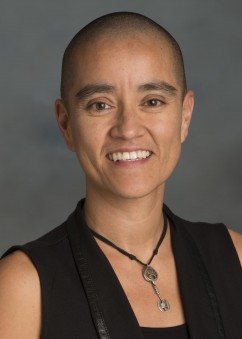 The pieces of my dissertation are beginning to float to the surface, piece by piece, released into the world as smaller parts of the whole. At some point this all may become a book, but for now, I have enjoyed the opportunity to share some of the learning from my dissertation research in book chapters, articles, and blog posts, which I’d like to share with you all so that you can see some of what I’ve been up to these days.
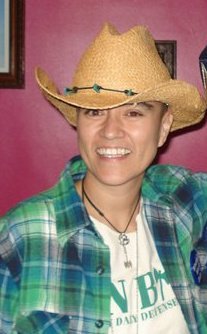 A friend of mine once commented that my feminism is evident from the moment you step into my house. In reference to all the female images around my house, she noted that my space reflected a different way of being in the world. I had never thought of it actually, it was not a specifically conscious choice I made to be woman-centered in the books and artwork I displayed, I simply put up what I loved. But once she pointed that out to me, I appreciated the point it raised about what we surround ourselves with and what it reflects about the world we want to live in and help create. What do our spaces evoke for us? for others? Do they help spark the imagination, and if so, what toward?
 I have called it, The Terrible Transition Year, this year of finishing dissertation, uprooting from home, moving cross-country, and starting a new full-time teaching job. Last year at this time I was in LA for a 7-8 week stay, away from home – which at the time was in Boston – writing dissertation nonstop. I spent the holidays apart from my family and shared in none of my traditional holiday celebrations as I intensely pushed forward to complete the dissertation. After (seemingly) endless edits back and forth with my advisor and second reader, I finished the dissertation just in time to successfully defended it in May.
