

Reflecting on the contradictions of modern life, this essay explores how both wilderness and female embodiment became culturally suspect within Western thought. Drawing on themes of estrangement, relational ontology and kinship, it considers how practices of attention, presence and nature connection may help us return to a deeper sense of belonging.
I perceive a curious contradiction at the heart of modern life. Despite all the technology that promised to make our life easier (imagine the promises of first hoovers and washing machines made to our mothers and grandmothers!), so many people feel disconnected from themselves, each other, and from the natural world.
While wellness and beauty spas thrive, we struggle to lovingly inhabit our own bodies. We might be aware of the healing benefits of being in nature, but life mostly happens indoors, under artificial light, detached from seasons, weather and fresh air.
Perhaps as women, we especially feel the effects of this disconnection. Playing the game of lineair time, of ‘dead’lines and advancements, leaves very little room for our relationships with rest, intuition, menstruation and menopause, sensuality, grief and other intense emotions, and oh, did I mention the inevitable process of ageing?
Beneath these experiences lies a cultural inheritance that has been observed by many scholars…. It’s a story of separation that began long-long ago, and lead to an ingrained suspicion of both nature and the female body.
When the Wild Became Dangerous
For centuries, if not millennia, Western culture has associated wilderness with danger and disorder. I’ve always thought this to be a strange contradiction. If, as in Christian theology, Eden was the sacred garden where humans lived in intimate relationship with land, animals, rivers and divine presence, how became Christian theology so suspicious of all things earthy? Wasn’t that what we yearned to return to?
I guess it was not paradise or creation itself we became suspicious of, but what we associated with that original separation (ominously called the Fall). We learned to fear the consequences of instinct, sensuality, sexuality and desire. We learned to ignore death, in large and small ways, as unpredictable and ungovernable. Wilderness bore the brunt of this, and started to represent exile, temptation and lack of divine order. That seems such a typically human construction, the blaming of the innocent, for things we couldn’t measure, control or face in ourselves.
The female body underwent a strangely parallel process. Women’s bodies became moralised, medicalised and surgically separated from older forms of cyclical, communal and earth-based knowledge. Menstruation was a taboo (“I’ve got the curse!”), and menopause signalled the end of any useful contributions.
Any woman, regardless of her faith or practice, who refused to subscribe to the mainstream moral codes, and who lived outside prescribed social structures was considered suspicious. Many of those who were accused of witchcraft were in fact healers, midwives and herbalists. Yet the inquisition instilled such fear of otherness, (which I believe goes way beyond this specific theme), that even now we carry traces of witch wounding in our collective unconscious or spiritual DNA. The way we tend to mistrust our instinct, are afraid of visibility or repress our bodily rhythms in service of efficiency and productivity are inherited fragments of this wound. You can read more on this in my earlier essay Life Still Shaped by the Witch Hunts? where I review Mona Chollet’s phenomenal book In Defence of Witches.
Returning to Relationship
Yet after this long history of accusations and separation, something is emerging in contemporary culture. Across philosophy, anthropology, ecology and spirituality, there is a growing recognition that the world may not be made up of isolated objects at all, but of relationships.
Many Indigenous cosmologies have never accepted the strict divide between humans and nature that shaped so much of Western thought. Rivers, mountains, animals, forests and weather are not understood as passive scenery or resources, but as presences in reciprocal relationship with human life. Increasingly, contemporary scholars are beginning to question whether the Western distinction between “nature” and “culture” was ever as universal as we assumed.
What would it mean to move through the world differently? Not as masters of a conquered and mute landscape, but as participants in a meshwork of relations (Ingold, 2011)? I have become increasingly interested in the idea of kinship as a way of describing this shift. Not kinship merely as blood relation or family structure, but as a deeper sense of belonging within the animate world itself. A remembering that we are shaped by the places we inhabit, by weather, birdsong, moonlight, tides, seasons and silence. My experience of being in nature since I was a little girl was like being with family. Maybe the fact that I am an only child made me more hungry for sibling connections?
Being in nature can feel strangely restorative. We may be temporarily out of relationship with humans, but simultaneously enter a different mode of relating altogether. Away from constant verbal exchange and digital noise, our perception opens to hear the frogs and crickets croak. I often feel soothed, met and indeed loved, when the wind caresses my face. I feel no longer alone in facing the weight of life.
Becoming kin is not a new spiritual idea. Rather, it helps us remember something very old. A path that doesn’t belong to any single religion or belief system. A non-denominational approach to embodied, nature-based spirituality does not ask us to subscribe to a fixed cosmology. Indeed, it re-opens the lines of direct communication with the mystery, through attention and presence.
Practising Belonging
I suspect many people are carrying this longing, even if they do not yet have language for it yet. Perhaps even a longing to do more than ‘read’ about it :-) and to weave this into daily life as a practice of participation.
For me, this is no abstract philosophy but a lived orientation that helps me sail my ship through the stormy seas of life. The more I meet nature, the more I feel inspired, carried, supported and able to act in service.
Like any other, this relationship grows through time and repeated encounter. This contributes to my Sacred Dream: helping others to find their ways to reconnect with the living world, not as an escape from but as a deeper participation within reality.
I’ve just started a new initiative, and opened the Wild Kin Collective as a space where relationship, attention and belonging can be cultivated together in the midst of ordinary life. I truly hope you’ll check it out and join us, in this sprouting seed of meaningful connection…
Perhaps moving with nature offers a subtle act of reclamation in a culture that has long feared both wilderness and female embodiment. Let’s remember that neither the body nor nature were ever the enemy. The sacred may still be encountered there, waiting just beneath the surface if we only open the eyes of our heart!
Small print
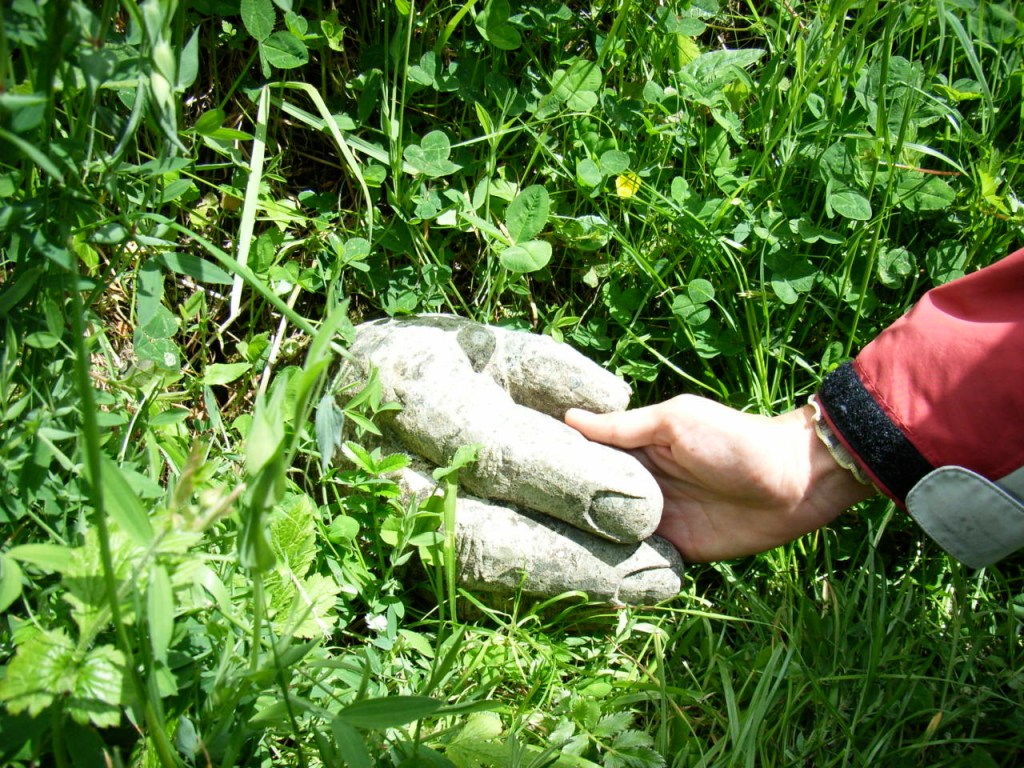
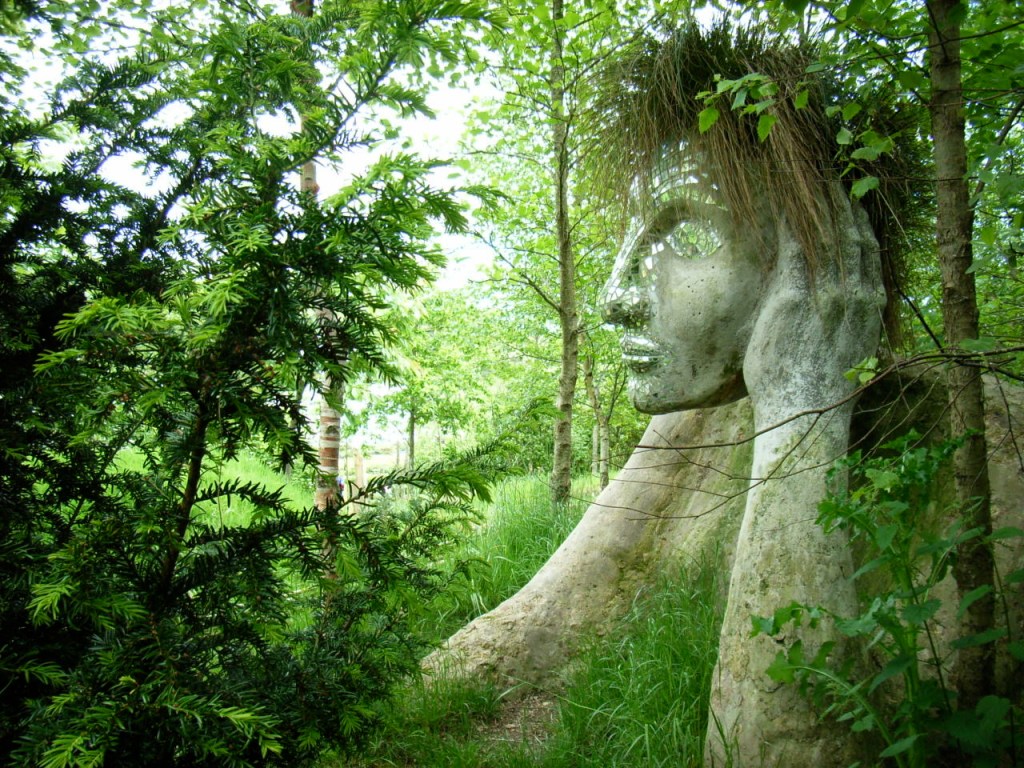
Image credits: I think I took both images at The Eden Project, Cornwall, in 2009, although it may have been somewhere else.
Ingold, Tim 2011. Being Alive. Essays on movement, knowledge and description. London and New york: Routledge.
Several of my recent Substack Essays dive deeper into this theme. I can also share pre-print versions of earlier articles:
Kieft, Eline (2027 in press), ‘Nature, the Environment and Solitude’, in J. Stern (ed). Cultural History of Solitude, London: Bloomsbury – ask me for full references of the authors mentioned above.
Kieft, E. (2017), ‘(Re)discovering the enchanted garden through movement and the body’, Revue Théologiques, 25:1, pp. 139–54.
And here is a 30% voucher for my book Kieft, E. (2022), Dancing in the Muddy Temple: A Moving Spirituality of Land and Body. Lanham, Maryland: Lexington Books.
Invitations
As usual, I have a few invitations for you for different connections and communities…
Weekly movement invitations to explore your relationship with body, landscape and rhythms. Includes 7 or 8 informal, live, seasonal gatherings across the year, access to a private online community space for connection and 10 Qi Gong workshops to Move with the Seasons!
✍🏽 Explore & Join
The next 9-week Goddess Qi Gong journey will happen in Fall. Each week, we explore one of nine aspects of the divine feminine. Sign up for the Goddess Compass, a light reflection workbook, and stay tuned for dates & bookings!
✍🏽 Receive the Compass & Stay tuned
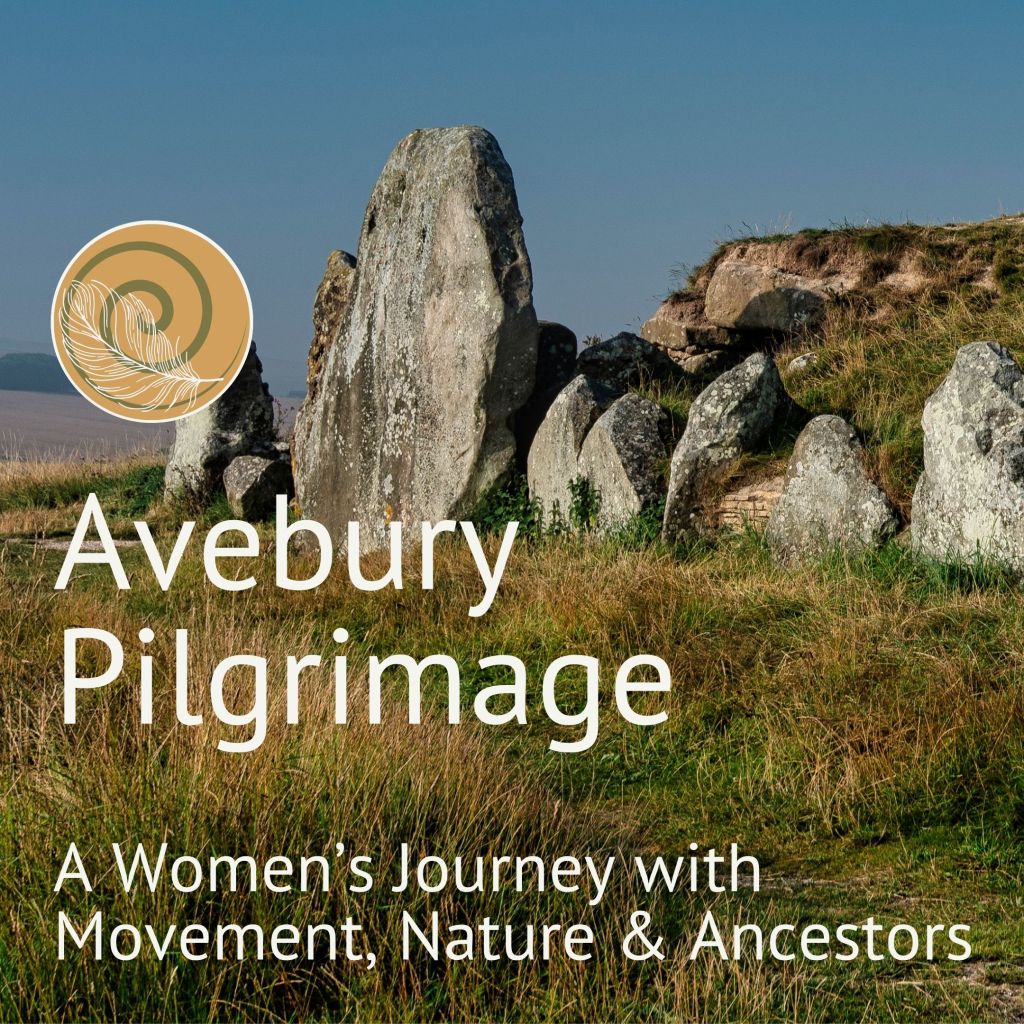
One place left! Join me in Avebury, a magical landscape of stone circles, avenues and hidden chambers, a place to rest and recharge just after Midsummer!
📅 22-26 June 2026, in person
✍🏽 Read More
Bio

Eline Kieft is a Qi Gong teacher, anthropologist and changemaker exploring embodied ways of knowing. With a PhD in dance and training in shamanic practice and Movement Medicine, she bridges academic insight with embodied spiritual practice.
Her book Dancing in the Muddy Temple blends theory and practice in service of land, body, and spirit. Now leading Wild Soul Centre for Embodied Consciousness, she offers coaching and courses to support deep transformation and inner strength through movement and the body. Try out her Qi Gong Membership for free! You can also find her on LinkedIn, YouTube, Instagram and Substack.
Discover more from Feminism and Religion
Subscribe to get the latest posts sent to your email.


df
LikeLike
There’s a book called ‘Man Against Being’ that talks about humans’ (particularly men’s) hatred and fear of the body, and how that leads to hatred and fear of women and the natural world. It started long before Christianity.
LikeLike
Yes, long long before Christianity – the moment we split away from nature we split away from ourselves in the deepest sense.
LikeLiked by 1 person
Whenever I see the word wilderness I feel like weeping – There is no such thing left on our planet. Wilderness has become a ‘myth’ – Robin Wall Kimmerer uses the word ki too express the reality that although we only have 4 percent of untrammeled nature left – what is left is KIN. What we can do is to surrender ourselves to what’s left with humility and an open heart. Nature heals even while her voice grows dimmer with each glysophate spraying or dying tree.
LikeLike
Hey Sara, I hear you! And there is so much unexplored, still, all the things we don’t know, don’t understand, outside and inside of us. Perhaps for me wilderness is first and foremost a metaphor of dancing with the unknown, the unchartered, the ungoverned. The wilderness of our hearts, of our hair growing, the way friendships develop or crumble, the way we don’t know what life has in store… That’s wild! Years ago I wrote this post here: https://feminismandreligion.com/2022/06/16/oakness-as-a-metaphor-for-the-wild-soul-the-dance-between-life-force-personality-and-original-nature-by-eline-kieft/ That sums up the direction of what wilderness represents for me – as well as untrammelled nature!
LikeLike
If Terry Tempest Williams is right and I believe she is, we have it backwards – Wilderness is the taproot of consciousness – and if so mind body that tunes to the rest of nature – metaphor is a human thing. No animal or tree speaks to metaphor!
LikeLike
What an important connection you draw here. I love that you are creating the Wild Kin Collective! I wish I lived closer.
I’ve been embracing the concept of kinship for the past several years.
I completely agree with all you wrote about the impact of the Burning Times. I wrote about in FAR post a few years ago: https://feminismandreligion.com/2022/11/03/remembering-the-burning-times-by-beth-bartlett/
Beautiful post! Thank you.
LikeLike
Hey Beth! Thank you! I’ll read your post later today… The Wild Kin collective is all happening online – so you can join from anywhere in the world, if that’s something you feel called to!
LikeLiked by 1 person
Hey Beth! Thank you! I’ll read your post later today… The Wild Kin collective is all happening online – so you can join from anywhere in the world, if that’s something you feel called to!
LikeLike
Today’s invitation in the Wild Kin Collective is about Temp and Rhythms … Here is a snipped from the Practice of Belonging:
Tempo signifies how fast or slow a piece of music is played, while rhythm indicates a pattern within the music. I can almost hear the flowers in the picture tinkle as little bells…
Both your body and nature are full of rhythms. In your body you may notice your heartbeat, breathing and the cadence of your footsteps.
When you bring this awareness into relationship with the world around you might hear fast or slow birdsong. The way the wind swooshes through the trees in a storm (as I am writing this, the house is rattling!). Perhaps you are by a pond or beach and you notice ripples or waves.
Simply begin by noticing the rhythms that are already present within and around you.. Where do you notice fastness and slowness, repetition and variation?
(It then continues with a movement invitation and an invitation to deepen the weave and explore what this inquiry means in your own daily life)…
LikeLike