

“Spiritual activism is spirituality for social change, spirituality that posits a relational worldview and uses this holistic worldview to transform one’s self and one’s worlds.” – AnaLouise Keating
Spiritual activism offers vital pathways for community care, resistance, and personal transformation and can take many forms. The same is true of witchcraft practices, which can follow a specific lineage, synthesize traditions, be practiced solo, be co-created in a coven of witches, and more. In this article, we’re reflecting on witchcraft as a form of spiritual activism, and approaching both in the most general terms as a starting point. We hold the works of Gloria Anzaldúa, Rachel Ricketts, Starhawk, and many others, including our fellow witches, as influential and present in our thinking. Furthermore, we view witchcraft as an act of cultural, spiritual, and feminist reclamation, enabling us to carry our ancestors into the future.
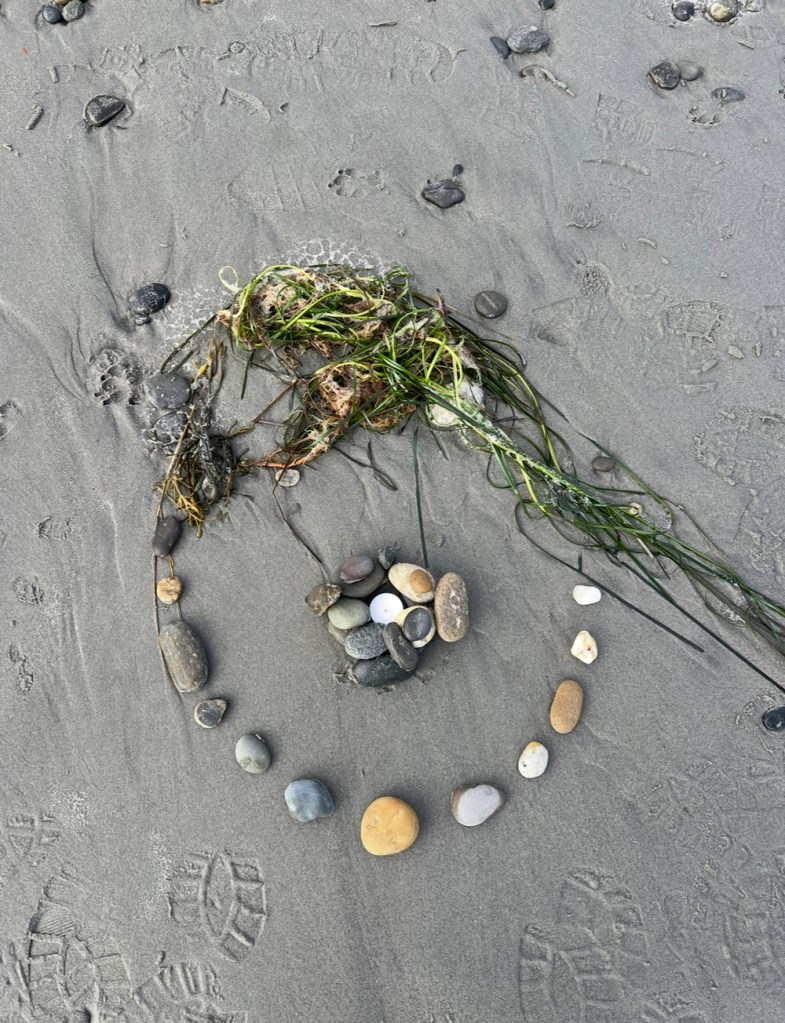
We arrive to the conversation as scholar practitioners, feminists, and co-facilitators of Witch Workshops. Amie is a European-descendant woman of Irish and Scottish ancestry whose work lives at the intersections of decolonizing human-water relationships, spiritual ecology, and healing-centered education. Freia is a European-descendant woman of Norwegian, Irish, and Sámi ancestry whose work seeks to heal colonial ruptures around Indigenous and matrilineal ways of knowing and being through ritual, art, and storytelling. We share these personal details as a way of sharing the standpoints that inform our views, which will of course be different from others. Hopefully our small offering can spark a conversation and ignite more witches into considering themselves spiritual activists, or vice versa.
Magic as Method
We first wish to ground our conversation in our understanding of spiritual activism and witchcraft as tangible, interconnected forms of relational weaving and knowing. Entering into conversation with Gloria E. Anzaldúa, we refuse the notion that spirituality is an inferior form of knowledge. Instead, spirituality can be a substantial form of inquiry into one’s experiences. Anzaldúa argues that a form of what she calls spiritual inquiry, conocimiento, is reached “via creative acts – writing, art-making, dancing, healing, teaching, meditation, and spiritual activism – both mental and somatic. Through creative engagements, you embed your experiences in a larger frame of reference, connecting your personal struggles with those of other beings on the planet, with the struggles of the Earth itself.” (119) Like conocimiento, we recognize witchcraft as a spiritual practice and way of knowing that weaves and connects mind, body, spirit, collective, and earth.
Moreover, the inter-relational weaving that happens during creative acts is alive in the creative work of witchcraft. Spell writing, ritual performance, chanting, dancing, creating healing herbal remedies, teaching magic to others – these practices are not only ways of knowing, but they also work to spiritually sustain us as we engage in activism. It is with this grounded understanding of spirituality as a way of knowing and spiritual activism as creative, inter-relational weaving, that we place witchcraft as spiritual activism. Below we discuss how witchcraft forms and supports our spiritual activism, and how our bodies, lineages, and identities interact in our practice.
On staying the course, grounded and creative
As mentioned earlier, witchcraft helps people remain emotionally, psychologically, and spiritually capable of engaging with difficult realities, like those we encounter as we approach social change. Our engagement might look like attending a protest, contributing to mutual aid, facing and resisting our own complicity in systems of oppression, or speaking up to a family member when they are spreading hatred and ignorance. While activist spaces and resistance can feel deeply nourishing, they can also require a lot of energy and courage.
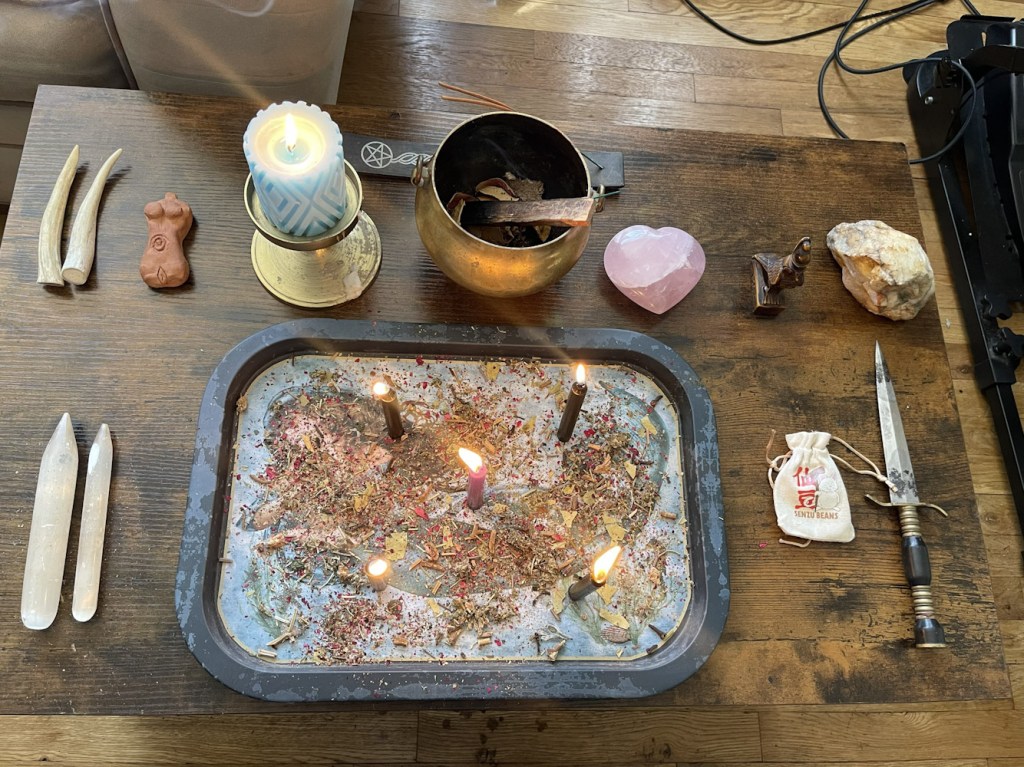
Witchcraft offers ways of staying grounded, feeling supported, and engaging from our most aligned selves. There are simple and creative ways to support ourselves and others. For example, there are practices such as knot magic to weave new realities or break old systems, creating and enchanting talismans to carry for protection and empowerment, or speaking a spell over an herbal infusion. Witchcraft grounds us amidst overwhelm and allows us to show up fully present and prepared to take on oppressive systems.
This is evidenced in a recent study on contemporary Irish feminist witches who stated that witchcraft supports them when political action takes a toll on their mental, emotional, and physical wellbeing. Shannon Hughes Spence interviewed five women who identify as feminist witches to gain a deeper understanding of how their relationship with political activism and witchcraft is connected. She found that all women involved believed witchcraft acted as the spiritual underpinning that encouraged them to keep fighting. One of her participants shared that because political action requires a significant amount of energy, her spiritual practice acts “not only a form of self-care but a form of protection and fuel to keep fighting injustices.” (52-53) These reflections position witchcraft not only as a method for conducting spiritual activism itself, but as a space activists can return to for strength.
On our bodies, identities, and lineage
Much of witchcraft and, indeed, contemporary spirituality relies on the combination of a variety of belief systems and worldviews. Practices are often based in remembrance and tradition, but are also alive and changing in response to present challenges, contemporary needs, and location. This is a reclamation and co-creation process that must be met with curiosity, humility and reflexivity if it is to truly be activist in nature.
When we practice witchcraft, our identities, bodies, land, and resources are part of the discussion. If we approach witchcraft as spiritual activism (which not all witches do), ideally, we take our positionalities and lineages into account to avoid perpetuating harm, performative activism, and cultural appropriation. Our Witch Workshops cohorts include people who hold diverse identities, ancestry, personal experiences, and ways of being. As facilitators, we mostly teach from our specific lineages and embodied experiences. We encourage others to do the same, aiming to ensure our practices are culturally rooted in our own lives, and appreciative rather than extractive.
So far, in our first two years, our participants have been white-bodied witches who carry many intersectional identities and experiences. We hold the power dynamics and potential for appropriation and spiritual bypassing carefully, knowing we might not always get it right. Being open to vulnerability, imperfection, learning, discomfort, and getting it wrong are necessary parts of the work. Importantly, as Rachel Ricketts argues, while our intentions matter, our impact – what we say and do – matters more. (108)
In closing
Overall, witchcraft’s emphasis on spiritual grounding, relationality over extraction, and creativity in the face of systems that feel immovable and untouchable puts presence, intention, and power-with at the forefront of a witch’s life. These are required qualities for organizing, taking part in community activism, and, importantly, believing another world is possible and that we all have a role to play. Whether you call what you do witchcraft, ritual, spiritual activism, or something else, we thank you for contributing your part. We hope to hear from you and how your spiritual practice, whether witchcraft or not, influences and supports your activism, politics, or efforts to create a more just and beautiful world for all.
P.S. We are hosting a workshop on Witchcraft as Spiritual Activism at the S/HE Divine Studies Conference on June 13th. We are also offering a Summer Solstice Celebration on June 21st. Both are open to the public and tickets are hyperlinked above. We hope to see you there or in the comments below.
Texts referenced:
Anzaldua, Gloria E. “now let us shift . . . conocimiento . . . inner work, public acts” in Light in the Dark/Luz en lo Oscuro:Rewriting Identity, Spirituality, Reality. Duke University Press, 2015.
Ricketts, Rachel. Do Better:Spiritual Activism for Fighting and Healing from White Supremacy, Atria Books, 2021. Spence, Shannon Hughes. “Irish Feminist Witches: Using Witchcraft and Activism to Heal from Violence and Trauma.” In The Witch Studies Reader, edited by Soma Chaudhuri and Elizabeth Jane Ward. Duke University Press, 2025.
Author Bios: Amie and Freia joined magical forces to co-found Witch Workshops after becoming friends in CIIS’ Women’s Spirituality PhD Program. Freia Serafina is a ritualist, women’s circle facilitator, award-winning filmmaker and artist, and PhD candidate in Women’s Spirituality. She’s passionate about unearthing hidden Herstories, creating healing-based rituals, and drinking coffee with her two cats. As for Amie, she is a heart-centered, water-loving witch with a passion for ritual, rivers, and more-than-human relationships. As a PhD student in Women’s Spirituality and an integral healing facilitator, Amie is committed to decolonial praxis, writing as ritual, and lifelong (un)learning. She lives with her husband and black cat along a river and thriving ecosystem she calls home. Find out more at www.witchworkshops.com.
Discover more from Feminism and Religion
Subscribe to get the latest posts sent to your email.


During the Cuban Revolution, our people did the same thing. Using spells to fight General Batista. It’s said that a group of Wise Indigenous Women in the Mountains (The Serranas of women of the Sierra Maestra Mountains) gave Fidel and Raul these magical totems made from a plant. They were told that when they won the Revolution (and they would) to give the totems back. And that’s what they did years later.
Back when no one believed that they would. There’s even a story where Fidel took an idol of the Goddess Oshun (Santeria) and dressed it in a rebel uniform so they could win a battle. And the July 26 Movement (M-26-7) official Rebel Flag is red and black. It confused a lot of people Bevause that’s usually the flag of the Anarcho-Communists. But in Santeria, Elegua, the God of the Crossroads, uses those colors.
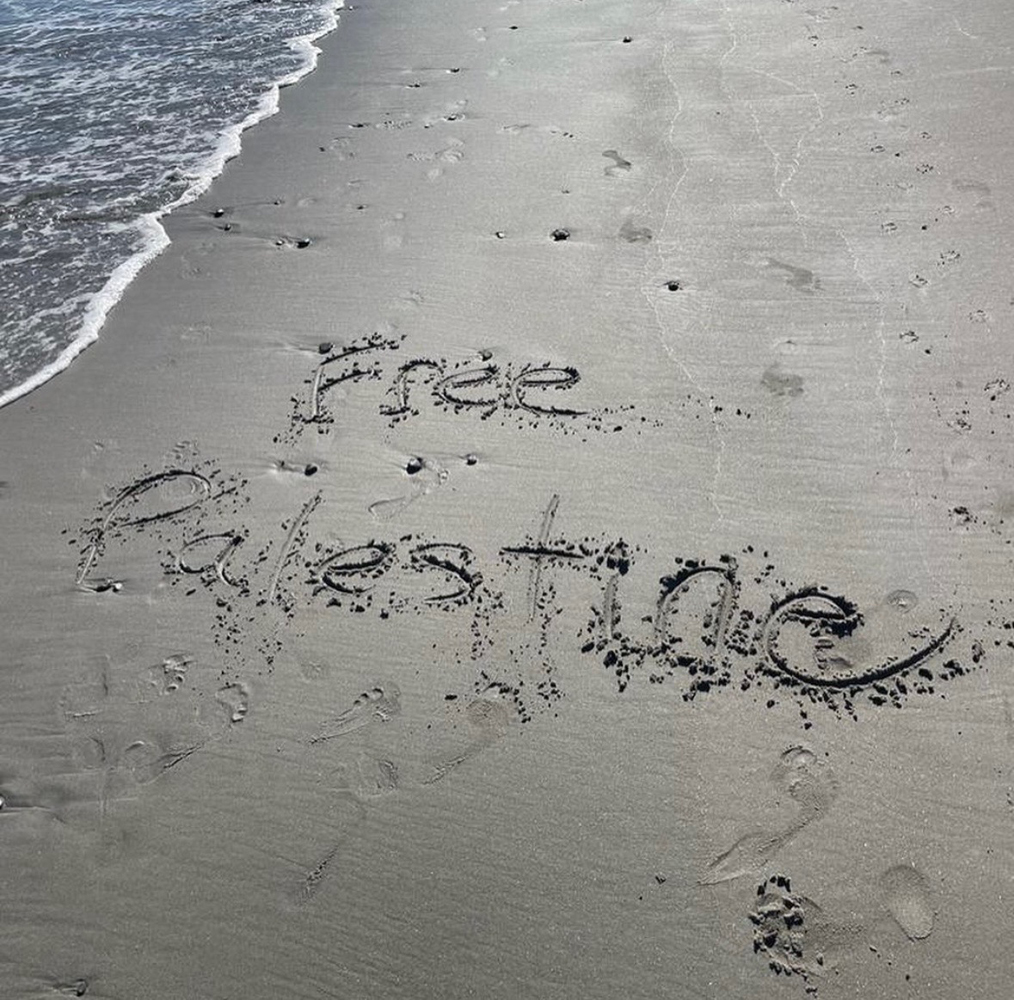
It was meant to open the roads to the Revolution. Even I and other witches have used our magic to support Black Lives Matter, the No Dapple water protectors, and now the Free Palestine movement.
LikeLike
Thank you for your generous comments and perspectives, @MiamiMagus! I had goosebumps as I read about the power of spiritual activism and Oshun in Cuba’s revolutionary history. I didn’t know these stories and am grateful I do now. Thank you for reading and for your continued magic in service to freedom. ¡Viva la revolución!
LikeLiked by 1 person
¡Viva la Revolución Compañera!
Very few people know these stories. But among Cubans we know. Even the Cuban Military has images of the Virgin Mary wearing different colored veils. The Blue Mary or Virgin of the Rule is Yemaya, the Sea Goddess in her Christian guise.
And the Yellow Mary is the Virgin of Charity who is Oshun. Goddess of Love, Prosperity, Witchcraft and many other things. In Venezuela there are many Witches and followers of the Old Indigenous Religions and even Old European Religions. In order to fight back against US backed coups with our spirits and our Gods and Goddesses. I pray they always aid us on our paths to liberation!
The Cuban Government had to hide that from the Soviet Union. We have always been Socialist and Rebellious. We have never been atheist though lol. Even Fidel himself was initiated into traditional African religions. And Colonel Hugo Chavez of Venezuela was an indigenous spiritualist.
And also joined Palo Mayombe religion. There’s so many stories out there.
LikeLike