Inspired by Carol P. Christ: Patriarchy Rules the Supreme Court by Janet Maika’i Rudolph

Along with the words of Justices Sotomayer, Breyer and Kagan.
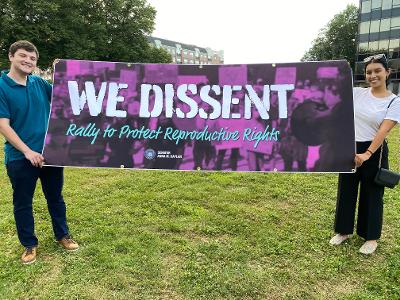
The Supreme Court ruling overturning Roe was expected, but there was nothing that could prepare me (nor likely anyone else) for the devastation of the actual decision. My gut is reeling. I thought it would be useful to survey the landscape through the lens of patriarchy. Thanks to Carol Christ for having always written insightful comments about the roles of patriarchy. This is inspired by her work.

The dissenting judges were quite eloquent, so I will work off their words.

  • “Whatever the exact scope of the coming laws, one result of today’s decision is certain: the curtailment of women’s rights, and of their status as free and equal citizens.”
  • “After today, young women will come of age with fewer rights than their mothers and grandmothers had. The majority accomplishes that result without so much as considering how women have relied on the right to choose or what it means to take that right away. The majority’s refusal even to consider the life-altering consequences of reversing Roe and Casey is a stunning indictment of its decision.”

My Commentary: Through the eyes of patriarchy here is no need to consider life-altering consequences because it only recognizes two roles for women: madonna or whore. We are never seen as full humans with civil and independent rights. Patriarchy doesn’t just hate the sexual freedom of women, it has spent millennia trying to quash it, make it into something dirty, control it. It’s a love/hate relationship with sex. Rape is really OK (look how hard it is to prosecute). Pedophilia OK too (look at the church). But a woman making her own sexual, reproductive choices . . . a bridge too far. Patriarchy will always force us to pay a price for having sex, for being alluring, for being female.

Continue reading “Inspired by Carol P. Christ: Patriarchy Rules the Supreme Court by Janet Maika’i Rudolph”
From the Archives: The Story of Juneteenth by Kelly Brown Douglas

This was originally posted June 18, 2013

Tomorrow is a special day for me. It is Juneteenth.  On June 19, 1865, news finally reached Galveston, Texas that slavery had been abolished. This was of course two and a half years after Lincoln issued the Emancipation Proclamation. While the actual impact of the emancipation for the enslaved remains a source of historical discussion if not debate, the fact of the matter  is that the proclamation of emancipation and the reality of freedom for black women and men did not necessarily coincide. To be sure, for a variety of reasons, the Emancipation Proclamation did not have an immediate impact on the daily lives of enslaved women, men and children.  While the “official” historical records marks   January 1, 1863 as a day of emancipation, the historical record for the descendants of enslaved men and women marks June 19, 1865 as the day of freedom. For, it was on this day that the last slaves were free

.

Continue reading “From the Archives: The Story of Juneteenth by Kelly Brown Douglas”

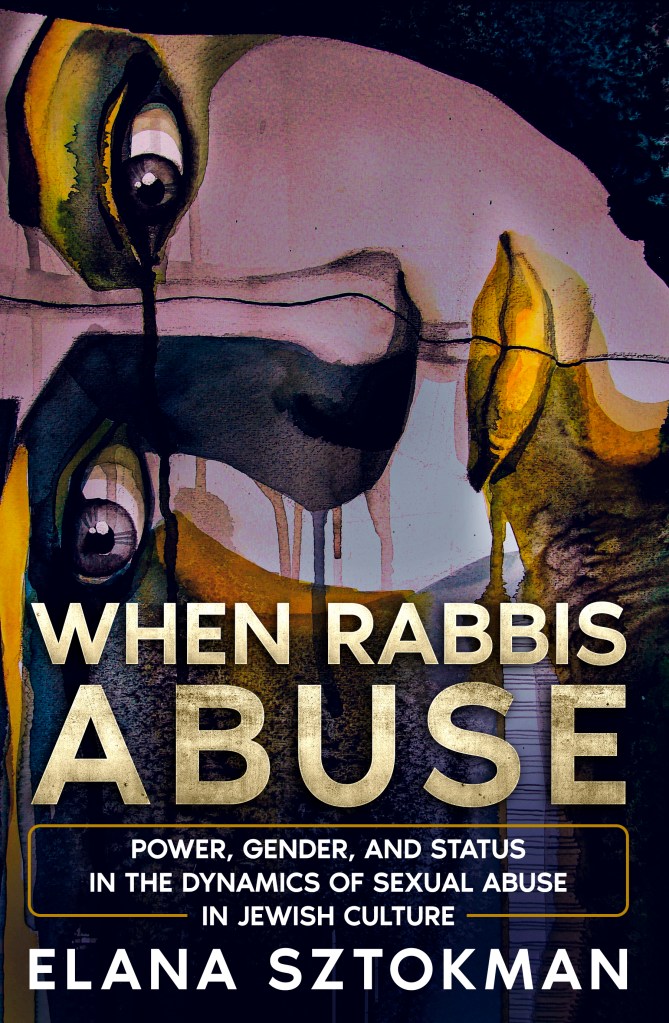
When Rabbis Abuse: Power, Gender, and Status in the Dynamics of Sexual Abuse in Jewish Culture, Part 2 by Dr. Elana Sztokman

Moderator’s note: This is a book excerpt in 2 parts. Part 1 was posted yesterday. When Rabbis Abuse will be published on June 14th, information on ordering below.

Grooming tactics: Targeting the victim

Although there are many ways to target a victim, there is a particular type of grooming that is available to rabbinic figures and other clergy, which comes in the form of pastoral care. Many stories involve glaring examples of this—funeral, bat mitzvah class, depression, or other moments of emotional vulnerability. Often the rabbi-abuser will target people who are going through a divorce—or even worse, recovering from sexual abuse. …

Brenda, for example, says that the rabbi targeted her when she was at a very stressful time in her life and having what she described as “emotional issues”:

I was making my son’s bar mitzvah, and it was a lot of work. I was having some emotional issues because I’m more observant than my family and most of my family is pretty secular and it’s always challenging to get my family to be engaged, and I was feeling stressed and hurt because a lot of my relatives had decided not to come.

Continue reading “When Rabbis Abuse: Power, Gender, and Status in the Dynamics of Sexual Abuse in Jewish Culture, Part 2 by Dr. Elana Sztokman”

When Rabbis Abuse: Power, Gender, and Status in the Dynamics of Sexual Abuse in Jewish Culture, Part 1 by By Dr. Elana Sztokman

Moderator’s note: This is a book excerpt in 2 parts. Part 2 tomorrow. When Rabbis Abuse will be published on June 14th, information on ordering below.

When I started this research in 2015, I was not expecting rabbis to be the headliners. I was looking at abuse in general in our community. When I began conducting interviews on this topic, I was startled to discover how many of the abusers described by interviewees were rabbis.

Discovering rabbis

Although anthropology does not claim to offer statistical evidence or representative sampling, and although I efforted to maintain listening neutrality and non-judgment, I was nonetheless swept away by hearing so many of these accounts of rabbis who sexually abuse. The title of this book is a result of an incomprehensible number of interviewees in which the abuser was a rabbi. I decided to examine the profile of the rabbi-abuser more carefully to understand what this means for our culture and our community, and to use those insights to analyze other cases of high-profile abuse using those paradigms of power in our culture….

Continue reading “When Rabbis Abuse: Power, Gender, and Status in the Dynamics of Sexual Abuse in Jewish Culture, Part 1 by By Dr. Elana Sztokman”

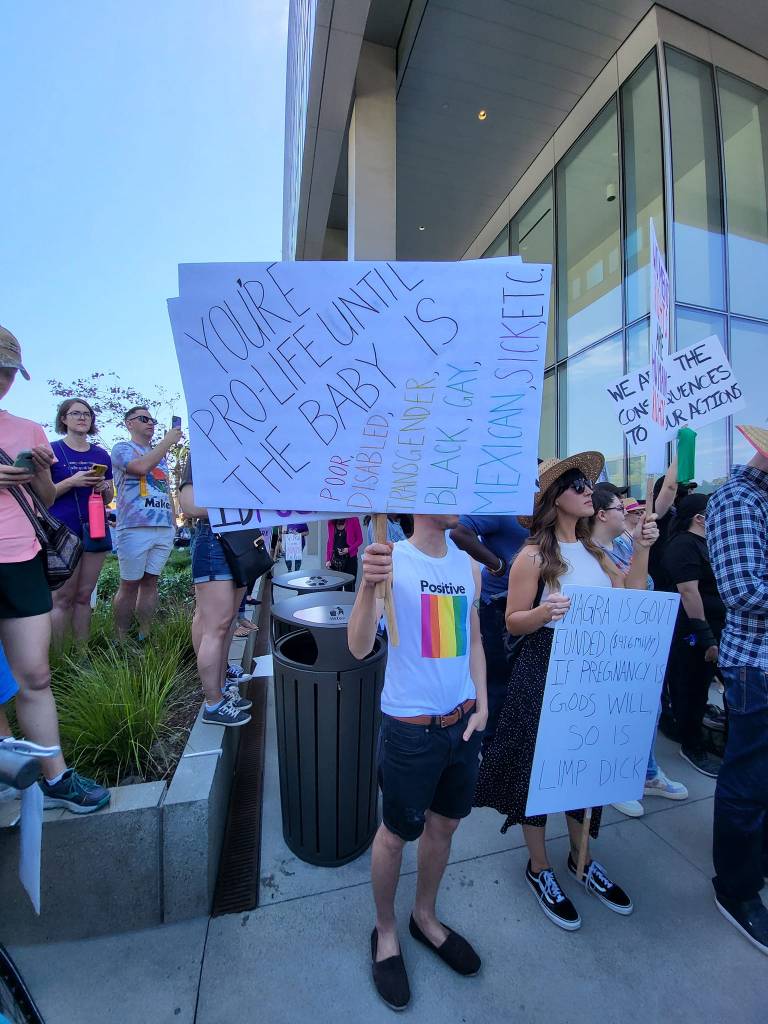
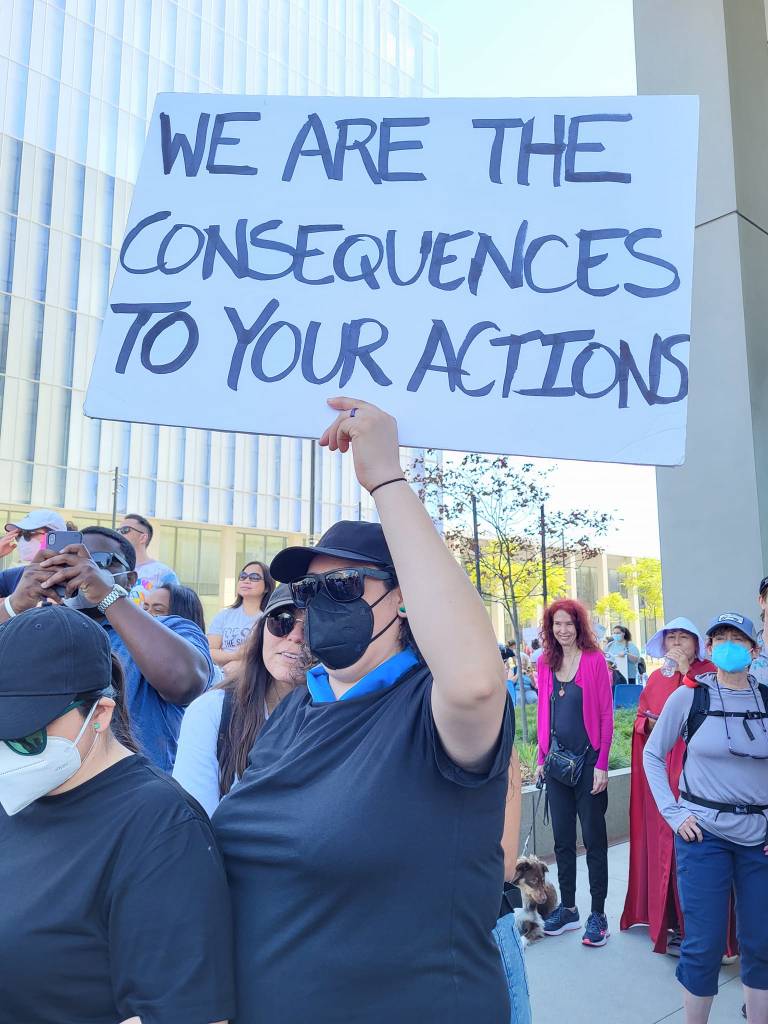
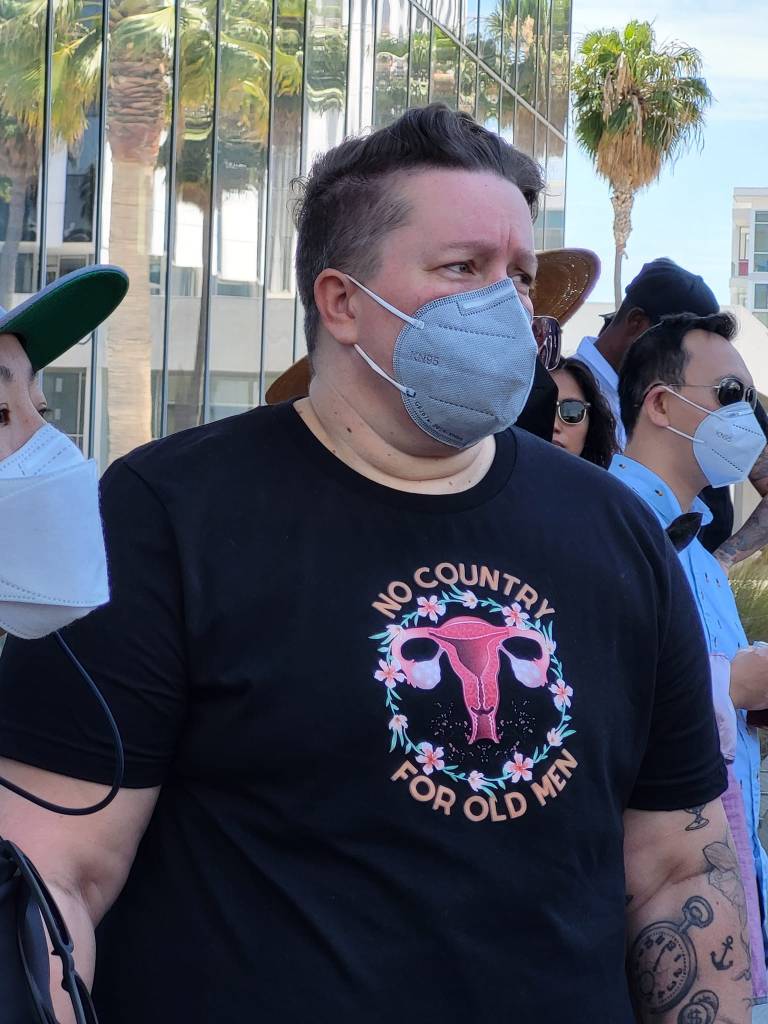
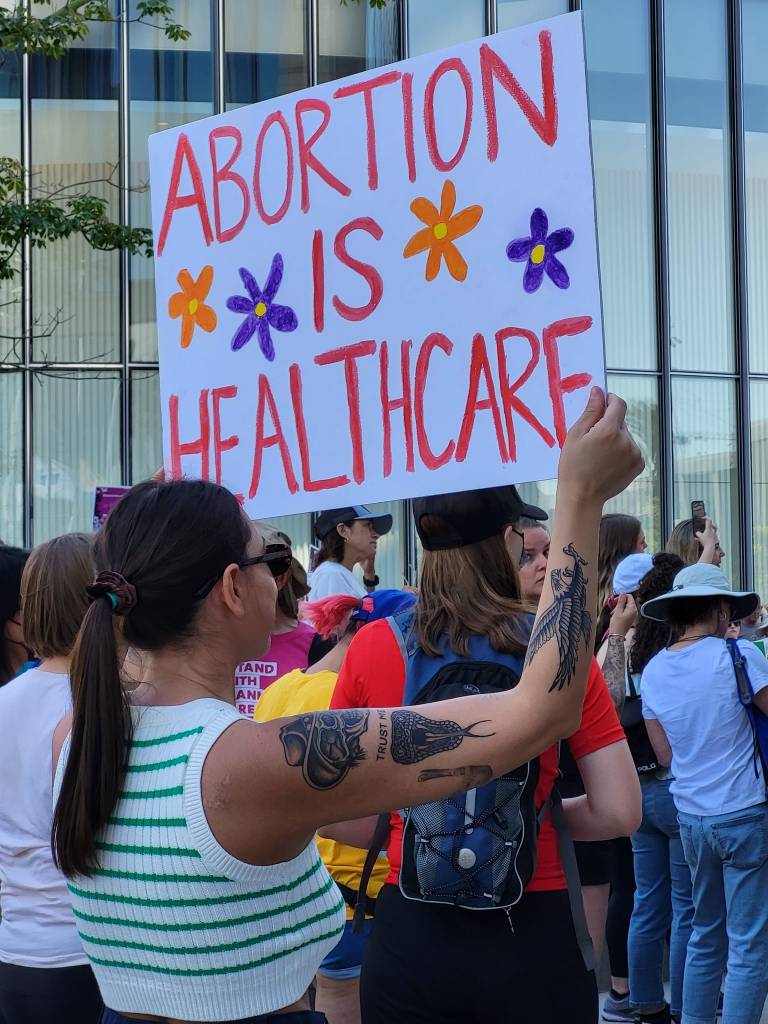
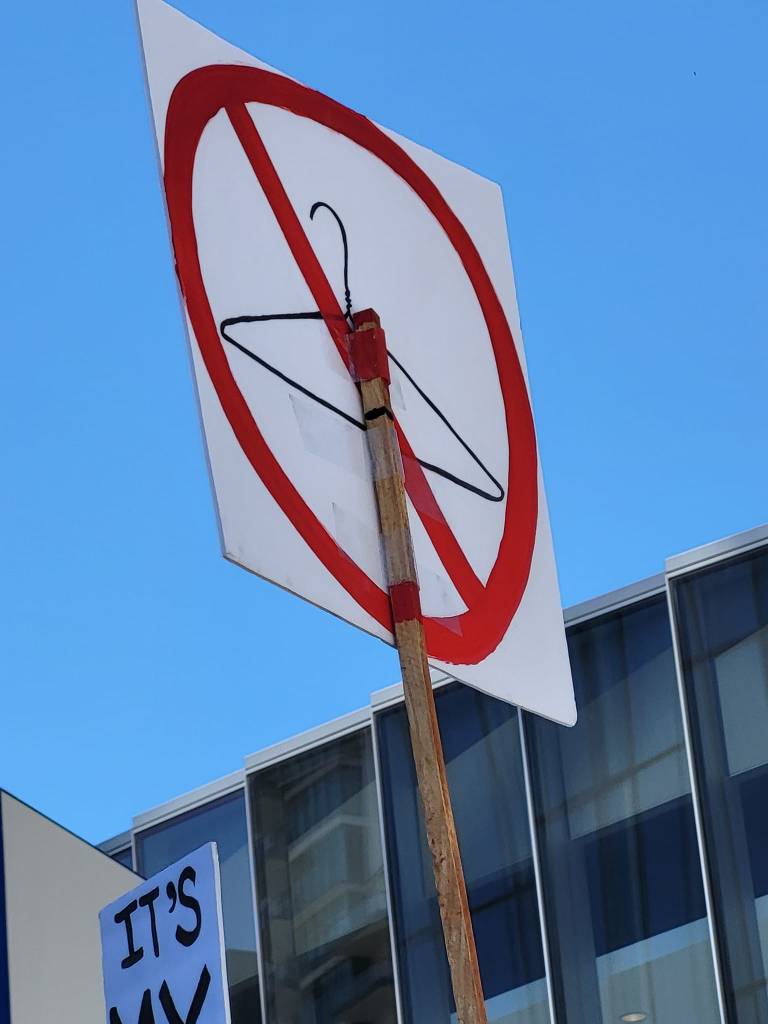
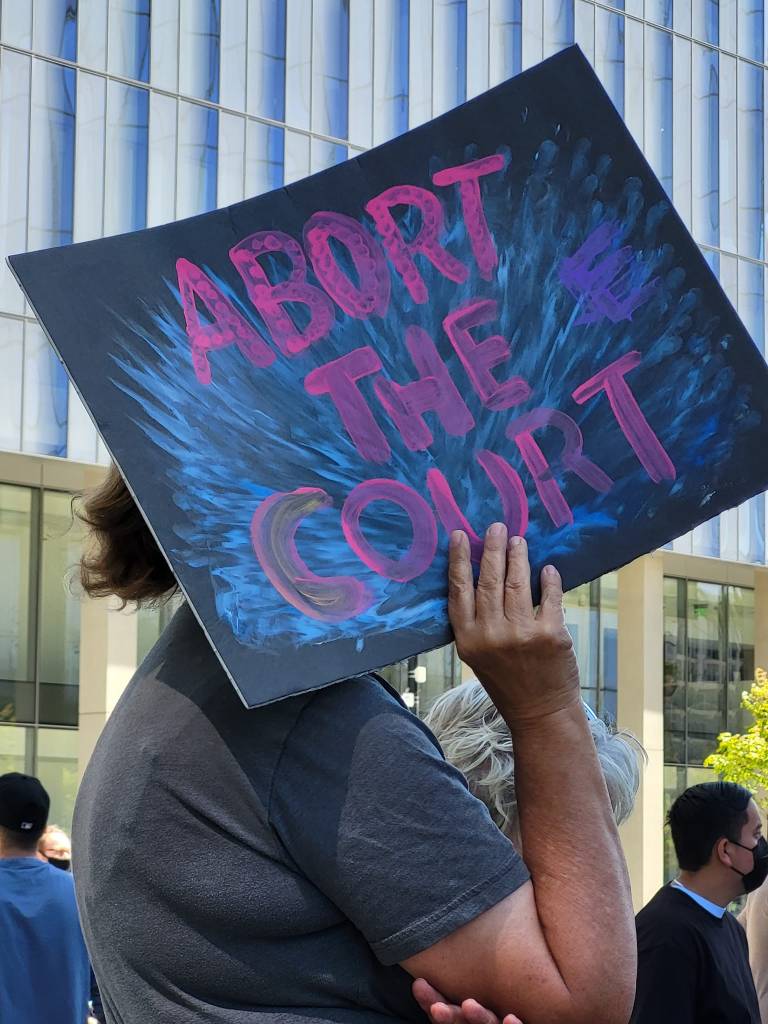
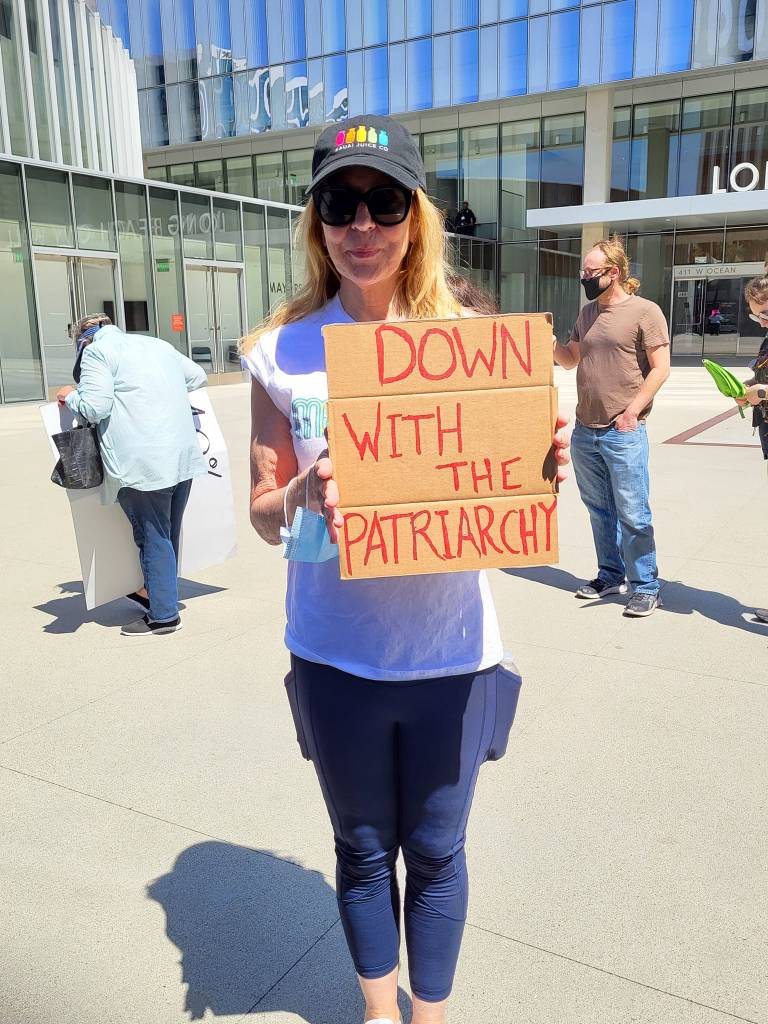
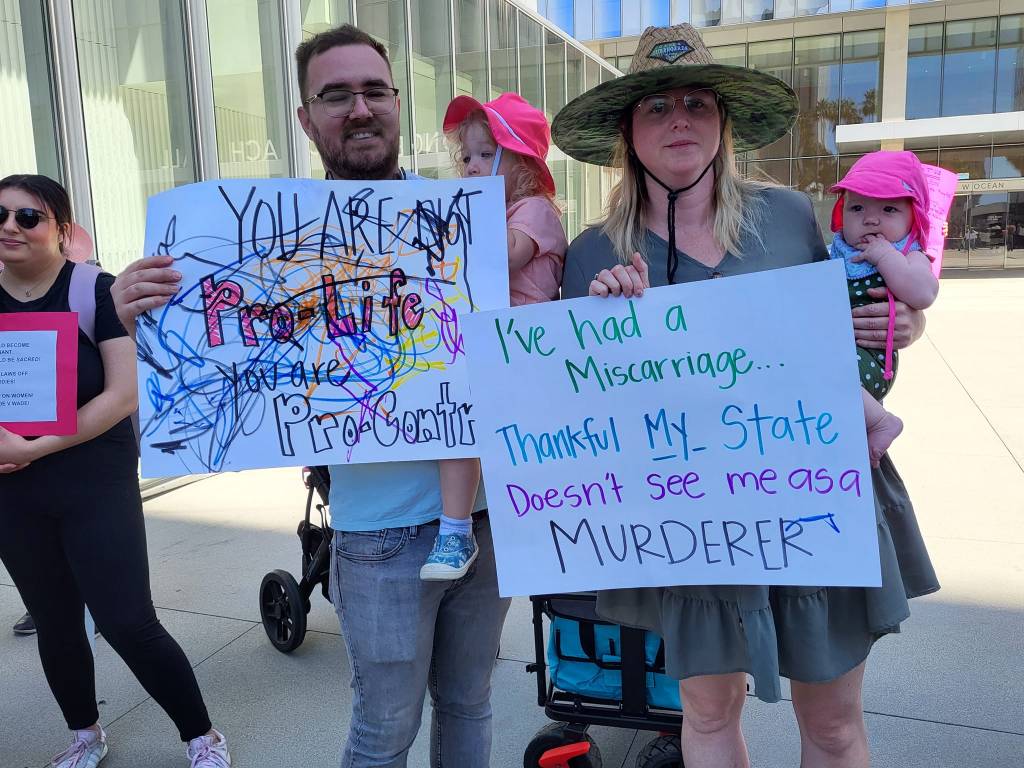
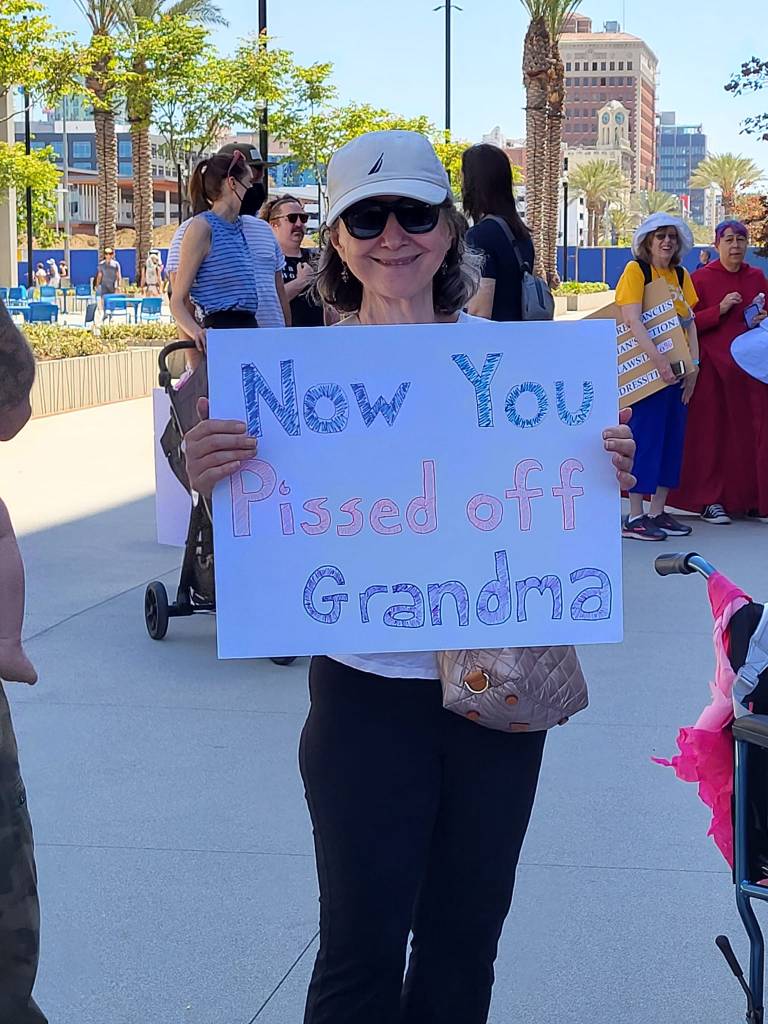
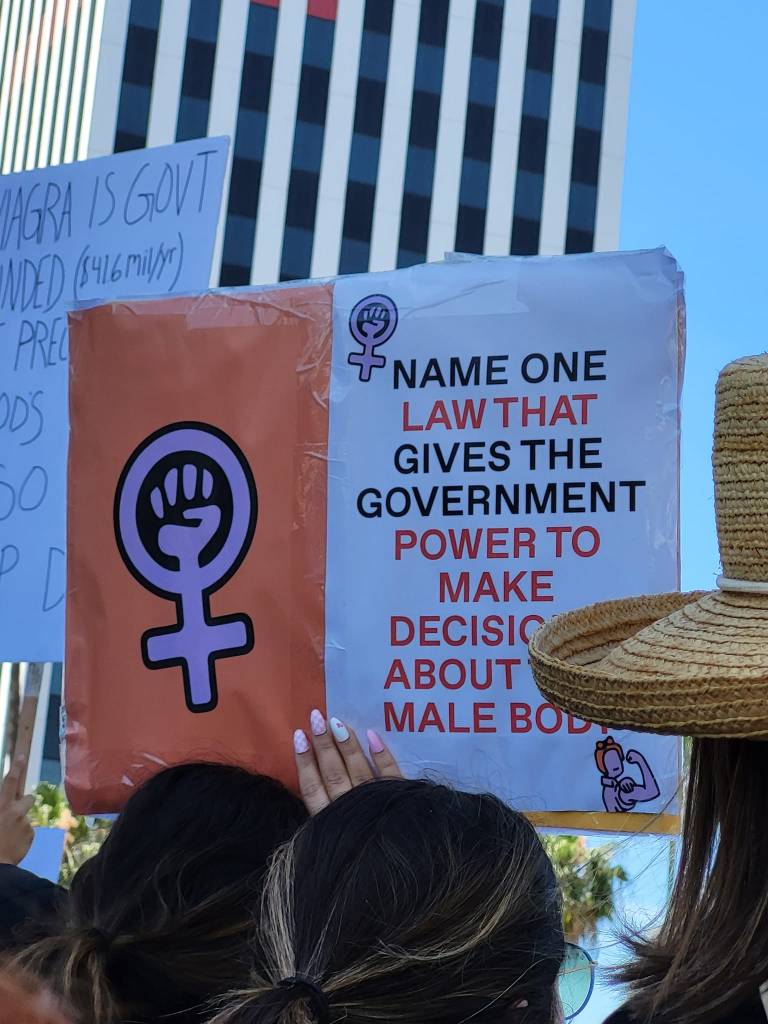
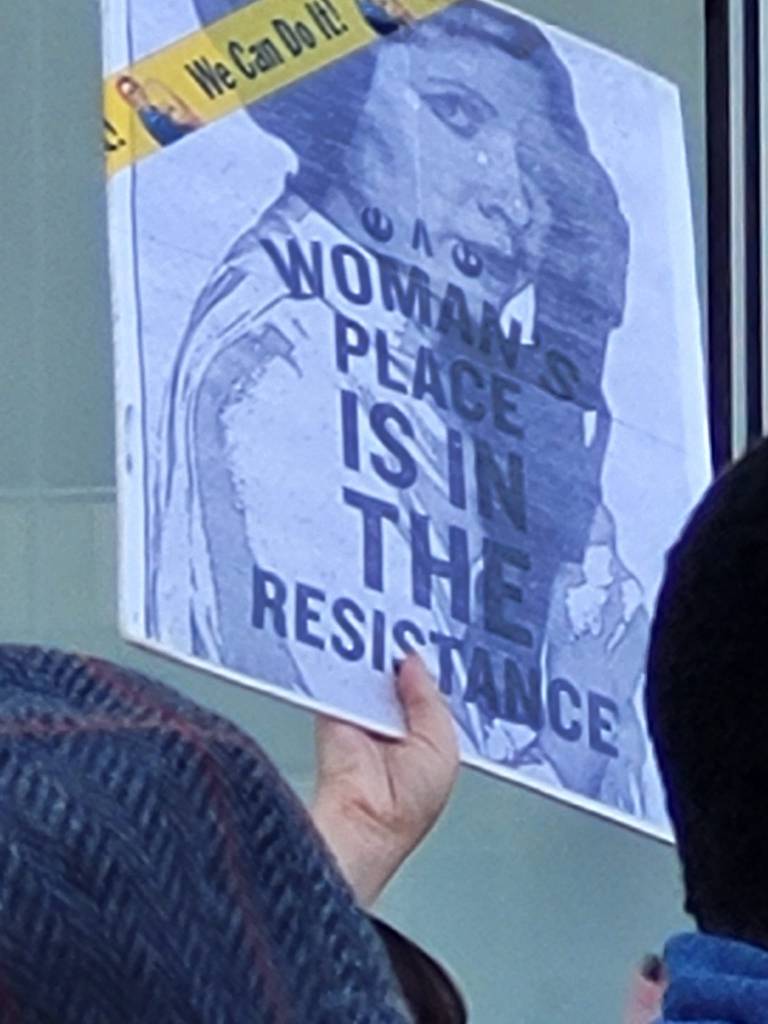
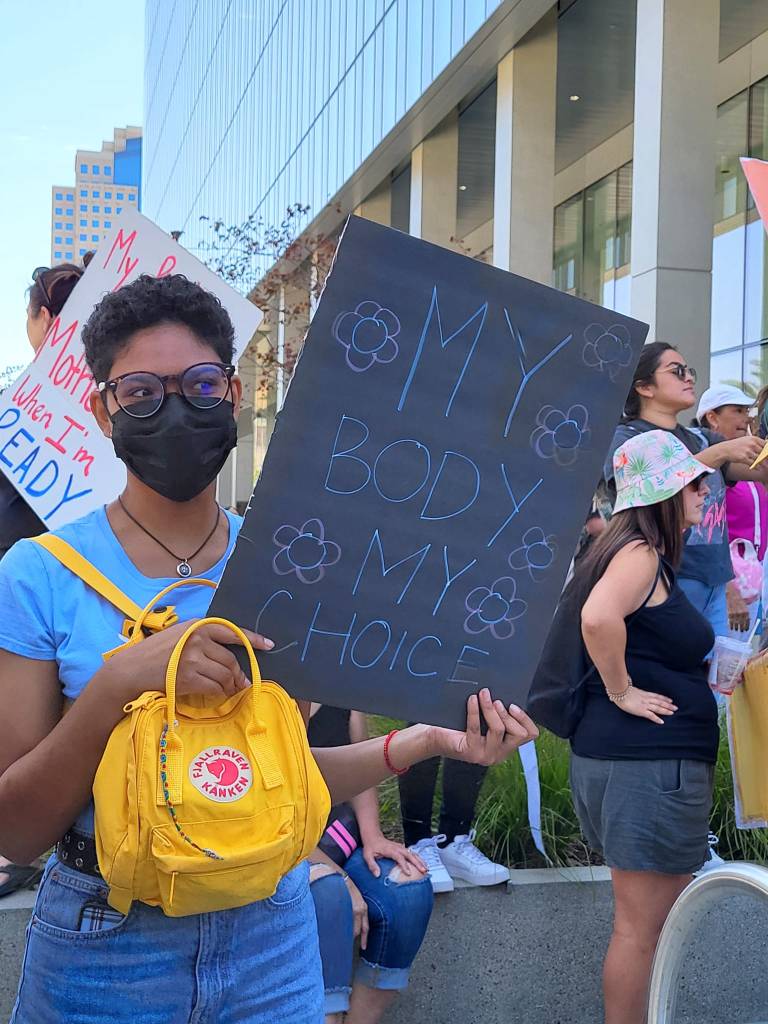
photo essay, part 2: bans off our bodies rally by Marie Cartier

photos from bans off our bodies rally, long beach ca may 14, 2022

all photos by: marie cartier

BIO: Marie Cartier is a teacher, poet, writer, healer, artist, and scholar. She holds a BA in Communications from the University of New Hampshire; an MA in English/Poetry from Colorado State University; an MFA in Theatre Arts (Playwriting) from UCLA; an MFA in Film and TV (Screenwriting) from UCLA; an MFA in Visual Art (Painting/Sculpture) from Claremont Graduate University; and a Ph.D. in Religion with an emphasis on Women and Religion from Claremont Graduate University.

Moderator’s note: This is the 2nd of the two part series. Part 1 was posted yesterday.

Continue reading “photo essay, part 2: bans off our bodies rally by Marie Cartier”

photo essay, part 1: bans off our bodies rally by Marie Cartier

photos from bans off our bodies rally, long beach ca may 14, 2022

all photos by: marie cartier

BIO: Marie Cartier is a teacher, poet, writer, healer, artist, and scholar. She holds a BA in Communications from the University of New Hampshire; an MA in English/Poetry from Colorado State University; an MFA in Theatre Arts (Playwriting) from UCLA; an MFA in Film and TV (Screenwriting) from UCLA; an MFA in Visual Art (Painting/Sculpture) from Claremont Graduate University; and a Ph.D. in Religion with an emphasis on Women and Religion from Claremont Graduate University.

moderator’s note: There are so many powerful photos that they will be posted in two parts, today and tomorrow.

Continue reading “photo essay, part 1: bans off our bodies rally by Marie Cartier”

Patriarchy and the Supreme Court by Janet Maika’i Rudolph

I am pissed! I wrote this blogpost the day after Beltane when the leaked draft of the Supreme Court majority opinion regarding Roe v. Wade was leaked to the public. I was up anyway feeling the effects of PTSD. Lessons that Carol P. Christ wrote about and brought to my own consciousness were rattling around my head. The first is her definition of patriarchy: “patriarchy is a system of male domination in which men dominate women through the control of female sexuality with the intent of passing property to male heirs.” This definition was part of a 3-part series she wrote (and we recently re-posed in her legacy posts) beginning here.

They are all well worth reading.

I was raped in 1977 when I was 22 years old. This after being abused by my father. I never got pregnant, but I was suicidal after the rape. Had I been pregnant without recourse to ending it, I would without a doubt have stabbed myself in the stomach or reached for that metal coat hanger. (I was too young to face pregnancy when my father abused me.) Had the result been my own death, that would have been warmly welcomed on my part. To this day, I still self-mutilate at times when stress becomes too much.    

Continue reading “Patriarchy and the Supreme Court by Janet Maika’i Rudolph”
Carol P. Christ’s Legacy: Please Keep It in Your Pants by Carol P. Christ

This blog was originally posted on November 6. 2017. You can read the original comments here.

Trigger warning: this post describes sexual abuse

Last week while responding to a comment on my blog, I suddenly remembered a series of incidents in which men I did not know exposed themselves to me in public places. The first time occurred at a park around dusk during an outing with a group of girls. I was about 11, I may have wandered away from the group, or I may have been with others. What I remember is seeing a man with his pants down sitting on a park bench, possibly the first time I ever saw an adult man’s penis. I told or we told, but the man was not reported by the adults. Fast forward to the beautiful gardens of the Palace Schoenbrunn in Vienna where I was confronted by a penis while lost in thought when I was 19. I ran, but said nothing. In my 20s at the early showing of movies in New York City men would sit next to me and jerk off into paper bags. I learned to move whenever a man was near me in the theater, but I never told the ticket seller. A few years later, I crossed paths with a man who had his penis out on my favorite walk in the hills of Alum Rock Park in San Jose. I never walked carefree in that park again. When I was looking for the cave of the Furies on the Acropolis Hill in Athens, a man followed me waving his penis. I told the guard, but when the police came, he was gone. I arrived home in distress. My boyfriend said I was over-reacting. I learned to stay clear of men in cars on the streets of Athens at night after seeing things I did not want to see more than once in their hands. I coded this behavior as part of the background of my life. There was a man who from the basement apartment a few doors up from the Cycladic Museum pressed his erect penis against the window. I told the guard at the museum who said, “We have called the police more than once, but he always cries, and they let him go.” On a trail I had walked many times with my dogs near Lafionas in Lesbos, coming around a bend, I encountered a young farmer, who as soon as he saw me, pulled out his penis and urinated against a fence. That was the last time I walked the trail. We are supposed to learn to consider this behavior as well, if not normal, anyway, not such a big deal. After all, I wasn’t hurt, or was I?

Continue reading “Carol P. Christ’s Legacy: Please Keep It in Your Pants by Carol P. Christ”

Walking With Aletheia by Jean Hargadon Wehner – Book Review by Janet Maika’i Rudolph

Trigger Alert: There is discussion of sexual violence.

“I transformed from terrified victim to a courageous survivor . . .Different than an ‘out of body’ experience, this felt more like an ‘in-body’ experience. I stood my ground and did what I had to do to get the hell out of there.” Jean Hargadon Wehner (pg 89).

In 2017, a Netflix documentary came out called The Keepers. It is the story of abuse and torture that was not only allowed but protected by the Catholic Church. Jean was featured in the series as the linchpin who helped to uncover and bring to light the atrocities. Our own Carol Christ watched the seven-episode series when it came out and wrote a blogpost about it. FAR reposted that blog at the end of February to honor Jean who has now written her own book, Walking with Aletheia. In it she describes her own healing journey or as she calls it her “health walk” out of the wreckage of that horror. For more on The Keepers, you can read Carol’s post here (which also includes Jean answering some questions about her story). This book is Jean’s story which, while intricately intertwined with the Church, is ultimately about her own pathway to spirituality and healing.

It’s hard to imagine the emotional weight of the authority figures that bore down on Jean when she was a student at Baltimore’s Archbishop Keough High School in the late 1960s. Not only did two priests torture and abuse her but they drew in other Church officiants as well as the police. The legal system actively turned its collective back to her. It is a great gift that she has survived and a testament to her strength, inner creativity, and the love in her heart that she was able to navigate such an apocalyptic terrain. The instruments of the torture were horrendous including rape, sex trafficking, drugs, and mind control techniques.

Continue reading “Walking With Aletheia by Jean Hargadon Wehner – Book Review by Janet Maika’i Rudolph”
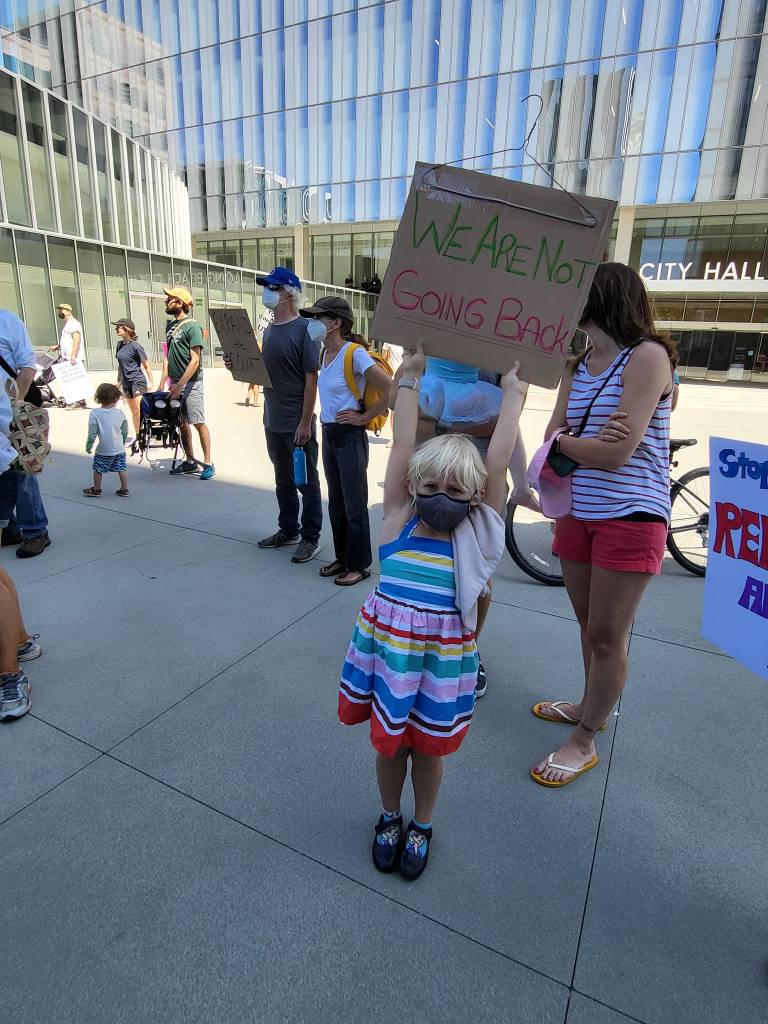
From the Archives: Rape is Not a Political Platform – Rape is a Violent Crime! By Michele Stopera Freyhauf

Moderator’s note: This marvelous FAR site has been running for 10 years and has had more than 3,600 posts in that time. There are so many treasures that have been posted in this decade. They tend to get lost in the archives. We are beginning this column so that we can revisit some of these gems. Today’s blogpost was originally posted August 23, 2012. You can visit it here to see the original comments.

Just when you think you have heard it all, here we go again – another politician with “open mouth-insert foot” syndrome.  Discussing his zero-tolerance policy for abortion, Missouri Representative Todd Akin made the following statement last Sunday about pregnancies that result from rape:

“from what I understand from doctors, that’s really rare.  If it’s a legitimate rape, the female body has ways to try to shut that whole thing down.  But let’s assume that maybe that didn’t work or something.  I think there should be some punishment, but the punishment ought to be on the rapist and not attacking the child.”

Continue reading “From the Archives: Rape is Not a Political Platform – Rape is a Violent Crime! By Michele Stopera Freyhauf”