Three poems by Rebecca Rogerson

Don’t Take Me to Church

He never let me eat communion because I wasn’t a catholic, but it was okay for me to eat his dick. My tiny palms forced to stroke him, the same dextrous hands that coloured in the lines. 

I knew his God wasn’t my God. I knew she saw everything there was to see and that he wouldn’t reach salvation; no matter how many Hail Marys he said at mass in Ireland.

The Virgin Mary knew what he stole from me, what they steal from all of us.

I couldn’t fall apart on Sundays at noon when he took me to church—before he took me home after he did what he did—to the little Jewish girl who didn’t know she was Jewish.

I couldn’t remember it because I buried it in Survive, until, it was resurrected by nightmares and demons who professed caring and brought me to altars of despair to vomit up all the darkness, and when there was no more left to cleanse or tear out; light ripped in.


No one talks about the embarrassment that goes along with the telling, sharing and surfacing of sexual violence. How it comes up, how it comes back. How we’re always haunted by the deadbeat dead and grabby grandfathers who try to reach from there into here, pretending they are made of heaven.

I fled a friend’s choir concert because perpetrators keep stealing time, moments, sleep, joy, and friendship, in churches and baths. On my flight, I hunted for nature, soil and anything else that felt most alive in the hilly town of Nelson. Pretending I was like everyone else, I hid the panic that strikes broken hearts.

Continue reading “Three poems by Rebecca Rogerson”

Two Poems by Rebecca Rogerson

ROSE WATER

I am the holy place somewhere in the stars of eternity,
 someone’s daughter who seeks reprieve somewhere.

Yetta changed her name to Mary. She tried to erase her past, not as a Jew, well maybe some of that, but more as a Jew molested by her father—a frum[1], “Monster”, his daughters called him.

On my altar sits my tallit alongside a Menorah with seven brass holders. No stars of David—before or after the decimation of Gaza. Can rose water sweeten our hearts? We pour it graciously in our hands, hoping the lost petals heal our guts and brighten our thoughts. She searches hungrily for hope in glass bottles adorned with Farsi, that cost $4.29 each.

Continue reading “Two Poems by Rebecca Rogerson”

Death & Rebirth : Domestic Violence and Victimhood by Chaz J.

*Trigger warning

**When I refer to Black women, I am referring specifically to descendants of African peoples that were forced to experience the dehumanization of chattel slavery in the United States.

I am no different than most Black children. Physical, mental, emotional, and physical harm is a historic reality deeply rooted in the Black American experience. This experience is mirrored in collective parenting and relating to children. In this context, many parents believe preparing children for the harsh realities of the world and the United States, while living in Black bodies, necessitates acclimating them to mistreatment and aggression. This parenting approach, (a consequence of centuries of colonization, slavery, and the ongoing impact of white supremacy), prioritizes survival. This survival mechanism has indeed ensured that we live and therefore I deeply respect the survival mechanisms deployed to survive. I offer no harsh critiques, only lessons learned and a desire for us to do better collectively now that we know better.

Continue reading “Death & Rebirth : Domestic Violence and Victimhood by Chaz J.”

Saved by the Sea by Laura Shannon

This is the story of an improbable rescue. 


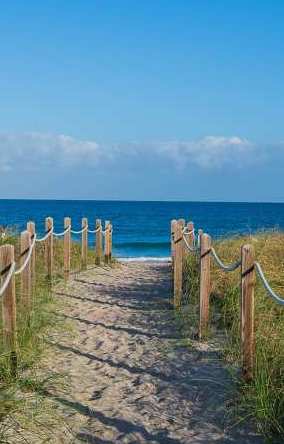
Delray Beach footpath. Photo: Public domain

The outcome of the US election was not the one I had hoped for or voted for. I know I’m not alone in this, nor am I alone in experiencing sudden strong emotional reactions in response to the acts of this new administration. 

For survivors of sexual abuse and sexual assault (officially 44% of adult women in the U.S., though habitual underreporting means this figure is probably much higher), it has been terrifying to see more and more men in positions of power who show no remorse for misogyny and abusive behaviour. This empowers others to behave badly, with an obvious sense of entitlement and impunity. 

The atmosphere of unchecked threat makes it harder for survivors to speak up for ourselves and others when any imbalance of power rears its head. Yet at the same time, it is ever more crucial that we do speak up. Many survivors find their chronic PTSD is triggered more frequently, while feeling even less able to respond with adult capability when a crisis strikes. This horrible paradox can quickly set off the paralysing cycle of diminishing self-esteem and increasing helplessness which survivors know only too well.

Continue reading “Saved by the Sea by Laura Shannon”

From the Archives: America, The Beautiful by Marie Cartier

This was originally posted August, 2018


There is a very white woman in a Lexus.
I could say her license plate number, but does it matter?
She’s that woman you’ve heard about—yelling at a brown woman
holding a sign, “I’ve lost my job. I have two kids. Help.”

The white woman leans out of her Lexus, “Go away! Go away!”
She will not move as other cars pile up behind her and the brown woman
does not “go away.” Where could she go at this point?
She’s surrounded. I watch from my car as I’m about to leave. I
take the yelling white woman’s picture. I get her license plate number. Continue reading “From the Archives: America, The Beautiful by Marie Cartier”

Sing Anyway by Dr. Jamie Marich

I often find myself sitting in conservative Catholic spaces. My brother is a Roman Catholic priest in the Dominican order and I remain in support of his vocation. Every time, before a Mass officially starts, I’m overcome with a sense of: “You belong here…and you don’t.”

The part of me that has always felt at home in a Catholic setting is that love of the ritual and ceremony, the smell of the incense, the familiarity of the chants and songs. It was a Catholic priest, the late Fr. Ciaran O’Donnell, who taught me how to play the guitar and got me started with the healing practice of songwriting. When I sink into these associations, I feel connected to my Croatian ancestors and our Catholic faith. And there’s the other part of me—the queer feminist and an advocate for other queer and transgender people to live the fullest, most open expressions of themselves in all spaces of life, especially faith-based spaces. As a survivor of several forms of sexual assault and as a trauma specialist who has guided countless other survivors in their healing process over the years, I can’t sit in a Catholic Church and not feel uneasy about the legacy of abuse and silencing survivors within the church. Between my queer identity and dedication to supporting survivors, I feel that I don’t belong.

Continue reading “Sing Anyway by Dr. Jamie Marich”

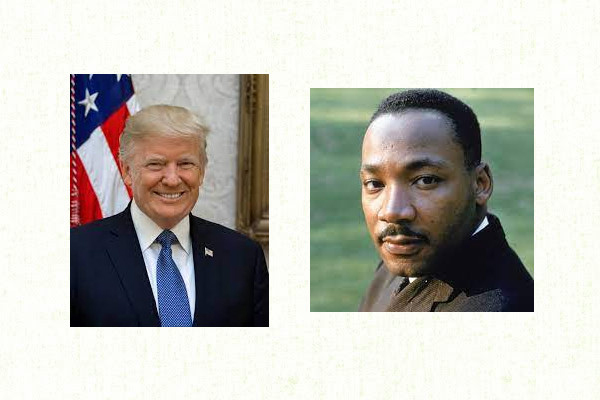
In Deep Gratitude to Donald Trump by Caryn MacGrandle

“Show me someone without an ego, and I’ll show you a loser.”
― Donald Trump

“Life’s most persistent and urgent question is, “What are you doing for others?”
Martin Luther King, Jr.

The fabric of our world is falling apart.

And it is necessary.

Last night, I took a job entering early results for elections.  My assignment was in a small city 30 miles away from me.  I found the courthouse and the courtroom where the election officials, law officials and others had gathered.

As I was waiting, I listened and observed.

Continue reading “In Deep Gratitude to Donald Trump by Caryn MacGrandle”

The Dark Tunnel by Sara Wright

Recently I had a very strange experience. I had fallen and was dumped into a nursing home to ‘recover’.

Since I have written about other aspects of this terrifying experience on this blog and published some pieces elsewhere, I am turning my attention to what happened to me after being drugged senseless, and then being stripped of every aspect of personal autonomy.

After I refused the 17 drugs, I incurred hostility from some nurses and aides who blamed me for having diarrhea and many other infractions none worth mentioning (one of the consequences of stopping the drugs was loose bowels).

 The one medication I needed was routinely withheld. Each time this happened I became more frightened and anxious. Shaky. These same caregivers either ignored me or intoned “all you have to do is relax, breathe”. They dismissed my PTSD/Anxiety disorder as some kind of psychological problem or were too ignorant or indifferent to care.

Continue reading “The Dark Tunnel by Sara Wright”

Keeping an Open Heart: My Ode to Father Ted by Janet Maika’i Rudolph

***Trigger Warning: Discussion includes sexual violence***

Father Ted and his friends helped me move in 1978. I have a bandanna on my head and Father Ted is behind me.

In early 1977 when I was 21 years old, I was followed into a building and attacked with a knife. I was raped. It is hard to express the rent in your soul when something like that happens.  And yet it is a common trauma in our patriarchal world, used as a weapon of war and, in general, to control women’s bodies. When I think of Israeli women being raped even as they were murdered, I don’t even know how to process that level of evil. As for myself, I was an easy mark as victim because I had been groomed to be meek by childhood abuse.

Continue reading “Keeping an Open Heart: My Ode to Father Ted by Janet Maika’i Rudolph”

On Repentance And Repair: Making Amends in an Unapologetic World by Rabbi Danya Ruttenberg

This is an excerpt of Rabbi Danya Ruttenberg’s On Repentance And Repair: Making Amends in an Unapologetic World, which comes out in paperback on September 12th. Called “A must-read for anyone navigating the work of justice and healing.” by Congresswoman Ayanna Pressley, it applies Maimonides’ Laws of Repentance to contemporary personal and systemic issues. This is an excerpt from Chapter Four, which addresses institutional repentance.

Most of us are part of many institutions—places of work, our own and/or our children’s schools and universities, houses of worship, co-working spaces, community organizations, sports leagues, social networking websites, the list goes on. And these institutions can and do perpetrate harm.  Sometimes, that harm impacts us as individuals—as stakeholders or beneficiaries of those institutions, or as those excluded or hurt by them—and sometimes it can impact our local or national culture.

Continue reading “On Repentance And Repair: Making Amends in an Unapologetic World by Rabbi Danya Ruttenberg”