Legacy of Carol P. Christ: GODDESS AND SACRED COW: A RE-EXAMINATION OF THE MYTHOLOGY OF THE SACRED BULL

This was originally posted on August 5, 2013

Most archaeologists and visitors to museums assume that when they see a horned bovine, they are faced with the image of the male God or the image of the bull sacrifice.  In the minds of many, these two are one, as we have been taught that the male God who was the consort or son-lover of the Goddess was sacrificed. Yet horned Goddesses are not infrequent in the history of religions and Hindus still revere the sacred cow.  

Cattle have played an important role in human life from the beginning of agriculture.  Cows provide milk which is also turned into butter, cheese, and yogurt.  Most of the young males and some of the females are killed for meat or leather, while a few males are kept to impregnate the females.  Though the “raging bull” is the lens through which most of us think about mature male bovines, I have been told by a friend who raised cattle that in fact bulls are for the most part gentle and even sweet–though of course they are also potentially dangerous.

Continue reading “Legacy of Carol P. Christ: GODDESS AND SACRED COW: A RE-EXAMINATION OF THE MYTHOLOGY OF THE SACRED BULL”

Return to Mountain Mother[1] by Jeanne F. Neath

Mountain Mother, I hear you calling me.
Mountain Mother, we hear your cry.
Mountain Mother, we have come back to you.
Mountain Mother, we hear your sigh.

Lyrics by Carol P. Christ [2]. Sung to the tune of “Ancient Mother.” (origin unknown)

What do a bunch of feminist women do while riding a tour bus around the Mediterranean island of Crete? If they are on the Goddess Pilgrimage started by Carol Christ and continued by Laura Shannon, they sing songs honoring the Goddess. The song that drew me most from the first time I heard it on the fall 2022 Goddess Pilgrimage was “Mountain Mother.” Not surprising since the rocky, sparsely vegetated, yet hauntingly beautiful mountains of Crete surrounded us much of the time as our trusty bus wound its way up and down and around the island.

Continue reading “Return to Mountain Mother[1] by Jeanne F. Neath”

Legacy of Carol P. Christ: The Mountain Mother: Reading the Language of the Goddess in the Symbols of Ancient Crete

The blog was originally posted on May 22, 2017

Before he told the story of how his people received the sacred pipe, Black Elk said:

So I know that it is a good thing I am going to do; and because no good thing can be done by any man alone, I will first make an offering and send a voice to the Spirit of the World, that it may help me to be true. See, I fill this sacred pipe with the bark of the red willow; but before we smoke it, you must see how it is made and what it means. These four ribbons hanging here on the stem are the four quarters of the universe. The black one is for the west where the thunder beings live to send us rain; the white one for the north, whence comes the great white cleansing wind; the red one for the east, whence springs the light and where the morning star lives to give men wisdom; the yellow for the south, whence come the summer and the power to grow.

But these four spirits are only one Spirit after all, and this eagle feather here is for that One, which is like a father, and also it is for the thoughts of men that should rise high as eagles do. Is not the sky a father and the earth a mother, and are not all living things with feet or wings or roots their children? And this hide upon the mouthpiece here, which should be bison hide, is for the earth, from whence we came and at whose breast we suck as babies all our lives, along with all the animals and birds and trees and grasses. And because it means all this, and more than any man can understand, the pipe is holy. [italics added]

In this passage Black Elk illustrates the multivalency of symbols: the sacred pipe does not have a single meaning, but many meanings, in fact, more meanings than anyone can understand.

Continue reading “Legacy of Carol P. Christ: The Mountain Mother: Reading the Language of the Goddess in the Symbols of Ancient Crete”

Asking Her Blessing by Christine Irving

… if the carving is in reach of its admirers,

the yoni will often be polished to a shine

by the touching fingers wishing to evoke

 the blessings of the Goddess.

~Adele Getty, Goddess: Mother of Living Nature

My book Sitting on the Hag Seat carries the blue cover I designed. Buried in the blue, riding the spiral Wheel of Return, stands a small Sheela-na-gig. The Sheela’ s origins remain unknown and controversial. It sometimes seem to me that the less explanation exists for a mysterious object or occasion, the more emotional attachment accrues to the opinions of diverging theorists. However, no matter what symbolism is ascribed to Sheela-na gig, her frequent placement above church doors or in the walls of cities, castles and watch towers, does seem to support a protective aspect not necessarily at odds with other attributions.

Continue reading “Asking Her Blessing by Christine Irving”

TRAVELOGUE INTO HISTORY: MY BIG FAT GREEK ODYSSEY (Part 2) by Sally Mansfield Abbott

Part 1 was posted yesterday. You can read it here.

Arriving in Heraklion on Crete, I was enlivened by the sea air and the informal “island” vibration. My sister and I made our way through its labyrinthine streets, following Daedalus, a pedestrian street named after the legendary creator of the labyrinth at Knossos, the prototype of the artist, who Joyce names as his stand-in in Portrait of the Artist as a Young Man and Ulysses. Our hotel was on Theotokopolous Street. (They’d call you El Greco too if your name was Domenikus Theotokopolous.) Nikos Kazantzakis was also from Heraklion, a city noted for its artists.

Knossos was a small, contained place circled by pine trees, unlike the sprawling sun-drenched expanse of a typical archeological site. There were restored ocher columns, four storeys to the palace, open courtyards for bull leaping, and cisterns that had been used for self-purification. Its red clay and turquoise frescoes were so familiar to me, with their vivid colors and playful lines that Matisse could have envied. No wonder it was the prototype of a work of art!

Continue reading “TRAVELOGUE INTO HISTORY: MY BIG FAT GREEK ODYSSEY (Part 2) by Sally Mansfield Abbott”

TRAVELOGUE INTO HISTORY: MY BIG FAT GREEK ODYSSEY (Part 1) by Sally Mansfield Abbott

My sister and I arrived in Athens midafternoon on Lamas, the feast day of the first harvest. A blast of dry heat greeted us as we left the airport and surveyed the barren brown hills. It transported me to my childhood when I’d lived in distant and exotic climates, and I felt the old excitement of being abroad again.

Going to Greece had long been a dream of mine. It was a spiritual pilgrimage, a Hajj to be undertaken at least once in a lifetime. Greece figured prominently in the college classes on the Goddess I had taught for ten years, but I’d only known it through the books and slides I lectured from. I longed to see its sacred sites in person.

Our hotel was at the base of the Acropolis, within a block of the Acropolis Museum, a stunning work of modern architecture that quotes the structure of the Parthenon.  The Parthenon and Erechtheon had been stripped of their bas reliefs and engravings—even the famed Karatydids– were now housed in the museum, either already or soon to be replaced by copies on the temples.

Continue reading “TRAVELOGUE INTO HISTORY: MY BIG FAT GREEK ODYSSEY (Part 1) by Sally Mansfield Abbott”

The Legacy of Carol P. Christ: Was Ariadne the Most Graceful Bull-leaper of All? Deconstructing and Re-visioning Greek Mythology

This was originally posted on March 3, 2014

Sometimes we think of Greek myth as a pre-patriarchal or less patriarchal alternative to the stories of the Bible. After all, Goddesses appear in Greek myths while they are nearly absent from the Bible. Right?

So far so good, but when we look more closely we can see that Greek myth enshrines patriarchal ideology just as surely as the Bible does. We are so dazzled by the stories told by the Greeks that we designate them “the origin” of culture. We also have been taught that Greek myths contain “eternal archetypes” of the psyche. I hope the brief “deconstruction” of the myth of Ariadne which follows will begin to “deconstruct” these views as well.

bull leaping ring before 2000 bc phourni

Ariadne is a pre-Greek word. The “ne” ending is not found in Greek. As the name is attributed to a princess in Greek myth, we might speculate that Ariadne could have been one of the names of the Goddess in ancient Crete. But in Greek myth Ariadne is cast in a drama in which she is a decidedly unattractive heroine.

Continue reading “The Legacy of Carol P. Christ: Was Ariadne the Most Graceful Bull-leaper of All? Deconstructing and Re-visioning Greek Mythology”

The Legacy of Carol P. Christ: Dance of the Bees: Reading the Language of the Goddess

This blog was originally posted on December 1, 2014

The image from an ancient Cretan bowl (c.1700 BCE) from the Sacred Center of Phaistos pictured here has often been interpreted as an early depiction of Persephone’s descent or rising. But are clues from later Greek mythology pointing in the right direction in this case?

Recently, my colleague Mika Scott posted the Phaistos bowl image on our Goddess Pilgrimage Facebook site in conjunction with the bee pendant from Mallia. This juxtaposition led me to think again about the importance of bees and pollination in agricultural societies and to offer an alternative reading of the symbolism on the bowl.

Continue reading “The Legacy of Carol P. Christ: Dance of the Bees: Reading the Language of the Goddess”

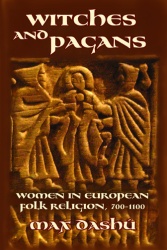
The Legacy of Carol P. Christ: Weaving and Spinning Women: Witches and Pagans by Max Dashu A Review

Moderator’s Note: This was originally posted on September 19, 2016

Max Dashu’s  Witches and Pagans: Women in European Folk Religion 700-1000 challenges the assumption that Europe was fully Christianized within a few short centuries as traditional historians tell us. Most of us were taught not only that Europe became Christian very rapidly, but also that Europeans were more than willing to adopt a new religion that was “superior” to “paganism” in every way. Careful readers of Dashu’s important new work will be challenged to revise their views. When the full 15 volumes of the projected series are in print, historians may be forced to hang their heads in shame. This of course assumes that scholars will read Dashu’s work. More likely they will ignore or dismiss it, but sooner or later–I dare to hope–the truth will out.

witches-and-pagans-cover

History has been written by the victors—in the case of Europe by elite Christian men. These men may have wanted to believe that their views were widely held, but Dashu suggests that they were not. Combing artistic and archaeological records, Dashu finds (to give one example) that images of Mother Earth nursing a snake are far from uncommon and can even be found as illustrations in Christian documents and on Christian monuments. Clerics rage against people—particularly women–who continue to visit holy wells and sacred trees and to practice divination and healing rituals invoking pagan powers. To paraphrase Shakespeare: “Methinks the cleric doth protest too much.” Were these things not happening and happening often, there would have been no need to condemn them.  Using these clues, Dashu provides intriguing new readings of the Poetic Edda and Norse sagas.

Continue reading “The Legacy of Carol P. Christ: Weaving and Spinning Women: Witches and Pagans by Max Dashu A Review”

Carol P. Christ’s Legacy: THE LABRYS: A RIVER OF BIRDS IN MIGRATION

Moderator’s Note: Carol Christ died from cancer in July, 2021. Her work continues through her non-profit foundation, the Ariadne Institute for the Study of Myth and Ritual and the Goddess Pilgrimage to CreteThis blog was originally posted July 29, 2013. You can its original comments here.

labrys seal ring

“There’s a river of birds in migration, a nation of women with wings.” Goddess chant, Libana

On the Goddess Pilgrimage to Crete, I explain that many of the names given to “Minoan” (c. 3000-1450 BCE) Cretan artifacts and architecture are products of patriarchal and Eurocentric imaginations, and as such, are misleading.  For example the name “Minoan” was given to the culture of Bronze Age Crete in honor of “King Minos,” who was said to have ruled in Crete a few generations before the Trojan War–several hundred years after the end of the culture to which his name was attached.  In fact, despite his eagerness to find evidence that King Minos ruled at Knossos, the excavator Sir Arthur Evans finally had to concede that the best he could do was to produce a fresco of a “Prince of the Lilies” which he identifed as the image of the male ruler of the culture he called “Minoan.”  Evans’ Prince had white skin, a fact that Evans conveniently overlooked–because according to his own interpretation of “Minoan” iconography, white skin would mark the figure as female.  Mark Cameron, who reviewed Evans’ reconstruction of the fresco, suggested that the Prince is more likely to be a young woman who is perhaps leading a bull to take part in the bull-leaping games.  He also stated that the “crown” belonged to another fresco altogether.

Continue reading “Carol P. Christ’s Legacy: THE LABRYS: A RIVER OF BIRDS IN MIGRATION”